Cylinder Deactivation: How It Works in a Car
Some petrol engines can temporarily stop supplying fuel to one or more cylinders when demand is low. Learn how the system works, when it activates and how it differs from Start-Stop and hybrid technology.
Key points
Cylinder deactivation lets a combustion engine temporarily run on fewer cylinders when power demand is low. It is not a hybrid system or Start-Stop, and any fuel savings depend on the engine and driving conditions.
What cylinder deactivation means
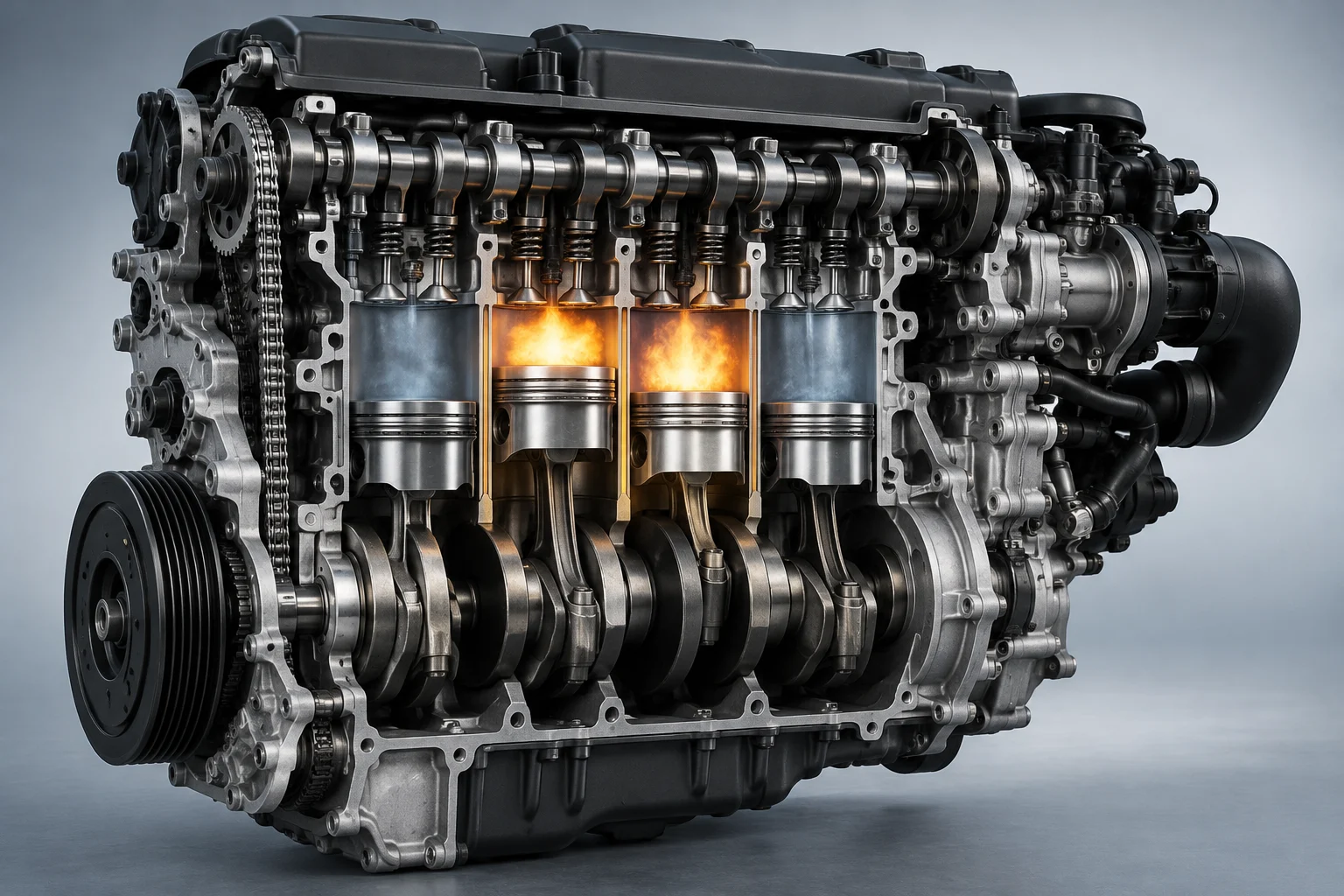
Cylinder deactivation allows a combustion engine to temporarily run on fewer cylinders when it does not need to deliver its full power. It is used, for example, in some petrol engines at low or moderate loads, such as when maintaining a steady speed.
The idea is for the cylinders that remain active to take on a larger share of the work. Under certain conditions, this can reduce engine pumping losses. It does not mean the car becomes electric or that the engine switches off: the engine keeps running and transmitting power.
Section references: ¿Qué es el sistema de desconexión selectiva de cilindros y cómo ayuda a ahorrar gasolina? ↗

What happens inside the engine
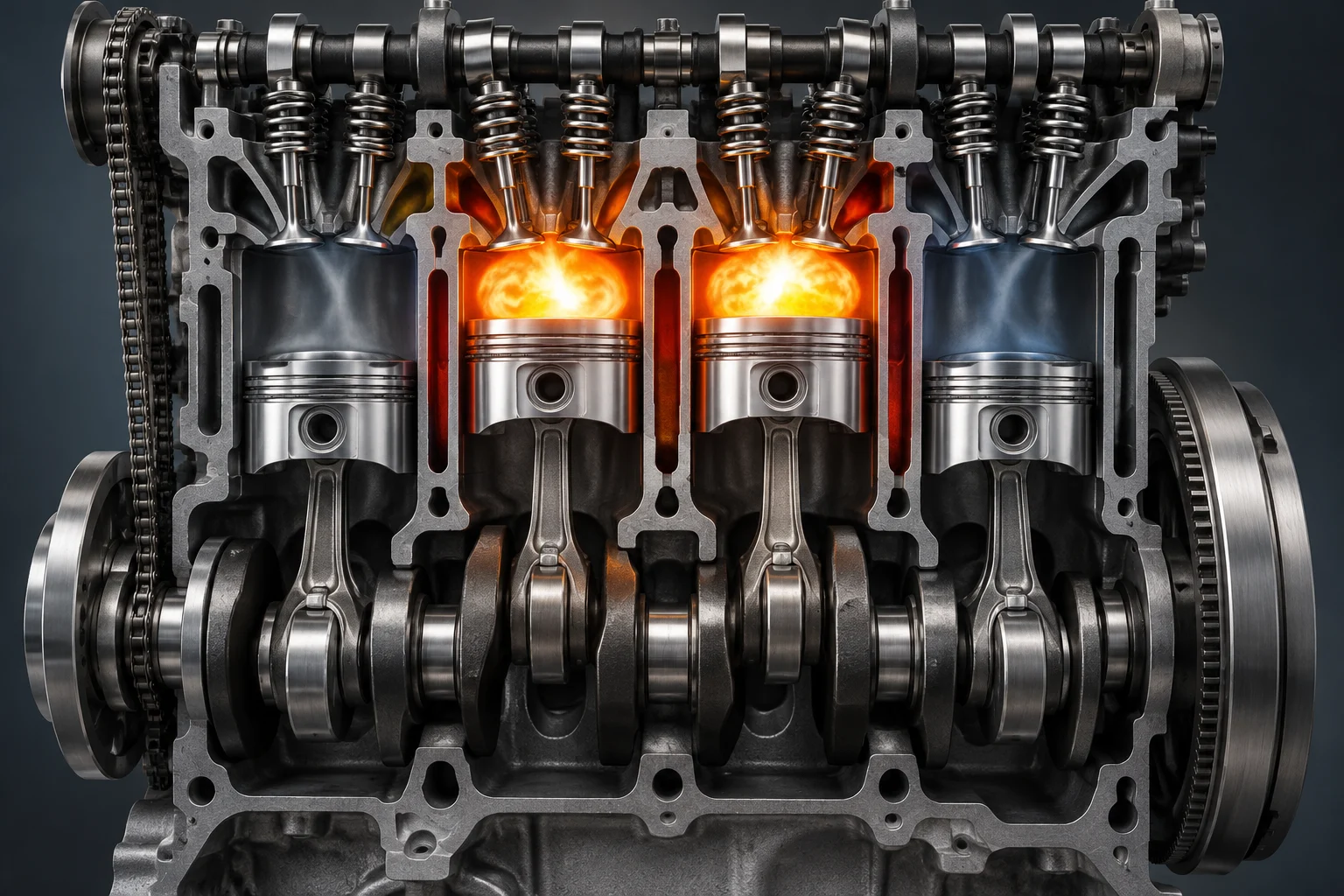
The engine management system cuts fuel injection and ignition to the selected cylinders. Depending on the system, it also prevents their intake and exhaust valves from opening as usual. The pistons still move, however, because they remain mechanically connected to the crankshaft.
The arrangement depends on the engine design: some three-cylinder engines can deactivate one cylinder, some four-cylinder engines temporarily run on two, and larger engines can deactivate several. There is no single configuration used by every car.
Section references: ¿Qué es el sistema de desconexión selectiva de cilindros y cómo ayuda a ahorrar gasolina? ↗
When it activates—and why all cylinders return
The engine control unit may take account of requested load, engine speed and temperature, as well as conditions required for the emissions system to work correctly. If demand rises—for example, when the driver accelerates harder—it reactivates the deactivated cylinders.
There is no fixed speed at which the system must engage. The engine and gear ratio matter, as do factors such as gradients, wind, the load being carried and accelerator pressure. Driving at a particular speed therefore does not guarantee that the car is deactivating cylinders.
Section references: ¿Qué es el sistema de desconexión selectiva de cilindros y cómo ayuda a ahorrar gasolina? ↗
Fuel use, response and differences from other systems
The aim is to reduce fuel use when the engine can run on fewer cylinders, but there is no fuel-saving percentage that applies to every car. The result depends on the engine design, how long it operates in that mode and driving conditions. A manufacturer may publish figures for a specific version and test cycle; those figures should not automatically be applied to other engines or every journey.
When more power is requested, the system reactivates the deactivated cylinders. It is designed to make this change automatically, although the engine’s response and sound can vary with its specific configuration.
Cylinder deactivation is not the same as Start-Stop: Start-Stop switches off the engine when the vehicle is stationary and certain conditions are met, whereas cylinder deactivation works while the engine is still running. It is also different from mild hybrid technology, which adds an electric system to assist the combustion engine. A car may combine technologies, but having one does not mean it has the others.
| System | What happens | When it operates |
|---|---|---|
| Cylinder deactivation | The engine keeps running with fewer active cylinders. | When power demand and other conditions allow. |
| Start-Stop | The engine switches off temporarily. | Usually when the vehicle is stationary and the system’s conditions are met. |
| Mild hybrid technology | An electric system assists the combustion engine. | According to the hybrid system’s design and operating strategy. |
Section references: ¿Qué es el sistema de desconexión selectiva de cilindros y cómo ayuda a ahorrar gasolina? ↗
How to check whether a car has this technology
Look for the technology in the vehicle’s sales specification, official documentation for the version or the engine description published by the manufacturer. Names can vary between brands, so check that the information applies to the exact engine, model year and trim—not just to a model range.
If a fuel-saving figure is published, check which version and test cycle it refers to. As an example of one specific application—not a general figure—Volkswagen reported in 2011 that its 1.4 TSI deactivated two of its four cylinders between 1,400 and 4,000 rpm and at torque levels between 25 and 75 Nm. For that engine, it reported a reduction of 0.4 l/100 km in the NEDC cycle; combined with Stop/Start, it stated savings of up to 0.6 l/100 km. These figures apply to that application and test cycle; they are not a prediction for other cars or real-world use.
Section references: ¿Qué es el sistema de desconexión selectiva de cilindros y cómo ayuda a ahorrar gasolina? ↗ · Volkswagen presenta su última tecnología eficiente ↗
- Check the documentation for the exact version and the name the manufacturer gives the system.
- Distinguish test-cycle figures from the fuel consumption you may achieve in actual use.
- Do not assume a car has cylinder deactivation just because it has Start-Stop or mild hybrid technology.
Does cylinder deactivation switch off the engine?
No. The engine keeps running. Combustion is temporarily stopped in one or more cylinders, while their pistons continue to move because they remain connected to the crankshaft.
At what speed does it activate?
There is no universal speed. Activation depends on factors such as accelerator demand, engine speed, temperature, gradient and vehicle load.
How much fuel does it save?
There is no percentage that applies to every car. Savings depend on the engine, how long it runs with cylinders deactivated and driving conditions.
Is it the same as Start-Stop?
No. Start-Stop switches off the engine when the vehicle is stationary and certain conditions are met; cylinder deactivation keeps the engine running.