Final Drive and Gear Count: What Changes When You Drive
A higher gear can lower engine revs, but it does not guarantee lower fuel consumption or better response in every situation. Learn how to interpret gearing and compare versions meaningfully.
Key points
A transmission’s gearing links engine speed to road speed. A higher gear may reduce fuel consumption in some conditions, but the result also depends on the engine, gearbox and route.
What transmission gearing means
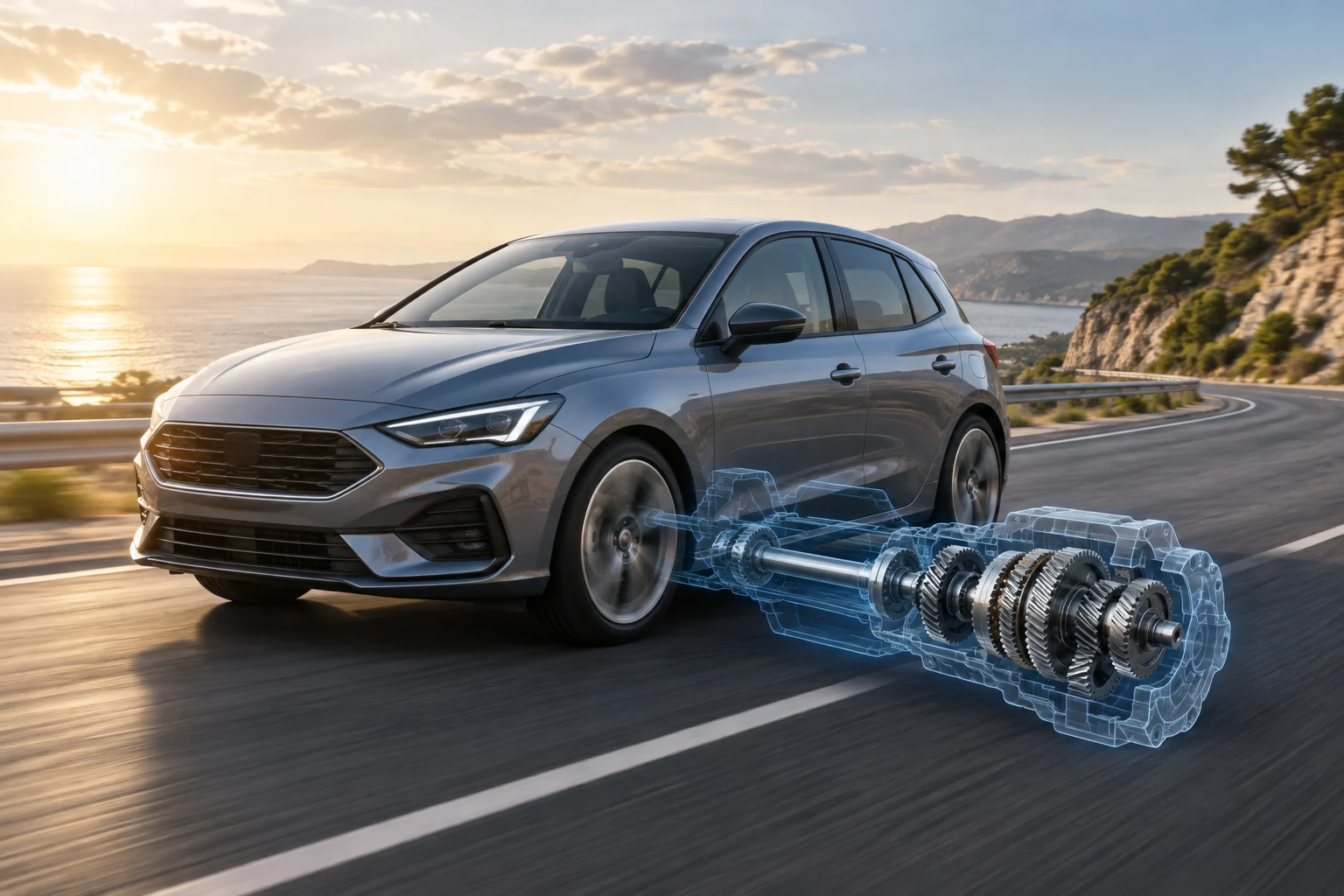
Gearing describes the relationship between engine rotation and wheel rotation through the gearbox and final drive. In practical terms, it indicates the engine speed at a given road speed in a particular gear. A higher gear usually keeps engine revs lower at the same speed, while a lower gear multiplies rotation more and can provide a more immediate response.
Gearing does not depend only on the number of gears. The ratios of each gear, the final-drive ratio, tyre size and the engine’s operating speed all play a part. That is why two cars with six gears can behave differently, and a gearbox with more gears does not automatically have higher gearing.
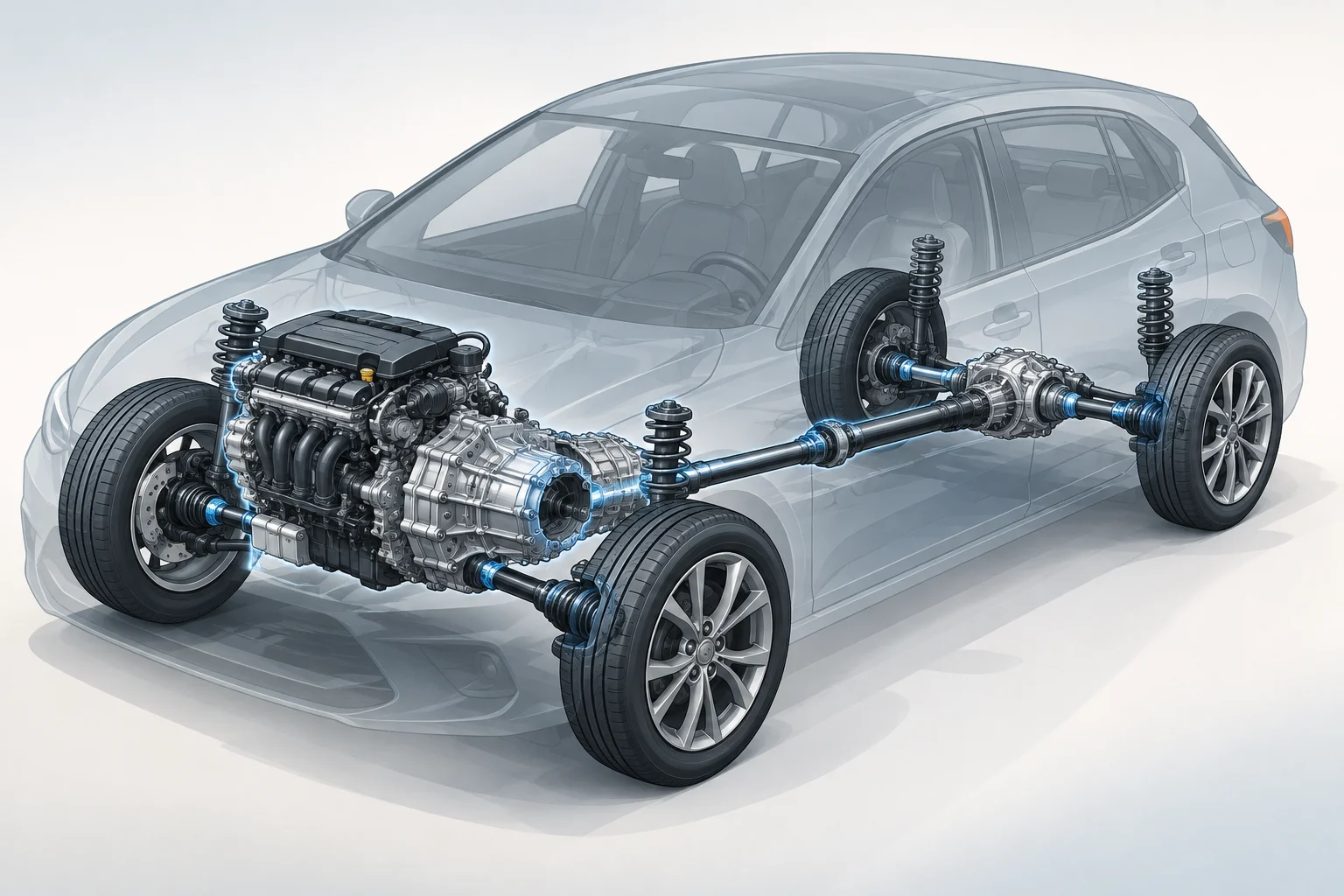
How gears affect engine speed and response
At a steady speed, selecting a higher gear usually lowers engine revs. This may help reduce fuel consumption if the engine can handle the load smoothly. If the gear is too high for the speed, gradient or load, the car may lack pulling power and need a downshift. Lower gears, by contrast, provide more tractive force at low speeds and are useful for moving off or responding quickly.
The engine matters too. RACE notes that, in general, petrol engines deliver power and torque at higher revs than diesel engines, so the same shift point should not be applied to every car. As a guide within its fuel-efficient driving recommendations, IDAE places gear changes at 2,000–2,500 rpm for petrol engines and 1,500–2,000 rpm for diesel engines. These are not universal limits and do not replace paying attention to the vehicle’s response and traffic conditions.
Section references: Estilo de conducción eficiente ↗ · ¿Cuántas marchas tiene un coche? ↗
Do more gears mean greater efficiency?
Not necessarily. A gearbox with more ratios can offer closer steps and help keep the engine in a suitable rev range in different situations, but the result depends on how the gearbox is configured and the engine it works with. RACE gives general figures of five or six gears for many manual cars and up to ten for some automatics; these figures alone do not reveal a model’s fuel consumption or response.
IDAE illustrates the possible effect of choosing a higher gear with a specific example: a 1.2-litre car travelling at 60 km/h uses 7.1 l/100 km in third gear, 6.3 in fourth and 6 in fifth. This is a comparison for that particular case, not a guarantee that applies to every car or journey. A hill, acceleration, load or different speed can change which gear is appropriate.
| Gear | Fuel consumption shown |
|---|---|
| Third | 7.1 l/100 km |
| Fourth | 6.3 l/100 km |
| Fifth | 6 l/100 km |
Section references: Estilo de conducción eficiente ↗ · ¿Cuántas marchas tiene un coche? ↗
What to compare in specifications and fuel consumption
When comparing versions, look for the gearbox type, the number of ratios and, if listed, the gear ratios or final-drive ratio. Also check that the versions have the same engine and relevant configuration: comparing gear count alone is not enough to explain differences in fuel consumption or performance.
Compare official fuel-consumption figures only between comparable configurations tested using the same measurement procedure. An official figure is a reference under a standardised test cycle; it does not predict each driver’s exact consumption or prove that a particular gearbox is more efficient on every journey. If gear ratios are not published, compare the performance and fuel-consumption figures of equivalent versions without automatically attributing differences to the number of gears.
- Identify the engine, fuel type, gearbox and number of ratios.
- Compare equivalent versions and fuel-consumption figures measured using the same procedure.
- Consider gearing alongside response and performance rather than treating it as an isolated figure.
City driving, motorways and loaded journeys
In town, lower gears help the car move off and travel at low speeds. As part of its fuel-efficient driving guidance, IDAE recommends using first gear only to set off, then shifting to second after about two seconds or six metres. On faster roads, a higher gear can keep engine revs lower when the speed and conditions allow the engine to maintain it without excessive strain.
On a steep hill or in a loaded car, a gear that is too high may leave little pulling power; changing down can help the engine respond better. In practice, choose a gear suited to the speed and the demand for acceleration without straining the engine. Fuel-efficiency advice should not take priority over choosing the response needed to drive safely in the circumstances.
Section references: Estilo de conducción eficiente ↗ · ¿Cuántas marchas tiene un coche? ↗
Does a higher gear always use less fuel?
No. It can lower engine revs and fuel consumption in some conditions, but the engine may lack the response needed to maintain the required effort. The engine, gear ratio, speed, gradient and load all matter.
Does having more gears mean a car uses less fuel?
Not by itself. The number of ratios does not show how they are spaced or how they work with the engine and final drive. Compare equivalent versions and their fuel-consumption and performance figures.