Variable Valve Lift: What It Is and How It Differs from Variable Valve Timing
Discover what variable valve lift means in a petrol engine, how it works mechanically, and how it differs from variable valve timing to help you choose your next vehicle with confidence.
Key points
Variable valve lift changes how far the valve opens, while variable valve timing changes when it opens. Understanding this distinction helps you correctly interpret technical specifications and avoid confusing two distinct technologies that optimize air intake in the engine.
What varying valve lift means
In a conventional combustion engine, the lift, the duration of opening, and the timing of the valves are fixed. This means the valve always opens the same amount and at the same point in the cycle, regardless of driving conditions.
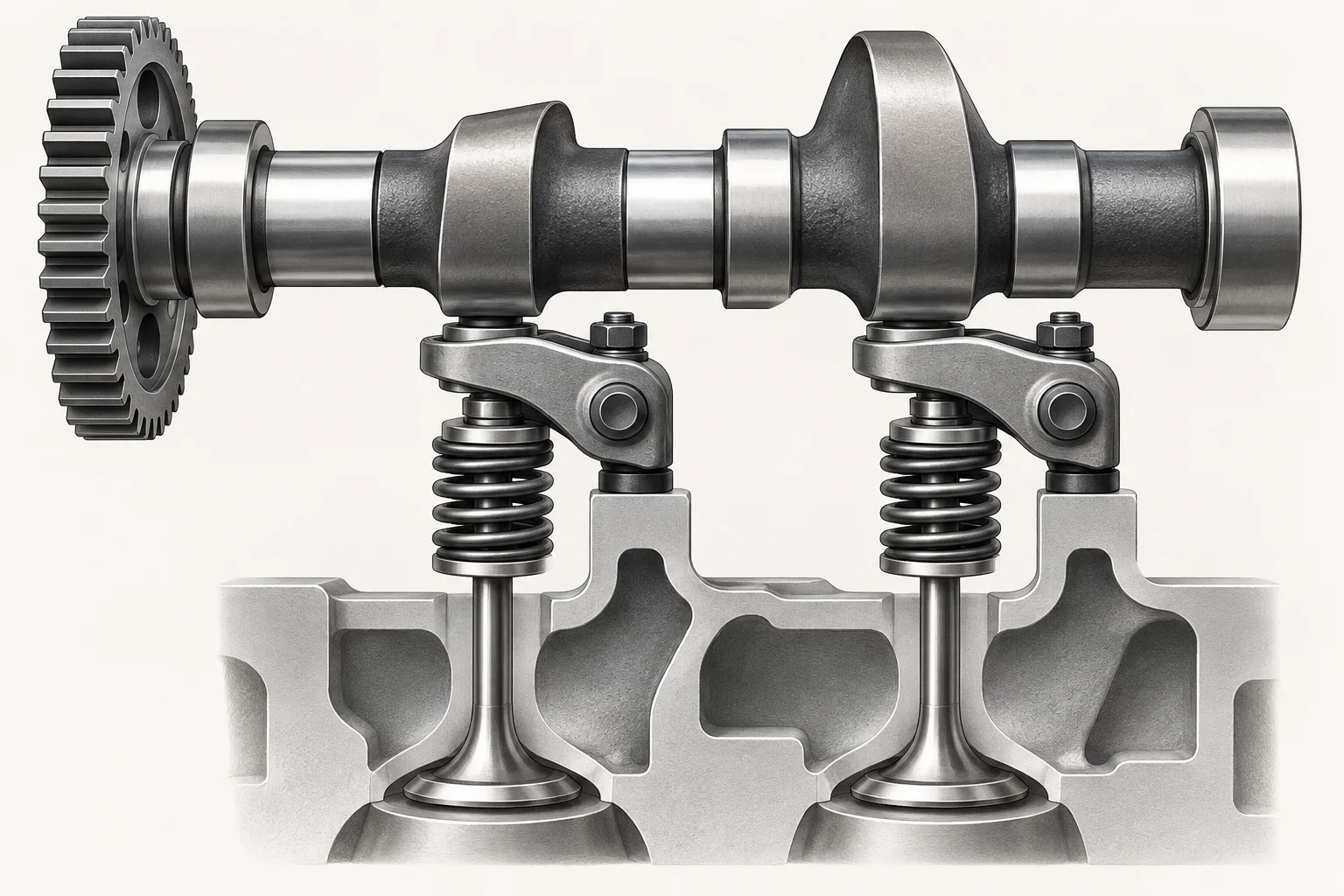
Variable valve lift is a technology that allows modifying how far the valve opens. Unlike variable valve timing, which changes the moment the valve opens and closes, variable valve lift alters the depth of the opening. This allows adjusting the amount of air entering the cylinder more precisely according to the engine's needs.
Section references: Distribución variable - Autodata Group CO ↗ · ¿Qué es la distribución variable y para qué sirve? ↗
- Fixed lift: the valve always opens the same amount.
- Variable lift: the valve can open more or less depending on engine speed and load.
- Variable lift modifies the height of the opening curve, not its temporal position.
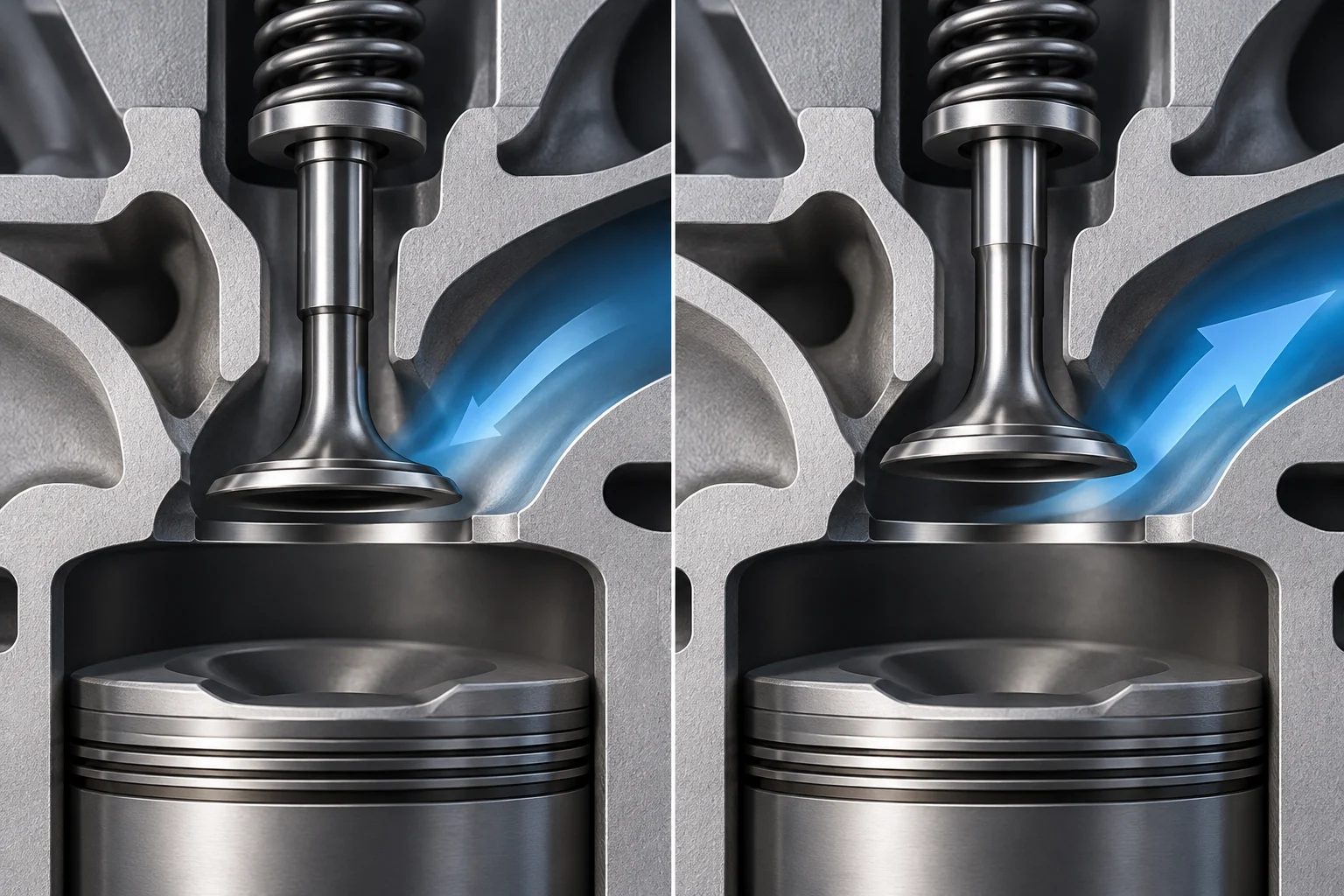
Difference between variable lift and variable timing
It is common to confuse these two systems because both optimize air intake, but they work in different ways. Variable valve timing acts on time: it advances or delays the moment of valve opening and closing relative to the crankshaft. Variable valve lift acts on quantity: it changes how far the valve opens.
In practice, many manufacturers combine both technologies. For example, Honda's VTEC system integrates variable valve timing and electronic control of the lift. Porsche's Variocam Plus system uses a variable on the intake camshafts along with two distinct cam profiles and variable hydraulic tappets. This combination allows optimizing both the timing and the depth of the opening.
| Characteristic | Variable Valve Timing | Variable Valve Lift |
|---|---|---|
| What it modifies | Timing of opening and closing | Depth of opening |
| Main effect | Changes valve overlap | Changes the amount of air |
| Typical mechanism | Camshaft displacement | Distinct cam profiles or intermediate levers |
| System example | Toyota VVT, BMW VANOS | Honda VTEC, BMW Valvetronic |
Section references: Distribución variable - Autodata Group CO ↗ · VVT: Sistema de Sincronización Variable de Válvulas. ¿Cómo funciona? ↗
- Variable valve timing: changes when the valve opens (advance or delay).
- Variable valve lift: changes how far the valve opens (opening depth).
- Many modern systems combine both technologies for greater efficiency.
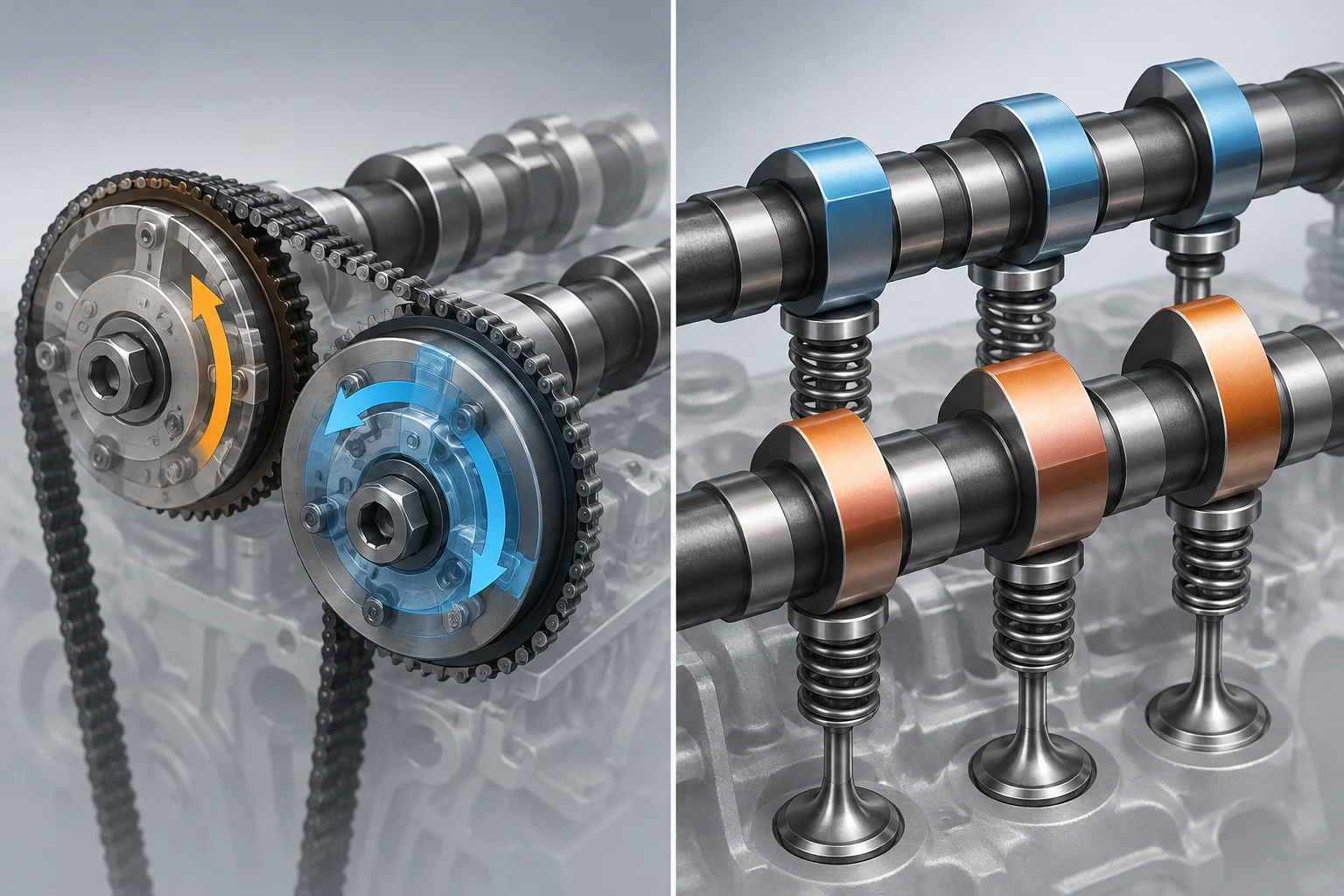
How variable valve lift works mechanically
There are several approaches to implementing variable valve lift. The most common is the use of two distinct cam profiles on the same camshaft. A mild profile is used at low revolutions to maintain efficiency, while a more aggressive profile is activated at high engine speeds to increase power.
In systems like Honda's VTEC, a hydraulic actuator moves a pin that locks the higher-lift rocker arm with the adjacent rocker arms when a certain engine speed is reached. In BMW's Valvetronic system, an intermediate lever with a boomerang profile changes its inclination thanks to a servomotor, gradually modifying the valve lift.
Fiat's MultiAir system uses a different approach: solenoid valves controlled by the engine control unit directly actuate the intake valves, allowing both the timing and the amount of opening to be determined with great precision.
Section references: Distribución variable - Autodata Group CO ↗ · ¿Qué es la distribución variable y para qué sirve? ↗
- Two cam profiles: one mild for low revolutions, one aggressive for high revolutions.
- Hydraulic actuator: locks the higher-lift rocker arm at high engine speed.
- Intermediate lever: gradually modifies the lift using a servomotor.
- Solenoid valves: direct control of the valve by the engine control unit.
How to identify this technology in documentation
When reading a technical specification sheet or a commercial description, it is important to distinguish between variable valve timing and variable valve lift. Manufacturers often use specific trade names: VTEC (Honda), VVT (Toyota), VANOS and Valvetronic (BMW), MultiAir (Fiat), Variocam (Porsche).
If the spec sheet only mentions 'variable valve timing', it is likely referring to camshaft displacement. If it mentions 'variable valve lift' or a specific system like VTEC or Valvetronic, it is likely to include the modification of opening depth. In many cases, modern systems combine both functions, so it is useful to consult the specific technical documentation for the model.
Section references: Distribución variable - Autodata Group CO ↗ · VVT: Sistema de Sincronización Variable de Válvulas. ¿Cómo funciona? ↗
- Look for specific trade names: VTEC, VVT, VANOS, Valvetronic, MultiAir.
- If only 'variable valve timing' is mentioned, it is probably just camshaft displacement.
- If 'variable valve lift' or a combined system is mentioned, it includes depth modification.
- Consult the model's technical documentation to confirm the exact functions.
What cannot be deduced about consumption and maintenance
The combination of variable valve timing and variable valve lift can reduce fuel consumption, increase power, and reduce emissions, according to technical documentation. However, it is not possible to attribute universal benefits to all systems without knowing the specific specifications of the model.
Real performance depends on many factors: engine design, engine control unit calibration, driving style, and usage conditions. A variable valve lift system does not automatically guarantee lower consumption or greater reliability. It is important not to generalize performance based solely on the presence of this technology.
Regarding maintenance, these systems do not require special interventions beyond regular engine maintenance. However, oil quality and its periodic change are important for the correct functioning of hydraulic actuators and variable tappets.
Section references: Distribución variable - Autodata Group CO ↗
- Not all variable valve lift systems offer the same benefits.
- Performance depends on the specific calibration and engine design.
- Exact consumption cannot be deduced solely from the presence of this technology.
- Regular oil maintenance is important for proper functioning.
Is variable valve lift the same as variable valve timing?
No. Variable valve timing changes the moment the valve opens and closes. Variable valve lift changes how far the valve opens. Many modern systems combine both technologies.
Which variable valve lift systems are most common?
The most well-known are Honda's VTEC, BMW's Valvetronic, Fiat's MultiAir, and Porsche's Variocam Plus. Each uses a different mechanism to modify the lift.
Does variable valve lift improve fuel consumption?
It can contribute to reducing consumption, but it is not a universal guarantee. The real effect depends on engine calibration and usage conditions. Exact savings cannot be deduced solely from the presence of this technology.
How do I know if my car has variable valve lift?
Consult the technical specification sheet or manufacturer documentation. Look for trade names like VTEC, Valvetronic, or MultiAir, or explicit mentions of 'variable valve lift'. If only 'variable valve timing' is mentioned, it is probably just camshaft displacement.
Does variable valve lift require special maintenance?
It does not require special interventions beyond regular maintenance. However, it is important to use the recommended oil and change it on time to protect the hydraulic actuators and variable tappets.