Curb Weight, Gross Vehicle Weight, and GVWR: How to Read the Technical Sheet
Learn to distinguish between curb weight, gross vehicle weight, and GVWR on your car's technical sheet. Calculate your actual payload and know the legal limits to avoid fines and safety risks.
Key points
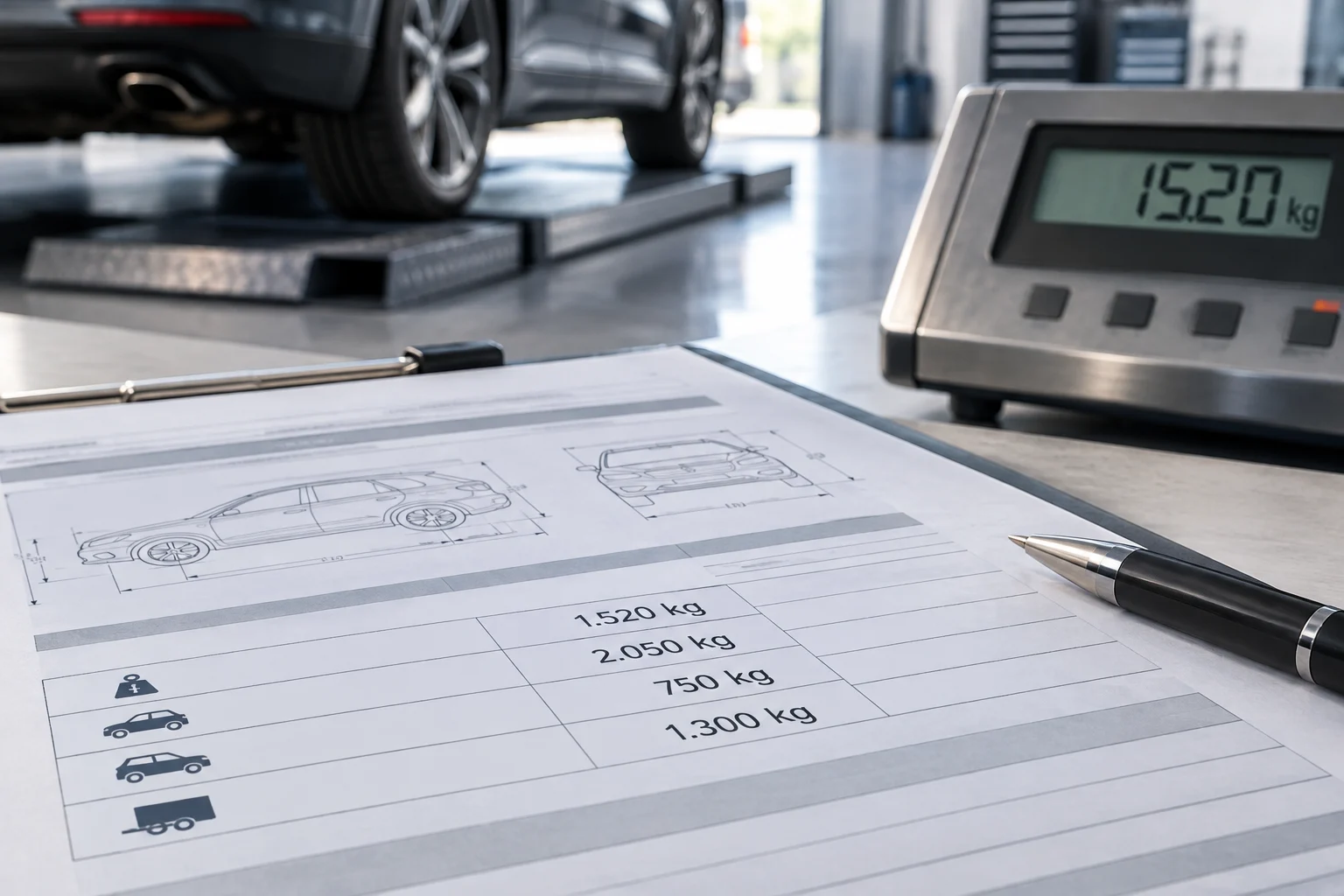
The key difference between curb weight, gross vehicle weight, and GVWR lies in the vehicle's preparation level and permitted load. GVWR is the absolute legal weight limit, while gross vehicle weight includes fluids and a reference driver. Knowing these values allows you to calculate the actual payload and avoid penalties for overweight.
Definition of the three mass concepts
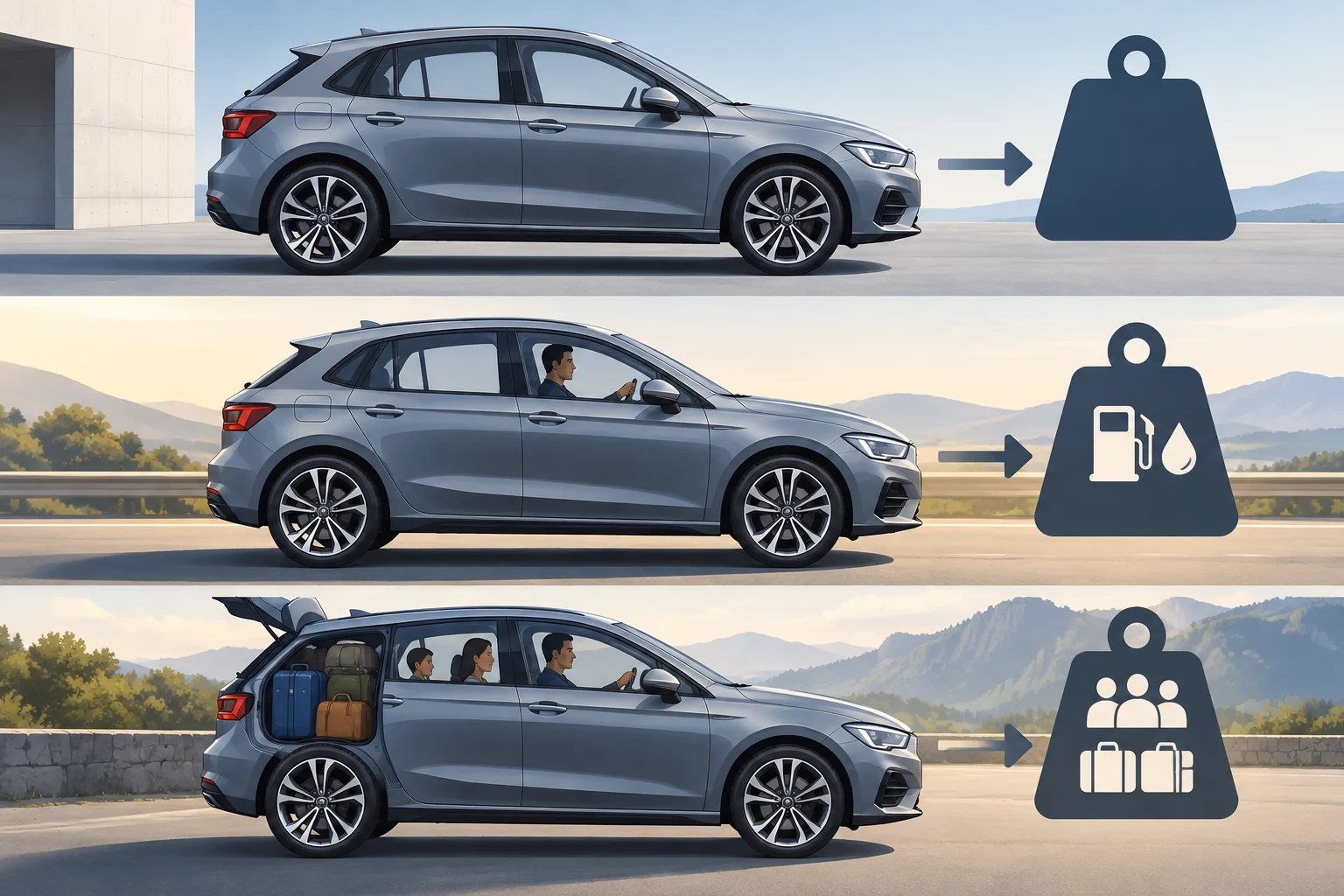
To understand how much your vehicle can actually carry, it is fundamental to distinguish between the three terms that appear in official documentation: curb weight (or tare), gross vehicle weight (GVW), and Gross Vehicle Weight Rating (GVWR). Each represents a different state of the vehicle and has a specific function in regulations and daily use.
Curb weight or tare is defined as the weight of the vehicle in its factory state, including fixed equipment and operational liquids necessary for its function, but without a driver, passengers, or cargo. This data is the basis for calculating the car's carrying capacity.
Gross vehicle weight (GVW) is the weight of the vehicle prepared to go on the road without additional cargo. Unlike tare, GVW includes operating fluids (such as fuel) and a reference driver. This value usually appears in field G of the vehicle inspection card and on the technical sheet.
Gross Vehicle Weight Rating (GVWR) is the maximum weight at which the vehicle can legally travel on public roads, loaded. It is the absolute limit set by the manufacturer's homologation and traffic authorities to guarantee the structural resistance of the axles, braking efficiency, and dynamic stability. This data is found in field F.1 (and F.2 for the authorized weight in Spain) of the technical sheet.
| Concept | Includes | Field in technical sheet | Main function |
|---|---|---|---|
| Curb weight (Tare) | Fixed equipment and operational liquids | Variable by manufacturer | Basis for calculating payload |
| Gross vehicle weight (GVW) | Full liquids and reference driver | Field G | Operational weight reference |
| Gross Vehicle Weight Rating (GVWR) | Vehicle + driver + passengers + cargo | Field F.1 / F.2 | Legal weight limit |
Section references: Pesos y masas en la ficha técnica de los vehículos ↗ · ¿Qué es la Tara de un vehículo y cómo se calcula? ↗ · Masa Máxima Autorizada (MMA): qué es, límites y multas ↗
- Curb weight (Tare): Weight without driver, passengers, or cargo, but with operational liquids.
- Gross vehicle weight (GVW): Weight with full liquids and a reference driver.
- GVWR: Maximum legal weight allowed for travel, including all cargo.
How to calculate the actual payload
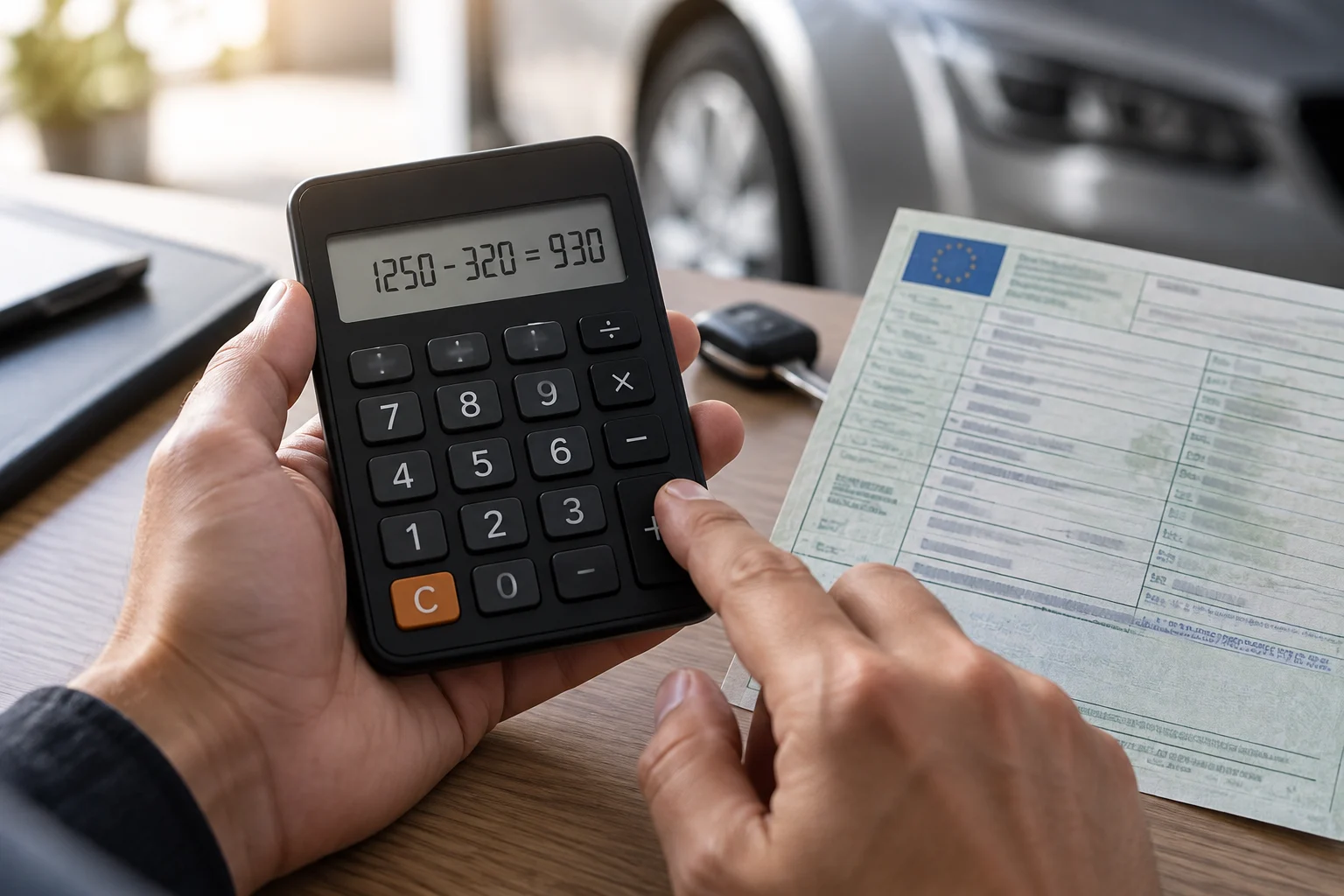
The most important calculation for any driver is determining how many kilograms of people, luggage, and accessories their vehicle can carry without breaking the law. This value is known as payload and is obtained through a simple subtraction: GVWR minus tare (curb weight).
It is crucial not to confuse payload with the difference between GVWR and gross vehicle weight. Although GVW includes a reference driver, regulations and manufacturers usually base the available payload for the end user on the tare to offer a wider safety margin. However, when planning a trip with many passengers and luggage, it is prudent to consider that the actual weight of the driver may vary from the reference value.
If the vehicle tows a trailer, the Gross Combination Weight Rating (GCWR) must be taken into account. The GCWR is the sum of the GVWRs of all vehicles involved (car and trailer) and cannot exceed the GCWR limit of the towing vehicle. Exceeding this limit is a serious offense that affects the safety of the combination.
Section references: Pesos y masas en la ficha técnica de los vehículos ↗ · ¿Qué es la Tara de un vehículo y cómo se calcula? ↗
- Basic formula: Payload = GVWR - Tare.
- Payload includes passengers, luggage, and additional accessories.
- When towing, the sum of GVWRs must not exceed the GCWR of the tractor.
Impact of load on safety and licenses
Exceeding the GVWR is not only an administrative offense but a direct safety risk. The GVWR is set to ensure that the brakes, tires, and chassis structure can support the weight. An overloaded vehicle has a longer braking distance, reduced stability in curves, and premature wear of mechanical components.
Regarding driving licenses, the GVWR limit determines what type of license you need. For conventional vehicles, a Class B driving license allows driving vehicles with a GVWR not exceeding 3,500 kg. If the vehicle or the combination (car + trailer) exceeds this limit, a higher category license, such as C1 or C, is required, depending on the exact mass and type of vehicle.
It is the driver's responsibility to verify these data before making a trip with heavy cargo or when towing. The vehicle documentation and technical sheet are the official sources to confirm these limits.
Section references: ¿Qué es la Tara de un vehículo y cómo se calcula? ↗ · Masa Máxima Autorizada (MMA): qué es, límites y multas ↗
- License B allows driving vehicles with GVWR up to 3,500 kg.
- Exceeding the GVWR increases braking distance and reduces stability.
- The manufacturer's homologation defines the GVWR to guarantee structural safety.
Common errors when interpreting documentation
A frequent error is confusing gross vehicle weight with tare. Although they are similar concepts, GVW includes a reference driver, making it slightly higher than the tare. Using GVW to calculate payload can lead to an incorrect estimate of available kilograms.
Another error is ignoring the weight of additional accessories, such as roof racks, bike carriers, or luggage in the trunk, which add to the total load. It is important to remember that the GVWR is an absolute limit: any weight added to the vehicle, including the actual driver's weight, counts toward reaching that limit.
Finally, many drivers do not verify the GCWR when towing. Assuming that if the car and the trailer are within their limits separately, the combination is too, is a dangerous error. The sum of the GVWRs must always be less than or equal to the GCWR of the towing vehicle.
Section references: Pesos y masas en la ficha técnica de los vehículos ↗
- Do not confuse tare (without driver) with GVW (with reference driver).
- Include the weight of accessories and luggage in the load calculation.
- Verify the GCWR when towing, not just the individual GVWRs.
Where do I find the GVWR on the technical sheet?
The GVWR is found in field F.1 of the technical sheet. In Spain, field F.2 indicates the maximum authorized mass specifically for circulation in the country.
What happens if I exceed my car's GVWR?
Exceeding the GVWR is an offense that can result in fines and points on your license. Additionally, it increases the risk of accidents due to longer braking distances and reduced vehicle stability.
Do I need a special license to tow?
It depends on the Gross Combination Weight Rating (GCWR). If the sum of the car's GVWR and the trailer's GVWR exceeds 3,500 kg, a Class B license is not sufficient, and a higher category license is required.
Does gross vehicle weight include fuel?
Yes, gross vehicle weight (GVW) includes operating fluids, such as fuel, and a reference driver, unlike tare, which does not include a driver.