What Is Engine Torque, and How Do You Read the Spec Sheet?
Learn how torque differs from power and how the gearbox and engine type affect the real-world feel of acceleration and traction.
Key points
Engine torque is the rotational force produced by an engine, measured in newton metres. It is not the same as top speed, but it affects traction and low-rev response—important factors in city driving and when towing or carrying a load.
Torque and power: two different measurements
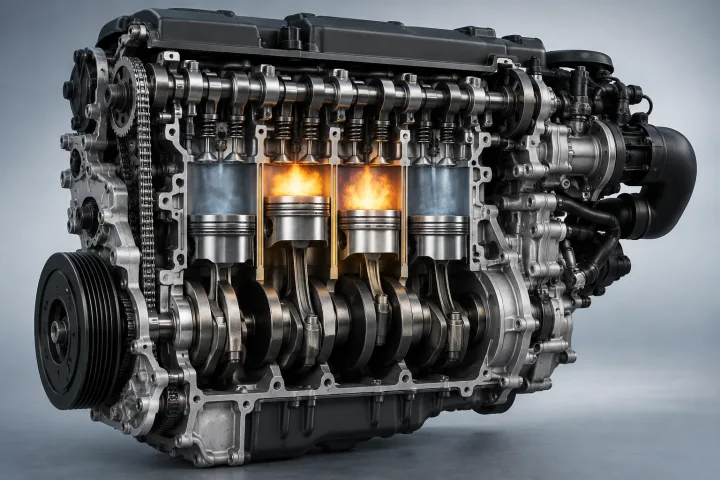
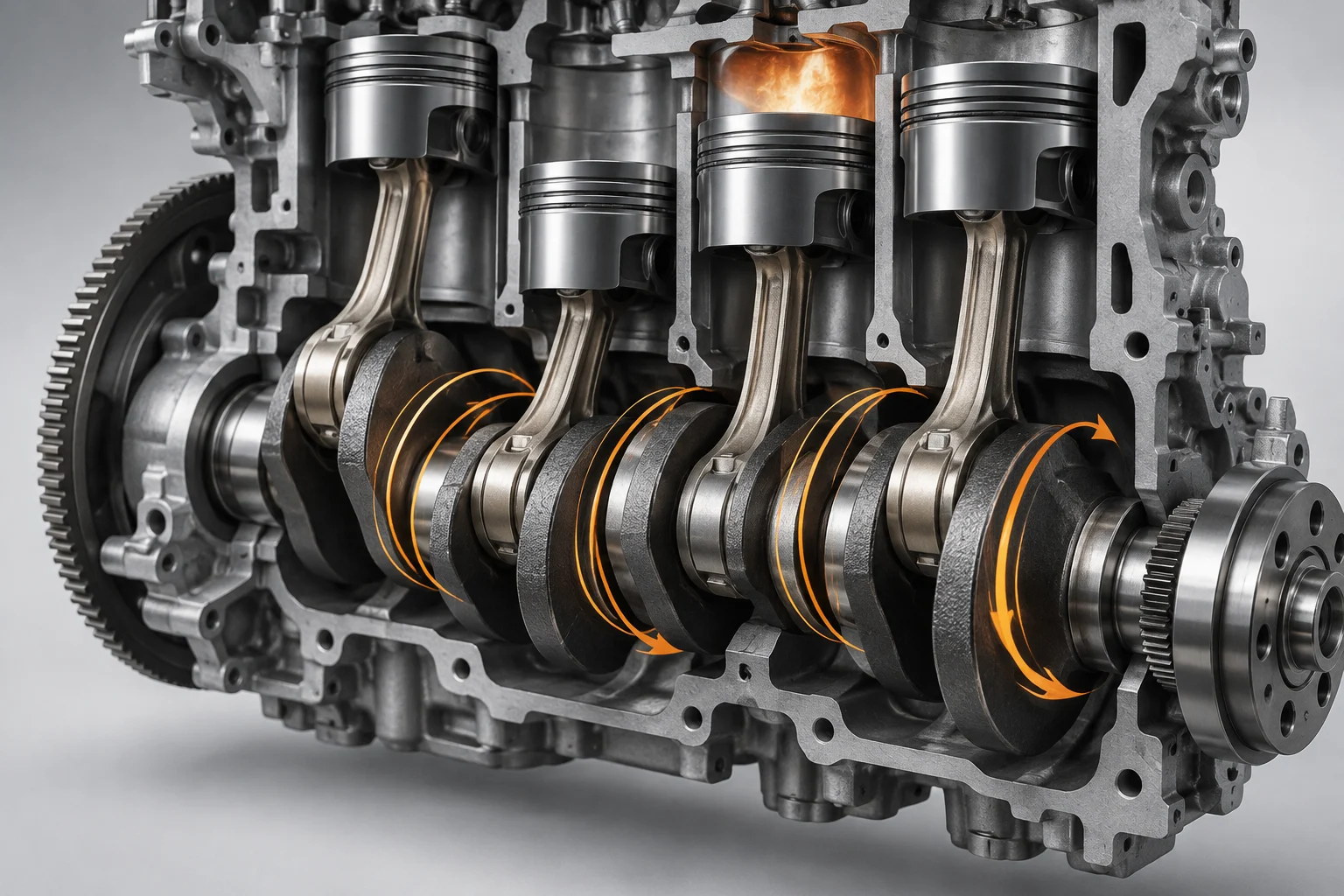
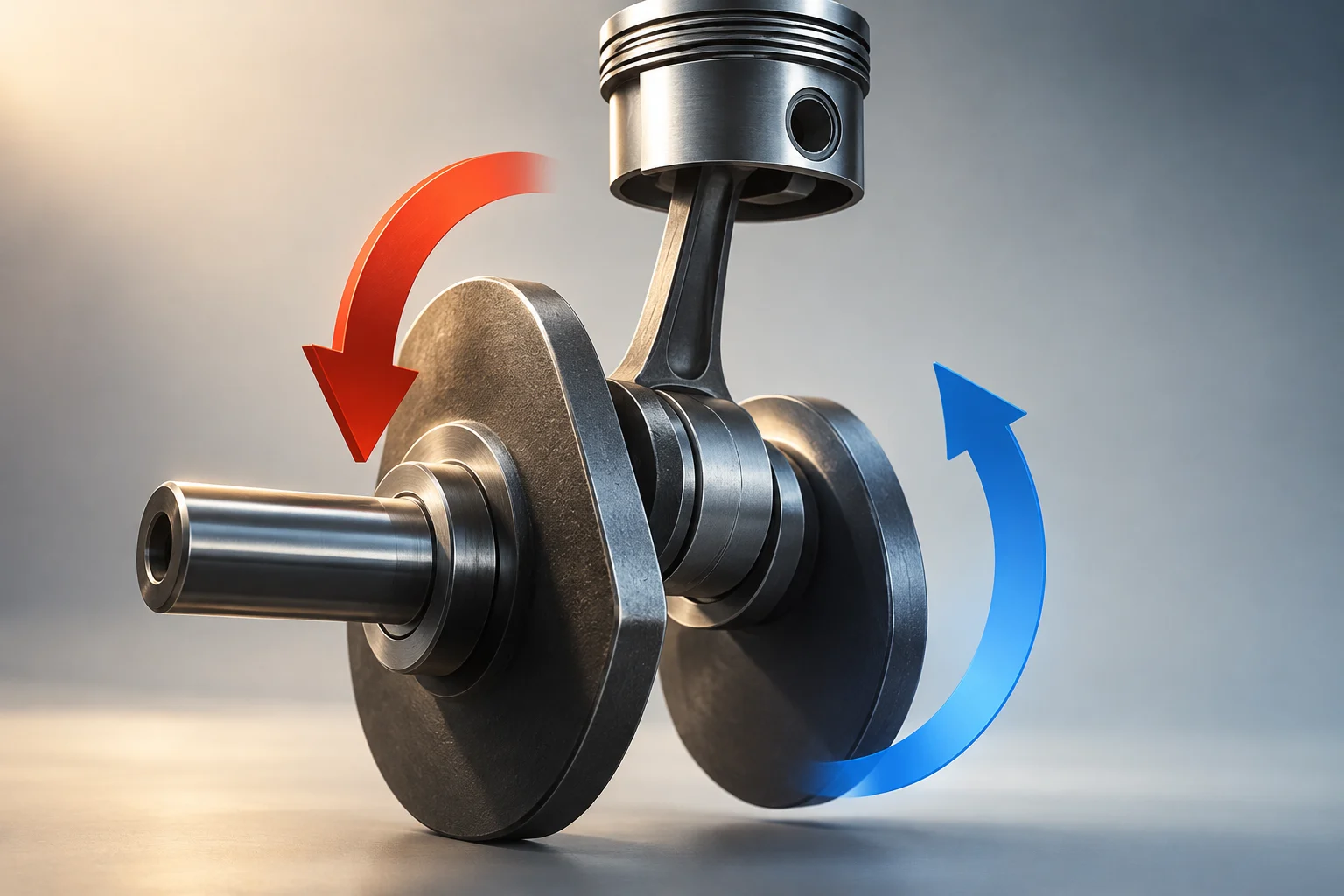
Engine torque is the twisting force an engine generates to move a vehicle. It is measured in newton metres (Nm) and represents the engine’s ability to produce rotational work. In general terms, torque is associated with pulling force, while power is associated with speed.
Although the two measurements are mathematically related, they are not interchangeable. An engine can produce high torque but limited power if it cannot rev highly, or vice versa. Understanding the difference is the first step to reading a specification sheet without assuming that more torque automatically means greater speed.
Section references: Par motor: qué es y cómo influye la fuerza oculta de los motores ↗ · Conceptos de potencia y par motor ¿qué es más importante? ↗
- Torque is measured in newton metres (Nm).
- Power is measured in metric horsepower (PS) or kilowatts (kW).
- Torque describes rotational force; power describes how quickly work is done.
Peak torque and the engine speed at which it is produced
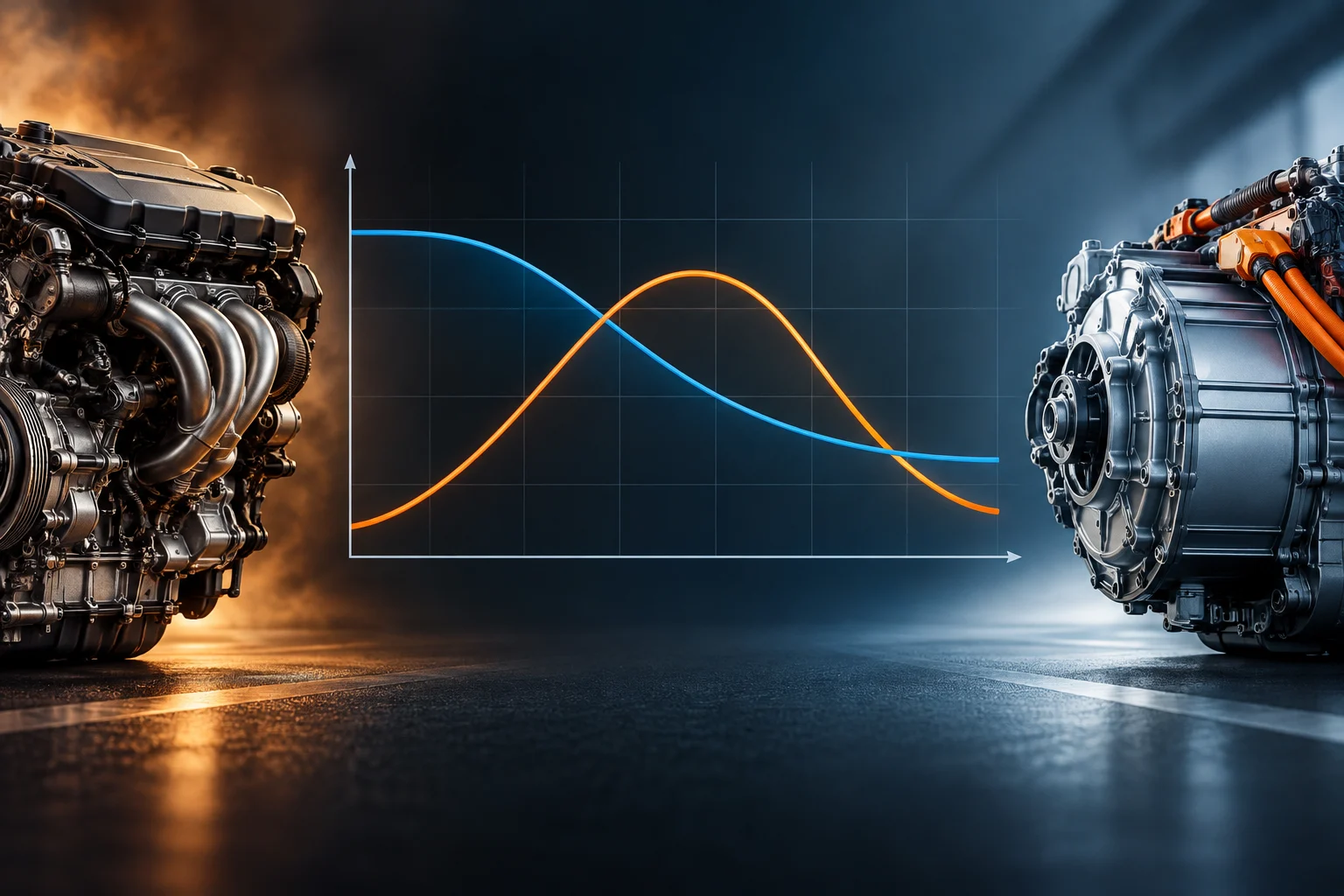
In internal combustion engines, torque is not constant. It depends on the amount of the air-fuel mixture entering the cylinders, which is regulated by the accelerator. The engine reaches peak torque at a specific engine speed. Below or above that point, rotational force decreases.
Electric motors work differently. In many electric motors, peak torque is available from 0 rpm, which explains the immediate surge when you press the accelerator.
Section references: El par motor y su reparto vectorial: qué es y para qué sirve ↗ · Par motor: qué es y cómo influye en el rendimiento del coche ↗
- Combustion engine: peak torque is reached within a specific rpm range (for example, 1,500–4,000 rpm).
- Electric motor: peak torque is available from a standstill (0 rpm).
- The accelerator regulates the air-fuel mixture in combustion engines and the current supplied to electric motors.
The role of the gearbox and final drive ratio
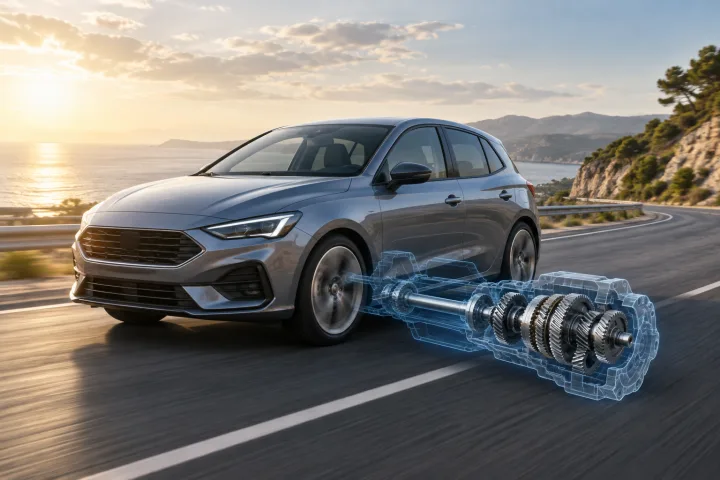
The torque reaching the wheels is not the same as the torque produced by the engine. The gearbox multiplies engine torque while reducing the rotational speed of the shafts. This is essential for getting the vehicle moving and accelerating from a standstill.
Gear ratios, the differential’s final drive ratio and physical factors such as vehicle weight and tyre grip determine how much force reaches the road. As a result, two cars with the same peak torque can feel very different under acceleration if their gearboxes or weights differ.
Section references: Par motor: qué es y cómo influye en el rendimiento del coche ↗
- The gearbox multiplies torque to help the vehicle pull away.
- The differential’s final drive ratio also affects traction.
- Vehicle weight and tyre grip limit how effectively torque can be used.
Why peak torque alone does not determine acceleration
A common misconception is that a higher peak torque figure guarantees quicker acceleration. In reality, acceleration depends on the entire torque curve, not just its highest point. An engine that produces strong torque at low revs responds well in city driving and when towing heavy loads because it does not need to rev highly to generate pulling force.
Power, however, is the limiting factor at high speeds. An engine with lower peak torque but more power may be faster at the top end than one with more torque but less ability to rev. The driving experience depends on how the torque curve, power and gearbox management work together.
Section references: Par motor: qué es y cómo influye la fuerza oculta de los motores ↗
- Low-rev torque improves response in town and when towing.
- Power is the key factor for top speed and acceleration at high revs.
- The full torque curve matters more than the peak figure on its own.
What to compare on a car’s specification sheet
When comparing cars, do not rely on peak torque alone. Check the engine speed at which peak torque is reached, the maximum power and its engine speed, and the vehicle’s weight. Diesel engines often produce more torque at low revs, which can be useful on trips with a load, while modern petrol engines may have a flatter torque curve.
In electric vehicles, peak torque is less useful for judging acceleration than it is in combustion-engine cars because torque is available across much of the normal operating range. Compare the power figures as well as the torque figures when assessing performance.
| Figure | Unit | What it tells you |
|---|---|---|
| Peak torque | Nm | The engine’s maximum rotational force |
| Engine speed at peak torque | rpm | The engine speed at which peak torque is produced |
| Maximum power | PS / kW | The engine’s ability to do work at high speed |
| Engine speed at maximum power | rpm | The engine speed at which maximum power is produced |
Section references: Potencia y par motor ¿cuáles son las diferencias? ↗
- Check the rpm figures for peak torque and maximum power.
- Compare vehicle weights to assess the torque-to-weight ratio.
- For electric vehicles, compare power as well as peak torque.
Limits of published figures
Manufacturers’ published torque and power figures are theoretical values measured on a test bench. They do not account for aerodynamic resistance, the vehicle’s actual weight with luggage or road conditions, so two cars with similar figures can feel quite different to drive.
Fuel-injection and electronic management technologies also allow modern engines to maintain useful torque across a wider rev range than older engines. This makes the full torque curve more relevant to everyday driving than the peak figure alone. A test drive or independent road test can help you assess real-world performance.
Section references: Par motor: qué es y cómo influye en el rendimiento del coche ↗
- Test-bench figures do not account for aerodynamic resistance or the vehicle’s actual loaded weight.
- The full torque curve is more useful than the peak figure on its own.
- Modern electronic engine management can widen the range of useful torque.
Is a car with more torque or more power better?
It depends on how you use it. Torque matters for traction, low-rev response and towing or carrying loads. Power matters for top speed and acceleration at high revs. For city and family driving, strong low-rev torque is often more useful than a very high peak-power figure.
Why do electric cars accelerate so quickly?
In many electric motors, peak torque is available from 0 rpm, allowing torque to be delivered from the moment the vehicle starts moving without needing the motor to rev up or change gear. This can create a strong surge off the line.
What does it mean when peak torque is reached at 1,500 rpm?
It means the engine produces its maximum rotational force at 1,500 revolutions per minute. Torque is lower below that engine speed and also falls above it. This figure helps show where the engine has the most pulling force available.