Car Wheelbase: Effects on Space and Handling
Wheelbase can be related to interior space and how a car responds, but its effect also depends on the design. Learn which measurements to compare before choosing.
Key points
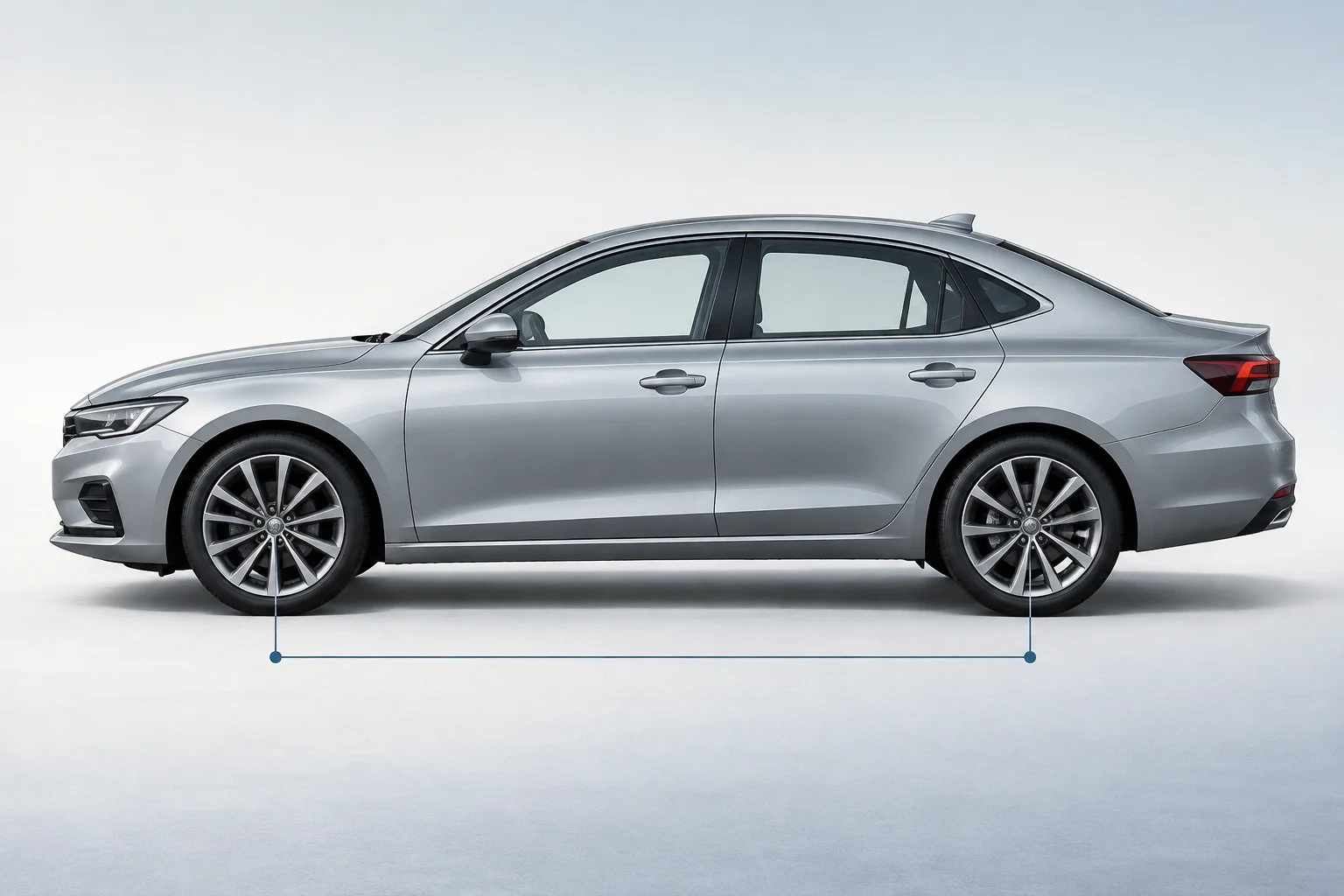
Wheelbase is the distance between the centres of a car’s front and rear wheels. It can affect cabin space and handling, but does not determine either on its own; compare it with the car’s dimensions and interior.
What wheelbase means
Wheelbase is the distance between the centres of the front and rear wheels. It is usually listed in a vehicle’s specifications in millimetres or metres. It is not the same as overall length, which also includes the bodywork that extends beyond the axles at the front and rear.
One useful way to interpret wheelbase is to compare it with the car’s overall length. If a relatively large share of the car’s length lies between the axles, there may be more room to arrange the cabin, and the overhangs may be shorter. Wheelbase alone does not show how much usable space a particular model offers.
Section references: Distancia entre ejes ↗ · Distancia entre ejes de un auto: espacio y estabilidad ↗
- Find the wheelbase in the specifications and make sure the figures refer to the same version and body style you are comparing.
- Do not confuse wheelbase with overall length: they measure different things.
Interior space: a clue, not a guarantee
A relatively long wheelbase compared with overall length can make more interior space possible, but the result depends on how the car’s structure is used and how each model is laid out. The figure does not guarantee more legroom or, by itself, tell you how comfortable the seats will be.
If you are comparing cars for carrying passengers, use wheelbase as a guide and check the cabin itself. Consider the seats you will use, the available legroom and the interior layout. Assess the boot separately, too: wheelbase alone does not indicate its capacity.
Section references: Distancia entre ejes ↗ · Distancia entre ejes de un auto: espacio y estabilidad ↗
Manoeuvring and on-road behaviour
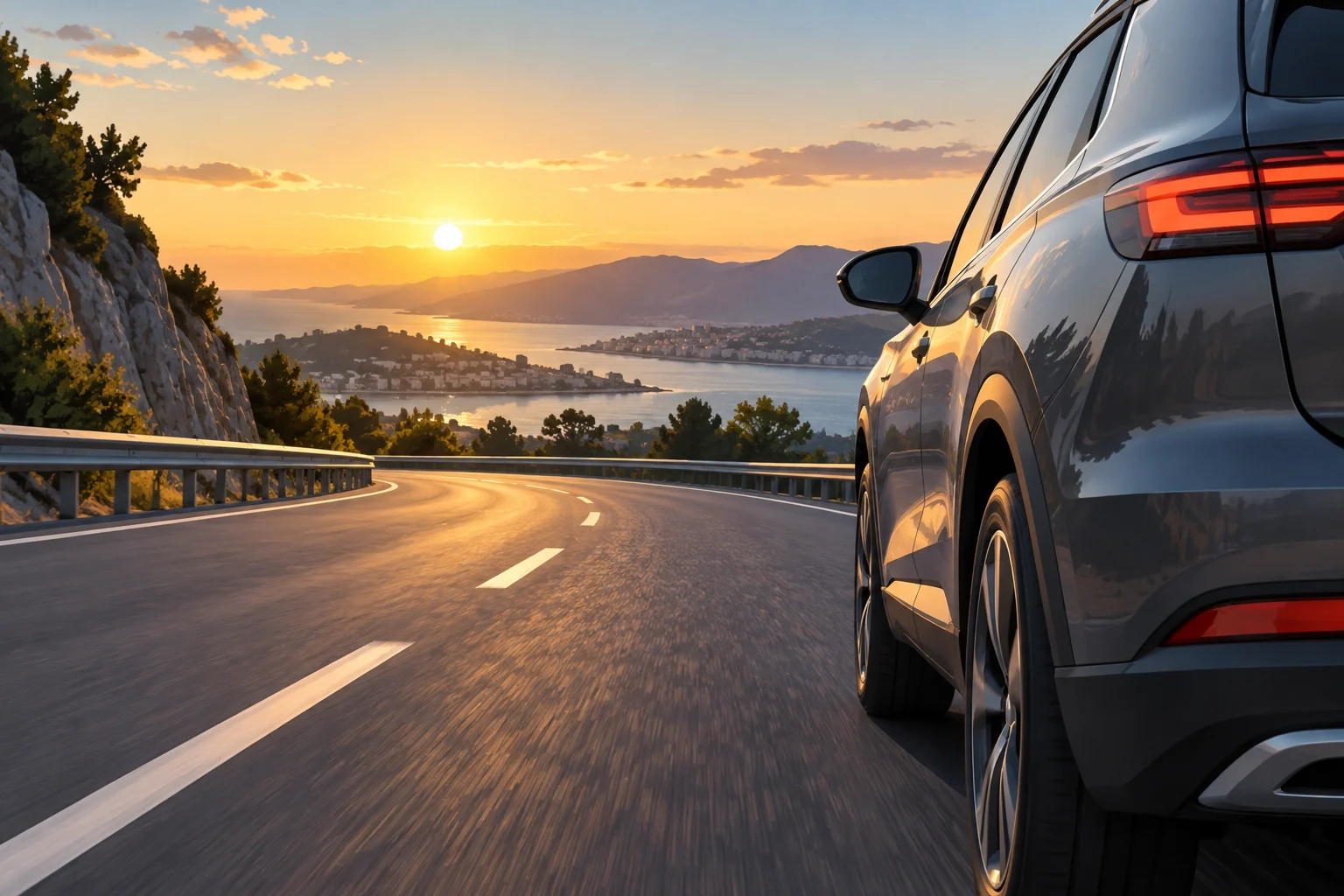
As a general tendency, a longer wheelbase can contribute to greater composure at high speeds, while a shorter one can favour agility in tight corners and winding sections. These are broad tendencies, not a complete account of how a particular car will behave: wheelbase alone does not determine its stability or response.
For city manoeuvres, do not use wheelbase as a substitute for turning circle. Steering geometry and vehicle design matter too; check the model’s turning-circle figure and consider whether its dimensions suit the parking spaces and streets you use.
Section references: Qué es la distancia entre ejes o batalla y cómo influye en la conducción ↗
What to compare before choosing
Wheelbase helps explain a car’s proportions, but choosing one requires looking at several measurements and checking whether its space meets your needs. Compare equivalent versions, and do not draw conclusions about comfort, stability or ease of use from a single figure.
Section references: Qué es la distancia entre ejes o batalla y cómo influye en la conducción ↗ · Distancia entre ejes de un auto: espacio y estabilidad ↗
- Overall length: indicates the car’s exterior size and helps you check whether it will fit in your parking space.
- Width: consider it if parking space or narrow streets are a concern.
- Turning circle: a more useful figure than wheelbase when comparing the space needed to turn.
- Cabin and boot: check the seats, layout and capacity you need directly.
- Design and setup: suspension, wheels, chassis, weight, height and track width also affect handling.
Where is wheelbase measured?
Between the centres of the front and rear wheels. Vehicle specifications usually give it in millimetres or metres.
Does a longer wheelbase mean more legroom?
It can make more interior space possible, but does not guarantee it. The layout and use of the car’s structure matter too, so compare the cabin of the specific model.
Does a long wheelbase always improve stability?
No. It can contribute to composure at high speeds as a general tendency, but handling also depends on the suspension, wheels, chassis, weight, height and track width.