Mild hybrid, full hybrid, or plug-in: what changes in daily use
A practical guide to distinguishing electrification levels by what the electric motor can do and how the battery charges, with specific criteria to decide based on your routine and charging availability.
Key points
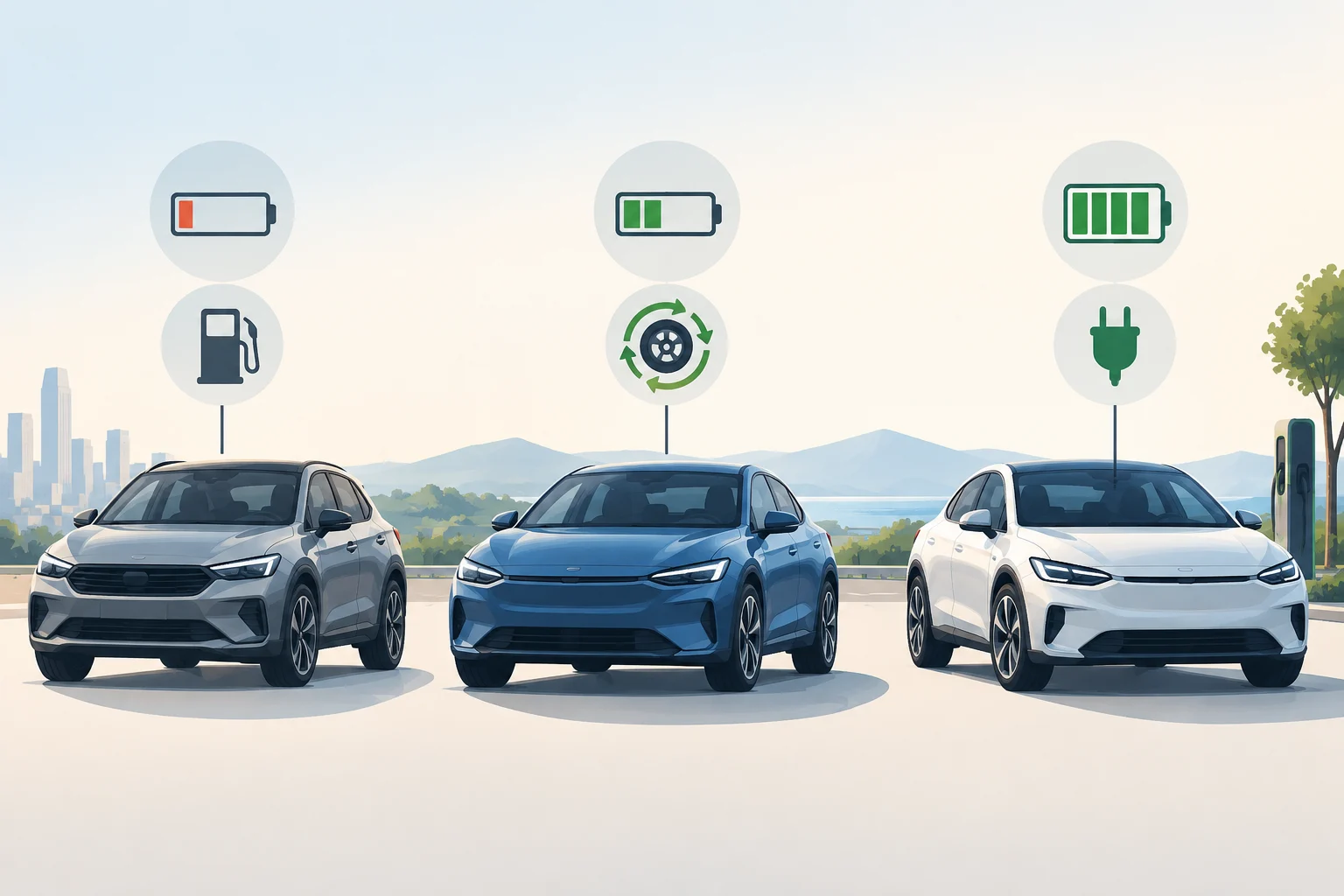
The essential difference between mild hybrid, full hybrid, and plug-in hybrid lies in the electric motor's ability to move the vehicle and the charging method. Mild hybrids only assist the combustion engine, full hybrids allow short electric driving without a plug, and plug-in hybrids offer greater electric range but require external charging to maximize their benefits.
Summary of essential differences
When comparing electrified cars, the key is not just the DGT label, but what the electric motor can do for you and how the battery is charged. A mild hybrid (MHEV) cannot move the car on its own; its electric motor only assists the combustion engine. A full hybrid (HEV) can drive in electric mode for short distances but does not require a plug. A plug-in hybrid (PHEV) offers the greatest electric range but requires external charging to fully exploit its advantages.
Section references: Guía práctica de El Motor sobre tipos de electrificación ↗
- Mild hybrid: occasional assistance, no 100% electric driving.
- Full hybrid: brief electric driving, automatic charging.
- Plug-in hybrid: greater electric range, requires a plug.
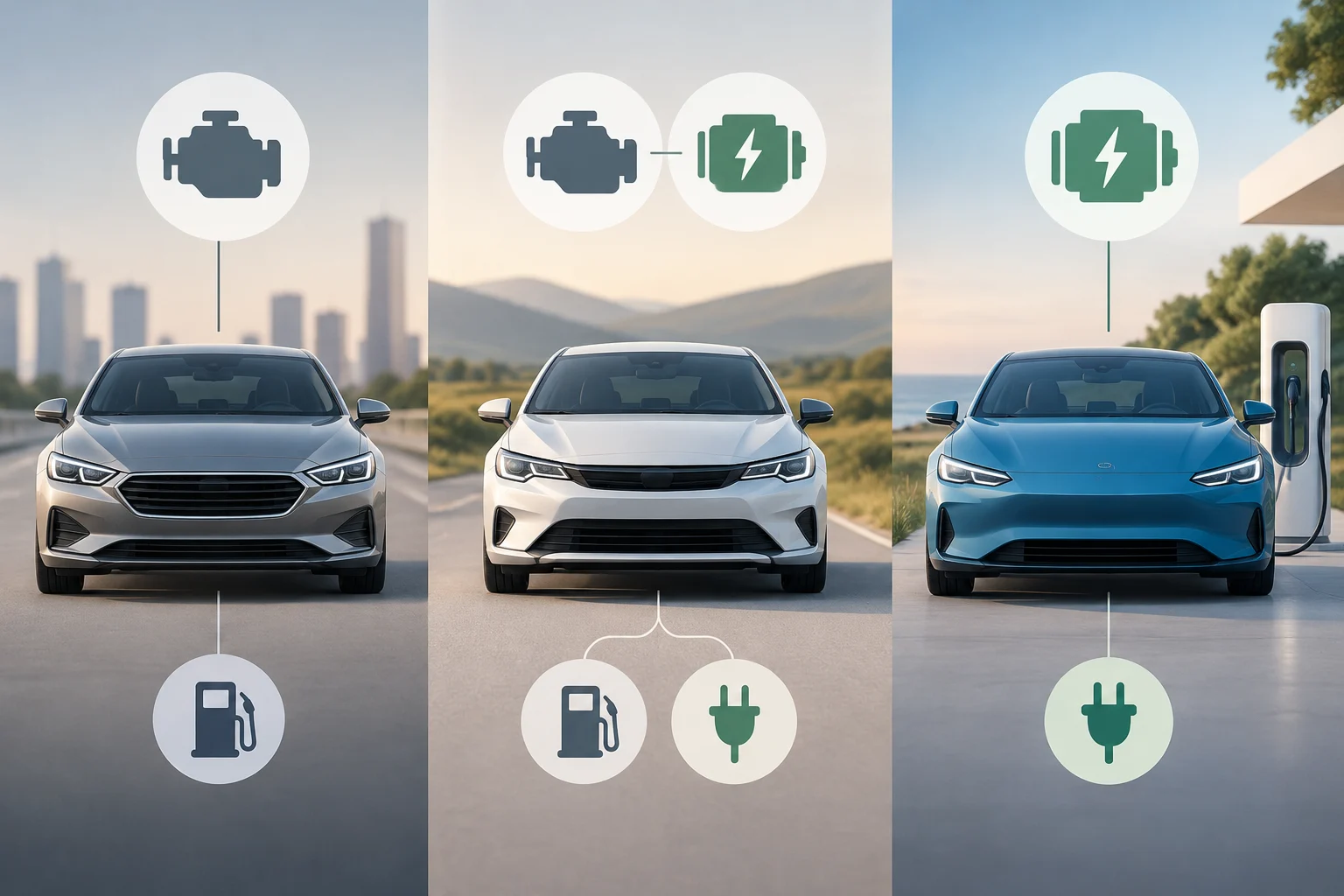
What the electric motor can do in each type
In a mild hybrid, the electric motor usually has between 10 and 20 hp and is powered by a 12 or 48-volt battery. Its function is to help with acceleration and starting, but it is not capable of moving the vehicle in 100% electric mode. The gasoline engine works permanently.
In a full hybrid, the electric motor is more powerful and the battery is larger. This allows driving in electric mode for short distances, especially in the city, although the range is usually around 5 kilometers. The Volkswagen Golf Hybrid, for example, can drive in electric mode up to about 60 km/h if there is charge, although it does not homologate a specific electric range.
In a plug-in hybrid, the battery is significantly larger (between 8 and 18 kWh) and the electric motor can move the car for dozens of kilometers without consuming fuel. Most of these models exceed 50 km of electric range.
| Type | Typical electric power | Battery | Electric range |
|---|---|---|---|
| Mild hybrid (MHEV) | 10-20 hp | 12-48 V | 0 km (assistance only) |
| Full hybrid (HEV) | Variable | Varies by model | ~5 km (approximate) |
| Plug-in hybrid (PHEV) | Variable | 8-18 kWh | >50 km |
Section references: Neomotor: diferencias entre MHEV, HEV y PHEV ↗ · Motor16: Volkswagen Golf híbrido HEV 2026 ↗
- MHEV: 10-20 hp electric motor, 12/48V battery.
- HEV: limited electric range (~5 km), no plug.
- PHEV: electric range >50 km, 8-18 kWh battery.
How each battery is charged and its impact on routine
Charging is the factor that changes most in daily life. Mild hybrids and full hybrids charge themselves automatically through regenerative braking and, in some cases, with the combustion engine. You never need to plug them in.
Plug-in hybrids, on the other hand, require external charging to optimize their consumption. If you do not plug them in frequently, they function like a conventional hybrid but with the extra weight of a large battery, which can increase fuel consumption.
Section references: Renault España: diferencias entre mild hybrid, full hybrid y hyper hybrid ↗ · BYmyCAR: diferencias entre híbrido y híbrido enchufable ↗
- MHEV and HEV: automatic charging, no external infrastructure.
- PHEV: requires a plug to maximize efficiency and electric range.
Practical comparison: trips, charging, and long journeys
If your use is mainly urban with short trips, a full hybrid may be sufficient to drive in electric mode without complications. If you make long trips and do not have access to charging, a mild hybrid or an HEV is more practical than an unplugged PHEV.
If you have access to charging at home or at work and want to minimize fuel use, a plug-in hybrid is the most efficient option. However, if you cannot plug it in regularly, its advantages are significantly reduced.
Section references: Guía práctica de El Motor sobre tipos de electrificación ↗
- Urban use: HEV or plugged-in PHEV.
- Long trips without charging: MHEV or HEV.
- Maximum efficiency with charging available: PHEV.
What to check in the technical sheet
To identify the exact version of a car, review the technical sheet. Look for the battery capacity in kWh, the electric motor power in hp or kW, and whether the manufacturer homologates an electric range. A mild hybrid will not have a homologated electric range. An HEV will have a low range, typically around 5 km, though this varies by model. A PHEV will have a range greater than 50 km and a charging port.
Section references: Neomotor: diferencias entre MHEV, HEV y PHEV ↗
- Battery capacity (kWh).
- Electric motor power (hp/kW).
- Homologated electric range (km).
- Presence of a charging port.
DGT label and tax advantages
In Spain, mild hybrids and full hybrids obtain the ECO label from the DGT. Plug-in hybrids that meet the requirements established by the DGT obtain the CERO label. These labels can imply advantages in low-emission zones and parking, although specific benefits vary by locality.
Section references: Guía práctica de El Motor sobre tipos de electrificación ↗
- MHEV and HEV: ECO label.
- PHEV (if it meets requirements): CERO label.
Conclusion: choose according to your routine
The choice between mild hybrid, full hybrid, and plug-in hybrid depends on your driving routine and your charging possibilities. If you cannot plug in the car, an HEV is more practical than a PHEV. If you have access to charging and want to maximize efficiency, a PHEV is the best option. An MHEV is an intermediate option that offers electric assistance without charging complications.
Section references: BYmyCAR: diferencias entre híbrido y híbrido enchufable ↗
- Without charging: MHEV or HEV.
- With charging: PHEV.
- Mixed use: HEV or plugged-in PHEV.
Can a mild hybrid move on its own in electric mode?
No. The electric motor of a mild hybrid only assists the combustion engine and is not capable of moving the vehicle in 100% electric mode.
Does a plug-in hybrid need to be charged to be useful?
Yes. To optimize its consumption and take advantage of its electric range, a plug-in hybrid must be charged frequently in a plug or charging point.
What DGT label does each type of hybrid have?
Mild hybrids and full hybrids obtain the ECO label. Plug-in hybrids that meet the DGT requirements obtain the CERO label.
What is the typical electric range of a full hybrid?
The electric range of a full hybrid is usually around 5 kilometers, although it can vary depending on the model.
What happens if you do not plug in a plug-in hybrid?
If you do not plug in a plug-in hybrid, it functions like a conventional hybrid but with the extra weight of a large battery, which can increase fuel consumption.