Wide car for a narrow parking space: what to measure before buying
A practical guide to calculating whether a vehicle fits in a garage: official dimensions, real measurement of the space, and maneuvering factors that determine the purchase.
Key points
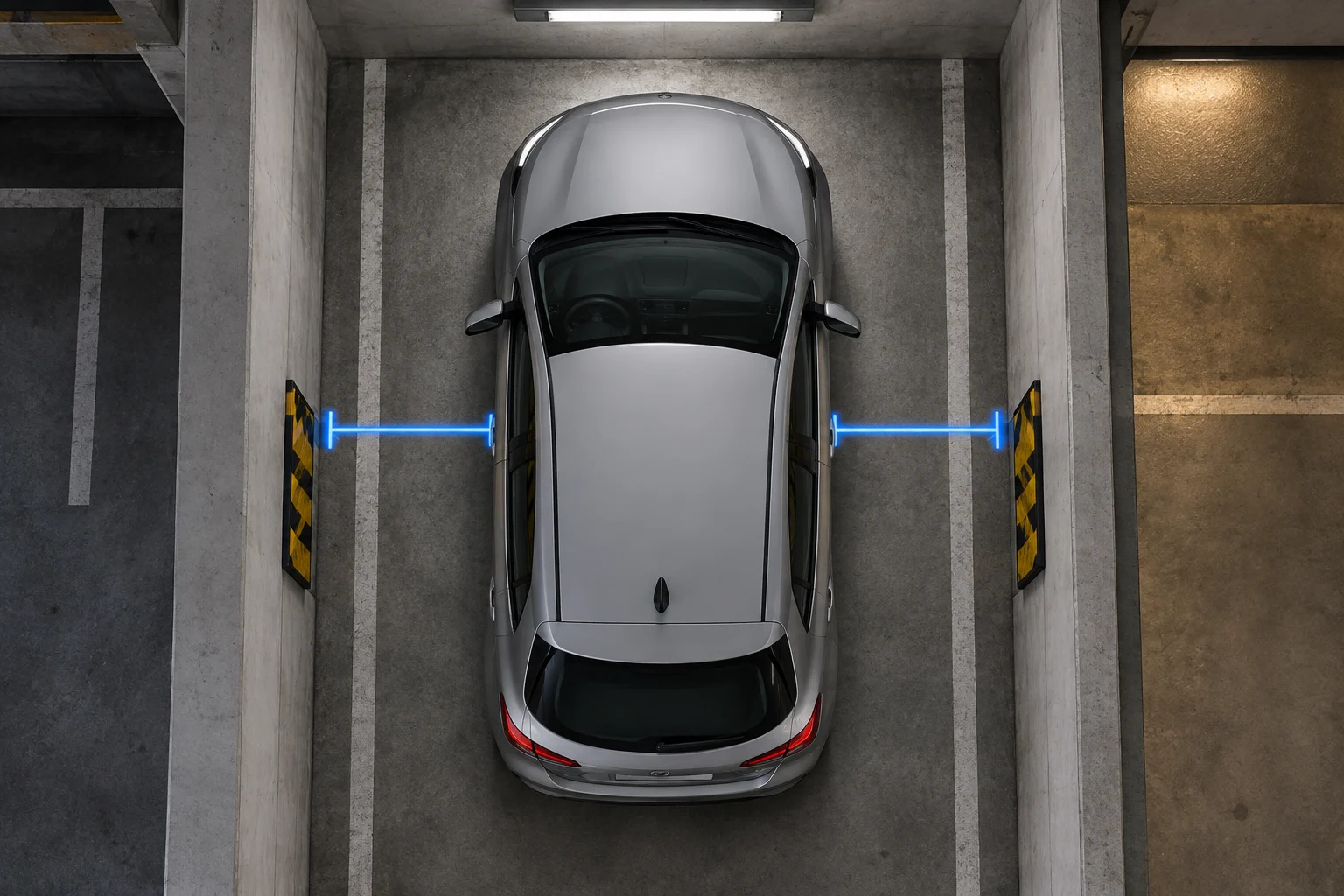
To determine if a car fits in a narrow parking space, subtract the body width (excluding mirrors) from the measured usable width of the garage. Also verify the turning diameter and door opening space, as maneuvering depends on the ramp and obstacles.
What width the manufacturer publishes and what the figure includes
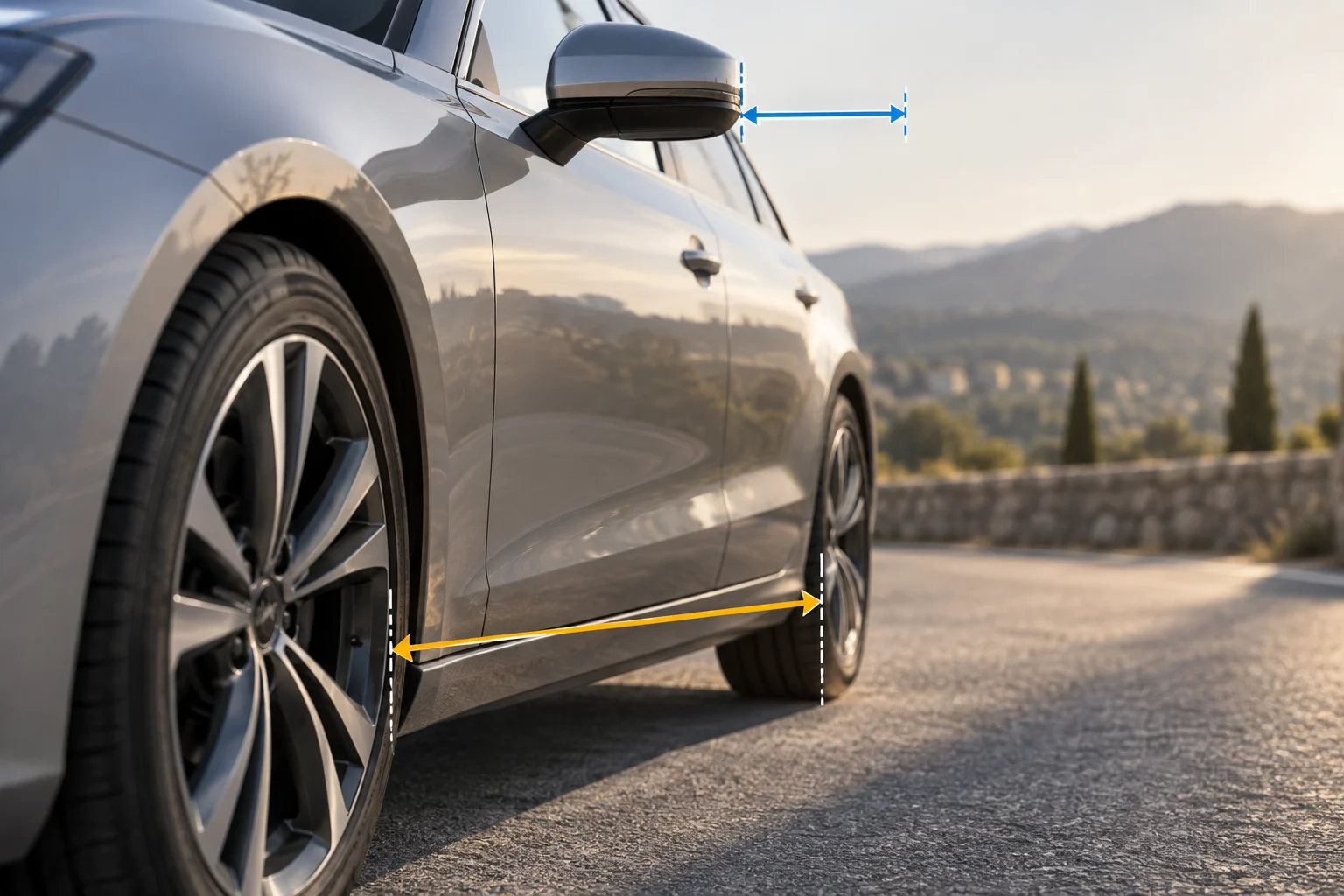
The first doubt when buying a car for a small garage is which figure from the technical sheet to use. Manufacturers publish the body width without the mirrors. This is the relevant measure for calculating the space the vehicle occupies once parked in the space.
However, the width with the mirrors deployed is crucial for access. If the garage door or the aisles are narrow, the mirrors can prevent entry or the initial turn. Therefore, it is necessary to distinguish between the parking measure and the maneuvering measure.
Section references: Motor28: Cómo saber si un coche cabe en tu garaje ↗
- Body width (without mirrors): to calculate the lateral space in the parking spot.
- Width with mirrors: to verify the passage through the door and turns.
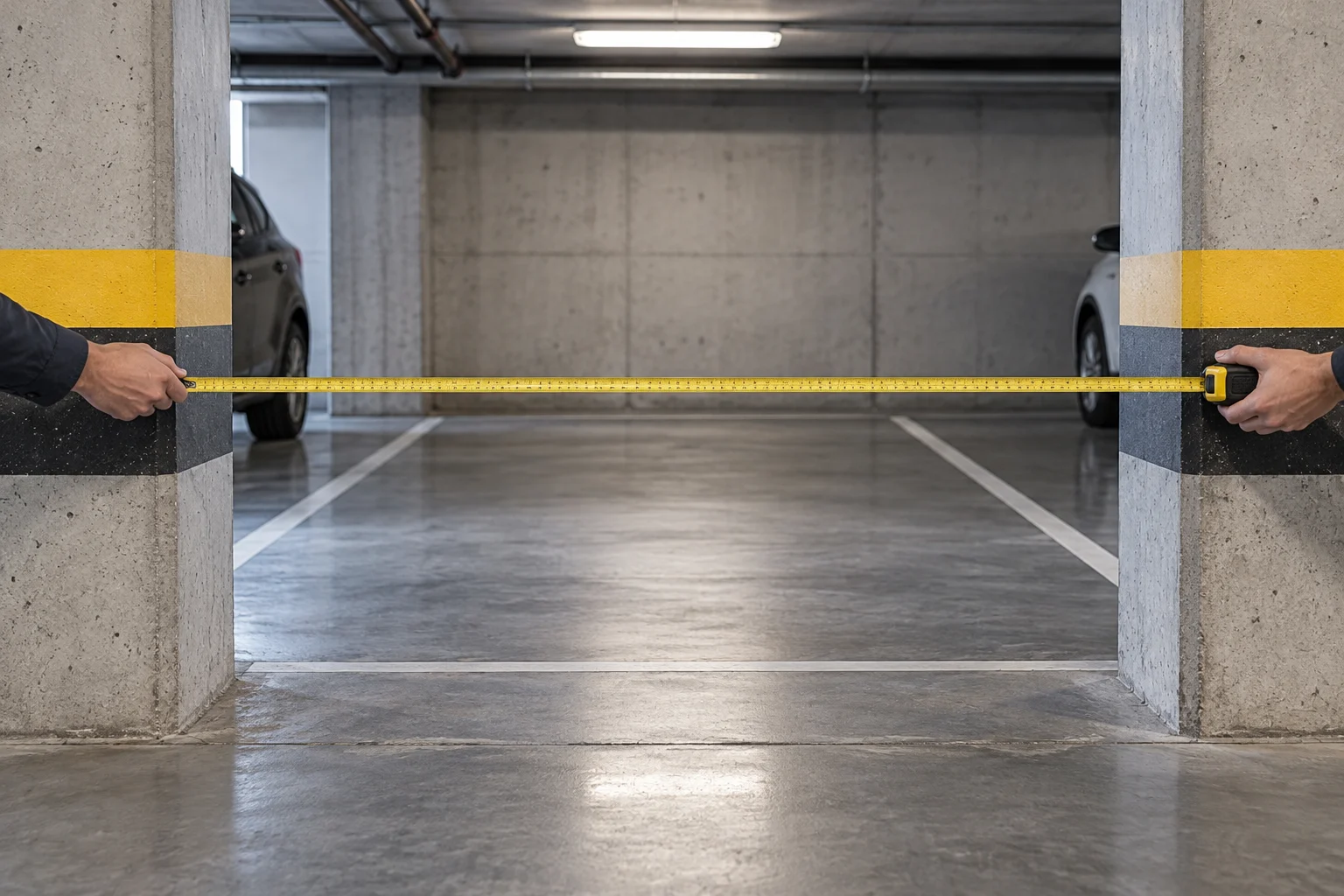
How to measure the space between walls, columns, and other obstacles
Parking spaces in Spain usually have reference dimensions, such as 2.20 meters wide by 4.50 meters long, according to the Technical Building Code. However, many spaces in old buildings or private garages can be narrower or have irregularities. Therefore, it is fundamental to measure the real space before buying.
To obtain the real measure, use a tape measure to measure the shortest distance between the side walls or columns. You must subtract any obstacle that protrudes, such as pipes, inspection boxes, or pillars. The indicative formula for the total lateral margin is: usable width of the space minus the body width of the car.
| Element | Typical measure (m) |
|---|---|
| Standard space (CTE) | 2.20 x 4.50 |
| Kia Picanto (width) | 1.60 |
| Citroën C1 (width) | 1.62 |
| Peugeot 108 (width) | 1.62 |
| Fiat 500 (width) | 1.63 |
| Hyundai i10 (width) | 1.68 |
Section references: Carplus: Coches para garaje estrecho ↗ · Autos Molière: Comparador de tamaños de coches ↗ · Motor28: Cómo saber si un coche cabe en tu garaje ↗
- Measure the minimum distance between lateral obstacles.
- Subtract the car's body width from the measured usable width.
- The result is the total margin available for both sides.
Mirrors, doors, and space needed to get in and out
Even if the car fits in the space, you must ensure that you can open the doors safely. If the lateral margin is very reduced, the doors can hit the wall or the neighboring car. Since the necessary space depends on the specific geometry of the vehicle and the obstacles of the space, the best practice is to physically check the door opening in the specific space before finalizing the purchase.
In addition, consider the height of the mirrors and their opening angle. In very narrow spaces, folding mirrors can be an advantage, as they reduce the total width of the vehicle during the entry and exit maneuver.
Section references: Motor28: Cómo saber si un coche cabe en tu garaje ↗
- Verify that the front and rear doors open without touching obstacles.
- Folding mirrors facilitate passage in narrow accesses.
- Check the real space for occupant movement in the parking spot.
Access, ramp, and turn: why the space is not the only measure
The entry maneuver into a garage is not linear. When entering at an angle, the body sweeps a larger space than the simple subtraction of widths. The vehicle's turning diameter must be verified in relation to the garage obstacles, such as the access ramp, aisle curves, and columns.
If the ramp is steep or the turn is tight, a longer car or one with a larger turning diameter can scrape the curbs or walls, even if the space itself is wide enough. Therefore, it is recommended to perform a maneuver test with the vehicle before finalizing the purchase, if possible.
Section references: Motor28: Cómo saber si un coche cabe en tu garaje ↗
- The turning diameter determines the space needed to maneuver.
- The ramp and access curves can be more restrictive than the space.
- Test the entry and exit maneuver before buying.
How to compare the dimensions of the unit before deciding
Before buying, compare the official dimensions of the specific model you are interested in. Measures can vary slightly between generations or versions. Use car size comparators to obtain precise data on width, length, and turning diameter.
If the calculated lateral margin is tight, consider a more compact model. Vehicles like the Kia Picanto (1.60 m), the Citroën C1 (1.62 m), or the Peugeot 108 (1.62 m) are popular options for narrow spaces, while the Hyundai i10 (1.68 m) requires a bit more space. The final decision should be based on the real measurement of the space and the maneuver test with the specific vehicle.
Section references: Carplus: Coches para garaje estrecho ↗ · La Vanguardia: Coches para plaza de parking pequeña ↗ · Autos Molière: Comparador de tamaños de coches ↗
- Verify the exact measures of the specific unit.
- Compare compact models if the margin is tight.
- Consider the turning diameter and total length.
What width measure should I use to know if the car fits in the space?
For parking, use the body width without mirrors. For access and maneuvering, consider the width with the mirrors deployed.
How much lateral margin do I need to open the doors?
The necessary space depends on the car's geometry and the obstacles of the space. It is recommended to physically check the door opening in the specific space before buying.
Is it enough for the space to be 2.20 meters wide?
It depends on the car and the maneuver. A car 1.60 m wide leaves 60 cm of total margin, while one 1.68 m wide leaves 52 cm. The final viability is determined by measuring the real space and testing the entry and exit maneuver.