 Cars
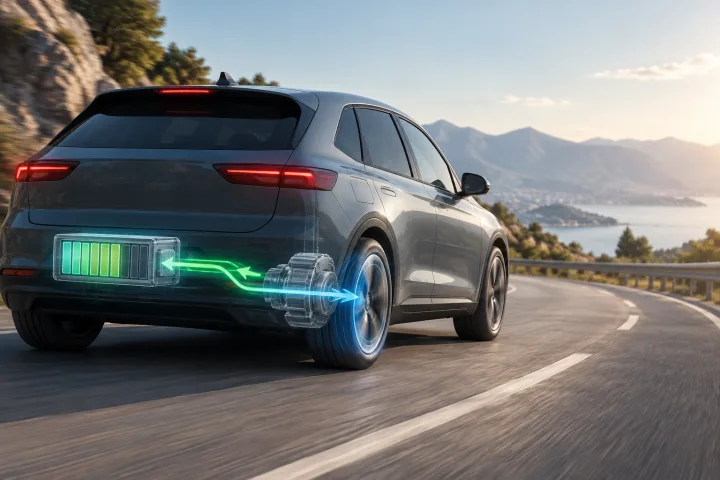
Regenerative braking: what energy it recovers and how it works
What energy regenerative braking transforms, how it is stored in the battery, and what the examples from Porsche and Dacia show.
Read articleGoogle Analytics helps us understand how the magazine is used. It is loaded only if you accept. You can browse without enabling it. Cookies.
The recovery of some of the energy of motion by an electric machine acting as a generator during deceleration.
Reviewed 05.10.2026 · Version 2 · Scope: General
The recovered energy can be stored in the battery. The amount and available intensity depend on the system and its conditions; not all the energy used during a trip is recovered.
In an energy example, recovering some of the energy used to accelerate does not eliminate losses in the system or make the trip consume no energy.
Helps explain why deceleration is part of the energy balance and how to interpret descriptions of electric driving.
It does not always replace the friction braking system. Energy recovery and unlimited range are incompatible concepts.
CarsWhat energy regenerative braking transforms, how it is stored in the battery, and what the examples from Porsche and Dacia show.
Read article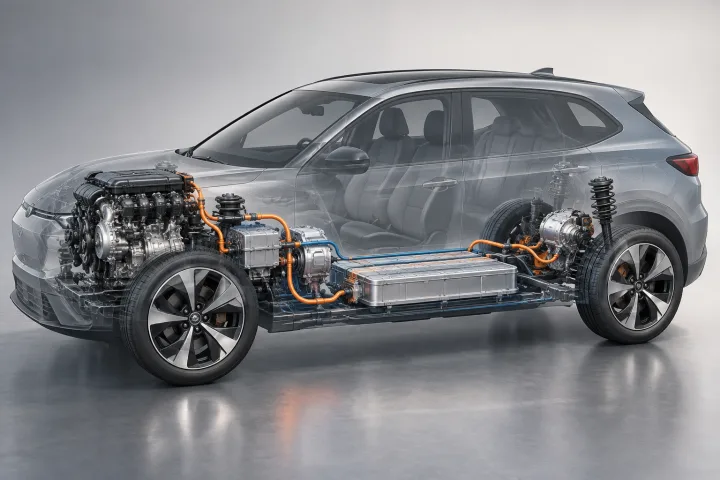 Cars
Not all hybrids transmit power in the same way. We explain the differences between series, parallel and power-split systems, and how they differ from mild, full and plug-in hybrids.
Read article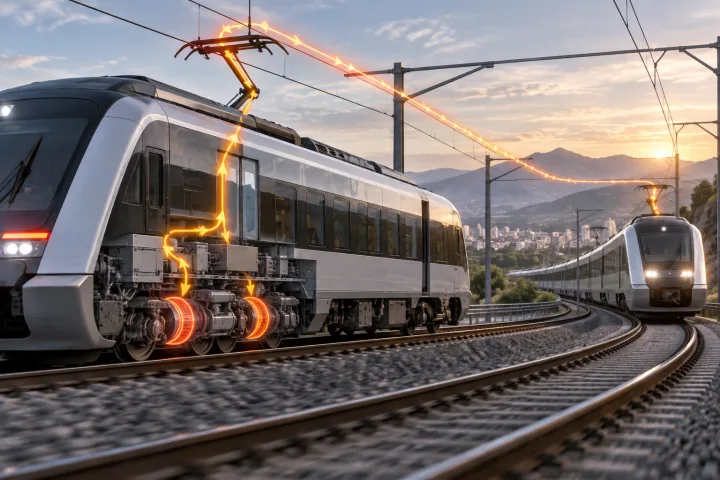 Rail & special vehicles
What happens to the electricity generated when a train brakes, and why recovering it depends on the grid, other trains and the equipment installed.
Read article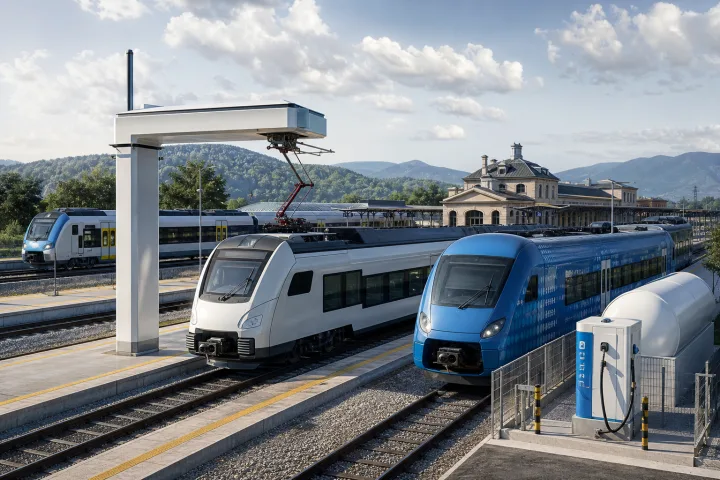 Rail & special vehicles
Non-electrified regional lines do not have a single technological answer: battery, hydrogen, hybrids and modern diesel depend on the route, the energy and the available infrastructure.
Read article