Fuel‑powered car range: how to estimate real distance
Learn how to calculate a gasoline car’s range using tank capacity and real fuel consumption, and plan refuels with safety margins.
Key points
Fuel‑powered cars estimate range by dividing tank capacity by average fuel consumption. The figure is a dynamic projection that changes with driving style, load and road conditions.
What range means and its limits
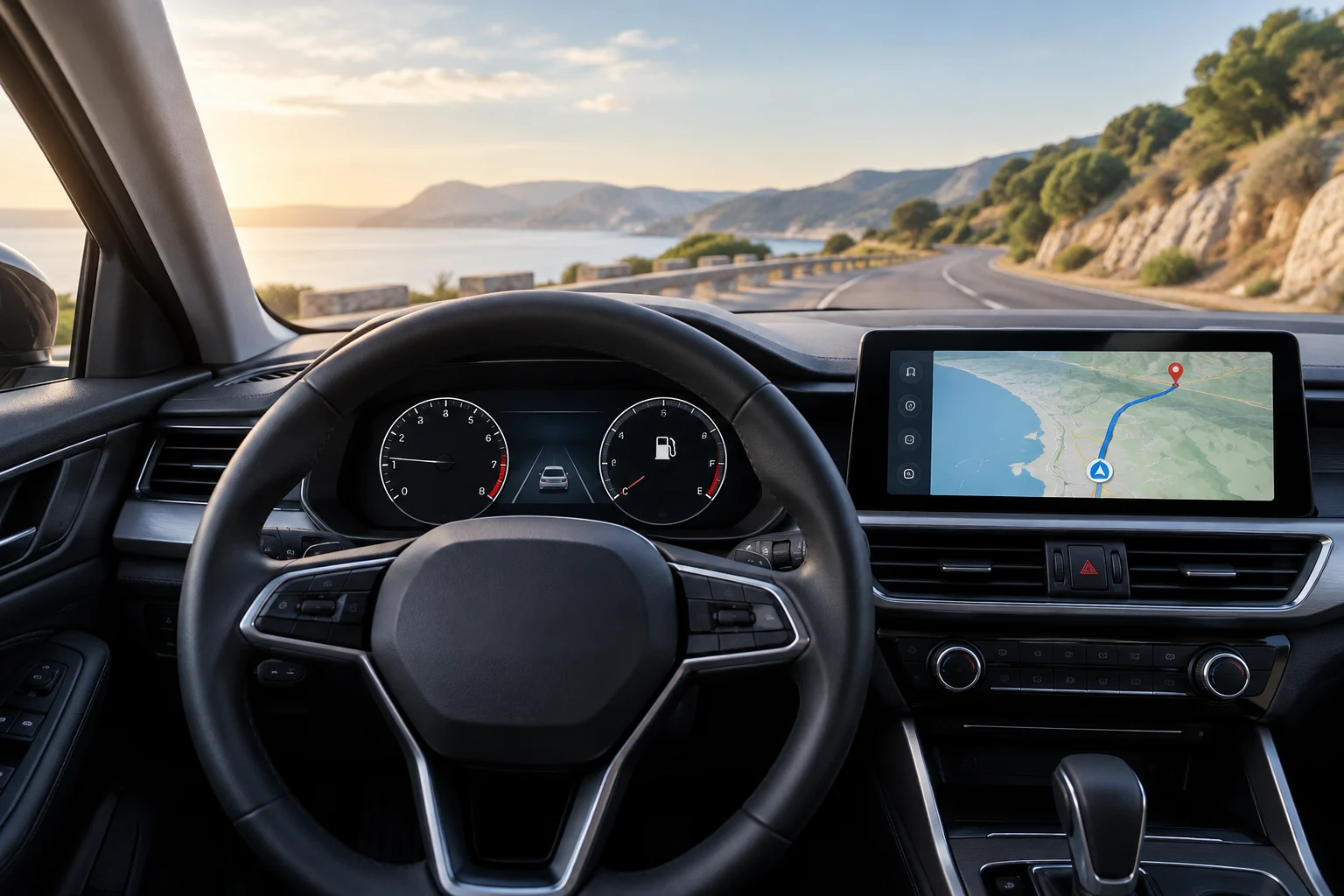
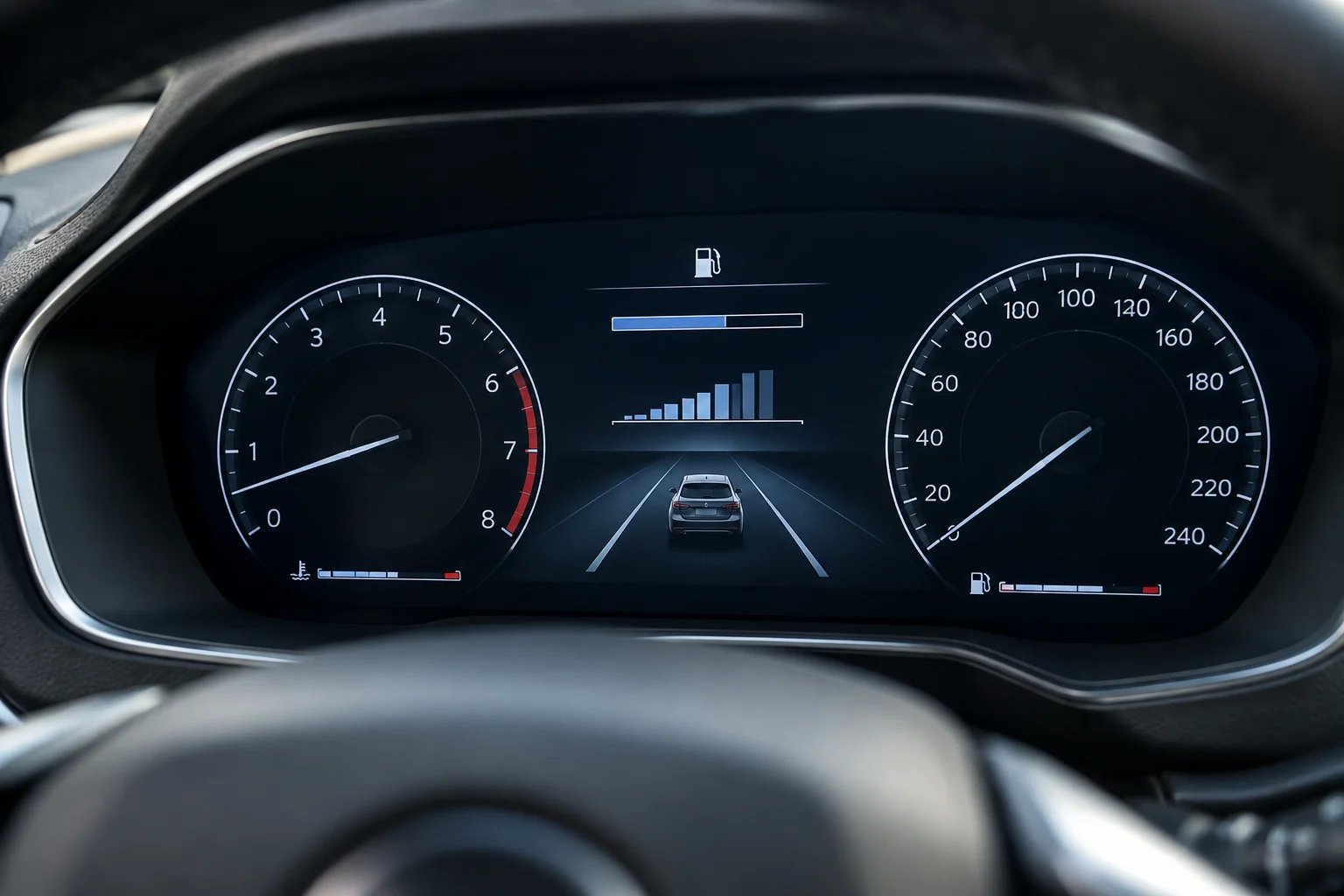
The range of a gasoline vehicle represents the estimated distance it can travel with the fuel available in its tank. However, it is not a fixed or guaranteed distance; rather, it is a dynamic projection that the car’s onboard computer calculates in real time.
The system averages consumption over recent kilometres and divides it by the estimated useful volume remaining in the tank. Thus, the figure constantly adapts to the driver’s style and road conditions, offering a more realistic estimate than static technical data.
Section references: KM77: Cómo calcula el coche cuánta gasolina queda y la autonomía restante ↗
How to estimate range with capacity and consumption
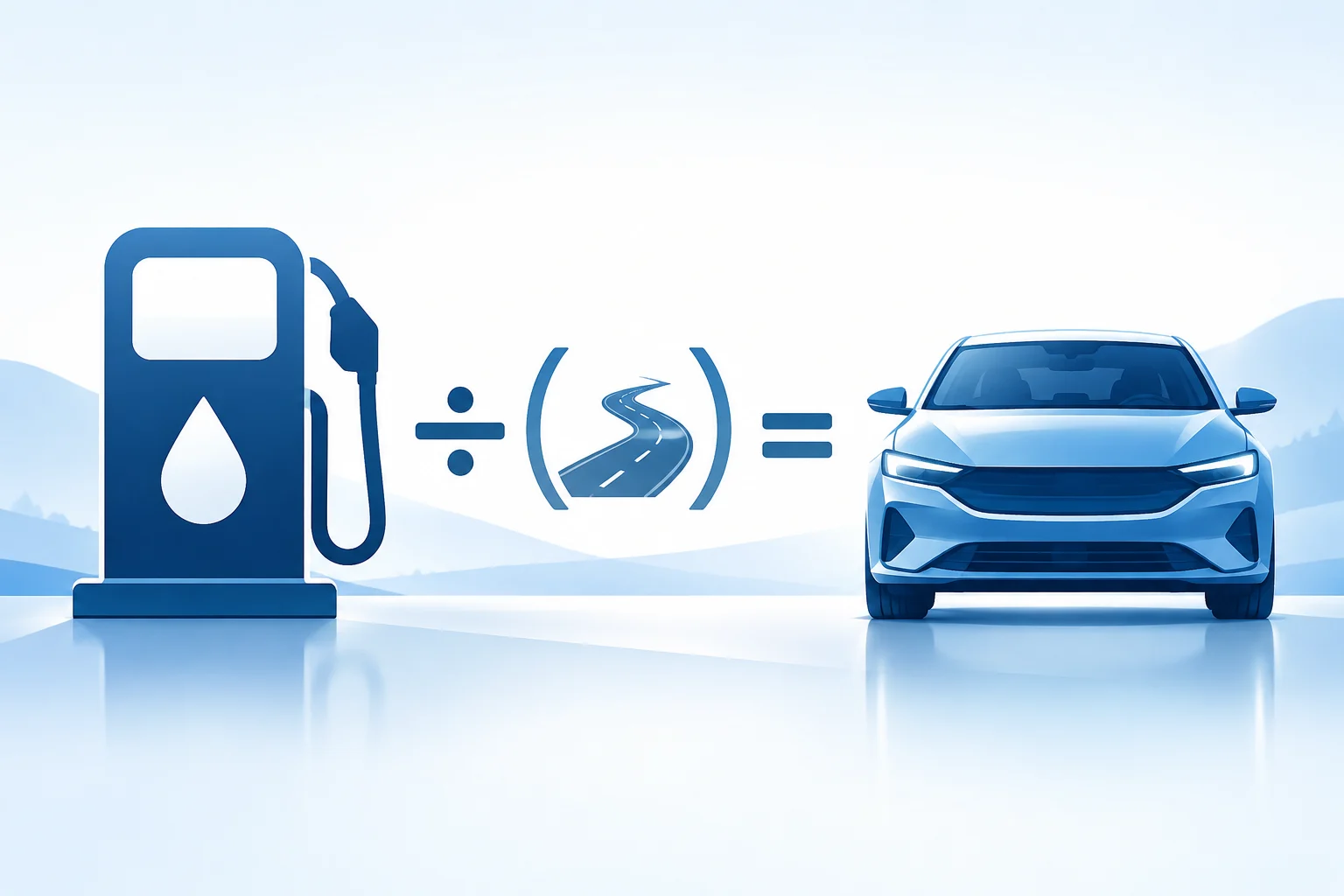
To manually estimate range, you need two key figures: the total tank capacity (in litres) and the vehicle’s average consumption (litres per kilometre). The basic formula is to divide tank capacity by consumption per kilometre.
For example, if a car has a 50‑litre tank and an average consumption of 0.06 l/km (equivalent to 6 l/100 km), the estimated range would be about 833 kilometres (50 ÷ 0.06). This calculation provides a solid basis for planning fuel needs on a trip.
Section references: Repsol: Aprende cómo calcular el consumo de combustible de tu coche ↗
- Tank capacity: check the vehicle’s technical data sheet.
- Average consumption: measure it using the full‑tank‑to‑full‑tank method.
- Calculation: Range (km) = Capacity (l) ÷ Consumption (l/km).
WLTP consumption versus real consumption
The WLTP‑approved consumption is an international standard that simulates vehicle usage conditions. While it approaches reality, it is usually lower than real consumption because it does not account for external factors such as vehicle condition or a driver’s specific style.
For more reliable data, it is recommended to measure real consumption. The most accurate method is full‑tank‑to‑full‑tank: fill the tank, drive a distance, then refill. The litres added at the second fill divided by kilometres driven, multiplied by 100, gives real consumption in l/100 km.
Section references: Renault España: Cómo calcular el consumo de un coche ↗ · Drivvo: Cómo calcular el consumo de combustible ↗
- WLTP: an indicative and standardised figure, useful for comparing models.
- Real consumption: reflects actual vehicle use and driver behaviour.
- Full‑tank method: avoids errors from partial refills.
Factors that modify the estimate
Several elements directly influence fuel consumption and, therefore, final range. Driving style is one of the most decisive: harsh accelerations and hard braking increase energy use.
Other relevant factors include route type (city typically consumes more than steady highway speed), vehicle load, tyre pressure and use of electrical systems such as air conditioning. A compact gasoline car usually has an average consumption between 5 and 7 l/100 km, but this figure can vary significantly under different conditions.
Section references: Renault España: Cómo calcular el consumo de un coche ↗ · Repsol: Aprende cómo calcular el consumo de combustible de tu coche ↗
- Driving style: smooth accelerations and braking.
- Route type: city, highway or motorway.
- Load and aerodynamics: extra weight and wind drag.
- Maintenance: tyre pressure and engine condition.
- Climate control: use of air conditioning or heating.
Planning refuels and safety margin
To plan fuel for a trip, multiply total distance by average consumption in litres per kilometre. This gives the litres needed to cover the route. It is prudent to add an extra margin if you expect mountainous terrain, heavy traffic or adverse weather.
Avoid running the tank to its minimum. Maintaining a safety margin allows you to react to unforeseen events such as detours or long queues at service stations, and protects the vehicle’s fuel injection system from potential damage due to lack of lubrication.
Section references: Repsol: Aprende cómo calcular el consumo de combustible de tu coche ↗
- Calculate needed litres: Distance (km) × Consumption (l/km).
- Add a 10‑15 % margin for adverse conditions.
- Avoid driving with the tank below one‑quarter capacity.
Why does the onboard computer’s range estimate change constantly?
Because the system averages consumption over recent kilometres. If you drive more aggressively or climb hills, average consumption rises and the estimated range drops dynamically to reflect that reality.
Which is more reliable, WLTP consumption or my measured one?
Your measured consumption (full‑tank‑to‑full‑tank) is more reliable for your current situation, as it reflects your driving style and the vehicle’s real condition. WLTP is useful for comparing models but remains an indicative estimate.
How does air conditioning affect range?
Using air conditioning adds load to the engine, increasing fuel consumption. In summer this can noticeably reduce estimated range, especially in city driving or with frequent stops.