How to Pack Luggage on a Motorcycle for a Trip
Balanced weight distribution and secure fastening help you travel with luggage without exceeding load limits or obstructing lights or interfering with the ride.
Key points
Distribute luggage evenly, place heavier items low and secure everything so it cannot shift. Before setting off, check the motorcycle’s and accessories’ load limits, and make sure the lights and controls remain unobstructed.
Balance the weight, secure the luggage and respect load limits
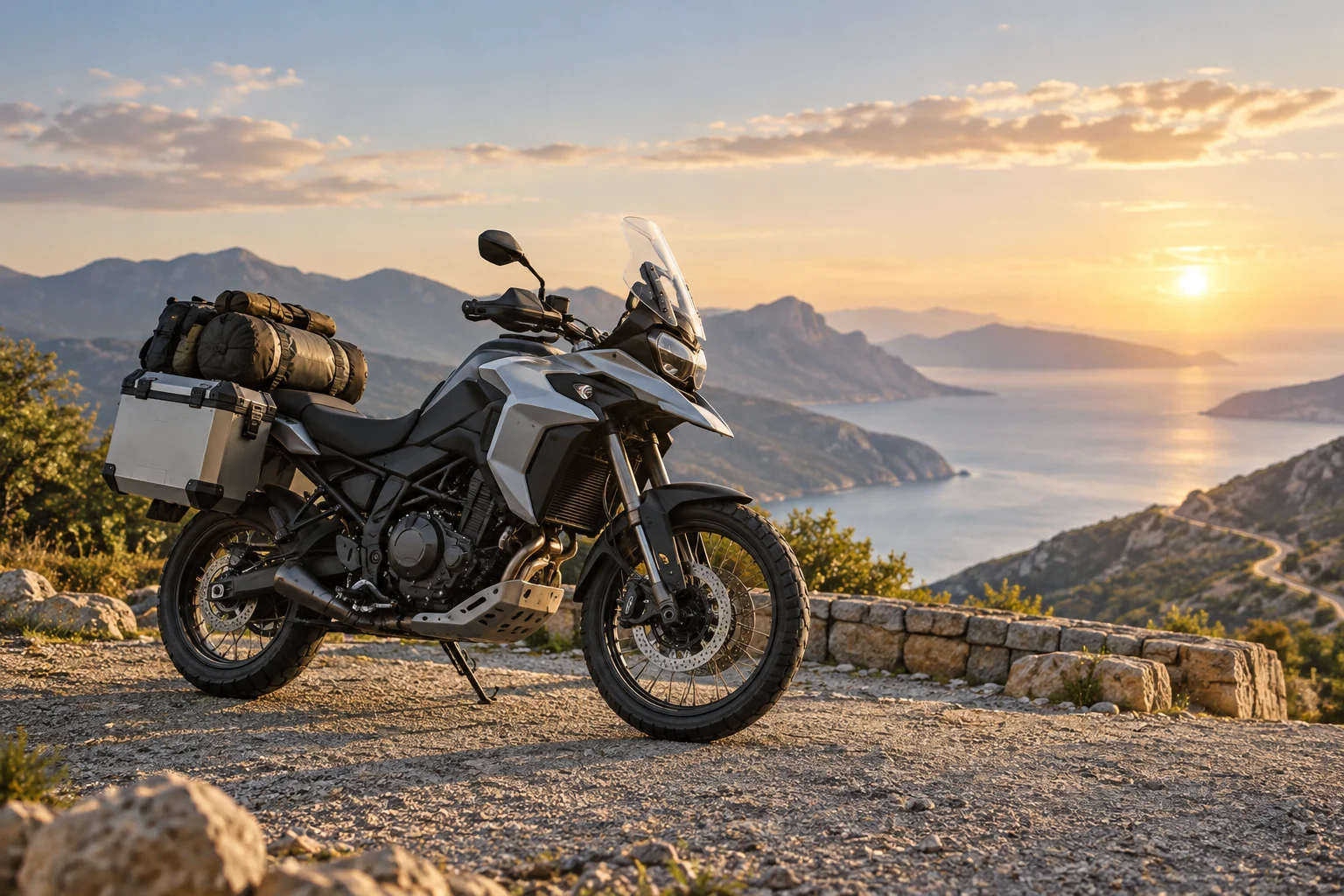
To pack a motorcycle for a trip, distribute the luggage evenly, place heavier items low down and secure everything so it cannot shift. The right setup depends on the motorcycle, its accessories and their manufacturers’ instructions; there is no universal load limit that applies to every model.
Before loading up, check the motorcycle documentation and the instructions for its panniers, racks or luggage carriers. Do not exceed the motorcycle’s maximum load or the permitted load for any accessory. Remember to include the weight of the rider, passenger and other items you are carrying: luggage is not the only weight the motorcycle supports.
Section references: Babiek – Consejos de equipaje en moto ↗ · Calimoto – Colocar el equipaje en la moto: cómo sujetarlo correctamente ↗

How to position your luggage
If you use luggage on both sides, aim to balance the weight from left to right. Put heavier items at the bottom and lighter ones on top; keep the load stable and avoid arrangements that affect moving parts or steering. Do not attach luggage to the handlebars, fork or fender.
The correct position and load limits depend on the motorcycle and accessories. Check the manufacturer’s instructions before using a luggage rack or panniers, and do not assume that general advice overrides their load limits.
Section references: Calimoto – Colocar el equipaje en la moto: cómo sujetarlo correctamente ↗

Keep the lights and controls clear
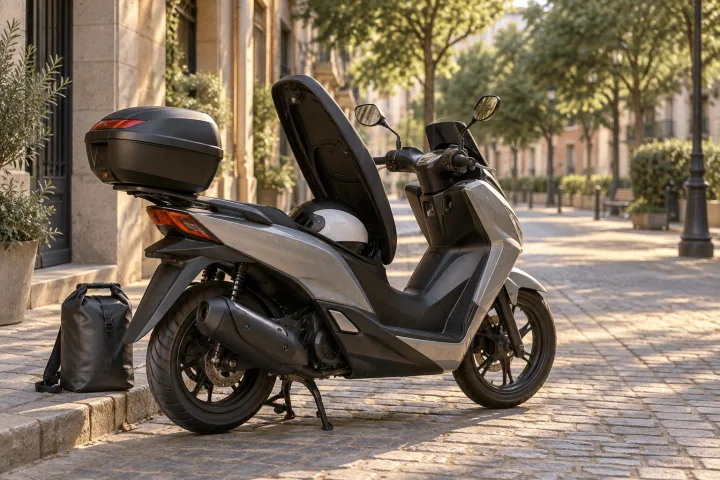
Keep anything you may need during the trip within reach, but in a closed compartment or securely fastened. Protect items that need to stay dry from rain, and do not open or handle luggage while riding.
Before setting off, check that the load does not cover the rear lights or indicators, and that it does not interfere with the controls, passenger or moving parts. If anything is obscured, loose or touching a moving part, rearrange it before continuing.
Section references: Calimoto – Colocar el equipaje en la moto: cómo sujetarlo correctamente ↗
Checks before setting off and during the trip
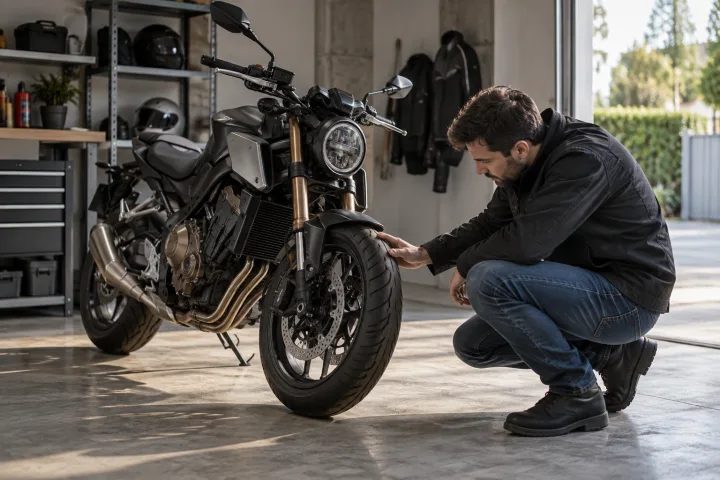
With the motorcycle loaded, check the fasteners, straps and closures, and make sure nothing is loose or able to shift. Repeat the inspection after a stop, especially if you have opened or rearranged any bags.
A rear load can affect how the motorcycle handles. Check the manual to see whether tyre pressure should be adjusted when carrying luggage, and which values apply to your model; do not rely on a generic figure. If the load exceeds any limit, cannot be secured properly, or the motorcycle’s stability changes, reduce the luggage. If the problem persists, consult a professional.
Section references: Calimoto – Colocar el equipaje en la moto: cómo sujetarlo correctamente ↗
Where should I put the heaviest luggage on a motorcycle?
Keep it low and secure. Distribute the weight evenly and follow the load instructions for the motorcycle and each accessory.
Can I carry luggage on the handlebars or fork?
No. Avoid loading the handlebars, fork or fender. Luggage must not interfere with steering, controls or moving parts.
Should I change tyre pressure when travelling with luggage?
Carrying a load may mean adjusting tyre pressure, especially when the weight is at the rear. Check your motorcycle’s manual for the recommended pressures when loaded.