Heat Pump in Electric Cars: How It Works and Its Impact in Winter
Discover how the heat pump improves thermal efficiency in electric vehicles, its differences from resistive heating, and the factors that limit its performance in extreme cold.
Key points
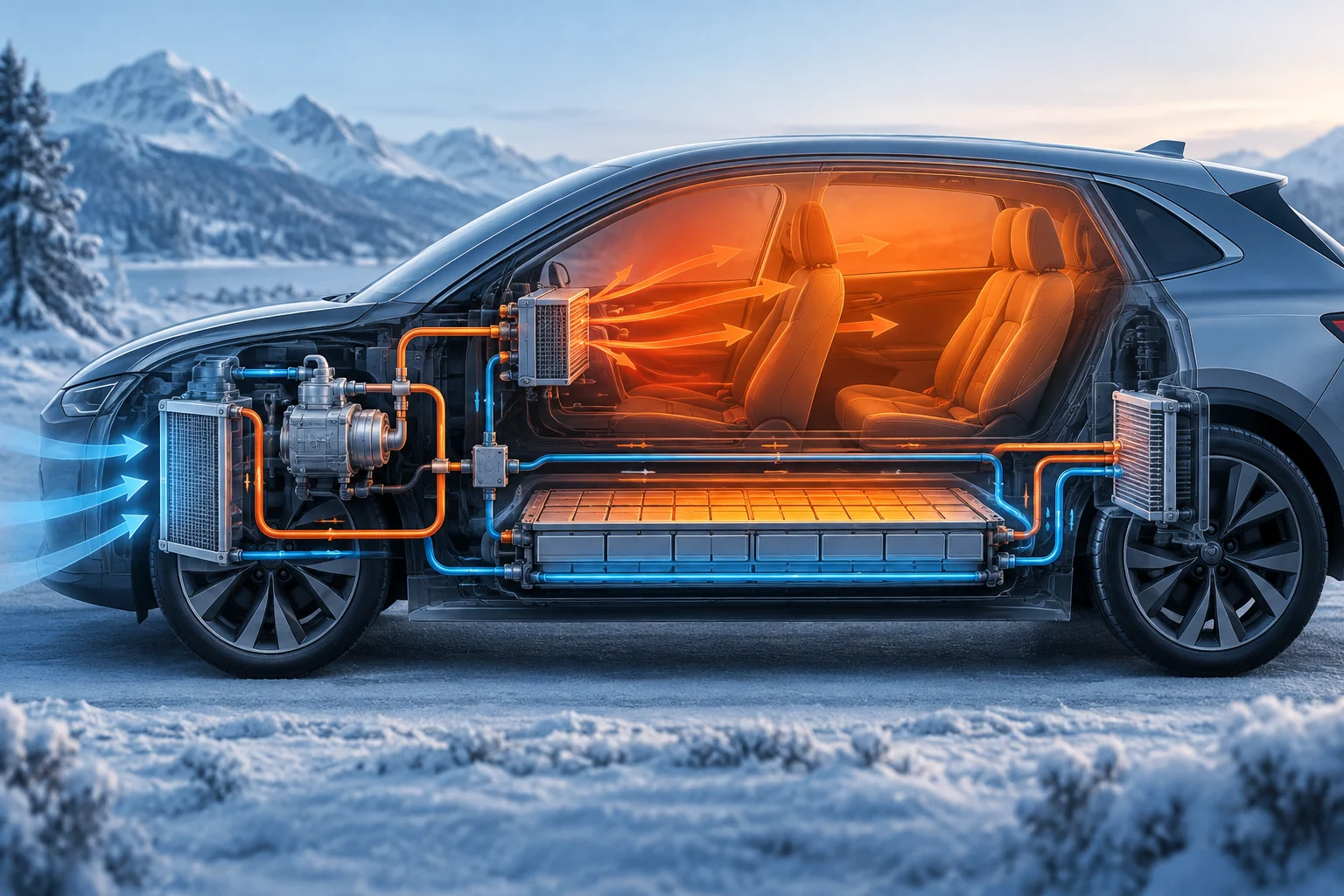
A heat pump in an electric vehicle transfers thermal energy rather than generating it via resistance, which can reduce battery consumption for cabin climate control in moderate conditions. Its availability and effectiveness depend on the model, version, and outside temperature, so it is advisable to check the technical specifications before comparing options.
What it is and its function
A heat pump in an electric car is a climate control system that uses electricity to transfer thermal energy through a refrigerant circuit, a compressor, and various heat exchangers. Unlike resistive heating, which directly transforms electricity into heat, the heat pump uses electricity primarily to drive the compressor and move heat from one point to another.
This mechanism allows the system to be more efficient in many operating conditions, as it does not rely exclusively on generating heat from scratch, but on redistributing existing thermal energy from the environment or from the vehicle's own components.
Section references: ¿Qué es la bomba de calor de un coche eléctrico y cómo funciona? ↗
How it transfers heat to the cabin
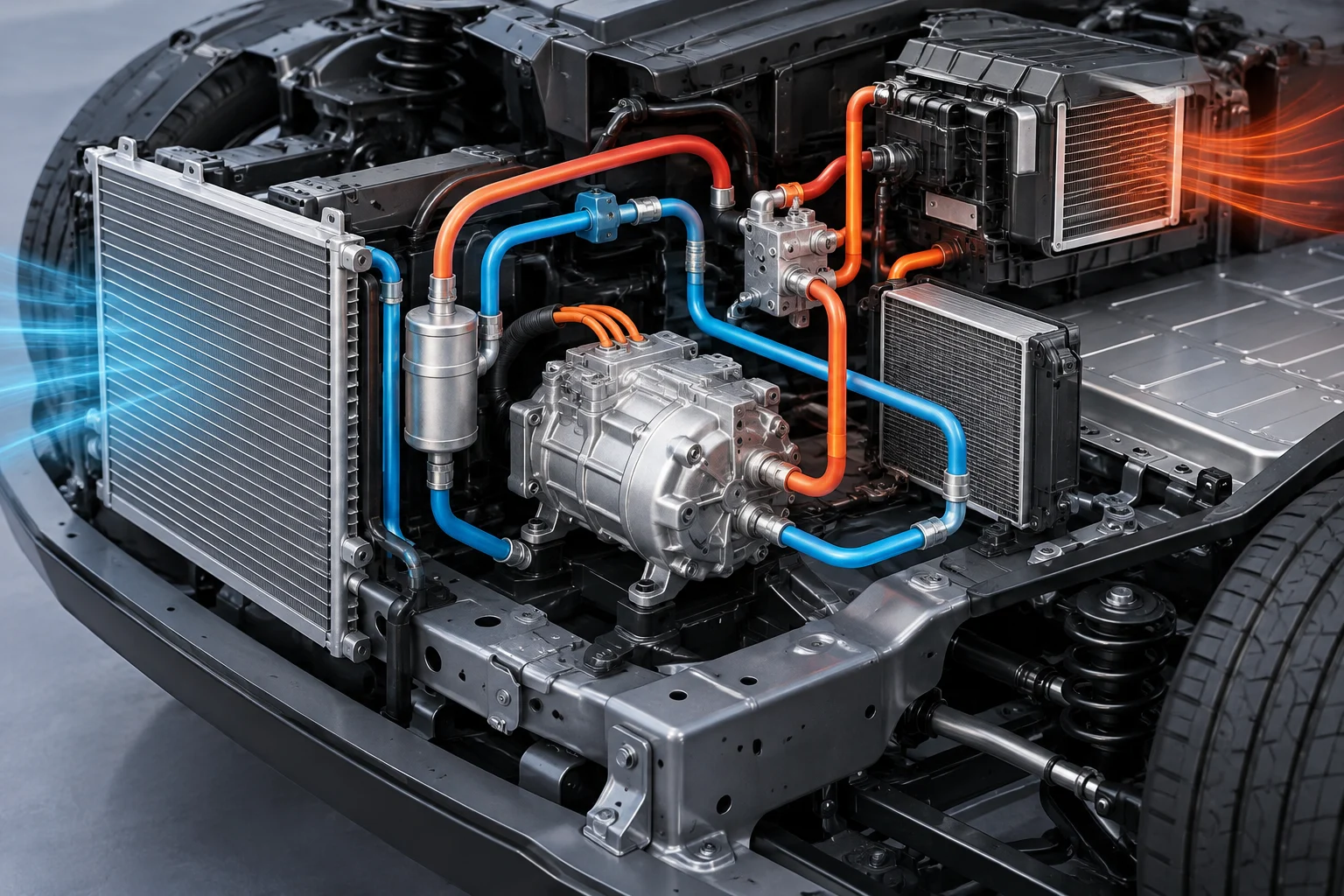
The basic operation is based on a refrigeration circuit similar to that used by an air conditioning system. The refrigerant absorbs thermal energy in one part of the circuit and releases it in another, allowing the cabin to be heated without consuming all the energy from the traction battery.
In more advanced systems, the heat pump can take advantage of residual heat from various electrical components of the vehicle. Depending on the design, recoverable heat sources may include the electric motor, the inverter and other power electronics, the onboard charger, and the high-voltage battery itself. This utilization of residual heat improves the overall efficiency of the thermal system.
Section references: ¿Qué es la bomba de calor de un coche eléctrico y cómo funciona? ↗
- Electric motor
- Inverter and power electronics
- Onboard charger
- High-voltage battery
Heat pump vs. resistive heating
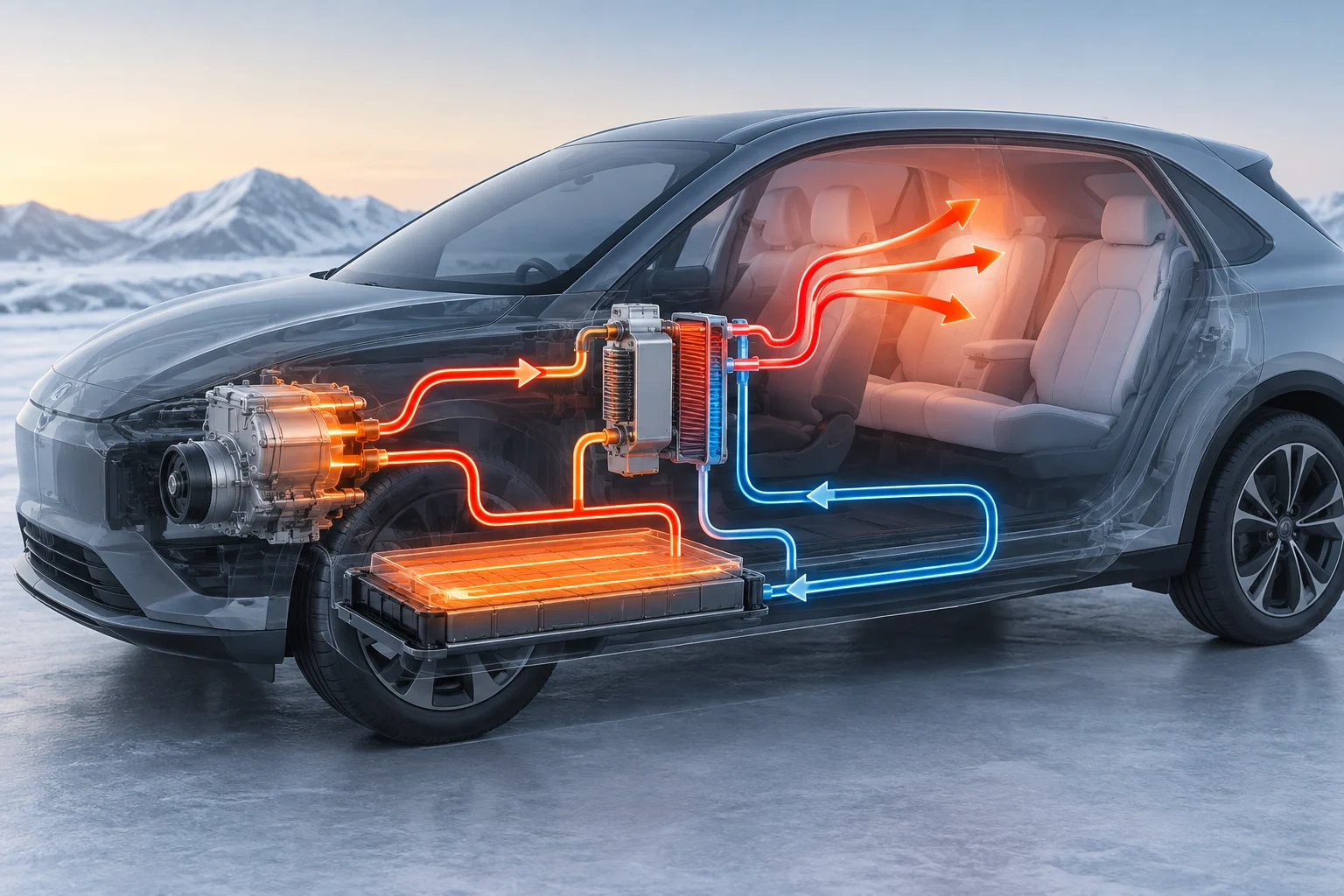
Resistive heating is a simple system that directly transforms electricity into heat. Although it is effective for raising the temperature, the energy it consumes comes entirely from the traction battery, which can drastically reduce driving range in electric vehicles.
The heat pump, on the other hand, does not increase the battery's capacity or generate additional energy. Its advantage lies in reducing the amount of electricity needed to climate control the cabin compared to a system based solely on resistive heating, especially when the outside temperature allows the pump to work efficiently. Additionally, it helps keep the battery within its ideal thermal range, favoring both operational efficiency and the charging process.
| Feature | Resistive heating | Heat pump |
|---|---|---|
| Mechanism | Directly transforms electricity into heat | Transfers thermal energy via refrigerant |
| Energy source | Traction battery | Traction battery + residual heat from environment/components |
| Efficiency in moderate cold | Direct energy consumption | Can be more efficient in many operating conditions |
| Impact on range | Significant reduction | Smaller reduction in optimal conditions |
Section references: ¿Qué es la bomba de calor de un coche eléctrico y cómo funciona? ↗ · Bomba de calor en carros eléctricos: ¿cómo funciona y cuáles son sus beneficios? ↗ · Indirect refrigeration cycle with heat pump function for hybrid and electric vehicles ↗
Factors that modify its advantage
The performance of a heat pump depends on factors such as outside temperature and system design. Its effectiveness decreases when conditions are extremely cold, as there is less thermal energy available in the environment to be transferred to the cabin.
Therefore, the advantage of the heat pump is not absolute and does not guarantee a specific range in all situations. In very cold climates, the system may require more energy to maintain the same interior temperature, approaching the consumption of a resistive system or even activating auxiliary resistors to complement the heating.
Section references: ¿Qué es la bomba de calor de un coche eléctrico y cómo funciona? ↗
What to check when comparing versions
Not all electric cars incorporate a heat pump. Its availability depends on the manufacturer, model, and version, so it is advisable to check the specific equipment of the vehicle before making a purchase decision.
When comparing versions of the same model, it is important to verify whether the heat pump is standard or an optional extra. Additionally, the vehicle's complete thermal strategy, which includes how it manages heat from the battery and the cabin, can vary between configurations. The technical sheet and manufacturer documentation are the authorized sources to confirm these details.
Section references: ¿Qué es la bomba de calor de un coche eléctrico y cómo funciona? ↗
- Verify if the heat pump is standard or optional
- Review the battery thermal management strategy
- Consult the specific technical sheet of the chosen version
Does the heat pump increase battery range?
No, the heat pump does not increase the battery's capacity or generate additional energy. Its function is to reduce the amount of electricity needed to climate control the cabin compared to a resistive system, which can result in lower total battery consumption in favorable conditions.
Does it work just as well in very cold climates?
The performance of the heat pump decreases when outside temperatures are extremely cold. In these conditions, there is less heat available in the environment to be transferred, so the system may be less efficient than in moderate climates.
Do all electric cars have a heat pump?
No. The availability of the heat pump depends on the manufacturer, model, and specific version of the vehicle. It is necessary to consult the technical sheet to confirm if it is included in the equipment.