Gasoline, Diesel, or Hybrid: How to Calculate Real Usage Costs
Learn to estimate annual fuel and maintenance costs by comparing real consumption data and market prices. A practical guide to choosing the most efficient engine based on your mileage and route type.
Key points
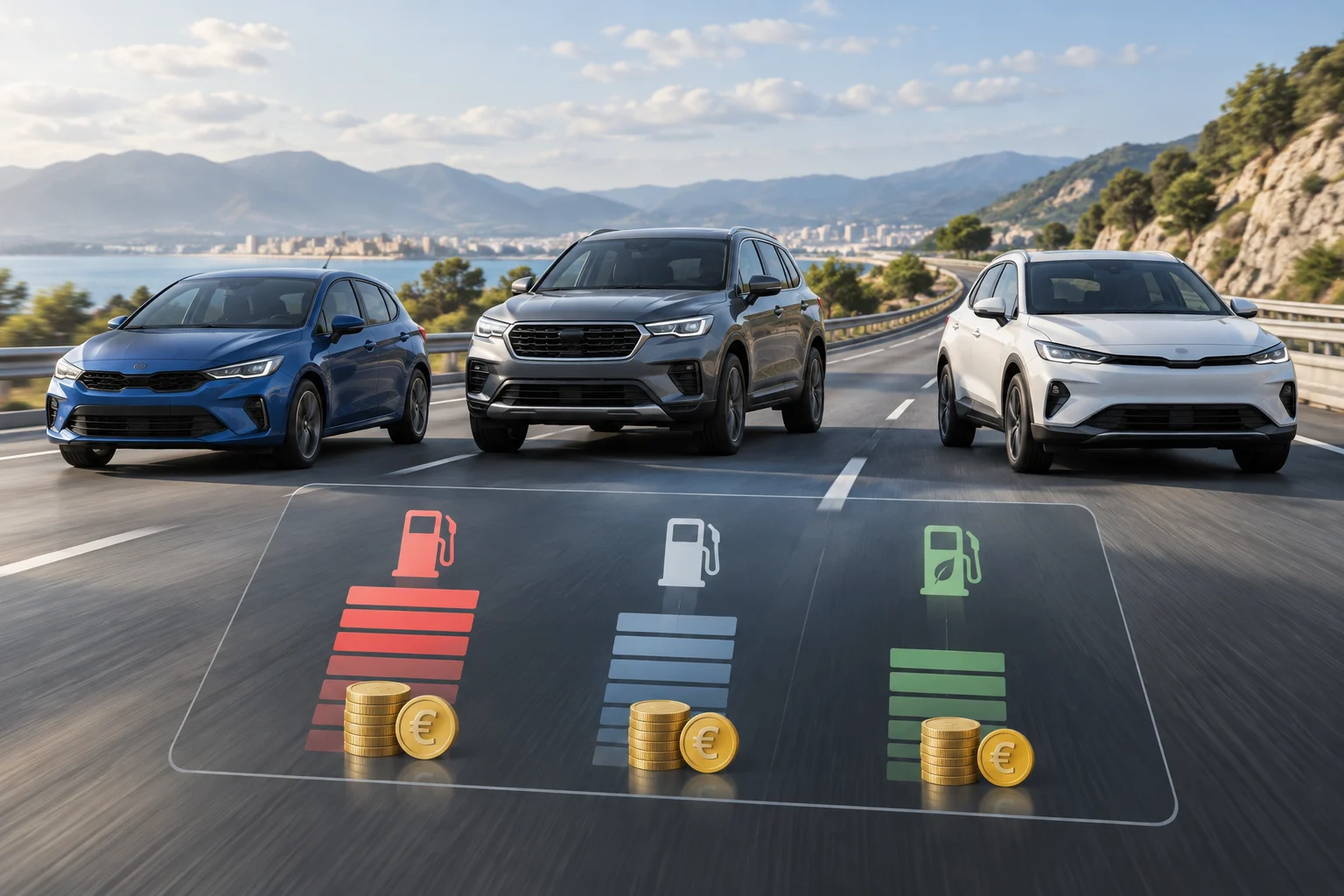
The cost of using a car depends on the interaction between engine type, fuel price, and real driving profile. To compare gasoline, diesel, and hybrid models, calculate the energy cost per kilometer using real consumption data and current prices, distinguishing between urban and highway routes.
Which costs are compared and which are excluded
To determine which engine is more economical, it is fundamental to distinguish between energy cost (fuel) and total cost of ownership. This article focuses on the variable spending associated with driving, which changes drastically depending on the engine type and fuel prices.
Fixed costs such as insurance, road tax, or resale value are excluded from this initial calculation, although these factors can influence the final decision. The goal is to build a solid basis for estimating monthly spending on fuel and basic maintenance, which usually represents the largest part of a driver's variable costs.
- Energy cost: Spending on gasoline, diesel, or electricity.
- Maintenance: Servicing, filters, and brake wear.
- Excluded: Insurance, financing, fixed taxes, and depreciation.
Fuel: consumption, price, and planned kilometers
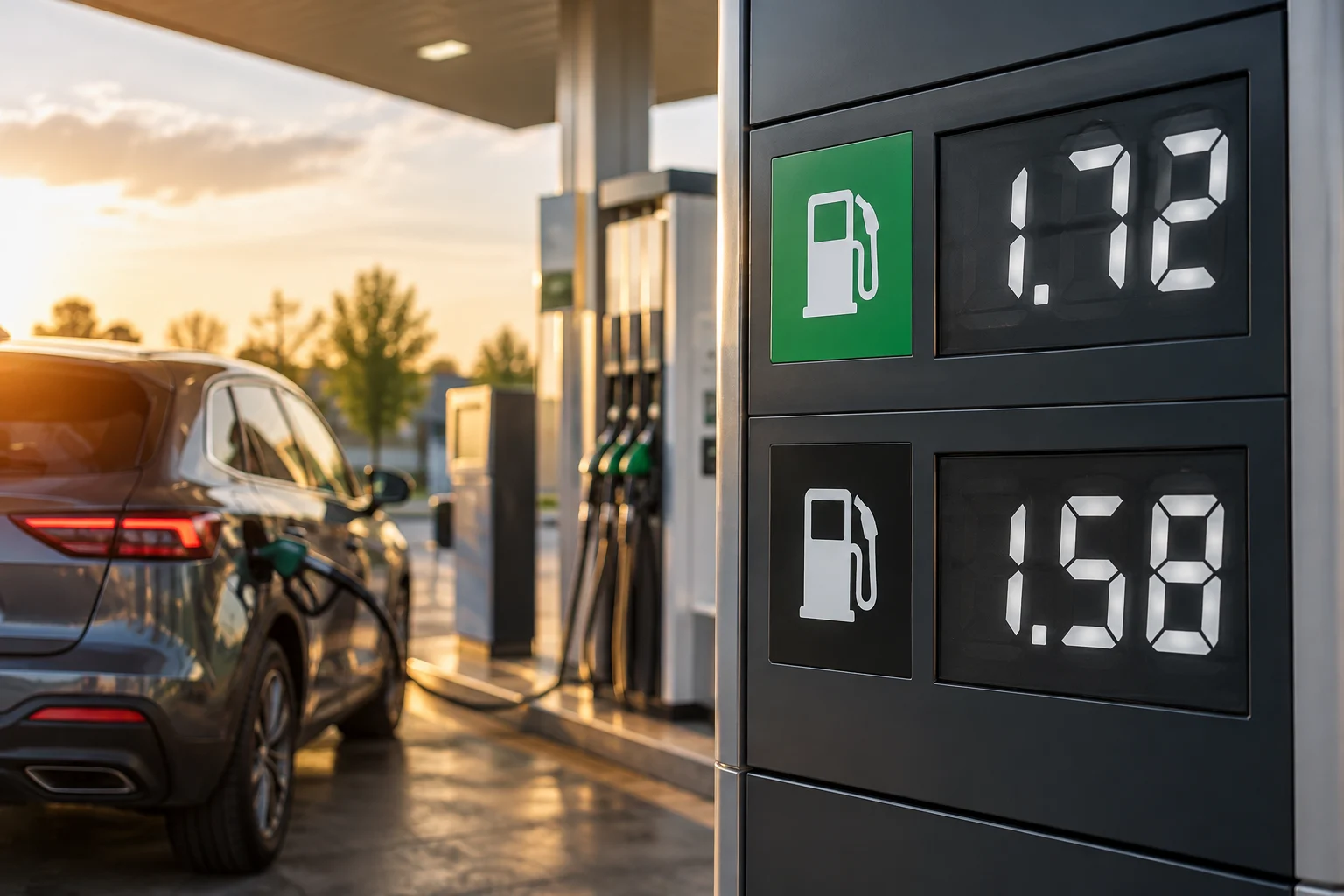
The first step is to know the reference fuel price. In a comparison conducted in June 2026, the price of gasoline was set at €1.466/liter and diesel at €1.545/liter. These values are starting points, but they must be updated with the prices in your area before performing the final calculation.
It is crucial to use real consumption rather than just the homologated (WLTP) figure. For example, on a 600 km highway trip, a Toyota Yaris Cross hybrid recorded a real consumption of 5.9 l/100 km, compared to the homologated 4.5 l/100 km. This difference can significantly alter the final result if based on theoretical data.
| Item | Value | Source/Context |
|---|---|---|
| Gasoline Price | €1.466/l | Carwow Spain Comparison |
| Diesel Price | €1.545/l | Carwow Spain Comparison |
| Avg Km/Year | 11,204 km | DGT Data |
Section references: Gasolina, diésel, híbrido o enchufable: ¿cuál sale más barato en un viaje este verano? ↗ · ¿Qué coche me compro: diésel, gasolina o híbrido? ↗
- Gasoline price (June 2026): €1.466/liter.
- Diesel price (June 2026): €1.545/liter.
- Average annual km in Spain: 11,204 km (DGT).
How to separate urban, highway, and mixed driving
The performance of each engine varies depending on the environment. Non-plug-in hybrids usually stand out in the city thanks to electric propulsion at low speeds, while diesel engines maintain their efficiency on the highway. In a highway scenario, a Cupra Formentor 2.0 TDI diesel consumed 5.5 l/100 km, a figure that should be compared with the hybrid's performance under the same conditions.
For an accurate estimate, divide your annual mileage into percentages of city, highway, and mixed driving. If 80% of your trips are urban, the hybrid will have a clear energy advantage. If long trips predominate, the gap between diesel and hybrid narrows or even reverses in favor of diesel in some models.
Section references: Gasolina, diésel, híbrido o enchufable: ¿cuál sale más barato en un viaje este verano? ↗
- Urban: Advantage for hybrids and electric vehicles.
- Highway: Advantage for diesel and efficient gasoline engines.
- Mixed: Depends on the proportion of each type of route.
Maintenance, taxes, and other expenses
In addition to fuel, maintenance differs between technologies. Non-plug-in hybrids usually have less brake wear due to regenerative braking, which can reduce costs in the long term. However, the complexity of the battery and electrical system can imply more expensive repairs if a component fails.
It is also important to consider environmental labels. Non-plug-in hybrids usually carry the ECO label, which can facilitate access to Low Emission Zones (ZBE) in cities with more than 50,000 inhabitants, avoiding possible restrictions or fines.
Section references: ¿Qué coche me compro: diésel, gasolina o híbrido? ↗ · Diésel, gasolina o híbrido: cuál elegir según tu uso ↗
- Brakes: Less wear in hybrids due to regeneration.
- Labels: Non-plug-in hybrids are usually ECO.
- ZBE: Restrictions in large cities since 2023.
Scenario template for comparing cars
To compare two or three equivalent cars, use a scenario template. Define your annual mileage (e.g., 15,000 km) and the current fuel price. Calculate the spending for each engine: (Kilometers / 100) x Real Consumption x Price per Liter.
If the real consumption of the hybrid in your use is 5.9 l/100 km and the diesel is 5.5 l/100 km, the difference in cost per kilometer is minimal. In this case, maintenance and traffic restrictions may be the decisive factors, not just fuel spending.
| Engine | Real Consumption (l/100km) | Price (€/l) | Annual Cost (€) |
|---|---|---|---|
| Hybrid | 5.9 | 1.466 | 1,300.70 |
| Diesel | 5.5 | 1.545 | 1,273.10 |
- Step 1: Define annual km and fuel price.
- Step 2: Use real consumption from tests or your own history.
- Step 3: Calculate annual spending for each engine.
- Step 4: Add estimated maintenance costs.
What can change the result and how to avoid universal conclusions
There is no universally cheaper engine. The result depends on your routine: if you frequently charge a plug-in hybrid, its consumption can be very low, but if you do not, its highway performance approaches that of a conventional gasoline car.
The European Union plans to ban the sale of new combustion engine cars from 2035, which could affect the resale value of combustion engines in the long term. When making the decision, consider not only the current cost but also the evolution of regulations and the availability of charging infrastructure if you opt for electrified technologies.
Section references: ¿Qué coche me compro: diésel, gasolina o híbrido? ↗
- Charging frequency: Key for plug-in hybrids.
- Future regulations: Combustion ban in 2035.
- Resale value: Can vary depending on the engine type.
Which engine is cheaper in the city?
Generally, non-plug-in hybrids are more efficient in the city due to the use of electric propulsion at low speeds, reducing fuel consumption.
Is diesel still profitable?
Yes, especially if you cover many kilometers on the highway. Its greater efficiency on long trips can compensate for the slightly higher price of diesel compared to gasoline.
How does the environmental label affect cost?
ECO or ZERO labels can avoid fines or restrictions in Low Emission Zones, which represents an indirect saving for those living in large cities.