Engine Compression Ratio: What It Means and What It Does Not Reveal
Learn to distinguish geometric compression ratio from measured compression pressure. Discover why this figure alone is insufficient for comparing engines or determining the appropriate fuel.
Key points
Geometric compression ratio is the static volume ratio between the cylinder at bottom and top dead center. It is distinct from measured compression pressure and does not alone determine performance, fuel consumption, or required octane rating, as forced induction, valve timing, and detonation control also play critical roles.
What is the compression ratio and how it is expressed
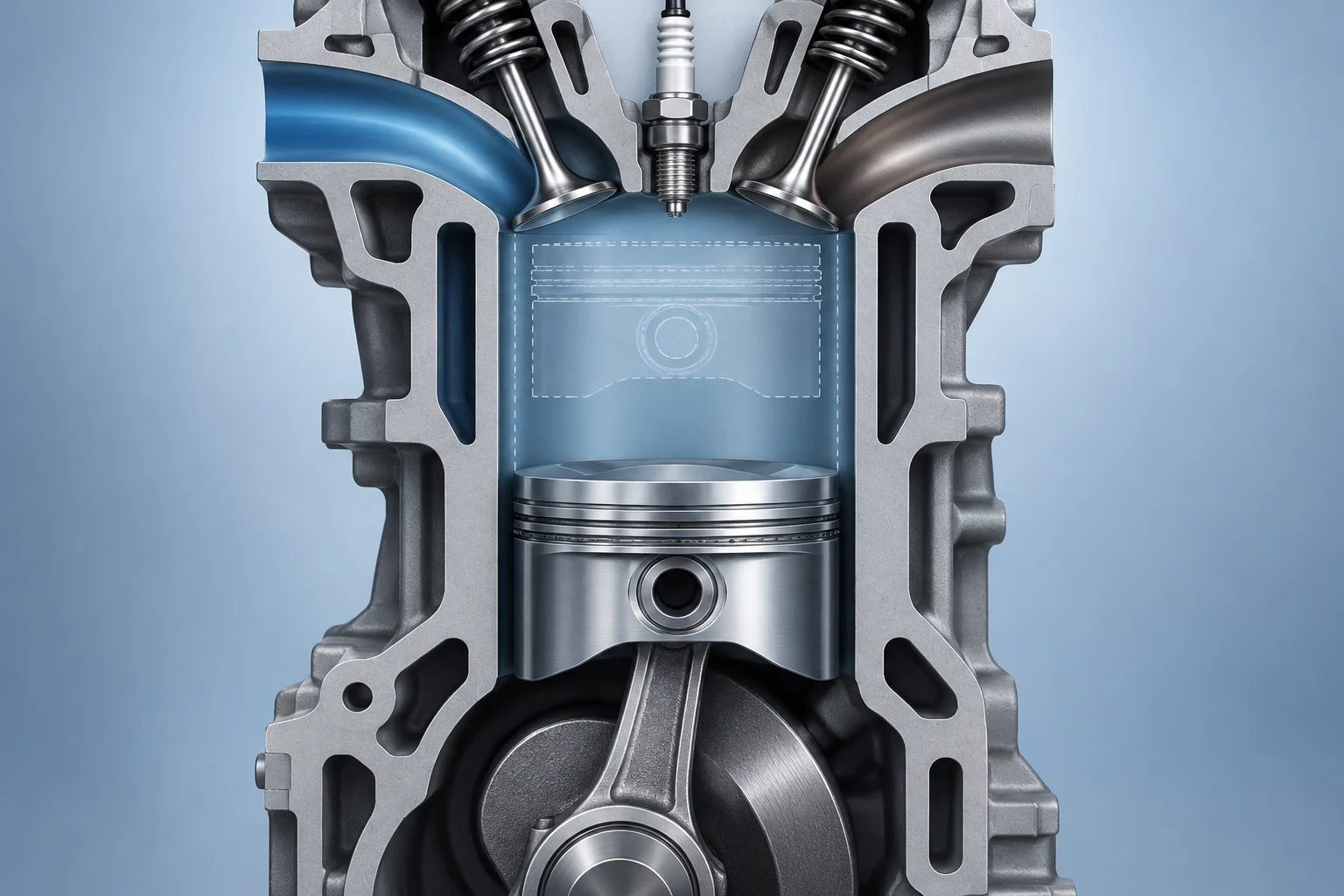
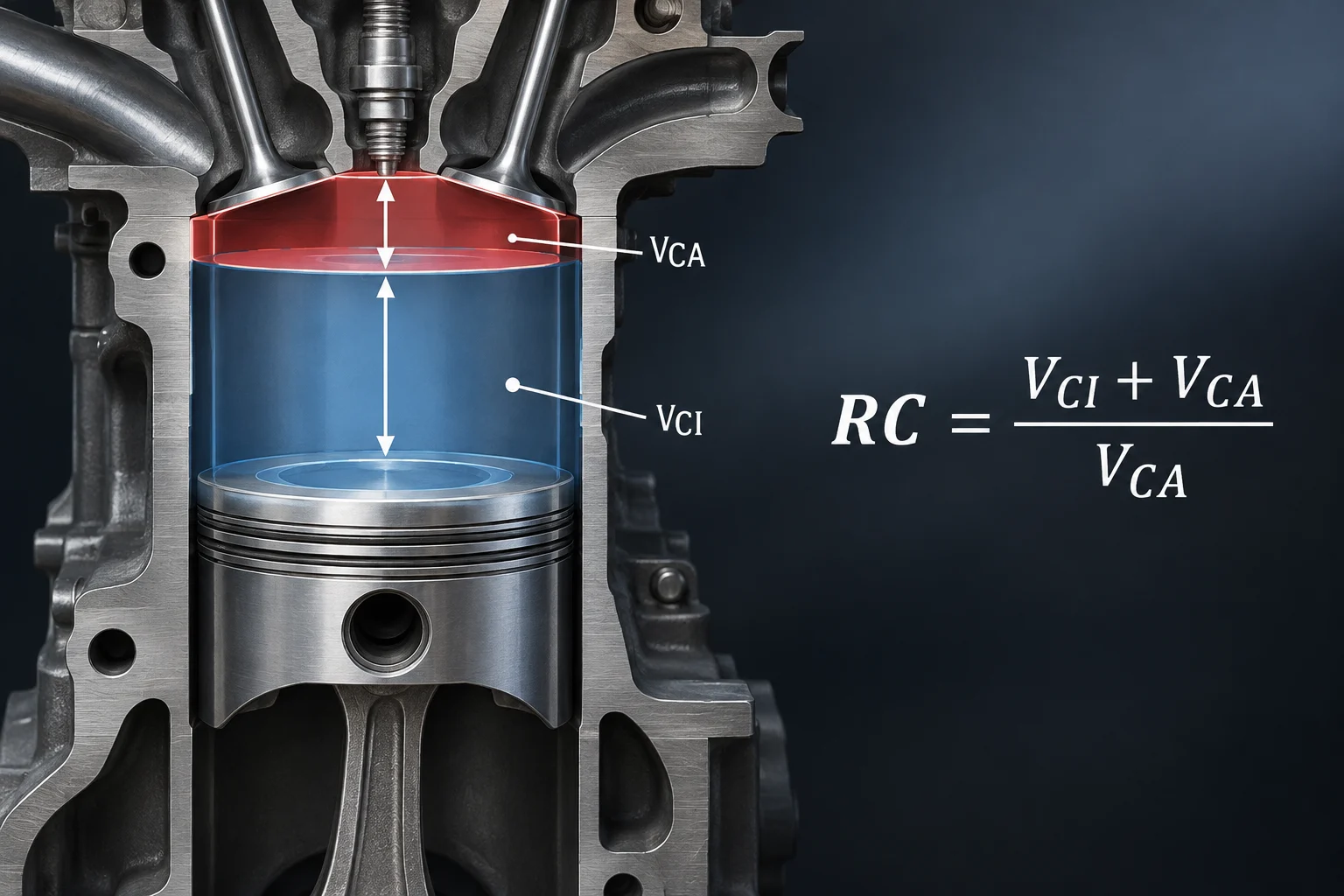
The geometric compression ratio is a static parameter that describes the engine's ability to compress the air-fuel mixture. It is defined as the proportion between the total cylinder volume when the piston is at bottom dead center (BDC) and the volume remaining in the combustion chamber when the piston reaches top dead center (TDC).
In technical specifications, this figure is usually expressed as a proportion, for example 8:1 or 10:1. This means that the combustion chamber volume is eight or ten times smaller than the total cylinder volume. Mathematically, it is calculated by adding the volume displaced by the piston (VCI) and the combustion chamber volume (VCA), and dividing the result by the chamber volume: CR = (VCI + VCA) / VCA.
Section references: Relación de compresión ↗
- It is a fixed geometric measure, determined by the design of the block and the cylinder head.
- It does not vary with engine speed or load.
- It is usually expressed as a proportion (e.g., 10.5:1).
Geometric ratio and compression pressure: two distinct concepts
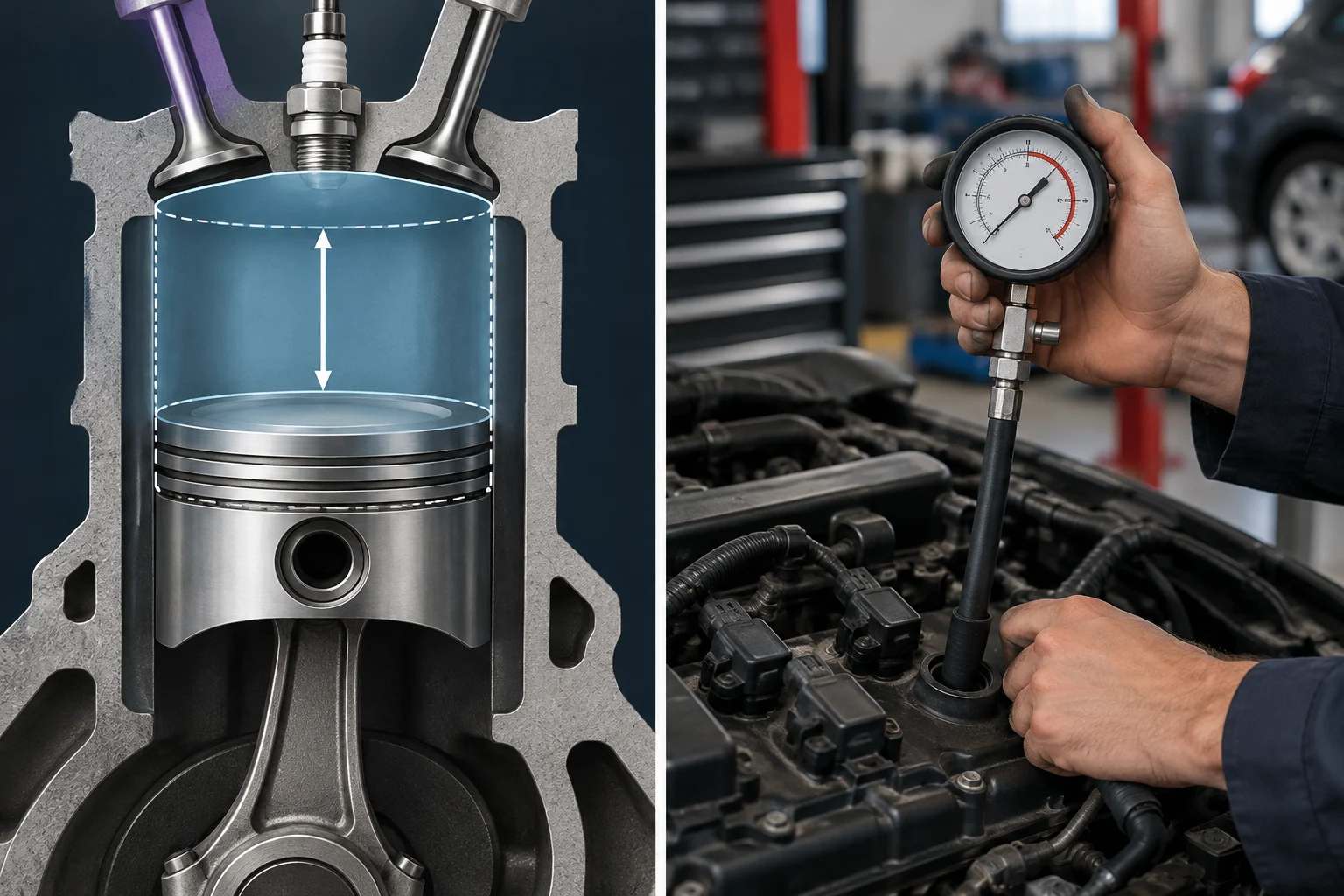
A common mistake is confusing the geometric compression ratio with the compression pressure measured in a workshop. They are fundamentally different concepts. The geometric ratio is an invariant design datum, while compression pressure is a dynamic reading obtained with a gauge while the engine is running.
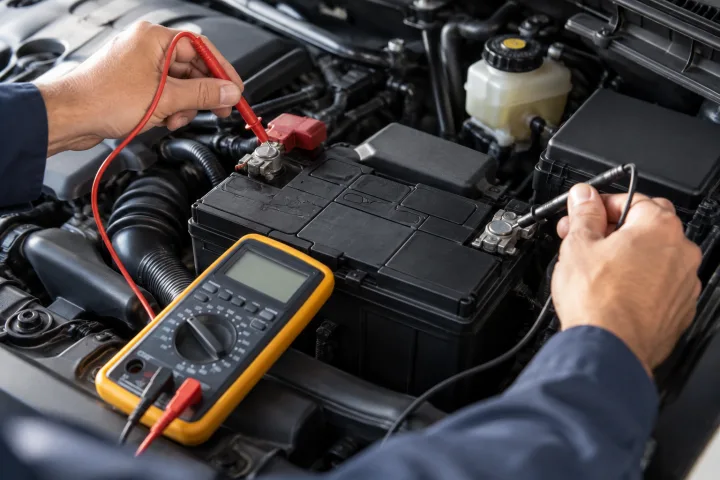
The measured pressure depends on multiple factors: the condition of the valve seals, the condition of the piston rings, the engine temperature, and the cranking speed during the test. An isolated pressure reading does not by itself identify which component is failing; it must always be interpreted in the context of the manufacturer's specifications and the test conditions. Therefore, a high compression ratio does not automatically guarantee high compression pressure if the engine has internal wear.
Section references: Compresión y Relación de compresión. No es lo mismo, ... ↗ · Cómo leer un informe de compresión y fugas ↗
- Geometric ratio: static design datum (e.g., 10:1).
- Compression pressure: dynamic reading in bar or psi during a test.
- Measured pressure reflects the actual mechanical state of the engine at that moment.
Its influence on combustion and why other factors intervene
The compression ratio influences the thermodynamic behavior of the engine. A higher compression ratio can increase the pressure and temperature of the gases, which may favor detonation if the limit suitable for the engine is exceeded.
However, real performance does not depend solely on this figure. Critical factors such as valve timing, fuel quality, the ignition system, and electronic management intervene. Additionally, there is 'dynamic compression,' which is calculated from the closing of the intake valve to TDC, not from BDC. This distinction is important because the compression process effectively begins when the intake valve closes, not when the piston reaches BDC.
Section references: Relación de compresión ↗
- Higher compression can increase gas pressure and temperature.
- Excessive compression can lead to detonation.
- Valve timing determines the start of the effective compression stroke.
Atmospheric and turbo engines: why the figure is not enough to compare them
When comparing atmospheric and forced-induction (turbo or mechanical) engines, the geometric compression ratio loses its value as a sole indicator of power or efficiency. In forced-induction engines, compressed air is introduced into the cylinder, which raises the effective pressure of the mixture above what the geometric ratio alone would allow.
To prevent detonation (knocking) in these engines, manufacturers design them with lower geometric compression ratios than equivalent atmospheric engines. Comparing only the compression figure between both types of engine is misleading and does not reflect their real behavior, as forced induction adds compressed air independently of the static geometry.
| Characteristic | Atmospheric Engine | Forced-Induction Engine (Turbo) |
|---|---|---|
| Compression ratio design | Higher geometric ratio | Lower geometric ratio to manage detonation |
| Effective pressure | Determined by geometry | Increased by the compressor |
| Detonation risk | Controlled by octane and ignition | Controlled by geometry and electronics |
Section references: Compresión y Relación de compresión. No es lo mismo, ... ↗
- Turbo engines are designed with lower geometric compression ratios to manage detonation.
- Forced induction increases effective pressure independently of geometry.
- Power cannot be directly inferred from the compression ratio in turbo engines.
Does higher compression require higher octane gasoline?
There is a correlation between compression ratio and recommended octane rating, but it is not an absolute or linear rule. A high compression ratio increases gas pressure and temperature, which increases the risk of detonation. To mitigate this risk, the manufacturer may recommend a higher octane fuel or adjust the ignition timing.
Octane rating is one of the tools to prevent knocking, along with ignition timing adjustment and other design factors. It cannot be stated that higher compression automatically implies a specific fuel for all engines. Always follow the manufacturer's recommendation for the specific model, not a general rule based solely on the compression figure.
Section references: Relación de compresión ↗
- Higher compression increases the risk of detonation.
- Octane rating is a control factor, not the only solution.
- Ignition timing adjustment is another method to prevent knocking.
- Always consult the manufacturer's manual for the recommended fuel.
What can be concluded—and what cannot—when comparing spec sheets
When reading the technical specifications of used cars, the compression ratio is a datum of interest for understanding the engine design, but it should not be the main criterion for comparing performance, consumption, or reliability. It does not reveal the mechanical state of the engine, the real power, or the exact consumption in daily use.
To make a purchase decision, it is more useful to compare power, torque, homologated consumption, and maintenance history. The compression ratio is a design parameter that helps understand why an engine may have certain characteristics, but it does not replace functional tests or the technical inspection of the vehicle. Use it as context, not as a verdict.
- Do not use the compression ratio to predict exact consumption.
- Do not assume that high compression means higher power in turbo engines.
- Verify the mechanical state with a compression test if in doubt.
- Prioritize power, torque, and maintenance history when buying.
Is the compression ratio the same as compression pressure?
No. The compression ratio is a fixed geometric design proportion (e.g., 10:1). Compression pressure is a measurement in bar or psi obtained with a gauge while the engine is running, and it depends on the mechanical state of the engine.
Is an engine with a higher compression ratio always more powerful?
Not necessarily. In atmospheric engines, higher compression can improve efficiency, but in turbo engines, power depends more on forced induction. Additionally, electronic management and valve timing are critical factors.
Do I need higher octane gasoline if my engine has a high compression ratio?
Not always. The manufacturer determines the recommended fuel based on the complete engine design, including ignition management. Always follow the instructions in the owner's manual.
How does forced induction affect the compression ratio?
Forced-induction engines are usually designed with lower geometric compression ratios to prevent detonation, as the compressor introduces air at higher pressure, increasing the effective pressure in the chamber.