Car Battery Discharged While Parked: Causes and Diagnosis
Understand why your car battery discharges while parked. Distinguish between normal standby system consumption and abnormal discharge causes, and learn what data to record for an effective workshop inspection.
Key points
Modern vehicle standby power consumption typically ranges from 20 to 50 milliamps, depending on the model and system status. If the battery discharges while parked, it may be due to an aging battery, added accessories, or abnormal consumption exceeding 80-100 mA. Recording battery age and connected devices aids professional diagnosis.
What standby electrical consumption means
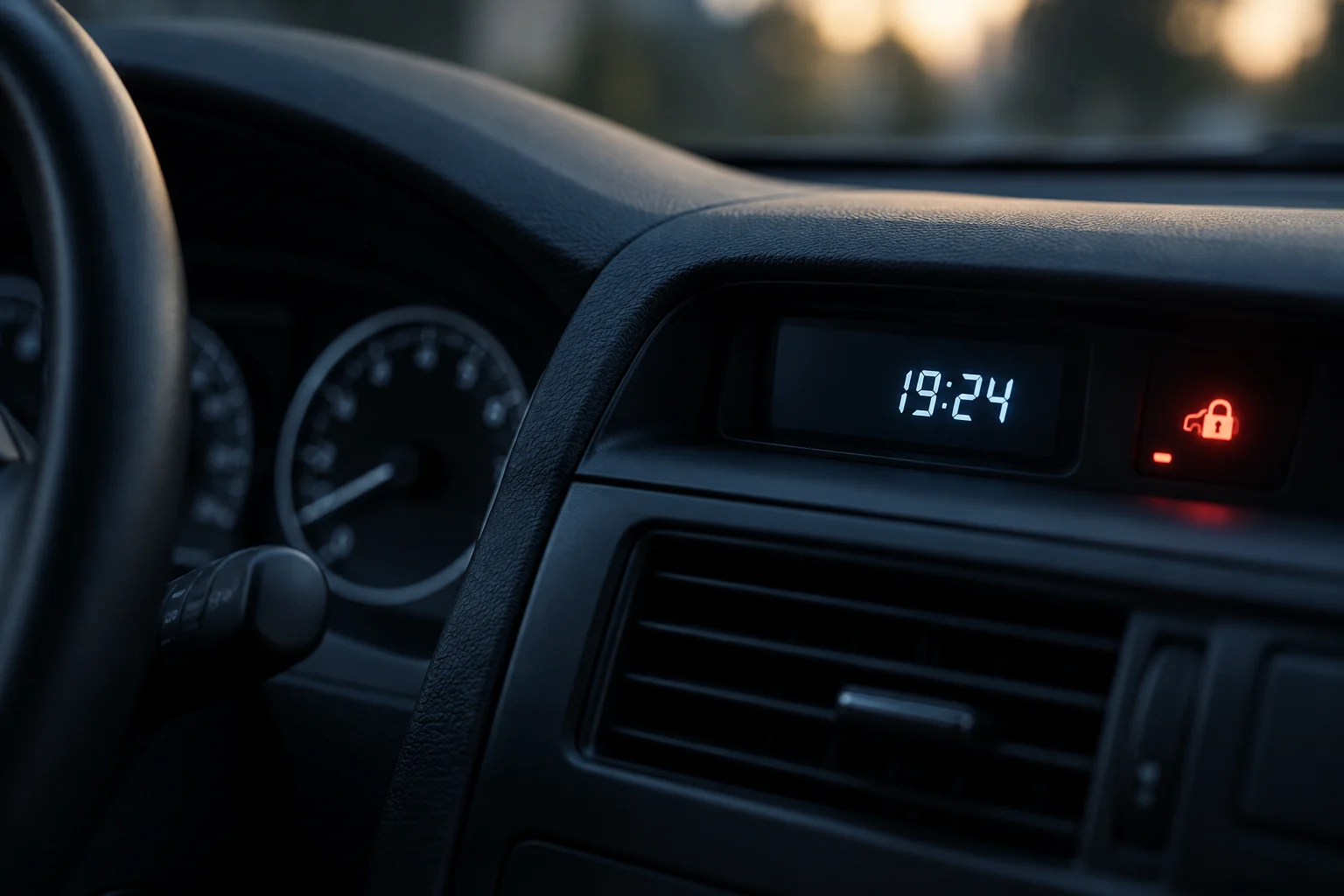
When you turn off the engine and lock the car, the vehicle does not become completely inactive. In modern automobiles, systems such as the alarm, central locking, electronic memories, and telematics continue to consume energy to maintain their basic functions. This consumption, known as standby consumption, is normal and necessary for the car to start and respond to the key or remote control.
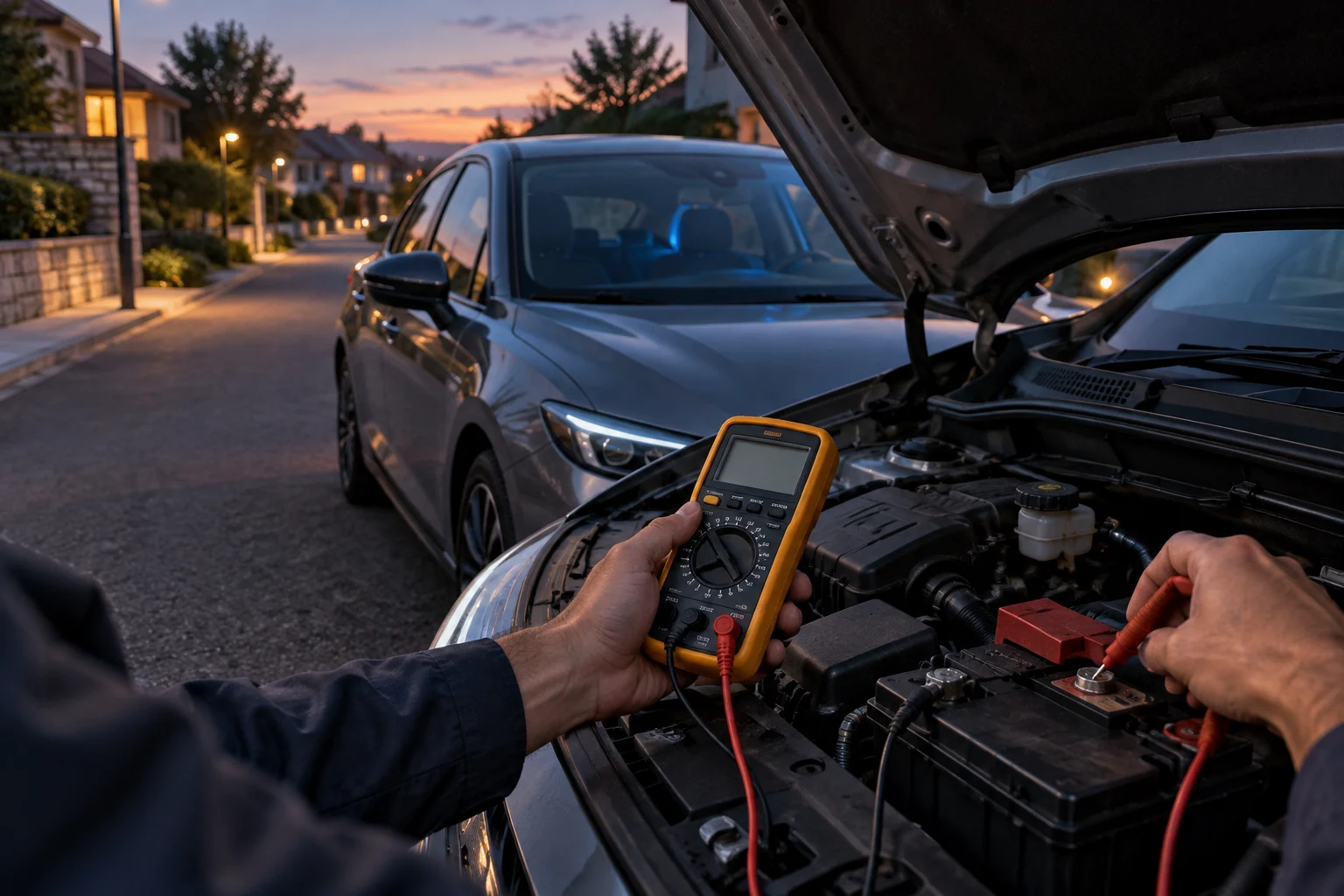
Once the electronic control units have entered their sleep mode, consumption usually stabilizes at a low range. In many vehicles, this value is approximately between 20 and 50 milliamps (mA). However, acceptable consumption varies by model and equipment. If consumption remains stable above 80 or 100 mA, it may indicate abnormal consumption that depletes the battery in a few days.
Section references: La batería del coche se descarga por la noche: causas, cómo localizar el consumo y soluciones ↗ · Por qué se descarga la batería del coche estando parado ↗
- Approximate standby consumption: 20-50 mA in many vehicles.
- Alert threshold: more than 80-100 mA steadily.
- Active systems: alarm, central locking, telematics, and memories.
Common causes of abnormal discharge
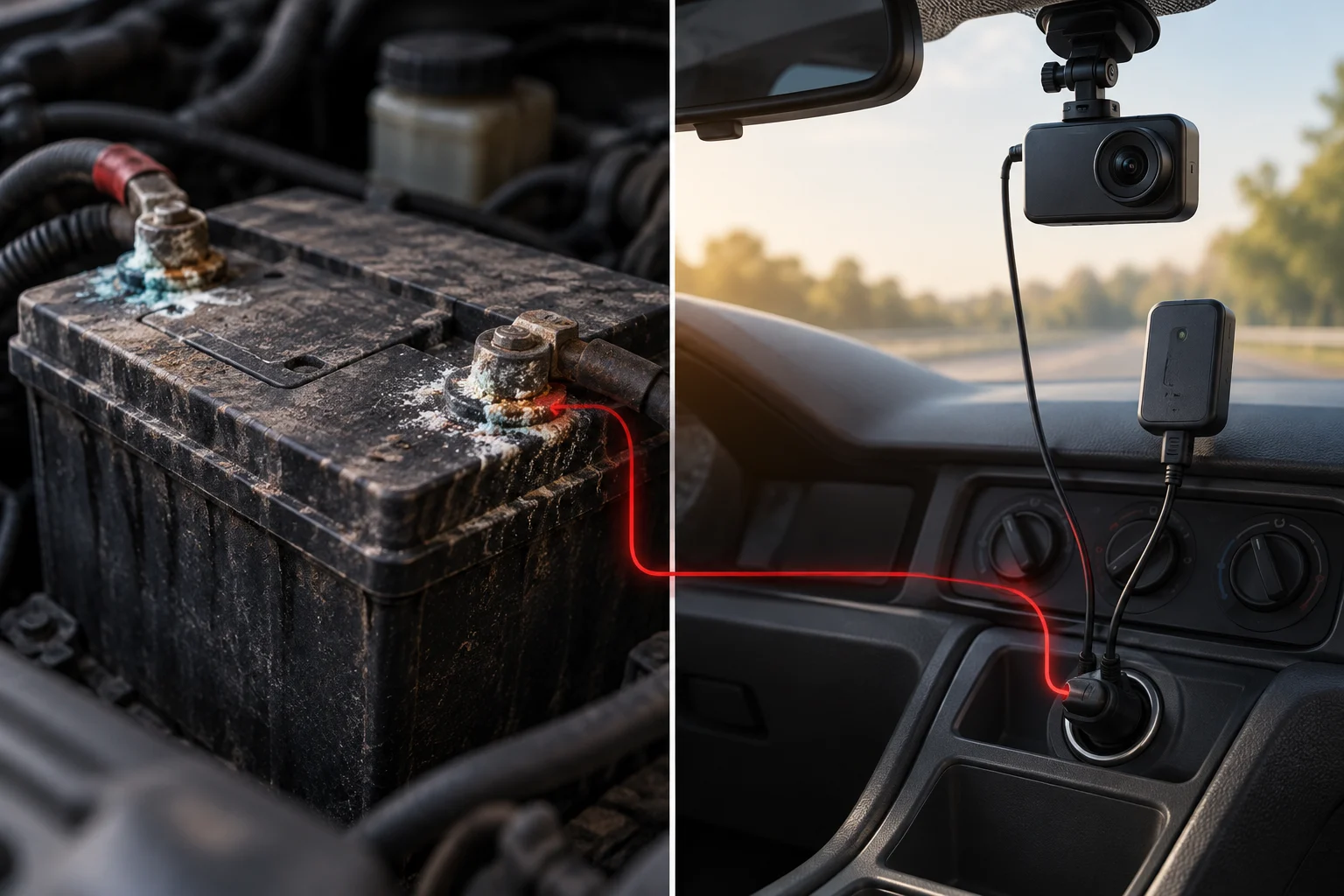
If the car does not start after being parked, it is not always due to a serious fault. The most common cause is the age of the battery. The useful life of a car battery is usually between 3 and 5 years. An aging battery may have lost useful capacity, meaning it can no longer support the vehicle's normal consumptions for several hours, even if there is no current leak.
Another frequent cause is accessories installed after the factory. Devices such as dashcams with parking mode, GPS trackers, or non-original alarms can maintain continuous consumption that the original battery is not designed to cover. Additionally, a failure in the alternator's rectifier diode can generate a current return to the battery with the engine off, a silent discharge often mistaken for an old battery.
Section references: La batería del coche se descarga por la noche: causas, cómo localizar el consumo y soluciones ↗ · Por qué se descarga la batería del coche estando parado ↗ · Batería descargada coche parado ↗
- Aging battery (more than 3-5 years).
- Added accessories: cameras, GPS, non-original alarms.
- Alternator failure (rectifier diode).
Factors influencing discharge time
The time it takes for the battery to deplete depends on several factors. The duration of parking is a key element: if the car is not used for about 15 days or more, the battery may be found discharged due to the continuous consumption of electronic systems, although this varies depending on the state of the battery and the vehicle.
Vehicle equipment also plays a role. Cars with more electronic systems, such as eCall or advanced sensors, have a base consumption that can be slightly higher. It is important to consider that battery capacity and energy management system efficiency vary between models, so there is no single general rule for all cars.
Section references: Batería descargada coche parado ↗
- Duration of stop: more than 15 days may increase the risk of discharge.
- Equipment: more electronic systems, higher base consumption.
- Battery state: residual capacity influences standby autonomy.
What data to record for the workshop
Before visiting a professional, collecting certain information can speed up the diagnosis. Note the age of the battery and the date of its last replacement. Indicate how long the car has been parked and if there have been previous warnings, such as warning lights on the dashboard or difficulties starting in the cold.
It is fundamental to mention any accessory installed after purchase, especially if they are connected directly to the battery or the cigarette lighter. If the problem appears after a long trip or in an area with extreme temperatures, it is also useful to mention it. This information helps the technician distinguish between a battery that has reached the end of its useful life and an abnormal consumption that requires a current leak search.
Section references: La batería del coche se descarga por la noche: causas, cómo localizar el consumo y soluciones ↗
- Battery age and installation date.
- Exact parking time.
- Added accessories and their connection method.
- Previous dashboard warnings or starting symptoms.
Is it normal for the battery to discharge a little when parked?
Yes, it is normal. Electronic systems such as the alarm and telematics consume energy in standby. In many vehicles, this consumption is between 20 and 50 milliamps, although the exact value depends on the model. If consumption steadily exceeds 80-100 mA, it may indicate a fault.
How often should I replace the car battery?
The average useful life is 3 to 5 years. If the battery is more than 5 years old and the car discharges easily, it has likely lost useful capacity.
Can accessories like a dashcam discharge the battery?
Yes, especially if they have active functions while parked. They are one of the most frequent causes of nighttime discharge in modern vehicles.