How to Replace a Work Van Without Disrupting Operations
A smooth replacement depends on the new van being able to accommodate the old one’s load and equipment. Learn how to take inventory, check payload capacity and adapt the interior for a safe, practical transfer.
Key points
To replace a work van without disrupting operations, make sure the replacement can carry the usual load and equipment. This guide covers taking inventory, checking payload and load restraints, and adapting the interior for a safe, practical transfer.
Inventory the equipment and plan the interior layout
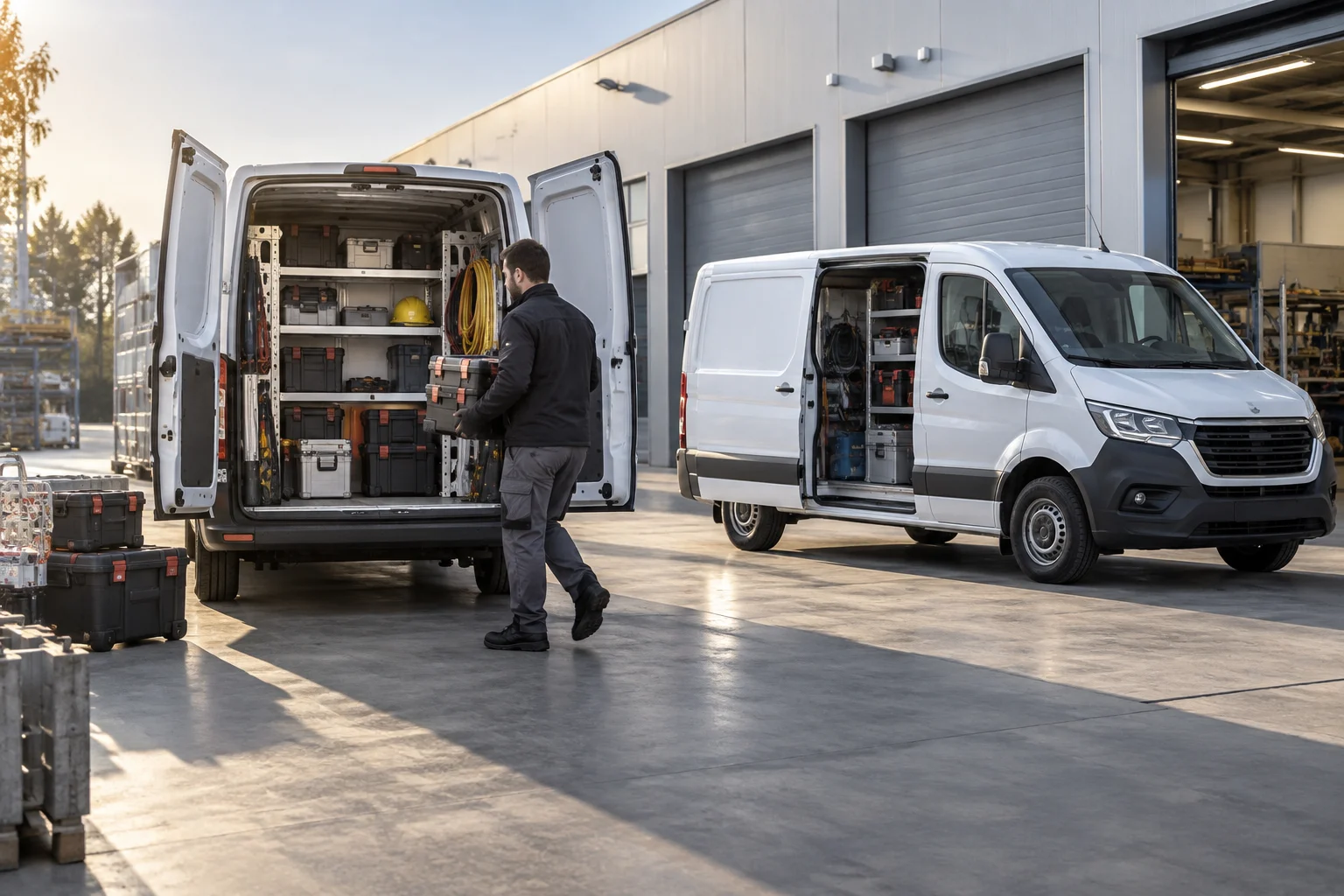
Before comparing vehicles or planning the transfer, make a detailed inventory of the tools, consumables and materials usually carried. The van’s layout should suit the specific work: a maintenance van needs a different setup from one used for electrical or air-conditioning work.
Prioritize items by how often they are used and how easy they are to reach. Frequently needed items should be accessible, while bulky materials may need a separate area. Creating distinct zones for tools, consumables and bulky loads helps keep the van organized and efficient for day-to-day work.
Section references: Cómo organizar una furgoneta de trabajo ↗ · Cómo organizar una furgoneta de trabajo paso a paso ↗
- List tools, consumables, regular cargo and anything that needs to be reached quickly.
- Set up separate areas for tools, materials and bulky loads to suit the work.
- Keep frequently used items easy to access.

Check payload capacity and secure the load
When transferring the setup to a replacement van, check that its payload and available space can accommodate the actual combination of people, equipment and goods. A van that appears to have enough volume may still have weight-distribution limits to consider. Exceeding its payload can be dangerous and illegal, so check the limits carefully.
Use suitable restraints to stop tools and supplies shifting in transit, such as straps, load bars or nets. Check that shelving and other cargo systems are compatible with the replacement van, and secure all equipment firmly before driving.
Section references: Cómo organizar una furgoneta de trabajo ↗ · Cómo organizar una furgoneta de trabajo ↗
- Compare the replacement van’s dimensions and payload with the setup you plan to transfer.
- Check how the weight is distributed to avoid dangerous or illegal overloading.
- Use suitable restraints, such as straps, load bars or nets, to secure the cargo.

Adapt the equipment and confirm availability
A roof rack, bulkhead or shelving may be essential to the work, but availability depends on the vehicle and supplier. If you are leasing or buying a van with specific equipment, request those items and confirm when they will be installed before setting the date the replacement must start work.
Make a list of what needs to be kept, what can be rearranged and what must be added. Check whether the existing equipment is compatible with the new van to avoid surprises during the transfer. Confirm that everything needed for daily operations is present and properly installed.
Section references: Cómo organizar una furgoneta de trabajo ↗
- Identify essential equipment, such as a roof rack, shelving or bulkhead.
- Confirm equipment availability and installation timing with the supplier.
- Check whether the existing setup is compatible with the replacement van.
What should I check before transferring shelving and tools?
Check that the replacement van has enough payload capacity and space for the setup, that the weight can be distributed appropriately, and that tools and materials can be secured. Also confirm equipment compatibility and installation costs.
How can I stop the load shifting in transit?
Use suitable restraints such as straps, load bars or nets. Secure the equipment so it cannot move, helping protect both people and materials.