How to Plan Charging for an Electric Delivery Van
Learn how to calculate charging power, manage real-world range, and optimize costs for an electric van in your urban delivery business in Spain.
Key points
Charging is the decisive factor for the viability of an electric delivery van. This guide explains how to calculate the required power, manage real-world range, and optimize energy costs for self-employed drivers and small fleets in Spain.
Charging as the Core of Operational Viability
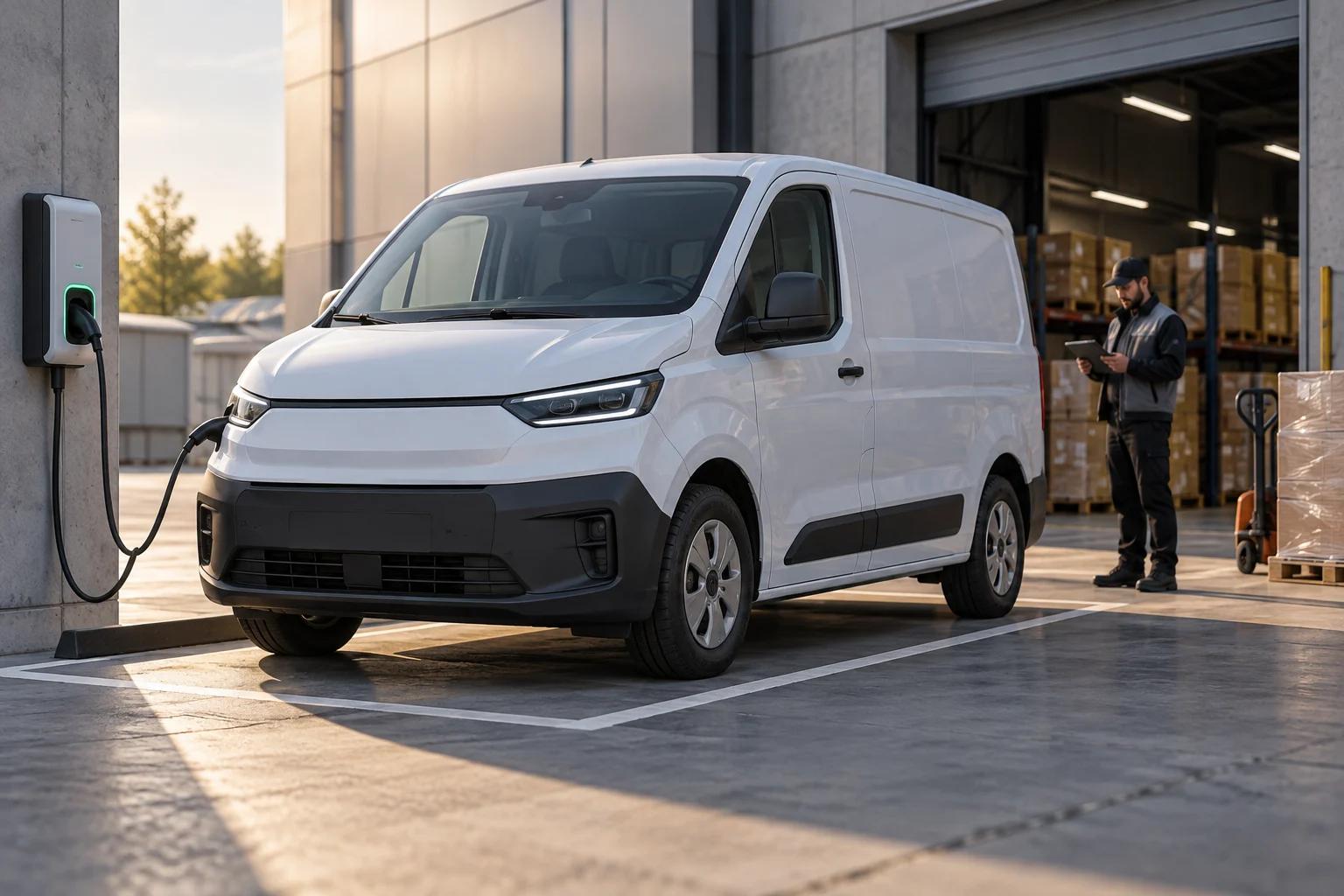
For a self-employed driver or a small fleet, the transition to an electric van depends not only on the purchase price but on the ability to integrate charging into the daily routine. Unlike a private car, a delivery vehicle operates with fixed schedules and predictable distances, allowing for more precise energy planning.
The key factor is the availability of charging infrastructure. If the daily distance is moderate and a charging point is available at the workplace or home, the operation becomes highly efficient. Planning should focus on ensuring the battery recovers the energy consumed during the workday without interfering with effective working hours.
Section references: Autónomos en Ruta: Recarga con corriente industrial ↗
- Identify whether charging will occur at home, the commercial premises, or public points.
- Evaluate the electrical power available at each location.
- Determine the vehicle's downtime available for charging.
Real-World Range vs. Homologated Range
The range homologated by manufacturers is often optimistic for professional use. In urban delivery, the consumption of an electric van is significantly higher than that of a passenger car due to three main factors: the weight of the cargo, the vehicle's poorer aerodynamics, and the frequency of starts and stops.
To plan realistically, it is fundamental to calculate the average real consumption. A delivery van traveling 120 km per day may consume between 25 and 35 kWh, depending on the load, traffic, and weather conditions. This data is the basis for sizing the charging infrastructure and avoiding range anxiety.
Section references: Autónomos en Ruta: Recarga con corriente industrial ↗ · Wallbai: Cargar una furgoneta eléctrica ↗
- The weight of the goods increases energy consumption per kilometer.
- Frequent stops in the city reduce aerodynamic efficiency.
- Ambient temperature influences battery performance and charging time.
Charging Options and Modes
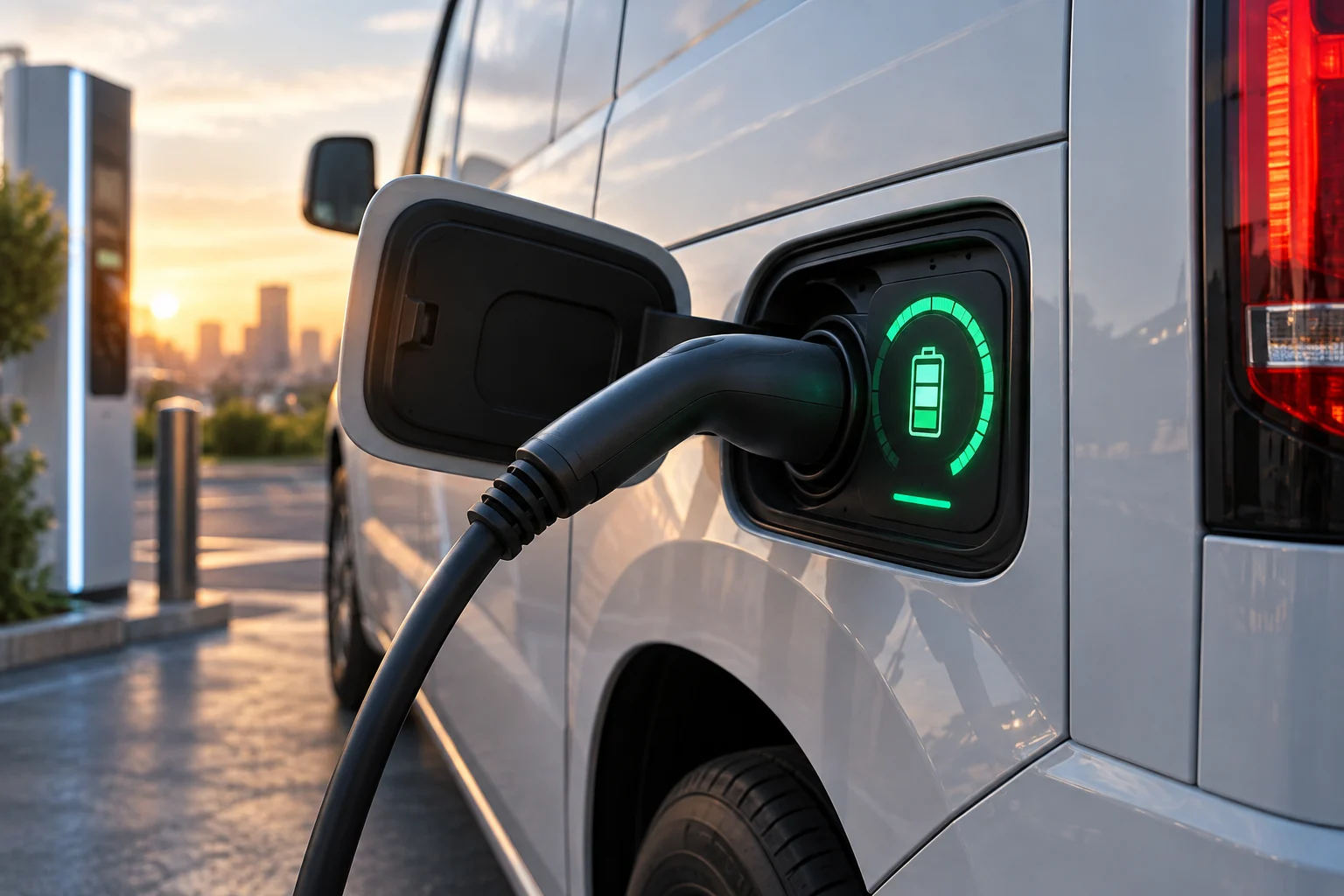
Most electric light commercial vehicles (eLCV) include charging modes 2, 3, and 4. Mode 2 is the most common for domestic use or in premises with a standard power outlet, while Mode 3 uses wall-mounted chargers (wallboxes) with higher power and safety. Mode 4 is associated with fast DC charging, although its use in urban delivery fleets is less frequent due to infrastructure costs.
Electric vans usually accept AC charging powers of 7.4 or 11 kW. The choice between these powers depends on the available electrical installation. An 11 kW three-phase installation allows the battery to recharge faster than a 7.4 kW single-phase one, which is crucial if the vehicle's downtime is limited.
| Mode | Infrastructure Type | Typical Power | Recommended Use |
|---|---|---|---|
| Mode 2 | Standard power outlet | 2.3 - 3.6 kW | Occasional use or home |
| Mode 3 | Wallbox / Wall charger | 7.4 - 11 kW | Workplace or home (recommended) |
| Mode 4 | Fast charger (DC) | 50 - 150+ kW | Large fleets or long trips |
Section references: Autónomos en Ruta: Recarga con corriente industrial ↗ · Arval: Guía Conductor Vehículo Eléctrico ↗
- Mode 2: Charging with cable and standard power outlet (home/premises).
- Mode 3: Charging with 7.4 or 11 kW wallbox (recommended for fleets).
- Mode 4: Fast DC charging (public points or large fleets).
Calculating the Required Power
To determine the appropriate charging power, divide the estimated daily consumption by the time available for charging. For example, if a van consumes 30 kWh per day and there are 8 hours of nighttime downtime, the required power is 3.75 kW. However, to optimize time and allow for partial or faster charges, it is recommended to install a 7.4 or 11 kW wallbox.
It is important to consider that charging time also depends on the ambient temperature and the battery temperature. In cold climates, the battery may take longer to reach the optimal temperature for fast charging, which can extend the process. Therefore, it is prudent to plan with a safety margin in charging time.
Section references: Autónomos en Ruta: Recarga con corriente industrial ↗ · Mercedes-Benz España: Furgonetas eléctricas ↗
- Estimated daily consumption: 25-35 kWh for 120 km.
- Available charging time: Vehicle downtime hours.
- Recommended power: 7.4 or 11 kW for professional fleets.
Battery Management and Degradation
The lifespan of an electric van's battery is affected by charging habits and usage conditions. Keeping the battery between 20% and 80% of its capacity can help reduce long-term degradation. Additionally, avoiding prolonged exposure to extreme temperatures is crucial to preserve performance.
In the context of delivery, daily full charging is common, but it is recommended not to leave the battery at 100% permanently if not necessary. Battery thermal management is automatic in most models, but the driver should be aware that frequent fast charges can accelerate wear.
Section references: Mercedes-Benz España: Furgonetas eléctricas ↗
- Avoid deep discharges below 20%.
- Do not keep the battery at 100% permanently.
- Consider the impact of temperature on charging time.
Integration into the Work Routine
Route planning must include strategic charging stops if the range does not cover the full workday. In urban delivery, nighttime charging at the workplace is the most efficient solution. However, if the fleet operates in shifts or with multiple vehicles, it is necessary to coordinate the use of charging points to avoid bottlenecks.
The use of fleet management applications can help monitor the battery status and plan recharges. Additionally, it is important to consider the availability of public charging points in case of unforeseen events, although their use should be the exception and not the norm to maintain operational efficiency.
Section references: Cargatucoche: Beneficios de las furgonetas eléctricas ↗
- Coordinate the use of wallboxes if there are multiple vehicles.
- Monitor battery status with fleet software.
- Have a contingency plan with public charging points.
Costs and Available Aid
The initial investment in an electric van and its charging infrastructure is higher than that of a thermal vehicle, but the cost per kilometer is significantly lower. The price of electricity is more stable and lower than that of fossil fuels, reducing operational costs in the long term.
In Spain, there are various aids and subsidies for the purchase of electric commercial vehicles, as well as for the installation of charging points. It is fundamental to consult the current calls from the Directorate General for Traffic (DGT) and the autonomous communities to maximize savings. Additionally, the tax deduction for the purchase of electric vehicles can be an additional advantage for self-employed drivers and companies.
Section references: Cargatucoche: Beneficios de las furgonetas eléctricas ↗
- Cost per kilometer: Lower in electric than in thermal.
- Aids: Subsidies for purchase and charging installation.
- Taxation: Possible deductions for electric vehicles.
Checklist to Determine Viability
Before acquiring an electric van for delivery, it is essential to carry out a complete evaluation of the operation. This checklist helps determine if the infrastructure and work routine are compatible with electrification.
If the answer to most of these questions is affirmative, the electric van is a viable and potentially profitable option. Otherwise, it may be necessary to consider a plug-in hybrid van or wait until charging infrastructure is more accessible.
Section references: Autónomos en Ruta: Recarga con corriente industrial ↗
- Do I have a charging point at the premises or home?
- Is the daily distance less than the estimated real range?
- Do I have enough time to recharge the battery during the day?
- Have I calculated the TCO (Total Cost of Ownership) including aids?
- Is my fleet coordinated for efficient use of the infrastructure?
How long does it take to charge an electric delivery van?
Charging time depends on the charger power and battery capacity. With a 7.4 kW wallbox, a full charge can take between 4 and 6 hours. With 11 kW, the time is reduced to between 3 and 4.5 hours. Ambient temperature also influences charging speed.
Is an electric van profitable for urban delivery?
Yes, especially if nighttime charging is available at the workplace. The cost per kilometer is lower than in a diesel vehicle, and purchase aids can reduce the initial investment. Profitability depends on the daily distance and the availability of charging infrastructure.
What charging power do I need for my electric van?
For a professional fleet, a 7.4 or 11 kW wallbox is recommended. The power must be sufficient to recharge the battery during the vehicle's downtime. If charging time is limited, higher power is preferable.
How does charging affect battery lifespan?
Charging habits influence battery degradation. Keeping the charge between 20% and 80% and avoiding exposure to extreme temperatures can prolong lifespan. Frequent fast charges can accelerate wear, so they are recommended only when necessary.