Motorhome Water Management: Practical Guide for a 10-Day Route
Learn how to calculate consumption, optimize a 115-liter tank, and plan service stops to ensure a supply of clean and grey water during a week and a half of travel.
Key points
For a 10-day route, a motorhome with a 115-liter tank requires active planning: consume less than 11.5 liters daily through short showers and reuse, or schedule refills every 2-3 days. Efficient management prevents exceeding the GVW and ensures real autonomy.
Why water is the critical resource on long trips
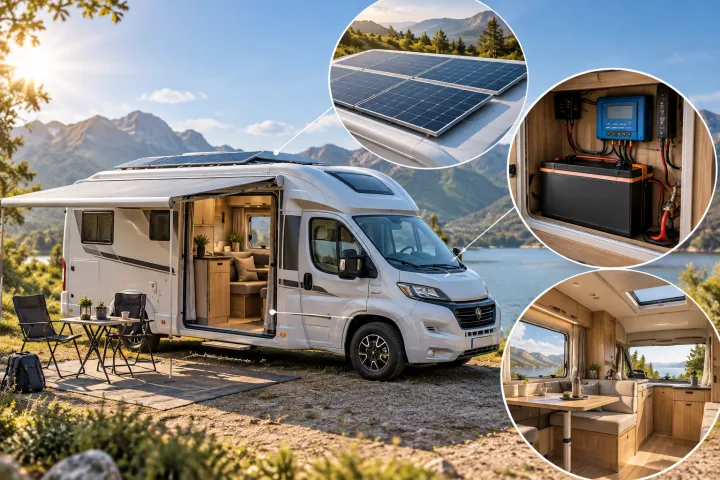
On a 10-day route, water is the resource that most limits a motorhome's autonomy. Unlike electrical energy, which can be managed with solar panels and batteries, clean water is a finite resource that depends exclusively on tank capacity and the availability of service points.
Efficient management not only prevents running out of water but also directly impacts the vehicle's total weight. A full tank adds hundreds of kilograms to the curb weight, which can dangerously approach the GVW (Gross Vehicle Weight) limit. Therefore, planning consumption is as important as calculating payload.
- Clean water is a non-renewable resource on board unless refilled.
- Water weight affects engine performance and braking.
- Planning stops is key to maintaining real autonomy.
Actual tank capacity: what you need to know
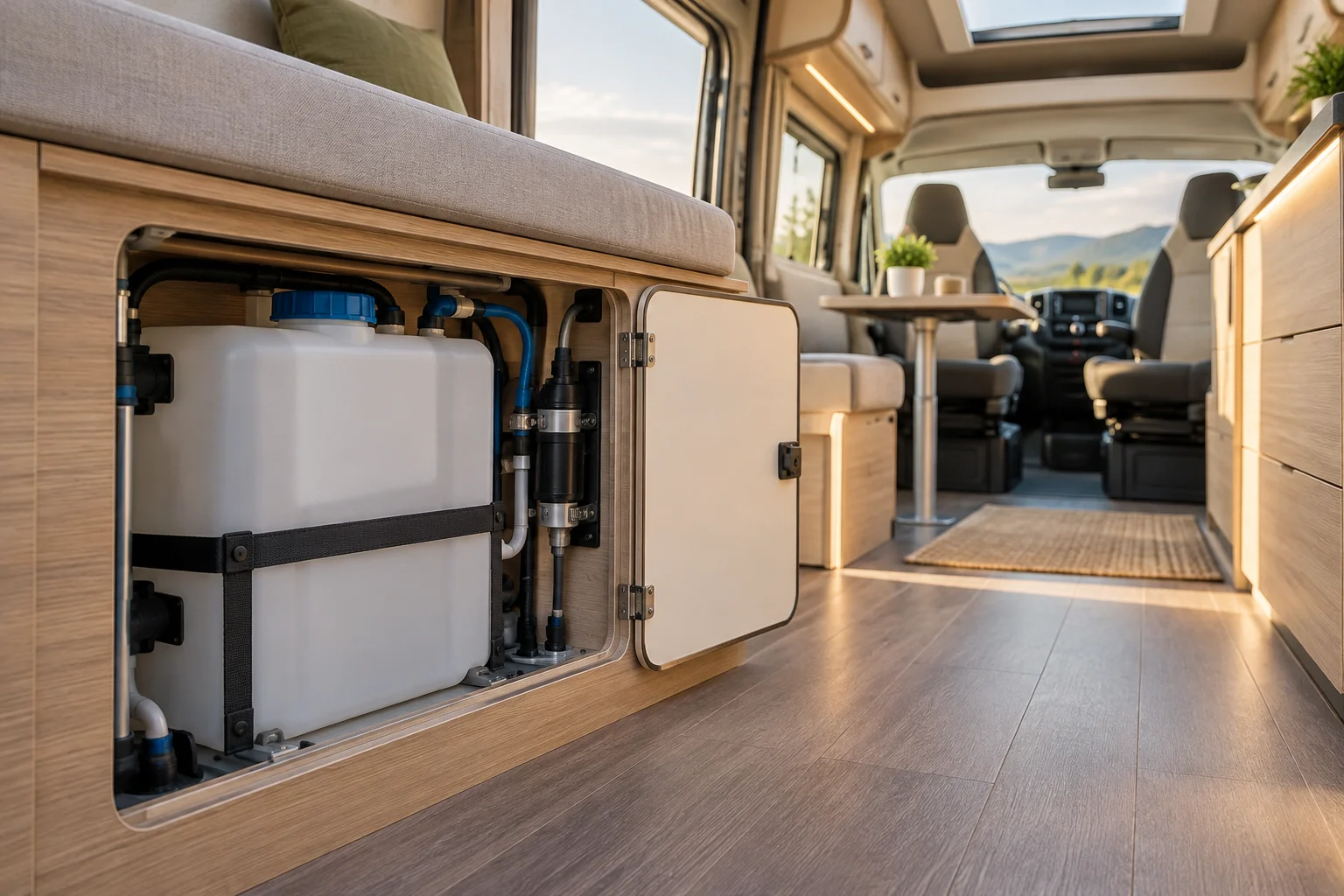
Tank capacity varies by model, but a common reference in mid-size motorhomes is a clean water tank of approximately 115 liters. This figure may seem generous if managed carefully, but it depletes quickly if domestic consumption habits are maintained.
In addition to the clean water tank, there are grey water tanks (from the sink and shower) and the black water tank (toilet). The capacity of the latter is usually smaller, requiring more frequent emptying. It is essential to know the exact capacities of your vehicle, as not all motorhomes are the same.
| Tank Type | Approximate Capacity | Management Frequency |
|---|---|---|
| Clean water | 115 liters | Refill every 2-3 days |
| Grey water | Variable (50-100 L) | Empty according to level |
| Black water (WC) | Variable (20-50 L) | Frequent emptying |
Section references: Depósito de agua limpia en autocaravana ↗
- Clean water tank: ~115 liters in typical models.
- Grey and black water tanks: variable capacities, usually smaller.
- Knowing exact capacities is essential for planning.
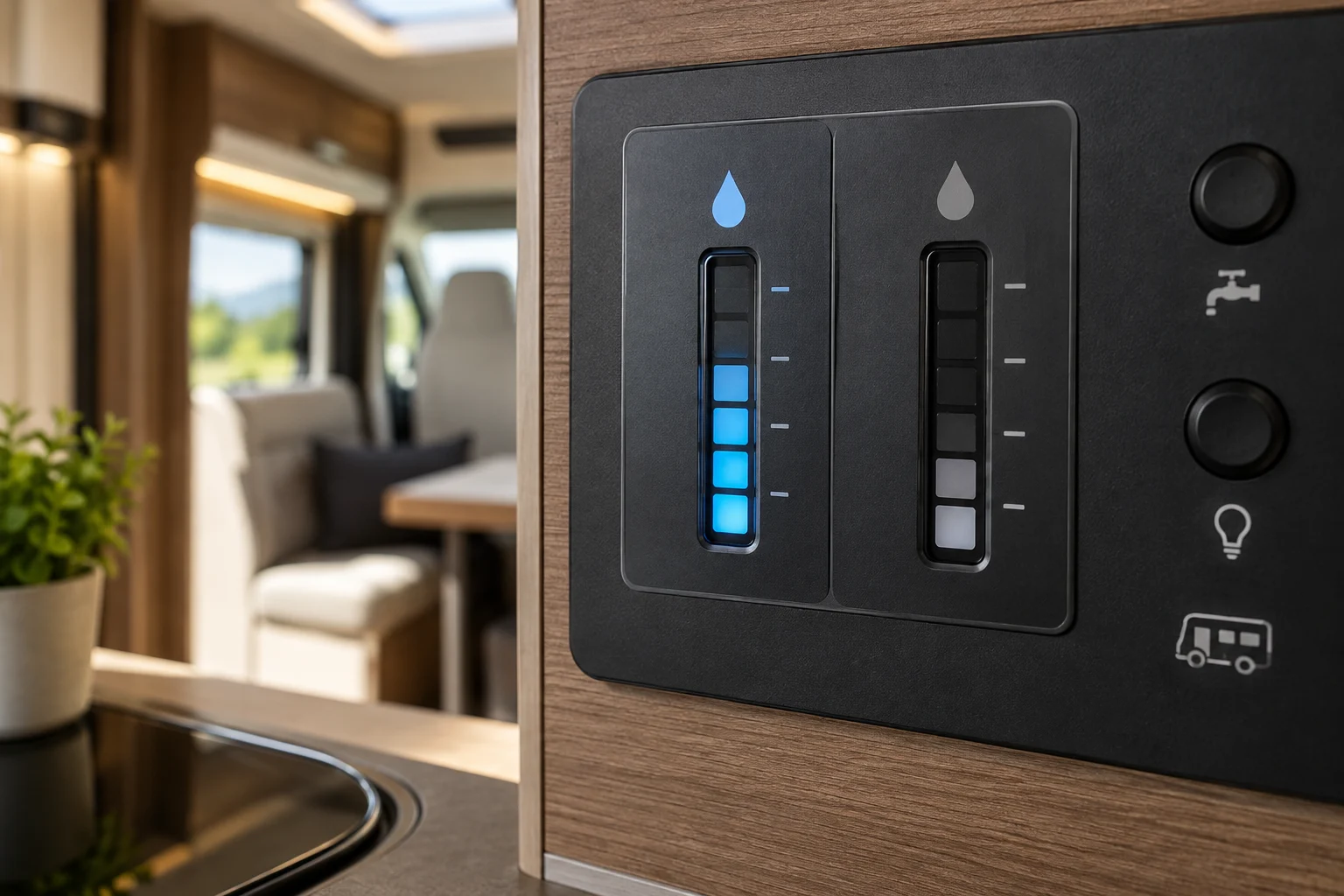
Estimated daily consumption: how to calculate your needs
To plan for 10 days, you need to estimate your daily consumption. Typical use includes cooking, showering, and hand washing. If 11.5 liters are consumed per day, the 115-liter tank depletes exactly in 10 days, with no margin for error.
However, it is prudent to assume higher consumption or plan intermediate stops. Efficient use can reduce consumption to 8-10 liters daily, allowing greater autonomy. Unrestricted domestic use can exceed 15-20 liters daily, depleting the tank in less than 5 days.
- Efficient use: 8-10 liters/day (11-14 days autonomy).
- Moderate use: 11-12 liters/day (9-10 days autonomy).
- Domestic use: 15-20 liters/day (5-7 days autonomy).
Techniques to reduce water consumption
The key to maximizing autonomy is reducing consumption without sacrificing hygiene. Short showers (3-5 minutes) are the most effective measure. Using the dishwasher at full load and reusing grey water to clean the floor or wheels are common practices among experienced motorhome owners.
Additionally, installing an activated carbon filter at the water inlet can improve taste and reduce the need to buy bottled water, although it does not directly reduce consumption. Consumption awareness is the most powerful tool.
Section references: Guía de agua en camper ↗
- 3-5 minute showers with a low-flow faucet.
- Dishwasher only at full load.
- Reuse grey water for non-potable cleaning.
- Activated carbon filters to improve water quality.
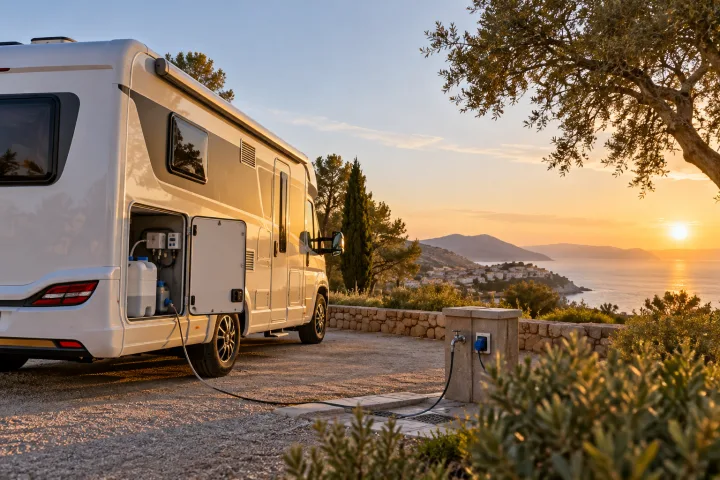
Planning refill and dump points
For a 10-day route, it is recommended to plan service stops every 2-3 days. This allows keeping grey and black water tanks under control and avoiding odors or overflows. Caravaning apps and service area maps are essential tools for locating these points.
In Spain, many service areas offer water refills and grey/black water dumping for a fixed fee. It is important to verify availability and hours before arriving, especially during high season.
Section references: Guía de agua en camper ↗
- Plan stops every 2-3 days.
- Use caravaning apps to locate service areas.
- Verify hours and fees before arriving.
- Avoid filling the clean water tank if not necessary to avoid adding unnecessary weight.
Practical checklist before departure and during the trip
Before leaving, verify that the tanks are clean and that there are no leaks. During the trip, monitor clean and grey water levels daily. Adjust consumption according to the availability of service points in the upcoming stages.
Always carry an emergency kit with water purification tablets, in case you run out of access to potable water. This is especially useful on remote routes or in case of filtration system failure.
- Before leaving: verify leaks and tank cleanliness.
- During the trip: monitor levels daily.
- Carry water purification tablets as an emergency.
- Adjust consumption according to service availability.
How many liters of water do I need for 10 days in a motorhome?
With a 115-liter tank and efficient consumption of 10 liters/day, you need 100 liters. However, it is recommended to plan refill stops every 2-3 days to not rely exclusively on the initial tank.
Can I reuse grey water for anything?
Yes, grey water (from the sink and shower) can be reused to clean the floor, wheels, or the exterior of the motorhome. It is not suitable for human consumption or cooking.
What happens if I run out of clean water?
If you run out of clean water, you must find the nearest service point. In emergencies, you can use purification tablets to make water from springs or streams potable, although it is not an ideal solution.
How often should I empty the grey water tank?
It depends on consumption, but it is recommended to empty it when it reaches 70-80% of its capacity to avoid odors and overflows. On a 10-day route, you will probably need to empty it 2-3 times.