Real cost of a motorhome for 10 days: budget guide
Discover the true cost of a 10-day motorhome trip. We analyze fuel, rental, water, electricity, and maintenance with documented data for Spain.
Key points
The real cost of a 10-day motorhome trip depends on whether you rent or own the vehicle, fuel consumption, and your lifestyle on board. This guide breaks down key expenses with documented ranges to help you adjust your budget before departure.
Introduction: The importance of budgeting each item
Planning a motorhome trip requires a clear view of expenses, which go far beyond fuel. Unlike a traditional car, a motorhome involves service costs (water, electricity), accommodation (overnights), and, in many cases, vehicle rental. For a 10-day trip, the difference between a tight and a generous budget can be several hundred euros.
This guide is based on documented data for the Spanish market, differentiating between the owner and the renter. The goal is to help you identify the variables that have the biggest impact on your wallet and adjust them according to your travel style, whether more economical or more comfortable.
1. Fuel: Real consumption and average prices
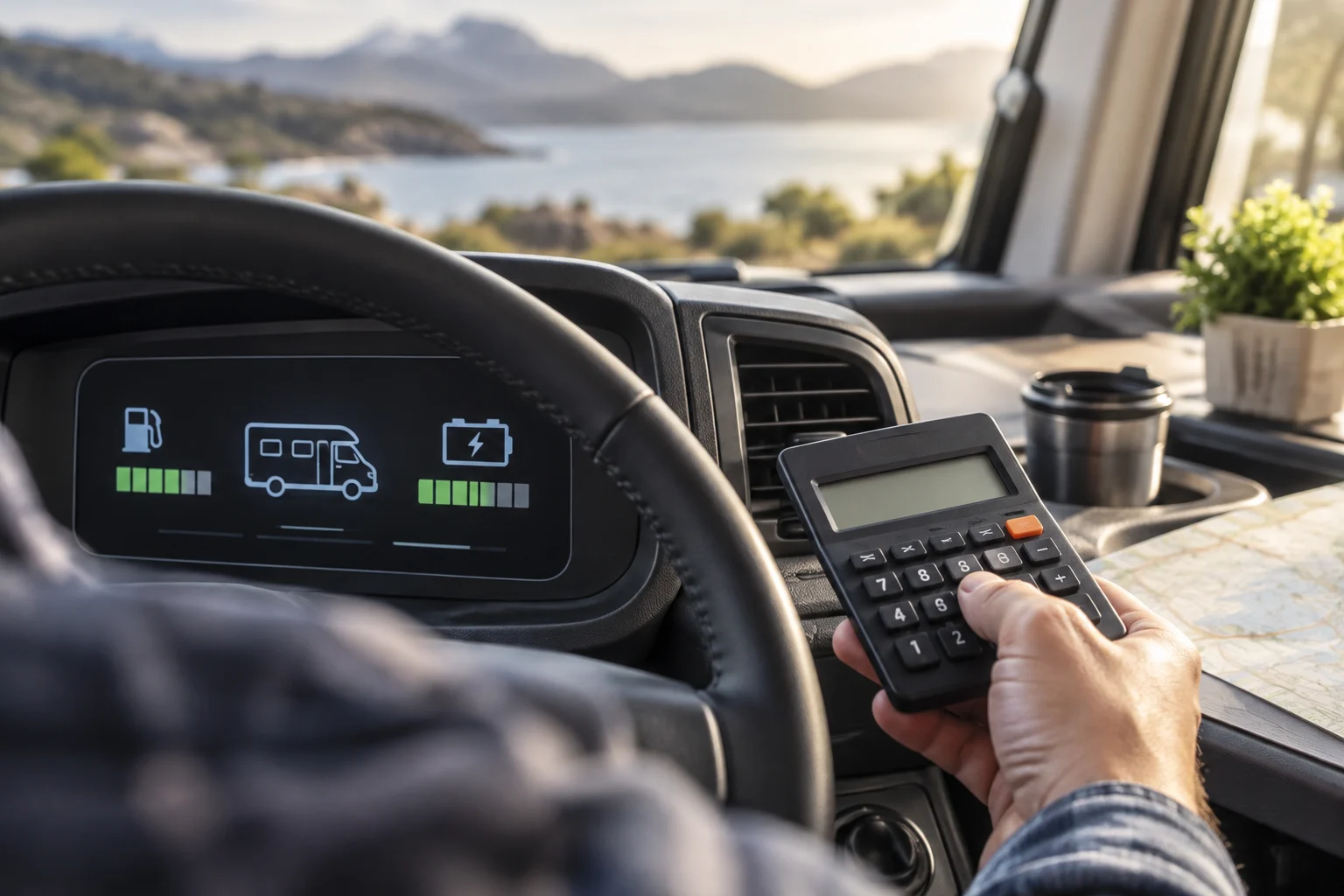
Fuel is the most significant variable expense. A motorhome's consumption depends on its weight, aerodynamics, and driving style. Unlike a passenger car, a large motorhome usually has higher consumption, especially in the city or with maximum load.
To estimate the cost, you must multiply the planned kilometers by the average consumption and the price per liter. It is crucial to consider that diesel and gasoline prices fluctuate, so it is advisable to check prices in the destination area before leaving.
Section references: Cuánto cuesta viajar en autocaravana en 2026 ↗
- Consumption varies according to weight, aerodynamics, and driving style.
- Check fuel prices along your route to optimize refueling.
2. Potable and grey water: Consumption and services
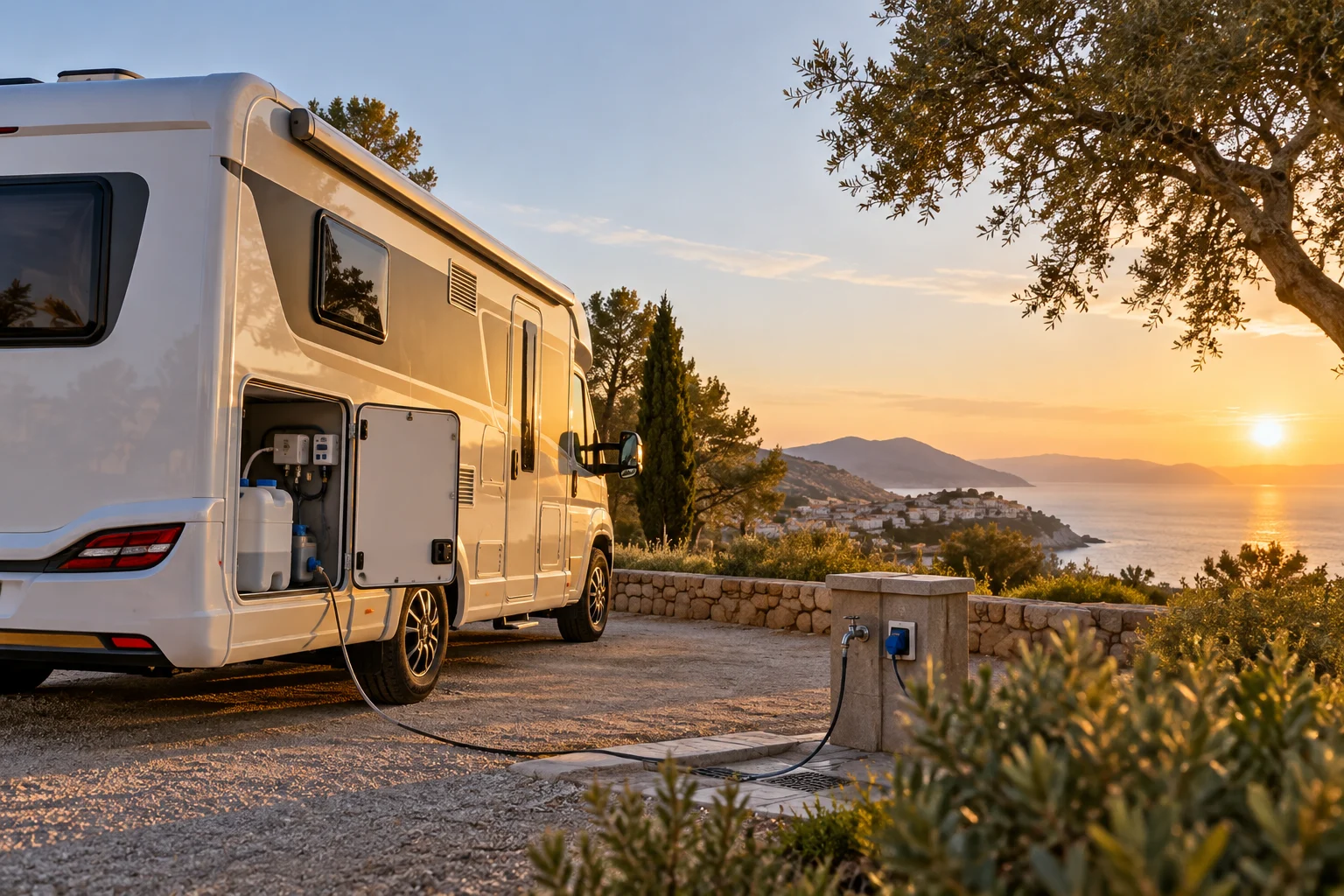
Water is a critical resource in a motorhome. Average consumption per person and day varies depending on domestic use (cooking, hygiene, cleaning). Most motorhomes have limited clean water tank capacity, which requires periodic refills if traveling as a couple.
Refilling potable water is usually free at service areas and campgrounds, although some points may charge a small fee. Emptying grey and black water is mandatory at authorized points. Ignoring this rule is not only illegal but can result in fines. Plan your route including these service points to avoid improvisation.
Section references: Cuánto cuesta viajar autocaravana: guía completa 2024 ↗
- Water consumption depends on the lifestyle on board.
- Water refill: generally free at service areas.
3. Electricity: Autonomy and external charging
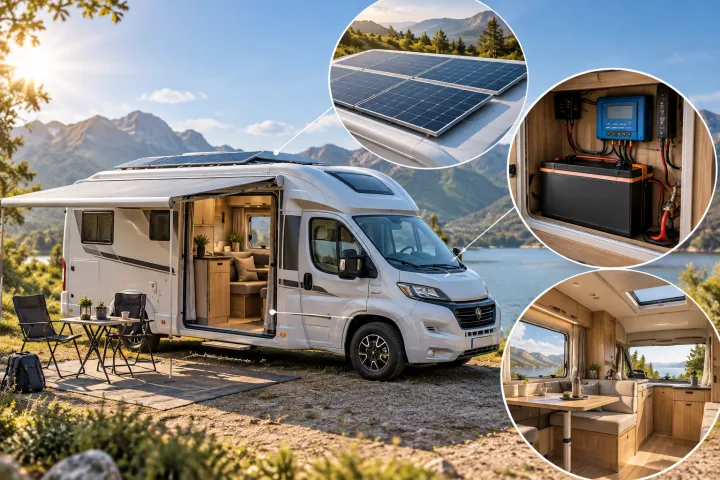
On-board electrical energy is managed through auxiliary batteries and, in many cases, solar panels. Consumption depends on the appliances used: refrigerator, lighting, fans, and electronic devices.
If battery autonomy is not sufficient, it will be necessary to connect the motorhome to the external electrical grid (230V) at campgrounds or service areas. This connection usually incurs a cost that varies depending on the establishment. Solar panels can reduce this dependence, but their effectiveness depends on solar radiation and the capacity of the installation.
Section references: Cuánto cuesta viajar en autocaravana en 2026 ↗
- Electrical consumption depends on the appliances used.
- Solar panels reduce the need for external charging.
4. Rental or insurance: Daily rates and coverages
If you do not own a motorhome, rental is the main investment. Prices vary significantly depending on the season, type of vehicle, and rental duration. In the low season, rates can range from €50 to €100 per day, while in the high season they can exceed €100.
It is essential to review the insurance coverages. Basic coverage usually includes civil liability, but it is recommended to contract own damage coverage and reduced excess. The additional cost of these coverages can vary, but it offers considerable peace of mind in the event of possible incidents.
| Season type | Estimated daily cost | Notes |
|---|---|---|
| Low | €50 - €100 | Outside school holidays and public holidays. |
| High | > €100 | Summer holidays, Christmas, and long weekends. |
Section references: Cuánto cuesta alquilar una autocaravana: precios por día ↗ · Cuánto cuesta viajar autocaravana: guía completa 2024 ↗
- Low season rental: €50-100/day.
- High season rental: >€100/day.
- Own damage coverage: variable cost depending on the insurer.
5. Preventive maintenance: Filters and inspections
Although major maintenance is usually annual, a 10-day trip requires preventive checks. Before leaving, it is essential to verify the condition of the tires, oil and coolant levels, and the functioning of the brakes. These checks are free if done at home, but if delegated to a workshop, they can have a variable cost.
During the trip, tire and air filter wear may be greater if driving on difficult terrain. It is recommended to carry a set of basic spare parts and know the nearest service points. Preventive maintenance is not an optional expense, but an investment in safety and reliability.
Section references: Cuánto cuesta mantener una autocaravana al año ↗
- Pre-trip check at home: €0.
- Workshop check: variable cost depending on the service.
- Basic spares: tires, fuses, bulbs.
6. Other expenses: Parking, tolls, and leisure
Parking is an item that is often underestimated. In Spain, overnight stays at service areas are usually free or low-cost, but at campgrounds the price per night can vary depending on the services included (water, electricity, sewage).
Tolls on motorways are another variable expense. If your route includes motorway sections, calculate the cost per kilometer and consider alternatives via secondary roads if time allows. Leisure and food also impact the budget: a couple cooking on board can spend between €10 and €25 per day on food, while eating out can double or triple this figure.
Section references: Cuánto cuesta viajar en autocaravana en 2026 ↗
- Overnight stay at campground: variable cost depending on services.
- Overnight stay at service area: generally free or low-cost.
- Food cooking: €10-25/day (couple).
7. Practical example: Budget for 10 days
To illustrate the total cost, consider an example of a couple renting a motorhome for 10 days in the medium season. The rental is estimated at €80/day, totaling €800. Food cooking at €20/day totals €200. Tolls and other miscellaneous expenses must be estimated according to the route.
If the traveler owns the motorhome, they must add the vehicle amortization and prorated annual fixed costs. Maintaining a motorhome in Spain involves between €1,000 and €3,000 annually in fixed costs, which equates to about €27-82 per day. Therefore, the real cost for an owner includes these fixed costs in addition to the variable expenses of the trip, excluding vehicle depreciation.
| Item | Estimated cost (€) | Detail |
|---|---|---|
| Rental | 800 | €80/day x 10 days. |
| Food | 200 | €20/day x 10 days. |
| Fixed costs (ownership) | 270 - 820 | Proration of €1,000-3,000 annually for 10 days. |
Section references: Cuánto cuesta viajar autocaravana: guía completa 2024 ↗ · Cuánto cuesta mantener una autocaravana al año ↗
- Rental (10 days): €800 (example at €80/day).
- Food (10 days): €200 (example at €20/day).
- Ownership fixed costs: €1,000 - €3,000 annually.
Conclusion: How to adjust the budget
The cost of a motorhome trip is flexible and depends largely on the traveler's decisions. Opting for free service areas, cooking on board, and planning the route to minimize kilometers can significantly reduce the budget. Conversely, the use of luxury campgrounds, dependence on the electrical grid, and long distances increase the cost.
The key is planning. Use travel budget tools to estimate each item and adjust the variables according to your lifestyle. Remember that maintenance and insurance are fixed costs that must be considered, especially if you own the vehicle. With good planning, a 10-day motorhome trip can be an enriching and economically viable experience.
- Plan the route to minimize kilometers.
- Cook on board to reduce food expenses.
- Use free service areas when possible.
- Check the vehicle's condition before leaving.
How much does it cost to rent a motorhome in Spain?
Renting a motorhome in Spain can cost between €50 and €100 per day in the low season, and exceed €100 in the high season, depending on the type of vehicle and rental duration.
How much fuel does a motorhome consume?
A motorhome's consumption depends on its weight, aerodynamics, and driving style. It is usually higher than that of a passenger car, especially in the city or with maximum load.
Is it cheaper to own or rent a motorhome?
It depends on the frequency of use. Maintaining a motorhome involves between €1,000 and €3,000 annually in fixed costs. If you travel less than 2-3 times a year, renting is usually more economical.
How much does an overnight stay in a motorhome cost?
Overnight stays at service areas are usually free or low-cost, while at campgrounds the price varies depending on the services included.