LPG or Petrol Car: How to Compare the Cost per Kilometer
Learn how to calculate the real energy cost of a bi-fuel LPG vehicle compared to a petrol one. Discover how consumption, fuel price, and installation influence your economy.
Key points
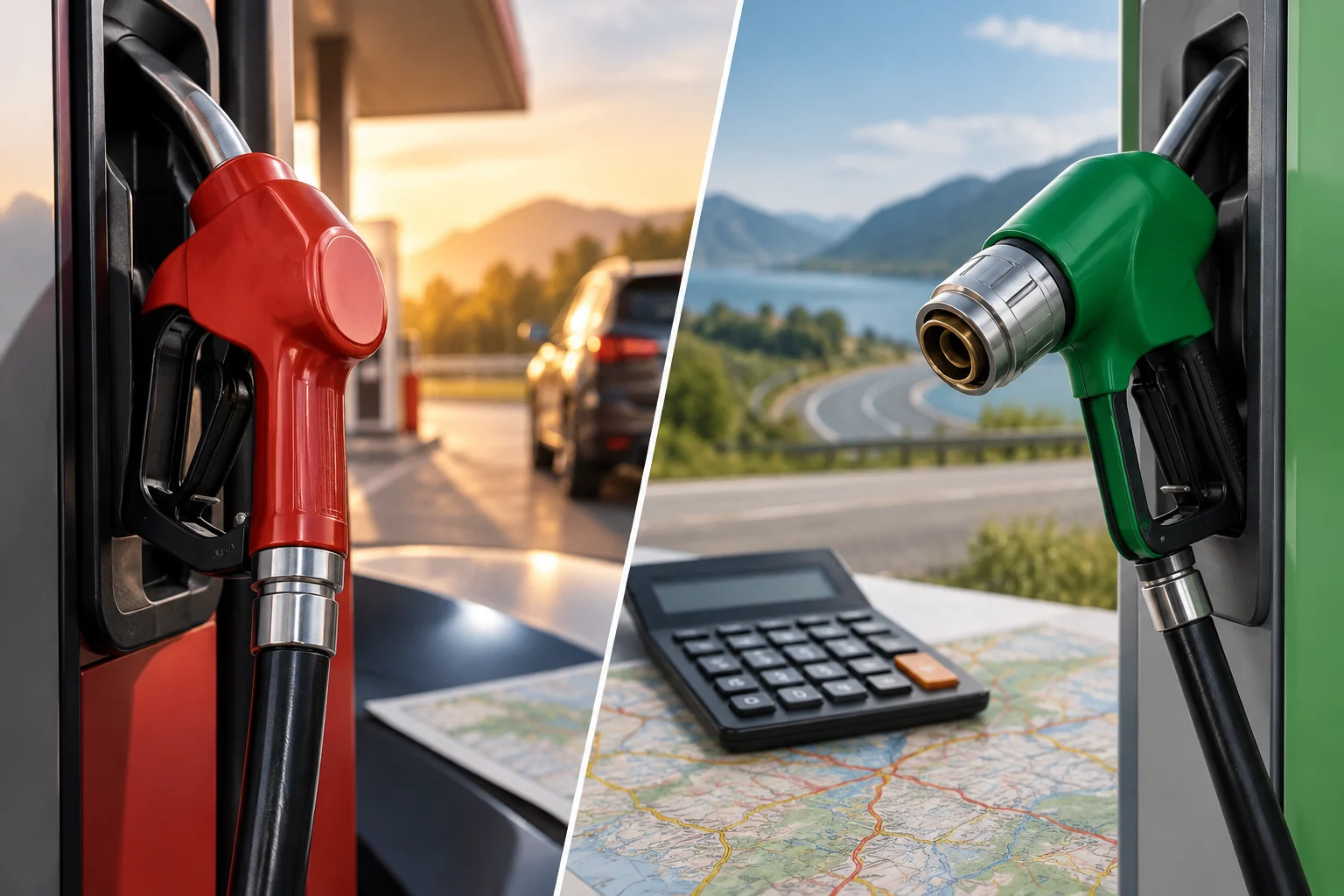
The cost per kilometer of an LPG car compared to a petrol one depends on real consumption in each mode, usage proportion, and current prices. This guide provides a method to calculate it and highlights items like installation costs and environmental labels that must be evaluated separately.
Key differences between a bi-fuel car and a petrol car
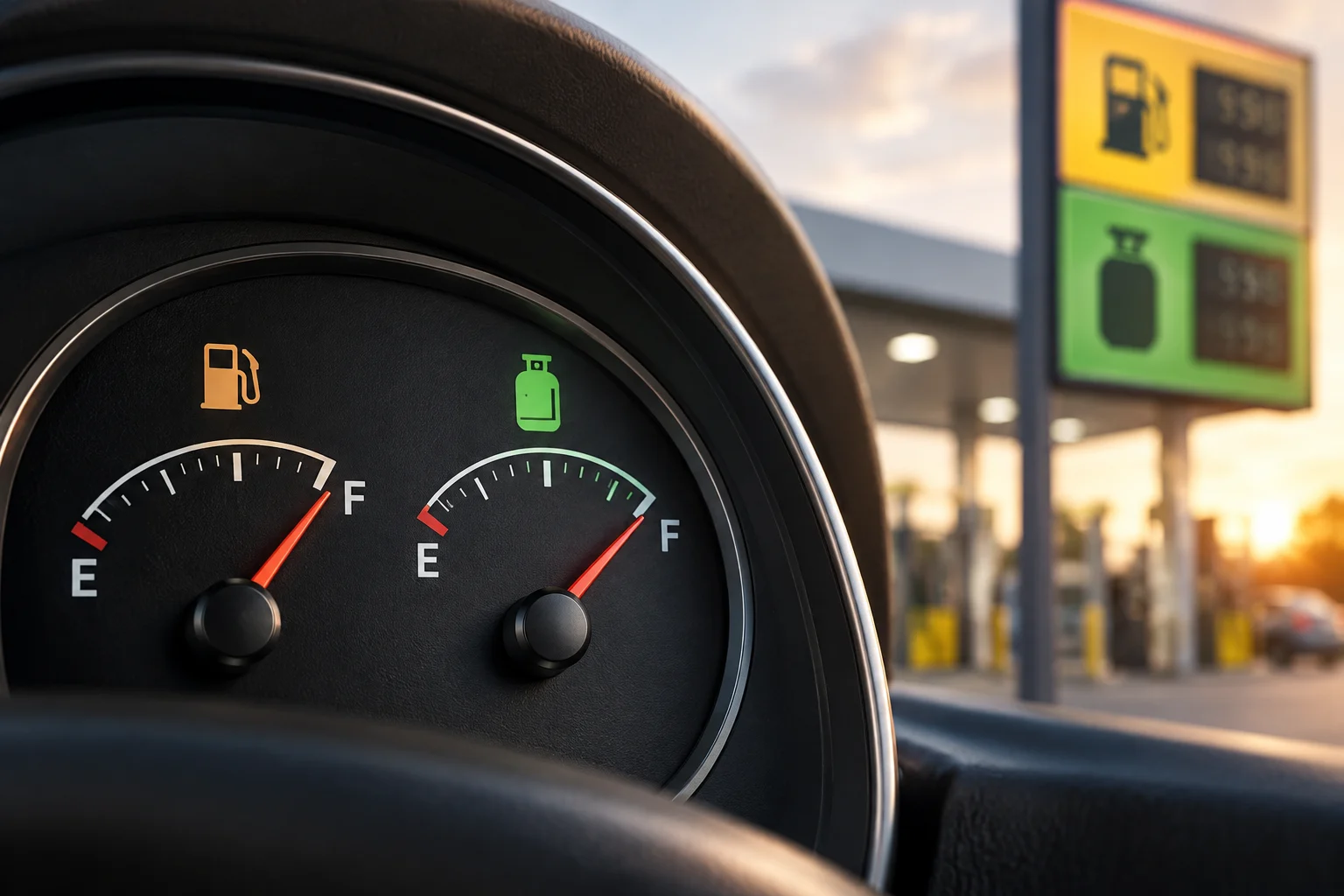
A bi-fuel petrol-LPG car is designed to run on both fuels, whereas a traditional petrol car uses only petrol. The main advantage of LPG is its price per liter, which is usually significantly lower than petrol and, in many cases, diesel. However, it is not a simple fuel swap: the injection system and engine management can vary, affecting real consumption.
In Spain, LPG has gained popularity recently. According to DGT and ANFAC data, in November 2024, LPG surpassed diesel for the first time in new car registrations, reaching a 5.85% share compared to diesel's 4.21%. This growth is largely due to the ECO environmental label granted by many autonomous communities to these vehicles, which facilitates access to low-emission zones and offers discounts on regulated parking.
Section references: GLP vs diésel: ¿Qué combustible es más económico y ... ↗
Essential data for comparison
To compare the cost per kilometer, you need three fundamental data points: real consumption in each fuel, the usable tank capacity, and current prices. It is not enough to look at the ECO label or the price per liter; the final result depends on how you drive and what percentage of the time you use each fuel.
The average price of LPG in Spain was €0.97/liter in February 2025. For context, diesel was €1.59/liter at the same time, while petrol prices typically fall between these two figures but vary by service station and region. It is crucial to use dated and updated prices for the comparison to be valid.
Section references: GLP vs diésel: ¿Qué combustible es más económico y ... ↗
- Real consumption in petrol (liters/100 km).
- Real consumption in LPG (liters/100 km).
- Current price of petrol (€/liter).
- Current price of LPG (€/liter).
- Estimated usage percentage of each fuel.
How to calculate the energy cost per kilometer
The basic formula to calculate the cost per kilometer is: (Consumption in liters/100 km × Price per liter) / 100. For a bi-fuel car, you must calculate the cost for each fuel separately and then weight it according to the usage percentage.
For example, if a car consumes 7 liters of petrol per 100 km and petrol costs €1.50/liter (an illustrative assumption for this calculation), the cost per kilometer in petrol is (7 × 1.50) / 100 = €0.105/km. If the same car consumes 8 liters of LPG per 100 km and LPG costs €0.97/liter, the cost per kilometer in LPG is (8 × 0.97) / 100 = €0.0776/km. If you use LPG 80% of the time and petrol 20%, the weighted average cost would be (0.8 × 0.0776) + (0.2 × 0.105) = €0.0831/km.
| Fuel | Consumption (L/100 km) | Price (€/L) | Cost (€/km) |
|---|---|---|---|
| Petrol | 7.0 | 1.50 | 0.105 |
| LPG | 8.0 | 0.97 | 0.0776 |
Section references: Consumo de coche GLP vs gasolina: comparativa de costes, eficiencia y ventajas ↗
Homologated consumption vs. real use
Homologated consumption figures, such as those from the WLTP cycle, are useful for comparing models but do not necessarily reflect real consumption in your daily driving. A car that consumes 7 liters of petrol per 100 km in test conditions may consume more in the city or on the highway, depending on driving style, traffic, and weather conditions.
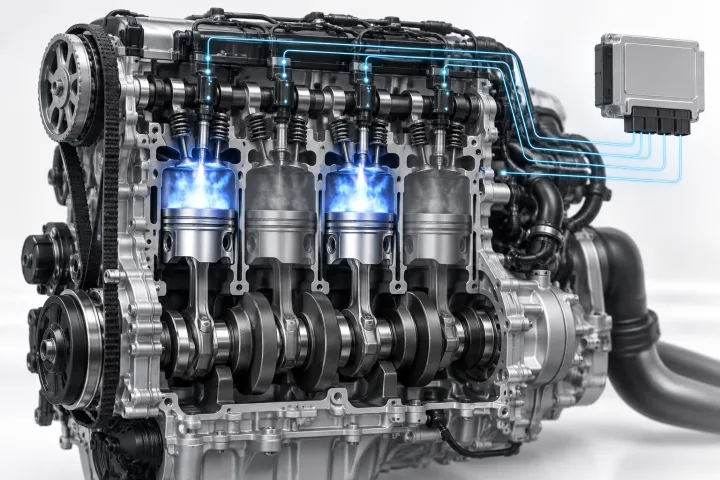
In engines with direct injection, petrol can represent up to 20% of total consumption in an LPG bi-fuel vehicle, depending on the type of driving and management system. This means that, although LPG is cheaper, it is not always used 100% of the time. It is important to consider this proportion when calculating real savings.
Section references: Consumo de coche GLP vs gasolina: comparativa de costes, eficiencia y ventajas ↗
Installation, maintenance, and environmental label
Fuel cost is only part of the equation. Installing an LPG system in a petrol car usually costs between €1,200 and €2,500, depending on the vehicle type and system. This initial expense must be amortized over time to determine if the fuel savings compensate for the investment.
Additionally, vehicles with an ECO label in cities like Madrid have unrestricted access to the Central District, while diesel cars with a C label have restricted access. In Madrid, the Regulated Parking Service (SER) applies a 75% discount on the base rate for vehicles with an ECO label. These non-monetary benefits can be decisive for urban drivers.
Section references: GLP vs diésel: ¿Qué combustible es más económico y ... ↗ · Comparativa técnica GLP vs coche eléctrico coste y rendimiento ↗
- Installation cost: €1,200 - €2,500.
- ECO label: access to low-emission zones and parking discounts.
- Maintenance: specific inspections for the LPG system.
Fuel station availability and comparison limits
The availability of LPG fuel stations is an important practical factor. Although the network of LPG service stations has grown in Spain, it is not as extensive as petrol or diesel. If you frequently travel to rural areas or other regions, the lack of fuel stations may limit the convenience of LPG.
A general cost comparison does not account for fuel availability, refueling time, or usage flexibility. These factors must be evaluated alongside economic savings to make an informed decision.
Data checklist for decision-making
Before deciding between an LPG car and a petrol one, gather the following data: your annual mileage, your driving style, fuel station availability in your area, installation cost (if applicable), and environmental label benefits. Use the cost per kilometer formula with your real data to obtain an accurate estimate.
Remember that savings are not universal: they depend on your specific use. An urban driver with many daily kilometers may benefit more from LPG than a driver who makes few long trips. Evaluate all items, not just the fuel price.
- Estimated annual mileage.
- Driving style (urban, highway, mixed).
- LPG fuel station availability in your area.
- LPG system installation cost.
- ECO label benefits in your city.
Is an LPG car always cheaper than a petrol one?
Not necessarily. Savings depend on real consumption, fuel price, and the usage percentage of each mode. In some cases, the installation cost and lower LPG consumption may not compensate for the fuel savings.
What environmental label does an LPG car have?
In many Spanish autonomous communities, LPG cars receive the ECO label, allowing them to access low-emission zones and obtain discounts on regulated parking.
How much does it cost to install an LPG system?
Installing an LPG system in a petrol car usually costs between €1,200 and €2,500, depending on the vehicle and the chosen system.
Can I use an LPG car at any service station?
No. The network of LPG service stations is more limited than petrol or diesel. It is important to verify availability in your area before buying or converting a vehicle.