Cylinder Deactivation in Gasoline Engines: How It Works and What to Notice
Understand how modern gasoline engines temporarily deactivate cylinders to save fuel, the conditions that trigger it, and the effects drivers may notice in daily driving.
Key points
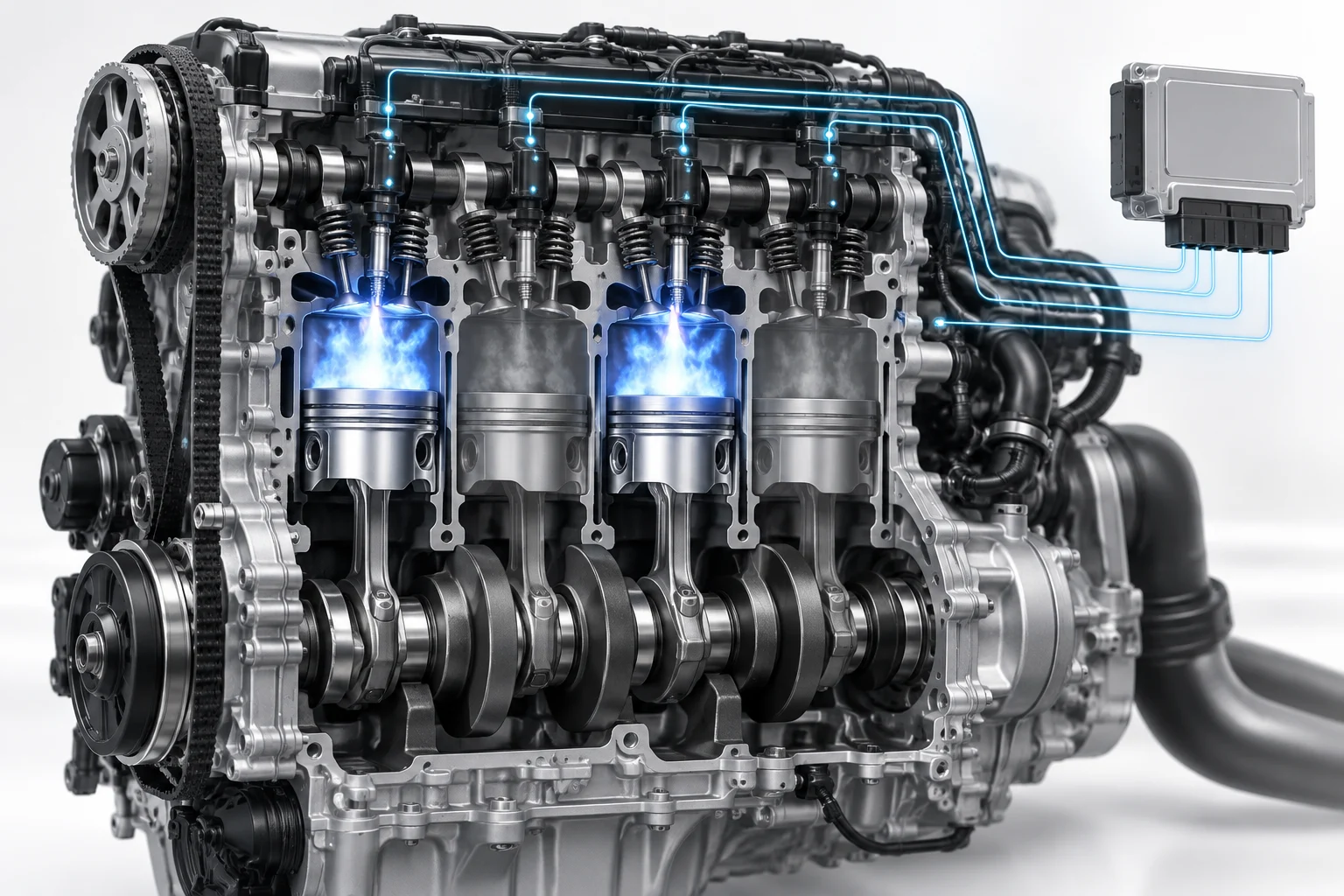
Cylinder deactivation in gasoline engines interrupts combustion in selected cylinders during low-load conditions to reduce fuel consumption. The system manages valves and injection to maintain smoothness, though savings vary by model and driving conditions.
What cylinder deactivation means
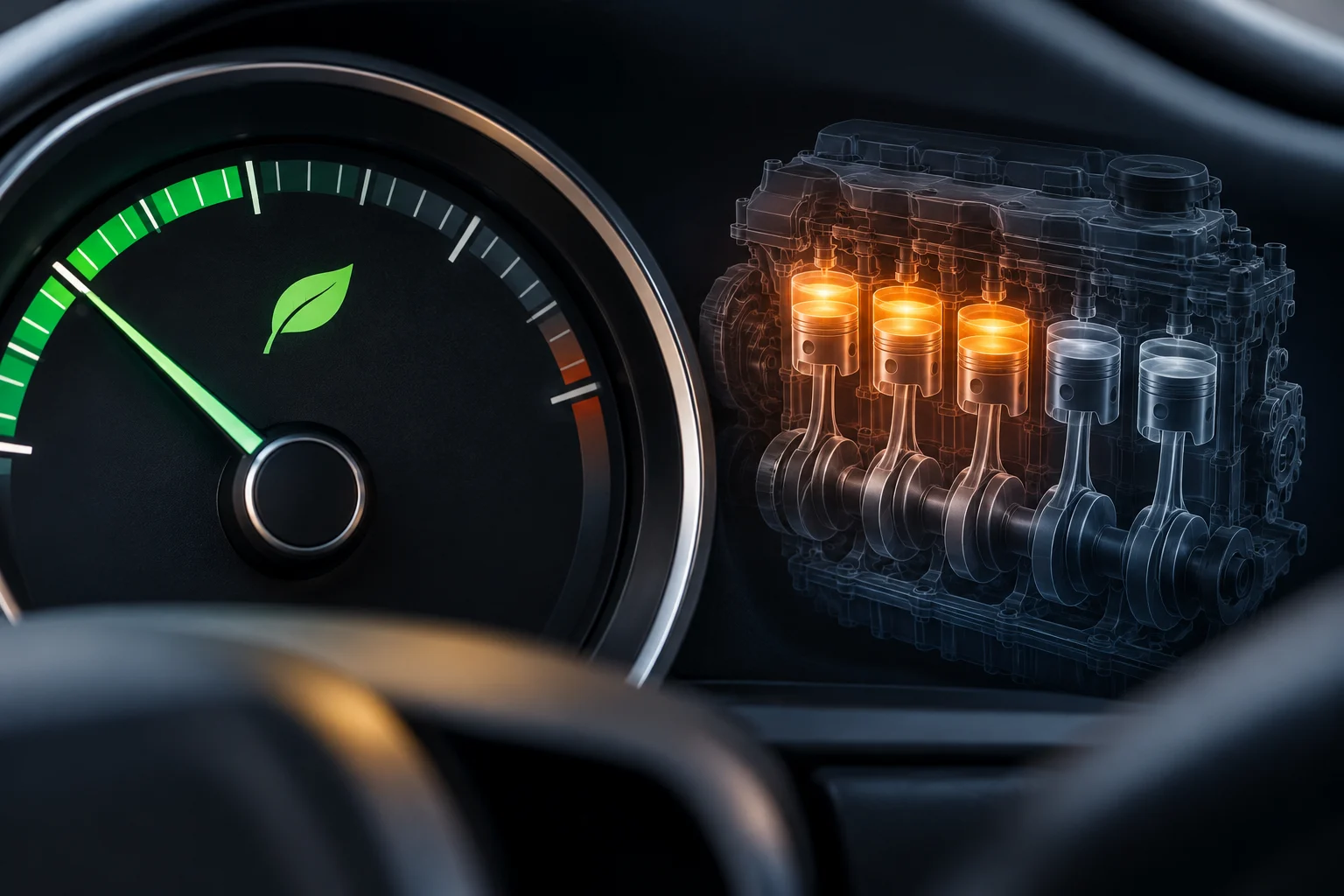
Cylinder deactivation is an engine management technology that allows combustion to be interrupted in specific cylinders when power demand is low. The main objective is to reduce gasoline consumption without sacrificing the engine's full power when the driver needs it.
Unlike the Stop/Start system, which turns the engine off completely, this function keeps the engine running but reduces its effective workload. By deactivating some cylinders, the engine operates with a more efficient load for the current driving conditions, such as cruising at a constant speed on the highway or driving in the city at medium engine speeds.
Section references: RACE: Sistema de desconexión de cilindros ↗
Mechanics and electronic management of the system
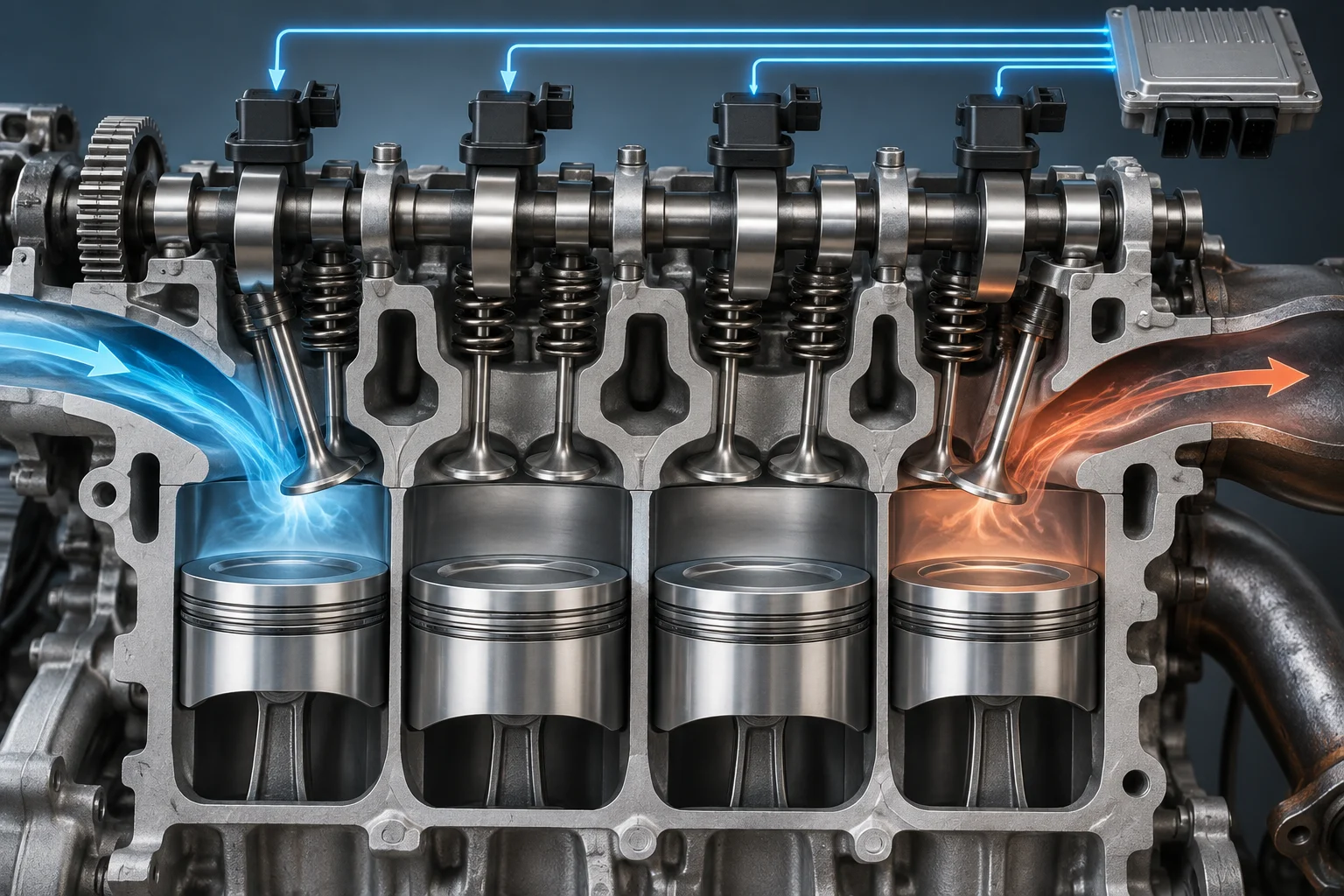
For the deactivation to be effective and smooth, the engine control unit (ECU) coordinates several systems. In the selected cylinders, fuel injection and spark plug ignition are interrupted. Simultaneously, the valve timing system keeps the intake and exhaust valves of those cylinders closed.
It is important to note that the pistons in the deactivated cylinders do not stop. They continue to move up and down because they are mechanically connected to the crankshaft. By keeping the valves closed, the air trapped in the combustion chamber acts as a pneumatic spring, which helps maintain the engine's dynamic balance and reduces vibrations.
The ECU analyzes parameters in real time, such as requested load, engine speed, engine temperature, and the state of the emissions system. Only when all these values meet the predefined criteria does the control unit authorize the switch between full operation and cylinder deactivation.
Section references: RACE: Sistema de desconexión de cilindros ↗ · Mi-Lexicon: Desactivación de cilindros ↗
- Interruption of injection and ignition in inactive cylinders.
- Closing of intake and exhaust valves to keep air trapped.
- Pistons continue moving to maintain crankshaft inertia.
- The ECU manages the transition to make it imperceptible to the driver.
Activation conditions and implementation examples
The activation of this technology does not depend solely on vehicle speed, but on a combination of factors. For example, in Volkswagen's 1.4 TSI engine, one of the first to implement this technology in series, deactivation activates when the engine speed is between 1,400 and 4,000 rpm and the requested torque is between 25 and 75 Nm.
In this specific case, the system temporarily disconnects two of the four cylinders (generally cylinders 2 and 3 in Volkswagen's ACT system). This allows the engine to operate in a '2-cylinder' mode with a maximum torque capacity of 100 Nm, sufficient to maintain speed without accelerating sharply.
Each manufacturer and model has its own thresholds and activation logic. Therefore, it is essential to consult the technical documentation of the specific vehicle to know the exact conditions under which deactivation will activate in your case.
| Parameter | Activation Range |
|---|---|
| Engine speed | 1,400 - 4,000 rpm |
| Requested torque | 25 - 75 Nm |
| Deactivated cylinders | 2 of 4 (cylinders 2 and 3) |
| Max torque in 2-cylinder mode | 100 Nm |
Section references: Volkswagen: Presentación de la Desconexión Selectiva de Cilindros ↗ · Seat Leon FR: ACT y el síndrome de los 2 cilindros ↗
What you may notice while driving
The design of these systems aims to make the transition between full-cylinder operation and deactivation imperceptible. Advanced electronic management allows the load change to occur very quickly and smoothly, avoiding vibrations or abrupt changes in engine sound.
However, some drivers may notice a slight difference in engine response when lifting off the accelerator. By keeping the valves closed in inactive cylinders, the compressed air acts as a spring, which can slightly reduce engine braking capability (inertial retention) compared to an engine running with all cylinders. This is more perceptible on gentle descents or when releasing the accelerator on the highway.
In most daily driving situations, the effect is minimal, and the system's priority is to maintain comfort and efficiency.
Section references: Mi-Lexicon: Desactivación de cilindros ↗ · Seat Leon FR: ACT y el síndrome de los 2 cilindros ↗
Consumption, emissions, and savings limits
Cylinder deactivation shifts the operating point of the active cylinders toward a higher load zone, optimizing their thermodynamic efficiency. This translates into a reduction in fuel consumption, although the savings are not fixed or universal.
For example, Volkswagen reported a reduction of 0.4 l/100 km in the NEDC cycle for the 1.4 TSI engine with this technology. When combined with the Stop/Start system, savings can reach up to 0.6 l/100 km. These values are specific to that model and test cycle; other engines and real-world driving conditions may offer different results.
It is important not to generalize these figures. Real savings depend on the base efficiency of the engine, the vehicle's aerodynamics, driving style, and traffic conditions. The technology is just one tool within an efficiency package that also includes emissions management and combustion optimization.
Section references: Volkswagen: Presentación de la Desconexión Selectiva de Cilindros ↗ · Mi-Lexicon: Desactivación de cilindros ↗
- Savings depend on the load and speed at which deactivation activates.
- Laboratory values (like NEDC) are not always replicated exactly in real driving.
- The technology complements, but does not replace, other efficiency measures like Stop/Start or aerodynamics.
How to identify the technology in your vehicle
If you are considering buying a vehicle with this technology, it is useful to verify its presence in the manufacturer's official documentation. Look for terms like 'Selective Cylinder Deactivation', 'ACT' (Active Cylinder Technology), or 'Cylinder Deactivation' in the technical sheet or owner's manual.
Not all four-cylinder or larger gasoline engines include this function. Its availability depends on the brand, model, generation, and market. When comparing vehicles, keep in mind that this technology is only one of the factors influencing overall consumption, along with power, weight, and transmission.
Section references: RACE: Sistema de desconexión de cilindros ↗
Does cylinder deactivation turn the engine off completely?
No. Unlike the Stop/Start system, cylinder deactivation keeps the engine running. It only interrupts combustion in some cylinders, while the pistons continue moving to maintain crankshaft inertia.
In what situations does cylinder deactivation activate?
It generally activates under low-load and medium-speed conditions, such as cruising at a constant speed on the highway or city driving without sharp accelerations. The exact parameters (rpm and torque) vary by model.
Can I notice cylinder deactivation while driving?
In most cases, the transition is designed to be imperceptible. Some drivers may notice a slight reduction in engine braking when lifting off the accelerator, but the system prioritizes smoothness and comfort.
How much fuel savings can I expect?
Savings vary by model and driving conditions. As a reference, some manufacturers have reported reductions of 0.4 to 0.6 l/100 km in test cycles, but real savings depend on multiple factors.