Hill Descent Control in Cars: How It Works and When to Use It
Discover what Hill Descent Control (HDC) is, how it acts on the brakes, and its real-world limits. A practical guide to understanding this assistant and distinguishing it from other safety systems.
Key points
Hill Descent Control (HDC) is a driver assistance system that independently brakes the wheels to maintain a low, constant speed on steep slopes, freeing the driver from the brake pedal. It does not replace driver attention and is ineffective on surfaces with no traction.
What is Hill Descent Control and its main function
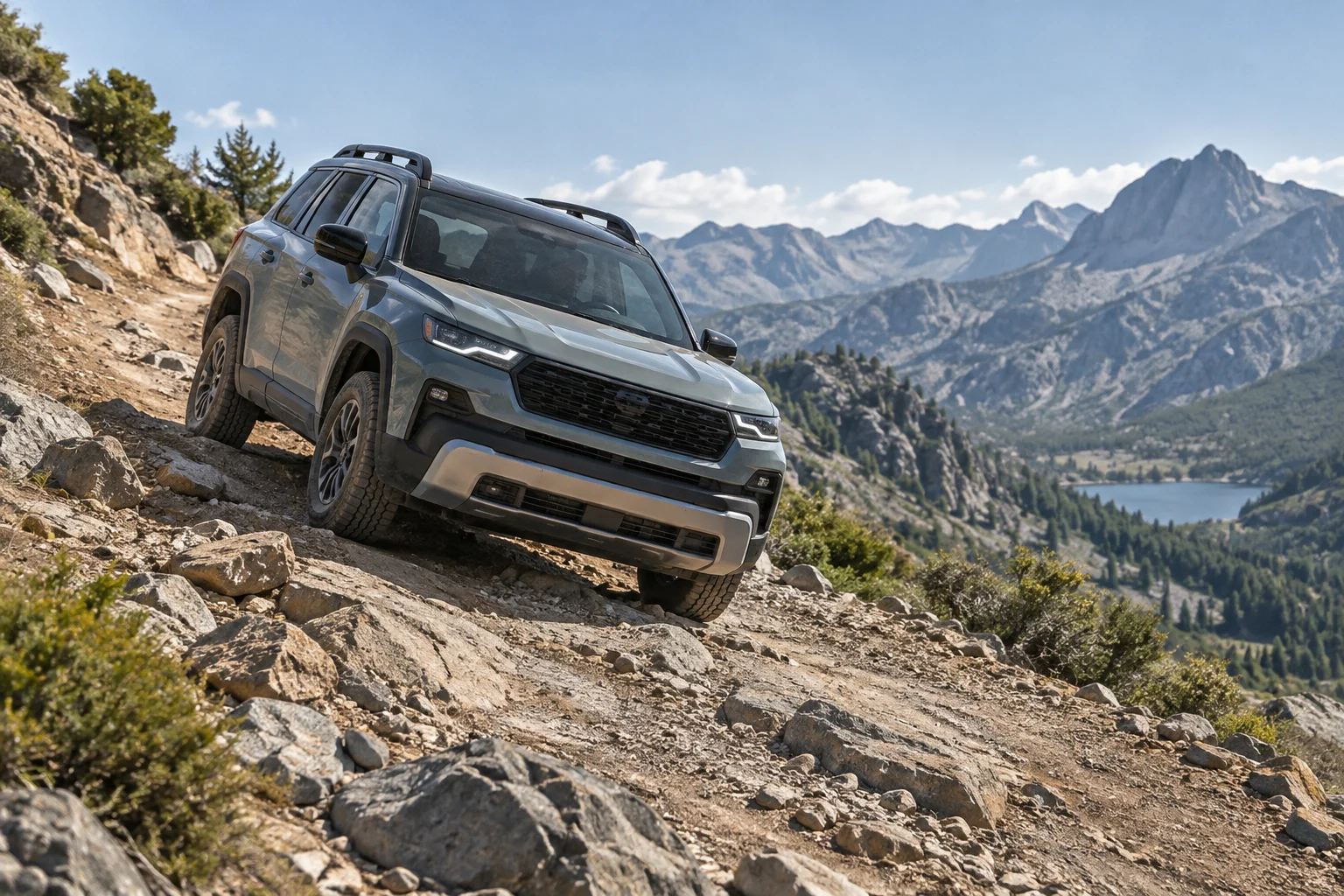
Hill Descent Control, known by its English acronym HDC, is a driver assistance system designed to facilitate the descent of inclined and uneven surfaces. Its main objective is to allow the vehicle to descend in a controlled manner without the driver having to constantly intervene on the brake pedal.
This system was introduced by Land Rover in the first-generation Freelander (1997-2007) and has since spread to a multitude of off-road and 4x4 vehicles. Once activated, the driver chooses a maximum descent speed, and the system takes control of the braking to maintain that pace, allowing the driver to focus exclusively on steering and observing the terrain.
Section references: Control de descenso de pendientes: ¿Cómo funciona este sistema? ↗
- Allows descending slopes without using the brake pedal.
- Introduced by Land Rover in the Freelander (1997-2007).
- Designed primarily for off-road and 4x4 vehicles.
How it acts on the brakes and speed
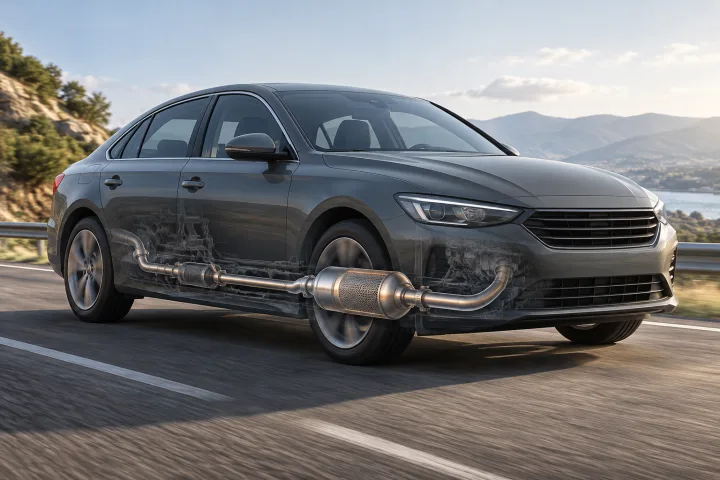
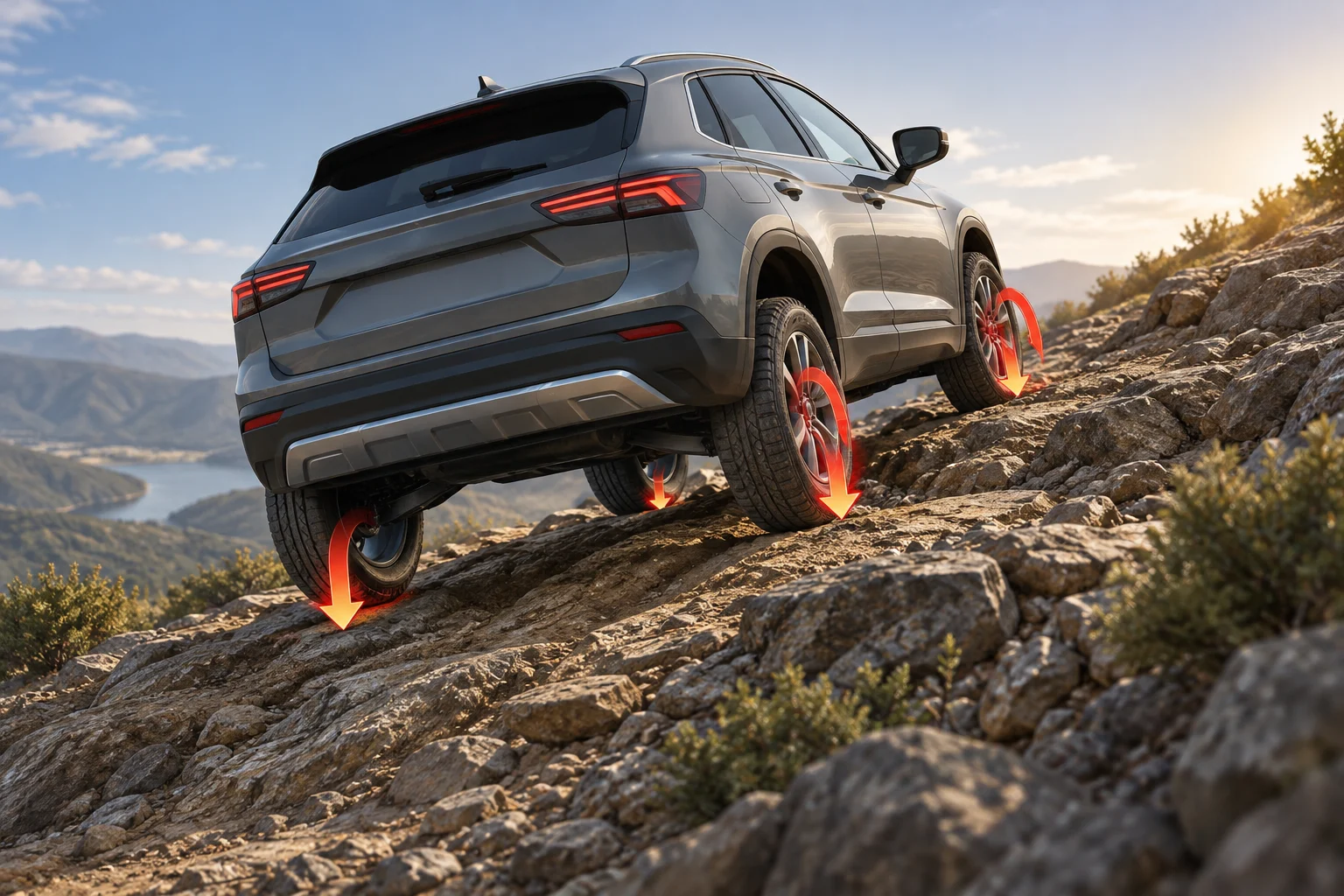
Once activated, the HDC continuously monitors the terrain's inclination and adjusts the braking pressure on each wheel independently. To achieve this, the system relies on the components of the traction control (TCS) and anti-lock braking system (ABS), and in many models, it is also integrated with the electronic stability program (ESP).
The goal is to minimize tire slippage and maintain a speed predefined by the driver. Some systems are calibrated to maintain a constant speed of approximately 7 km/h, while others limit their use to speeds below 8 km/h, offering adjustments to the tenth of a kilometer per hour. This precision allows for an optimal descent on difficult terrain.
Section references: Control de descenso de pendientes: ¿Cómo funciona este sistema? ↗ · Control de descenso de pendientes: cómo funciona ↗ · Control de descenso HDC: qué es y cómo funciona al bajar ↗
- Brakes each wheel independently to prevent slippage.
- Uses ABS, TCS, and ESP systems.
- Maintains a low speed, generally between 7 and 8 km/h.
Differences from other assistance systems
It is common to confuse Hill Descent Control with other safety functions, but each has a distinct purpose. Unlike engine braking, which only helps maintain inertia, the HDC applies active braking. It is also not the same as cruise control, which is designed to maintain cruising speeds on the road and not for extreme slopes.
The Hill Start Assist (HSA) is its counterpart: it helps prevent rolling back when going up, while the HDC helps prevent uncontrolled acceleration when going down. Both systems complement active safety, but the HDC is specific to the descent phase on difficult terrain.
| System | Main Function | Typical Use |
|---|---|---|
| Hill Descent Control (HDC) | Maintain low speed when descending | Steep slopes and off-road |
| Hill Start Assist (HSA) | Prevent rolling back when ascending | Starting on hills |
| Cruise Control | Maintain constant speed | Roads and highways |
- It is not cruise control: the latter is for the road, HDC for off-road.
- Complements the Hill Start Assist (HSA).
- Applies active braking, not just inertia retention.
System limits and usage conditions
HDC is not a magic solution and has clear limits. It is not designed to be used on flat terrain or in normal driving conditions. Its effectiveness depends directly on tire traction: on extremely slippery surfaces such as ice or deep mud, the brakes may not have enough grip to maintain a constant speed.
Furthermore, the system should not be used in situations requiring sudden or emergency braking, as it is calibrated to maintain a constant speed and not to stop the vehicle completely. It is crucial to remember that the HDC is an assistant: the driver must always maintain supervision, attention, and the ability to intervene at any time.
Section references: Control de descenso de pendientes: cómo funciona ↗ · Control de descenso (HDC) | Qué es, tipos, características ↗
- Does not work on flat terrain or normal driving.
- May fail on surfaces with no traction (ice, mud).
- Does not replace emergency braking.
- The driver must always maintain supervision.
How to activate and deactivate it
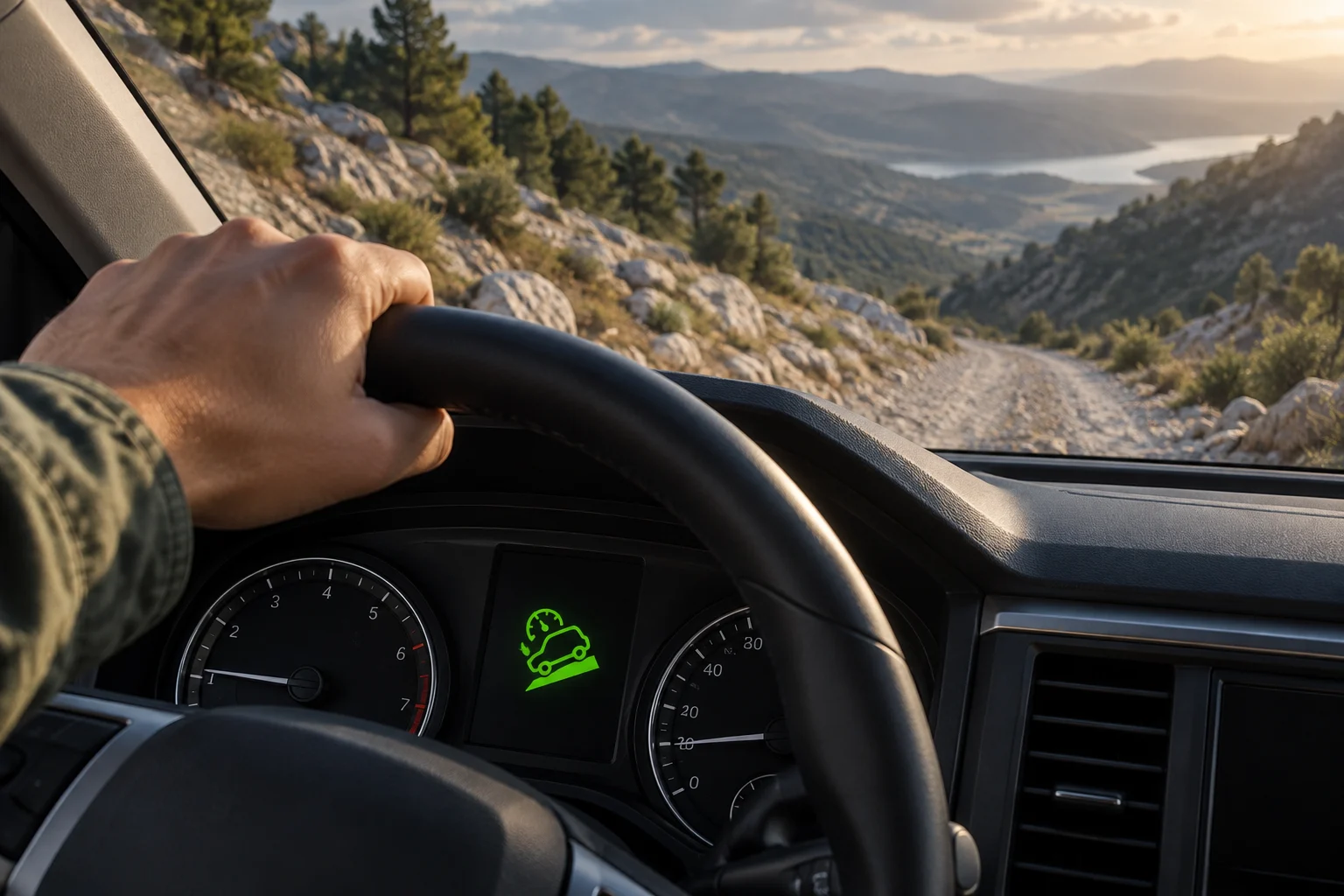
Activating Hill Descent Control is usually done via a specific button on the dashboard or center console, generally identified with an icon of a car going down a slope. Once activated, the system remains active until the driver decides to deactivate it or until a safety condition is met.
Deactivation is immediate and simple: applying pressure to the accelerator or brake pedal cancels the system's commands and returns full control to the driver. This feature is fundamental for safety, as it allows the driver to take command at any time if the situation requires it. The system can be reactivated at any time if assistance is desired again.
Section references: Control de descenso de pendientes: ¿Cómo funciona este sistema? ↗ · Cómo funciona el control de descenso de pendientes ↗
- Activated with a specific button on the dashboard.
- Deactivated by pressing the brake or accelerator.
- Allows the driver to regain full control instantly.
How to confirm if your car has it
To know if your vehicle has Hill Descent Control, the most reliable method is to consult the owner's manual. Look in the section on driver assistance systems or active safety. There you will find the exact name of the system (HDC, Hill Descent Control, etc.) and the specific activation and deactivation instructions for your model.
You can also identify it by the icon on the dashboard: a car descending a slope, often with a dashed line underneath. If you cannot find information in the manual, you can contact the official brand dealer, who can confirm if your model and year of manufacture include this function as standard or as an option.
- Consult the owner's manual in the safety section.
- Look for the icon of a car going down a slope on the dashboard.
- Contact the official dealer to confirm the equipment.
Does Hill Descent Control replace the driver?
No. It is an assistance system that helps maintain speed, but the driver must always maintain attention, steering, and the ability to intervene on the brakes or accelerator at any time.
Can I use Hill Descent Control on the road?
It is not designed for that. Its use on flat terrain or in normal driving conditions is not recommended and may interfere with the vehicle's normal dynamics.
What speed does the HDC maintain?
It generally maintains a constant speed of approximately 7 km/h, although some systems allow adjusting the maximum speed to 8 km/h or less, depending on the model.
How is Hill Descent Control deactivated?
It is deactivated immediately by pressing the brake or accelerator pedal. This returns full control to the driver.
Does it work on ice or mud surfaces?
Its effectiveness is significantly reduced on extremely slippery surfaces, as it depends on tire traction to brake effectively.