Guide to Checking Your Car Lights Before Traveling
Discover how to inspect your vehicle's lighting before a long trip. Learn to detect faults in headlights, turn signals, and brake lights, and when it is essential to visit a professional workshop.
Key points
Checking your vehicle's lighting before a trip is an essential safety measure to detect visible faults and avoid fines. This guide details which lights to verify, how to do it safely with the help of another person, and when it is necessary to visit a workshop for adjustments or repairs.
Why it is crucial to check lighting before departure
Visibility is a fundamental pillar of road safety, especially during night trips or in adverse weather conditions. Before embarking on a long journey, dedicating a few minutes to ensure that all car lights function correctly is a practice recommended by experts and traffic authorities.
Driving with burnt-out lights not only reduces the ability to see and be seen by other drivers but can also result in fines according to the Directorate General for Traffic (DGT). Therefore, it is essential to ensure that headlights, turn signals, and brake lights operate normally before starting the journey.
Section references: Torcal Autoescuelas: Qué revisar en el coche antes de un viaje ↗ · Andaluza de Inyección: La importancia de revisar el coche antes de irte de vacaciones ↗
- Visibility is crucial for road safety on night trips.
- Driving with burnt-out lights can lead to administrative fines.
- Pre-trip inspection is a simple and effective preventive measure.
Which lights the driver should verify
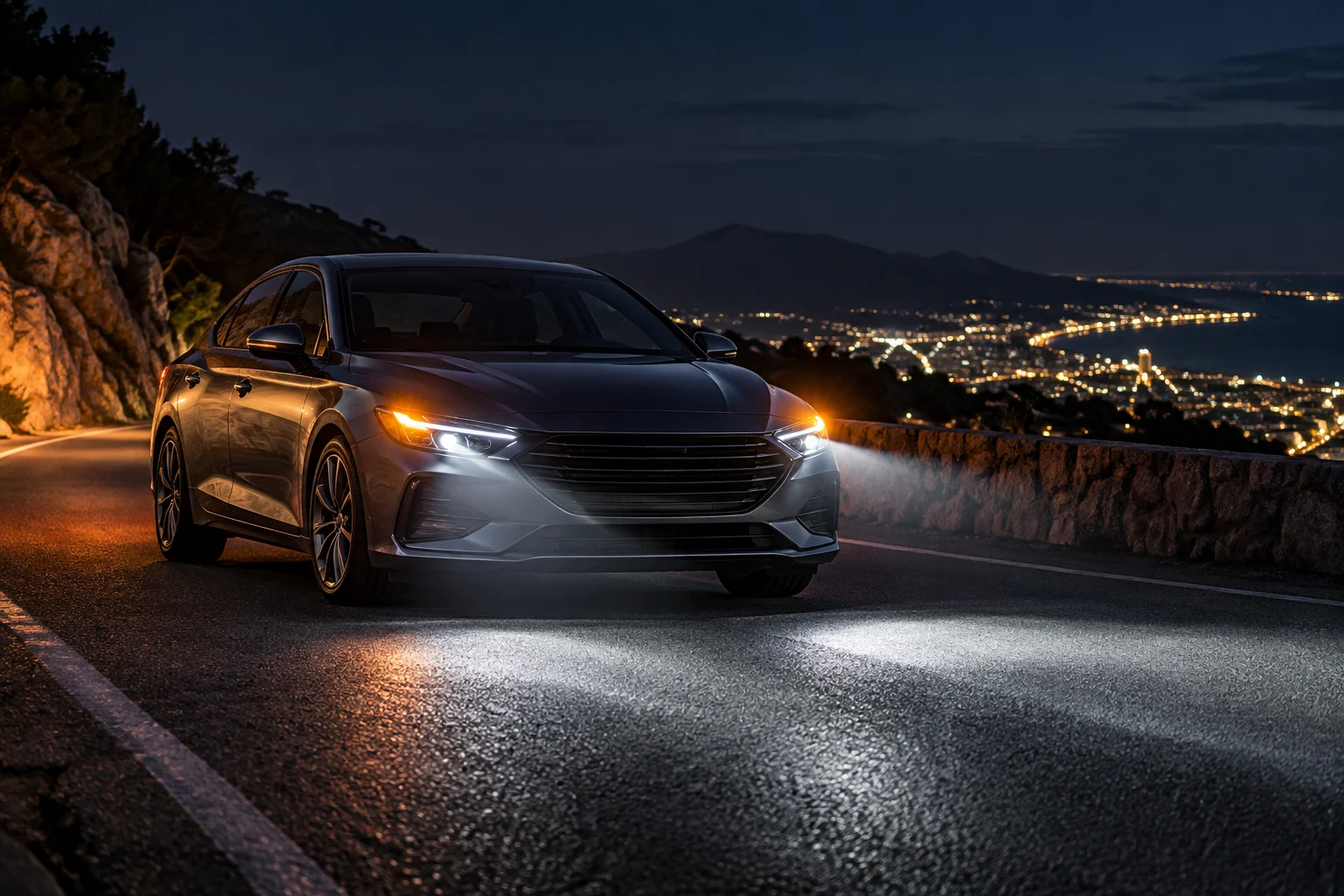
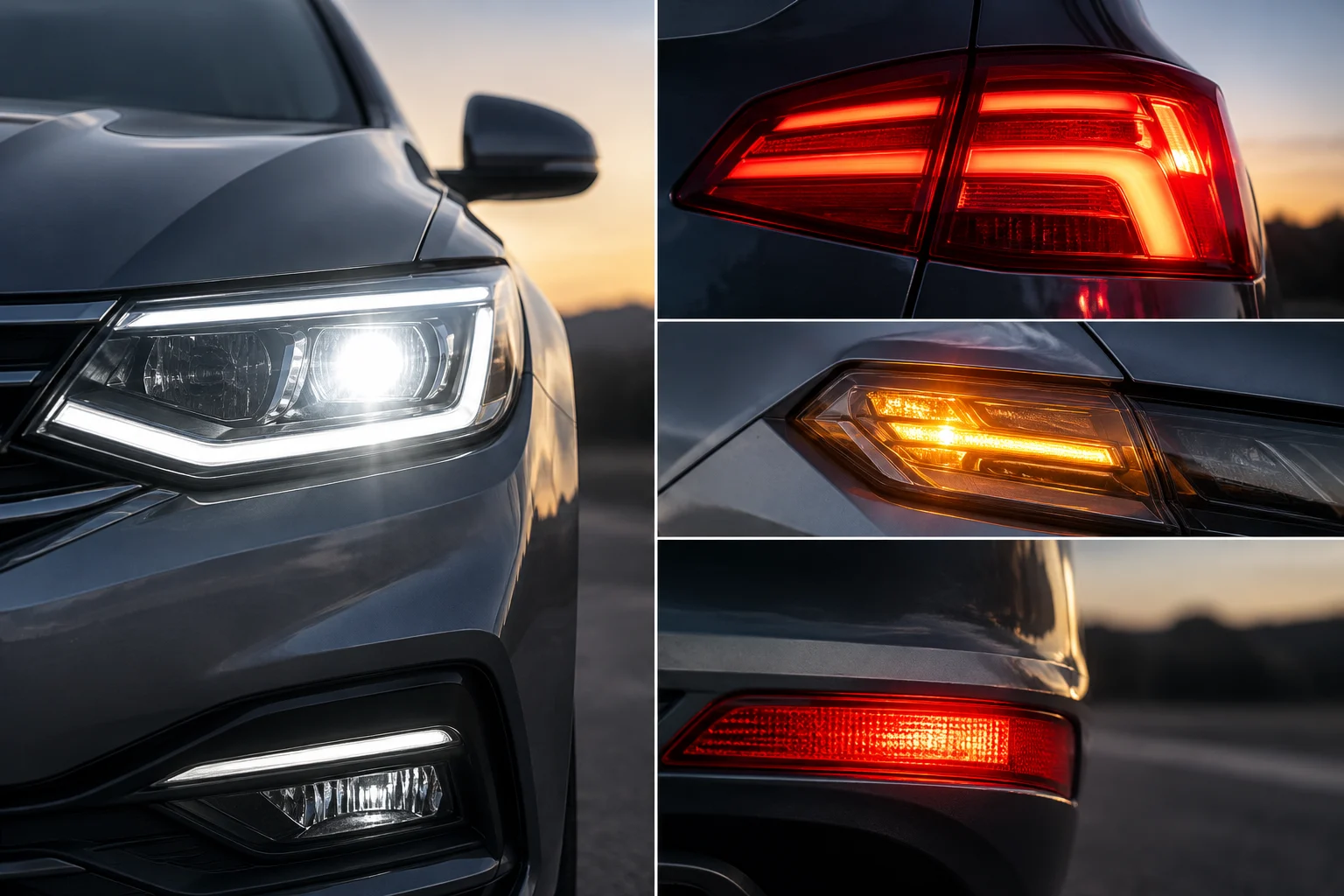
For a complete inspection, the driver must pay attention to a specific set of lighting elements. The list includes low beams, high beams, position lights (parking lights), brake lights, turn signals, reverse lights, and fog lights.
Each of these lights serves a distinct function in communicating with other road users. Verifying their operation ensures that the vehicle correctly conveys its intentions and maintains the necessary visibility in any driving situation.
Section references: Torcal Autoescuelas: Qué revisar en el coche antes de un viaje ↗ · Yamovil: ¿Sabes que revisar en tu coche antes de hacer un ruta larga? ↗
- Low beam and high beam headlights.
- Position lights or parking lights.
- Brake lights and reverse lights.
- Turn signals and fog lights.
How to perform the visual inspection safely
The most effective way to check the condition of the lights is to do so with the help of another person. This method allows simultaneous observation of the front and rear headlights, as well as turn signals, without the need to constantly move the vehicle.
In the absence of a second observer, the check can be performed in front of a reflective surface, such as a wall or glass, although this option offers a less complete view. It is important not to manipulate internal components or attempt complex repairs without adequate technical knowledge.
Section references: Yamovil: ¿Sabes que revisar en tu coche antes de hacer un ruta larga? ↗
- Ask another person for help to observe the lights from outside.
- Use a reflective surface as an alternative if you are alone.
- Avoid manipulating electrical components without experience.
Headlight alignment and fault signs
In addition to the functionality of the bulbs, it is important to verify that the headlights are properly aligned. Incorrect alignment can cause glare for other drivers, which is dangerous and violates traffic regulations.
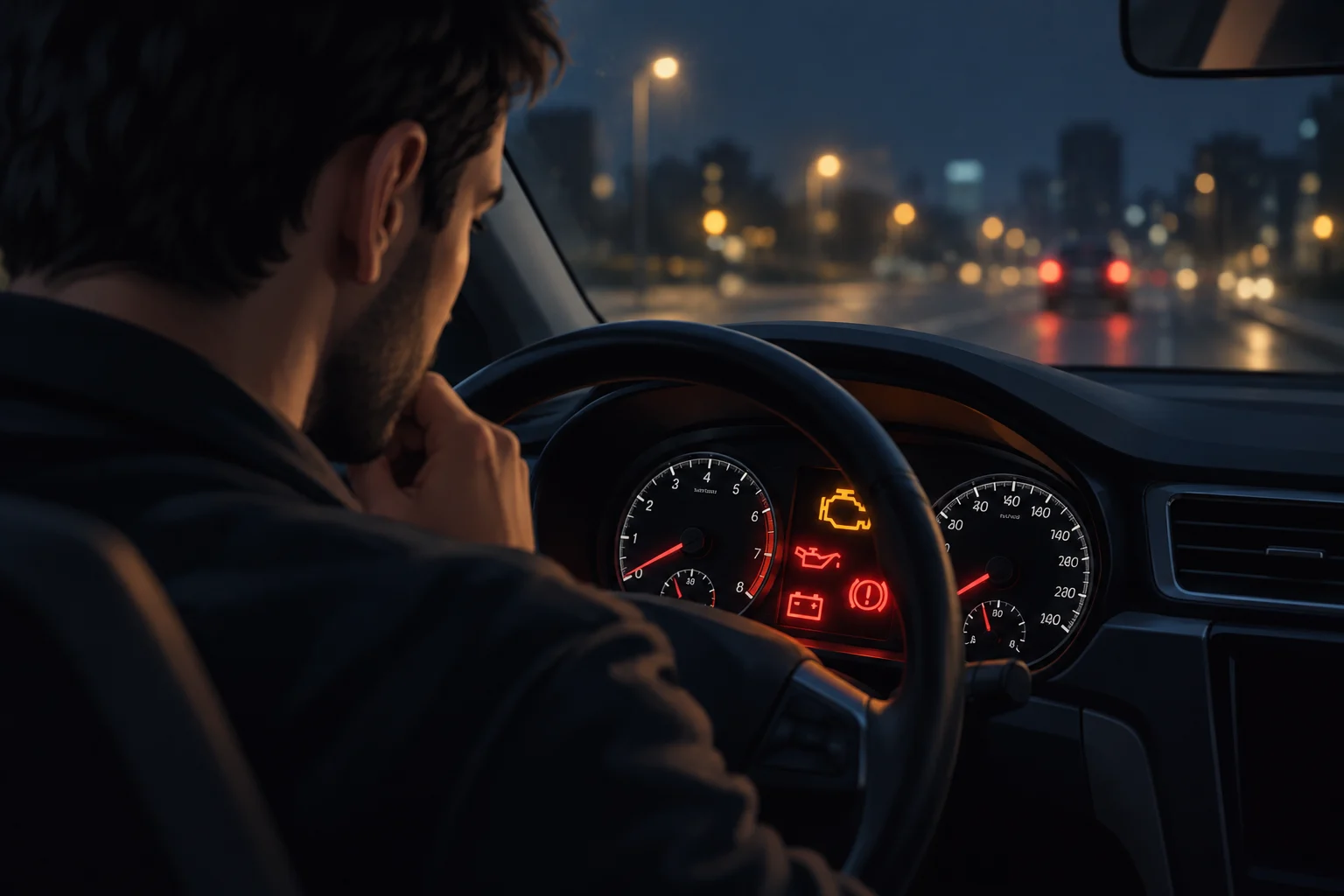
The vehicle's onboard computer usually warns via illuminated indicators if a light has burnt out. If excessive condensation is observed in the optics, physical damage, or irregular illumination is present, it is recommended to visit a professional workshop for an accurate diagnosis and necessary repair.
Section references: Torcal Autoescuelas: Qué revisar en el coche antes de un viaje ↗ · La Vanguardia: Los testigos iluminados de avería que deben preocuparte ↗
- Verify headlight alignment to avoid blinding other drivers.
- Heed onboard computer warnings about burnt-out lights.
- Visit a workshop for damage to optics or abnormal condensation.
When to visit a workshop and what information to provide
If a light fails intermittently or does not turn on, it is necessary to replace the bulb or repair the electrical circuit. This work can be performed by the driver themselves if they have the tools and knowledge, or by a specialized workshop.
When visiting a workshop, it is useful to communicate the exact behavior of the fault: whether the light does not turn on, flickers, or if the problem appears only under certain conditions. This information helps the technician diagnose the root cause more quickly and effectively.
Section references: La Vanguardia: Los testigos iluminados de avería que deben preocuparte ↗
- Replace burnt-out bulbs to avoid fines.
- Describe the intermittent or constant fault to the technician.
- Mention if the problem is related to weather or load.
Is it mandatory to replace a burnt-out bulb before traveling?
Yes, driving with burnt-out lights can result in fines according to the DGT. Additionally, it compromises road safety by reducing visibility and the ability to communicate the vehicle's intentions to other drivers.
Can I check my car's lights alone?
It is possible to do so in front of a reflective surface, although the general recommendation is to do it with the help of another person to observe the front and rear lights simultaneously in a more complete and safe manner.
What should I do if the car's computer warns of a burnt-out light?
You must locate the affected bulb and replace it. If you do not have experience or the problem persists, visit a professional workshop to avoid fines and ensure vehicle safety.