Car for transporting long objects: what to check in the trunk
A practical guide to verifying useful dimensions, accessibility, and seat configurations when choosing a vehicle to frequently load instruments, sports equipment, or bulky items.
Key points
To choose a car for transporting long objects, measuring the useful length, width, and height is essential. Verify the tailgate accessibility and floor continuity with folded seats in the specific unit to ensure safe and legal loading.
Short answer: measure the object and check access
Trunk capacity expressed in liters does not always reflect the space actually usable for long objects. The shape, depth, and height of the compartment determine which items can be transported, so the liter figure is only a starting point. Before deciding, it is fundamental to measure the dimensions of the object you wish to transport and physically verify if it fits in the specific unit, paying attention to tailgate accessibility and seat configuration.
Section references: Coches con maletero grande: consejos y modelos ↗
- Measure the length, width, and height of the largest object you will usually transport.
- Compare those measurements with the useful dimensions of the trunk, not just the total liters.
- Verify the height of the tailgate threshold and the maximum opening to facilitate loading.
Useful length, width, and height: which measurements to look for
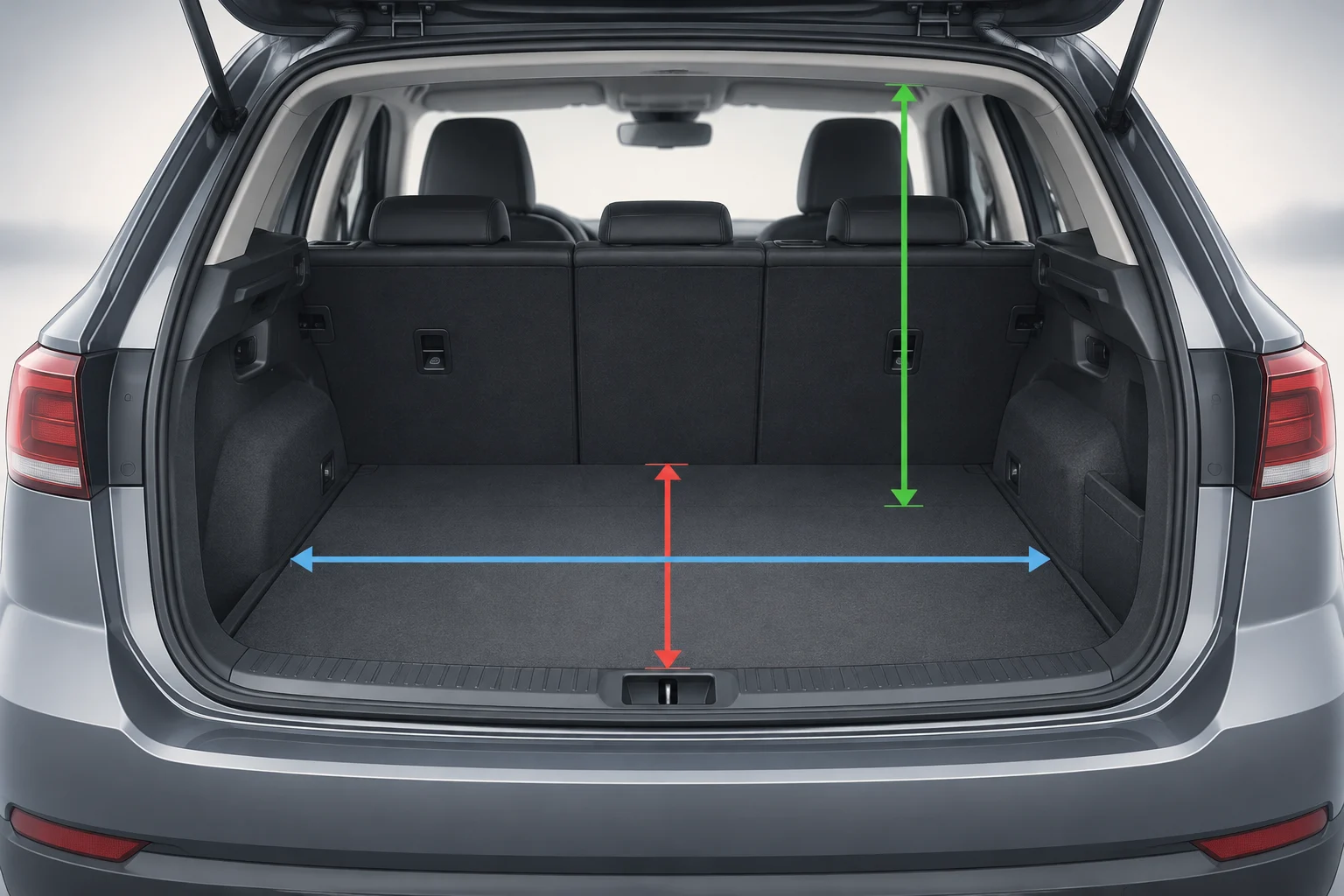
In the manufacturer's technical sheet, look for the trunk dimensions in its three axes. The useful length is the maximum distance from the back of the rear seats (or the flat floor if they are folded) to the tailgate. The useful width should be considered between the wheel arches, which can reduce the space available for wide objects. The useful height is the distance from the trunk floor to the roof of the compartment, crucial for tall items.
| Measurement | Practical description | Importance for long objects |
|---|---|---|
| Useful length | Distance from rear seat back to tailgate | Determines if the long object fits without folding or deforming |
| Useful width | Distance between wheel arches | Limits the maximum width of the item in the central zone |
| Useful height | Vertical distance from floor to trunk roof | Prevents loading large-volume objects if insufficient |
Section references: Coches con maletero grande: consejos y modelos ↗
- Useful length: maximum distance for long objects with rear seats in standard or folded position.
- Useful width: distance between wheel arches, which may be less than the total trunk width.
- Useful height: available vertical distance, important for large-volume boxes or instruments.
Tailgate, threshold, and wheel arches: real accessibility
A trunk may have sufficient dimensions on paper, but if the tailgate threshold is high or the opening is narrow, loading bulky objects becomes difficult or dangerous. Wheel arches, which are the lateral protrusions where the wheels are located, reduce the useful width in the rear part of the trunk. When loading long objects, it is necessary to check that the item can be introduced without forcing the bodywork or damaging the interior.
Section references: Cómo transportar cargas en el interior de tu Coche ↗
- Verify the height of the tailgate threshold: a high threshold makes loading heavy items difficult.
- Check the tailgate opening: it must be sufficient to introduce the object without forced angles.
- Observe the position of the wheel arches: they may prevent loading wide objects in the rear part.
Foldable seats and floor continuity
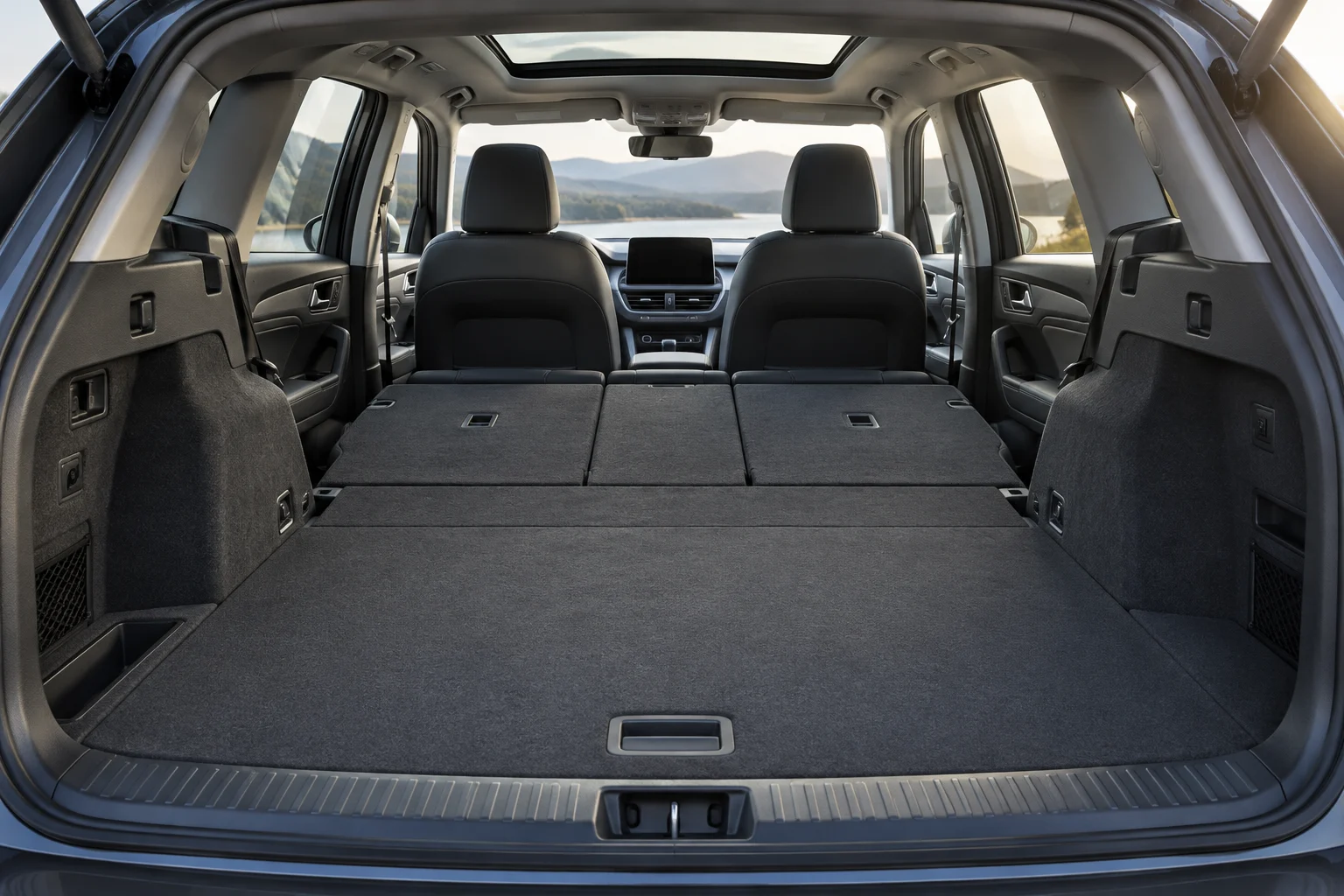
For very long objects, the key is often the configuration of the rear seats. Not all cars offer a flat surface when folding the seats; some have a step or slope that prevents the transport of rigid items. Floor continuity is essential for the object to rest stably and not slide. Additionally, it is important to verify how many seats can remain occupied while transporting the cargo, as some designs only allow the seats to be folded completely.
Section references: Cómo cargar el maletero del coche de forma adecuada y evitar multas ↗
- Check if the floor is flat and continuous with the rear seats folded down.
- Verify if the seats can be folded in parts (60/40) to keep seats available.
- Ensure that the cargo does not invade the front cabin, which is illegal and dangerous.
Practical check and safety during the visit
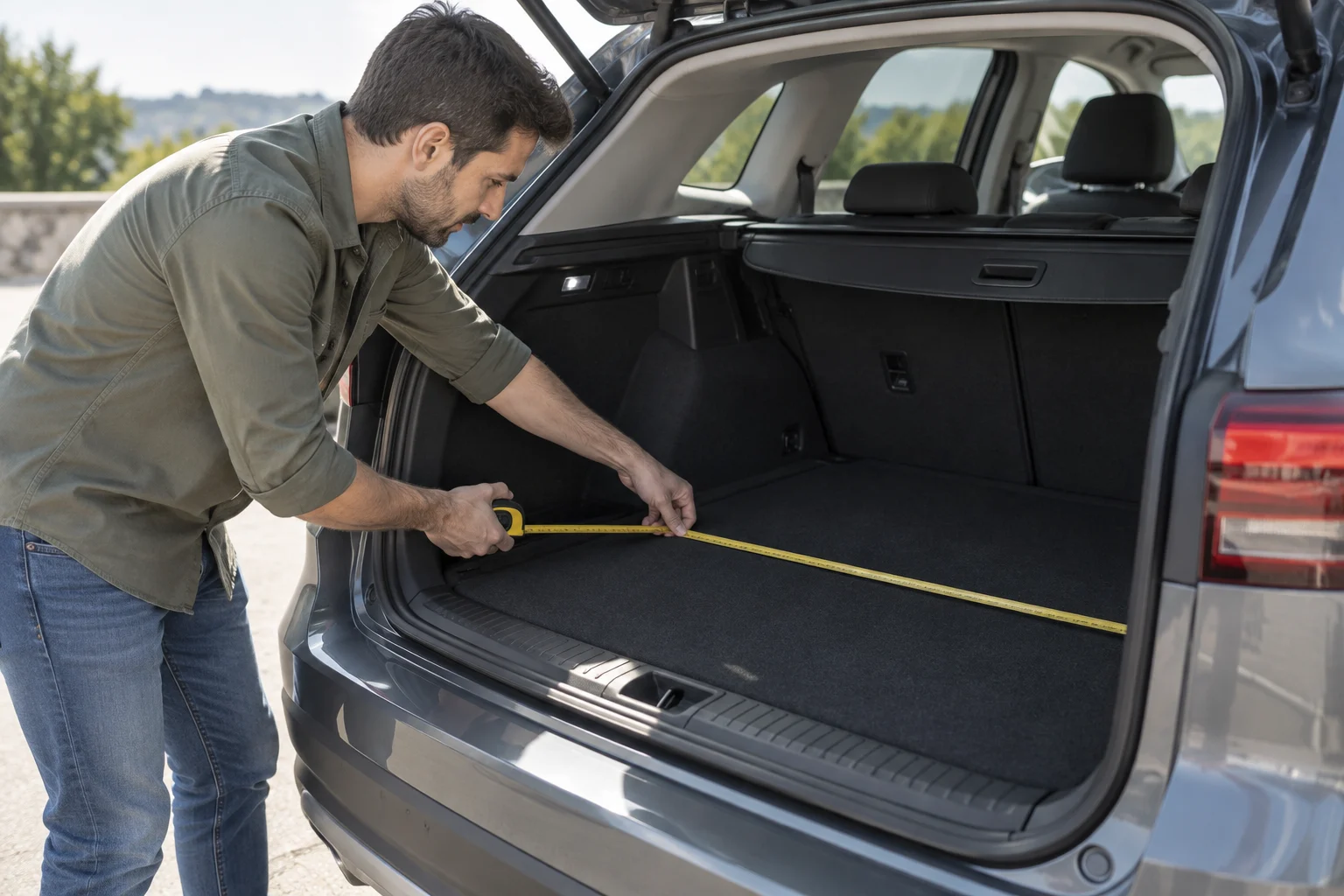
During the visit to the dealership or when buying second-hand, bring a physical reference or a tape measure to verify the dimensions. The DGT recommends cleaning the trunk and removing unnecessary objects to check the space actually available. It is crucial to remember that the cargo must be well secured: the heaviest objects should be placed at the bottom and against the rear seat back to lower the center of gravity. Fastening the seatbelts of unoccupied rear seats helps prevent the cargo from penetrating the cabin in case of sudden braking or an accident. Never place objects on the rear shelf, as they can fly towards the driver.
Section references: Cómo organizar el maletero del coche y aprovechar mejor el espacio ↗ · Cómo cargar el maletero del coche de forma adecuada y evitar multas ↗
- Bring a tape measure or a reference object to verify the measurements in the specific unit.
- Place the heaviest objects at the bottom and against the rear seat back.
- Fasten the seatbelts of unoccupied rear seats for extra securing.
- Avoid placing loose objects on the rear shelf, which can fly during braking.
When to consider a family car, minivan, or SUV
The choice of vehicle type depends on the type of cargo. Family cars and minivans usually offer better floor continuity and accessibility, ideal for long and bulky objects. SUVs may have a higher threshold, which makes loading difficult, but offer good capacity. If the cargo is extremely bulky, such as skis or very large sports equipment, it may be more practical to use a closed roof box or a ski carrier, as the interior space may be insufficient or the cargo may compromise safety. Remember that if the cargo protrudes more than 10% of the bodywork (or 15% if divisible), you must signal it with the V-20 plate. Driving with poorly secured cargo carries a fine of 200 euros.
Section references: Cómo transportar cargas en el interior de tu Coche ↗ · Cómo cargar el maletero del coche de forma adecuada y evitar multas ↗
- Family cars and minivans: better floor continuity and accessibility for long objects.
- SUV: good capacity, but high threshold that may make loading difficult.
- Closed roof box or ski carrier: recommended option for very bulky objects that do not fit inside.
- Signaling: V-20 plate mandatory if the cargo protrudes more than 10% of the bodywork.
Is it enough to look at the trunk liters to know if a long object fits?
No. Liters indicate the total volume, but the shape, depth, and height of the trunk determine if a long object fits. You must verify the useful dimensions in the specific unit.
What if the cargo does not fit in the trunk?
If the object is very bulky, it is recommended to use a closed roof box or a ski carrier. You must never invade the front cabin with the cargo, as it is illegal and dangerous.
How should I secure the cargo in the trunk?
Place the heaviest objects at the bottom and against the rear seat back. Fasten the seatbelts of unoccupied rear seats to prevent the cargo from moving in case of braking or an accident.
Are there fines for transporting long objects poorly placed?
Yes. Driving with poorly secured cargo or with a risk of falling entails a fine of 200 euros. Additionally, if the cargo protrudes more than 10% of the bodywork, you must use the V-20 plate.