Electrochromic mirror in cars: how it works and what to check
Discover how the electrochromic mirror works, which sensors it uses, and how to distinguish it from a manual tab. A practical guide to checking its condition and scope in new or used cars.
Key points
The electrochromic mirror automatically darkens the glass using multi-layer technology and light sensors to reduce nighttime glare. Its availability varies by model and may be limited to the interior or extend to exterior mirrors, so it is essential to verify its function and scope before purchase.
What is an electrochromic mirror and its main function
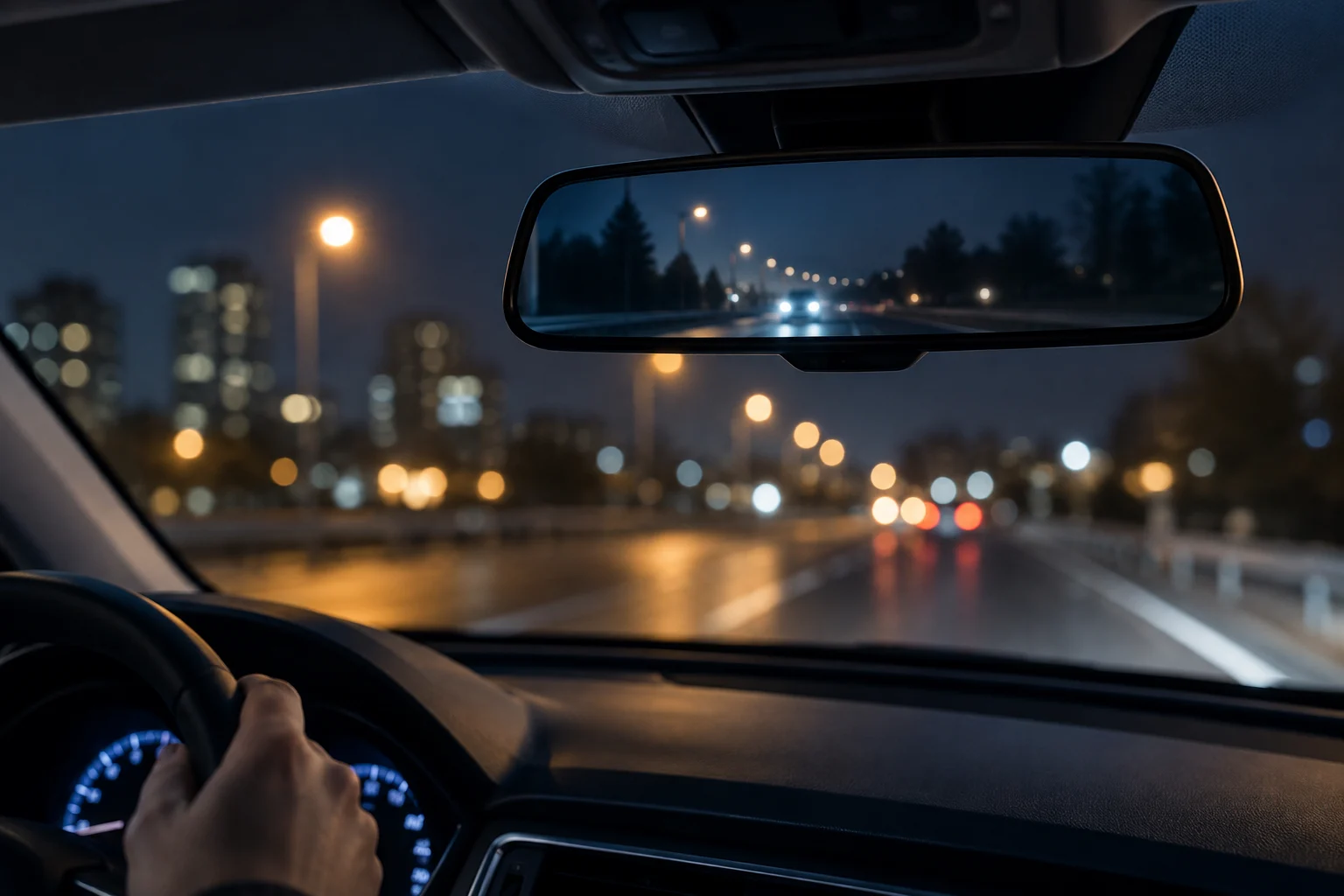
The electrochromic mirror is an active safety system designed to mitigate glare caused by the lights of vehicles traveling behind. Unlike conventional rearview mirrors, which rely on the driver's manual intervention, this equipment adjusts the opacity of the glass automatically and continuously.
Its main objective is to improve visibility at night and in low-light conditions, allowing the driver to keep their attention on the road without needing to look away or manipulate the mirror's angle. This system is increasingly common in modern cars, although its availability still depends on the model and version chosen.
Section references: Cómo funciona el sistema antideslumbramiento del retrovisor de tu coche ↗
- Automatically reduces glare from rear headlights.
- Maintains visibility of rear traffic without manual intervention.
- Functions as an active safety system in night driving.
How it detects light and darkens the glass
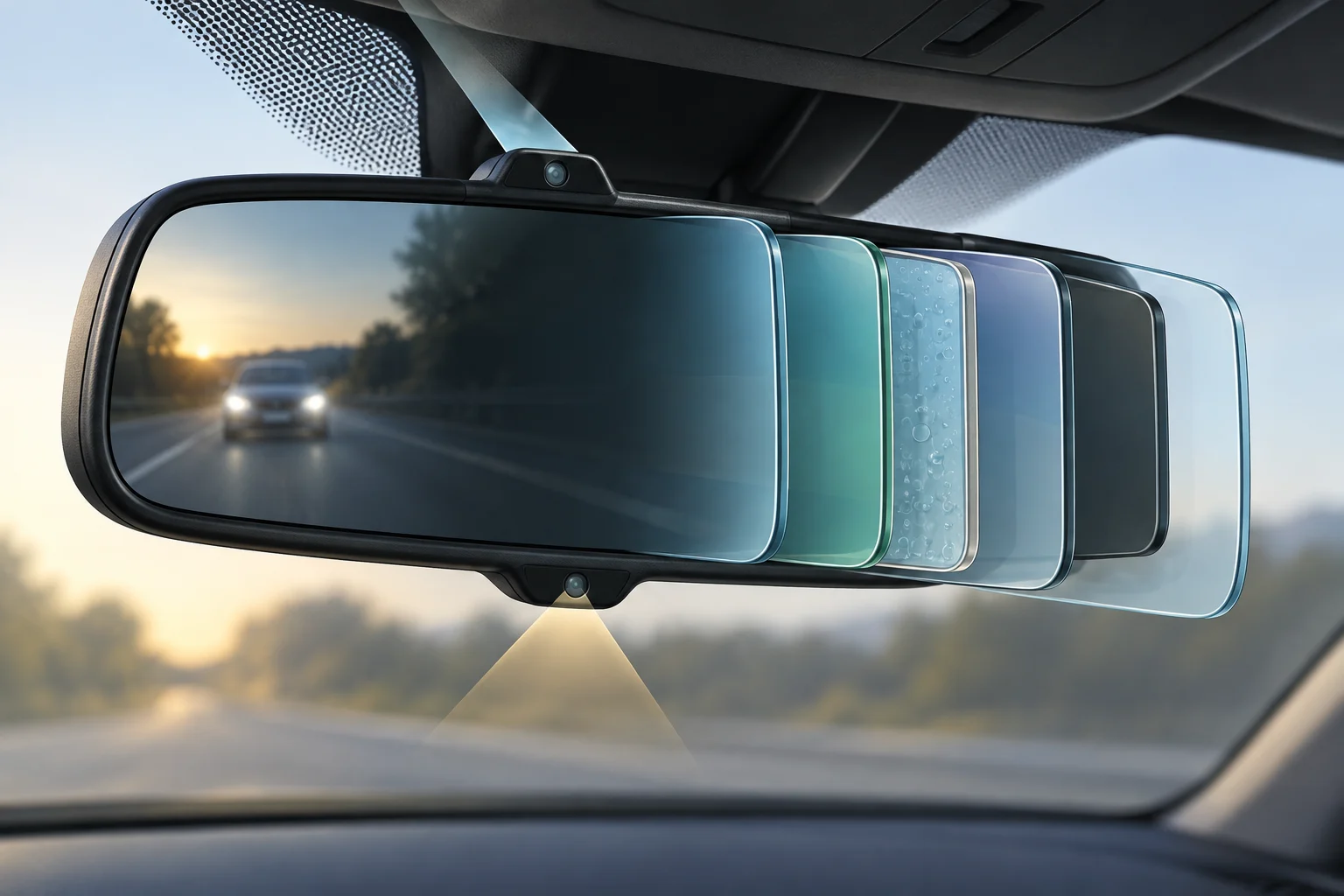
The operation is based on a multi-layer glass containing an intermediate chemical compound, generally an electrochromic gel. When a low-voltage electric current, between 1 and 3 volts, is applied, an oxidation-reduction reaction occurs that alters the molecular structure of the gel, increasing its opacity and darkening the reflection.
The system uses two light sensors oriented in opposite directions: one on the back of the housing that measures ambient light through the windshield, and another on the front that directly detects the intensity of light beams coming from the rear of the vehicle. A microprocessor compares both signals and decides the amount of current necessary to achieve the appropriate level of darkening.
Section references: Cómo funciona el sistema antideslumbramiento del retrovisor de tu coche ↗ · Espejos retrovisores fotosensibles: así funcionan ↗
- Uses multi-layer glass with an intermediate electrochromic gel.
- Operates with a low voltage of 1 to 3 volts.
- A microprocessor regulates the current based on the detected light difference.
Differences from the manual anti-glare tab
Conventional rearview mirrors usually include a double-position tab or lever that allows the driver to manually change the mirror's angle to avoid glare. This method requires a physical action and can distract the driver, especially in dense traffic or when changing lanes.
The electrochromic mirror replaces this mechanism with continuous optical adjustment. It does not change the field of view angle, but rather the transparency of the glass, which allows maintaining the full field of view while reducing the intensity of reflected light. This difference is key to assessing the comfort and safety of the equipment in daily use.
Section references: Cómo funciona el sistema antideslumbramiento del retrovisor de tu coche ↗
- The manual tab changes the mirror angle; the electrochromic changes the opacity.
- The automatic system does not require physical intervention from the driver.
- Maintains the full field of view during darkening.
Configurations: interior and exterior mirrors
It is important to note that electrochromic equipment is not uniform across all cars. Most commonly, the technology is available only in the interior mirror, while the exterior mirrors retain conventional glass.
However, many current models offer the option to include automatic darkening also in the side mirrors, although this is usually optional equipment or reserved for high-end versions. When comparing cars, it is fundamental to verify whether the system is limited to the interior or extends to the exteriors, as this directly influences perceived value and safety in parking maneuvers or lane changes.
Section references: Qué es un espejo retrovisor electrocrómico y cómo funciona ↗
- The interior electrochromic mirror is more common than the exterior one.
- Exterior mirrors with this technology are usually optional.
- Verifying the scope of the system is key when comparing versions.
How to check the equipment before buying
Before acquiring a car with an electrochromic mirror, it is recommended to perform a practical test. The system usually takes between 6 and 10 seconds to reach maximum darkening and a similar time to lighten. During the test, one should observe if the glass changes tone progressively upon detecting an intense light source.
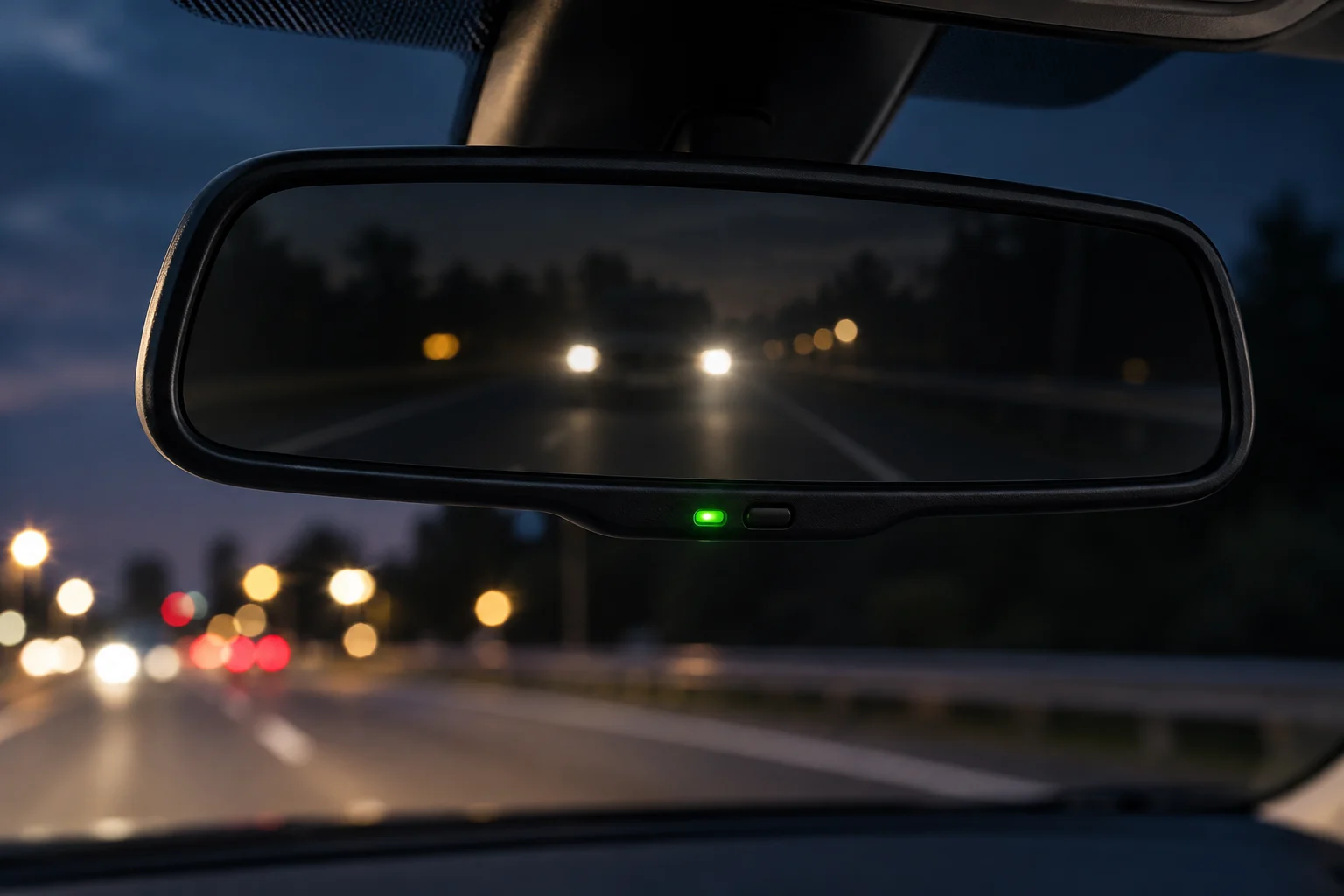
Additionally, the presence of a manual deactivation button should be checked, generally accompanied by a green LED indicating that the system is active. If the mirror does not darken or the LED does not light up, it could indicate a fault in the sensors or the control unit. It is also important to verify that the system automatically disconnects when reverse gear is engaged, a critical safety function to ensure visibility when maneuvering.
| Element to check | Indicator of correct operation |
|---|---|
| Darkening time | Between 6 and 10 seconds from light detection |
| Indicator LED | Lights up green when the system is active |
| Deactivation button | Keeps the mirror clear when pressed |
| Reverse gear | The mirror lightens immediately when engaged |
Section references: Espejos retrovisores fotosensibles: así funcionan ↗ · Qué es un espejo retrovisor electrocrómico y cómo funciona ↗
- Verify the response time (6-10 seconds) under controlled light conditions.
- Check the operation of the deactivation button and the indicator LED.
- Confirm that the mirror lightens when reverse gear is engaged.
System limits and when to consult a workshop
Although the electrochromic mirror is a robust system, it has limits. It does not completely eliminate glare in extreme conditions, such as with high-intensity headlights very close by, and its effectiveness depends on the state of the sensors and the cleanliness of the glass.
If the mirror does not darken, darkens irregularly, or the LED blinks, it is a sign that there may be a fault in the electrical connection or the sensors. In these cases, it is recommended to consult the seller or the workshop to diagnose the fault before purchase, as the repair may involve replacing the entire mirror unit.
Section references: Beneficios de los espejos retrovisores antideslumbramiento ↗
- Effectiveness depends on the cleanliness of the glass and the state of the sensors.
- Faults in the LED or response time indicate possible failures.
- Repair may require replacing the mirror unit.
Does the electrochromic mirror work with the car off?
No, the system requires electrical power to function. When the engine is turned off, the mirror returns to its normal transparent state.
Can I deactivate the automatic darkening?
Yes, most electrochromic mirrors include a button that allows keeping the glass in its clearest state, temporarily deactivating the system.
Is it mandatory to have an electrochromic mirror in new cars?
It is not a legally mandatory equipment, but it is very common in mid and high-end ranges. Its availability depends on the manufacturer and the chosen version.
What happens if the mirror does not lighten when reverse gear is engaged?
It is a sign of a serious fault, as automatic disconnection in reverse is a safety function. It must be repaired before driving.