Different Front and Rear Tyres: What to Check
Different tyre sizes on each axle are not automatically incompatible. Check that the combination is approved for the exact vehicle version and follow the specifications for each axle.
Key points
A car can have different tyre sizes on the front and rear axles if that setup is approved for its exact version. Before buying or replacing tyres, check the vehicle documents and confirm the required load and speed ratings and wheel compatibility.
Different sizes do not necessarily mean there is a problem
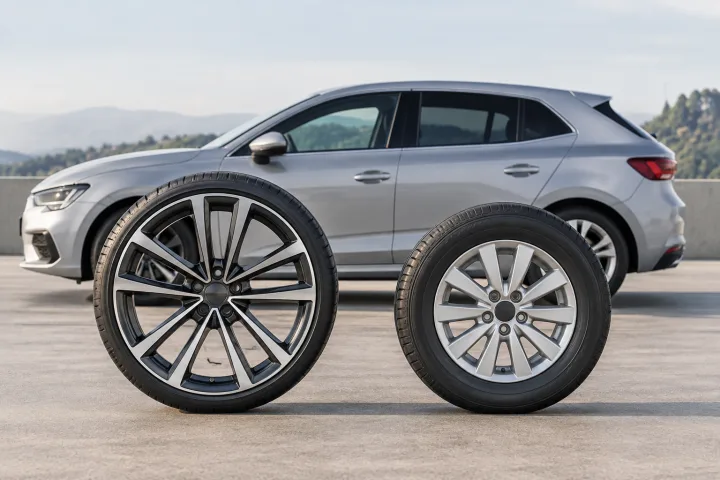
Yes, a car can have different tyre sizes at the front and rear when that combination is part of the approved specifications for its version. What matters is not that all four tyres are identical, but that each axle has the size and characteristics specified for the vehicle.
This is different from fitting different tyres to the same axle. Michelin generally recommends that the two tyres on each axle match in brand, model, size, and load and speed ratings. So a staggered setup—with different sizes on the front and rear axles—should not be confused with mixing tyres within the same pair.
Section references: ¿Se pueden mezclar neumáticos diferentes? ↗
Confirm the approved sizes for that car
Check the vehicle registration document or inspection certificate. RACE notes that these documents list applicable tyre sizes and specifications, and that the remarks may include other approved sizes. Do not assume a setup is valid just because the tyres are fitted or the seller says they are original: verify that the sizes for both axles are approved for that specific vehicle.
If the documents do not make this clear, check with the manufacturer or a tyre professional before buying or replacing the tyres. The information must match the exact vehicle version, not just the model name.
Section references: ¿Qué neumáticos le corresponden a mi coche? ↗
- Compare the specified size for the front axle and rear axle separately.
- Check any alternative sizes listed in the remarks on the vehicle documents.
- If the documents and fitted tyres do not match, get confirmation before completing the purchase or ordering a set.
Check more than tyre size
Size is not the only detail that must match the vehicle specifications. RACE lists the load index and speed rating among the characteristics to check. Do not choose a tyre based only on its width or diameter; compare the ratings required for each axle.
Also check that the wheels are suitable for the specified tyre sizes. If you cannot confirm wheel-and-tyre compatibility from the available documents, consult the manufacturer or a specialist. This is particularly important for 4x4 vehicles: Michelin says to follow the manufacturer's specified speed relationship between the axles.
Section references: ¿Qué neumáticos le corresponden a mi coche? ↗ · ¿Se pueden mezclar neumáticos diferentes? ↗
- The tyre size specified for each axle.
- The specified load index and speed rating.
- Compatibility between the tyres and wheels.
- For a 4x4, the manufacturer's guidance for the relationship between the two axles.
What to ask when buying a used car
Before accepting a car with different tyre sizes across the axles, ask to see the vehicle documents and compare them with the fitted tyres. Confirm that the setup is approved for that specific vehicle, that each axle has the specified size, and that the load and speed ratings are appropriate.
Also check that the two tyres on each axle match in brand, model, size, and load and speed ratings, following Michelin's general recommendation. If the car is a 4x4, ask about the manufacturer's tyre specifications; do not assume that a combination suitable for a conventional passenger car is suitable for it.
Section references: ¿Qué neumáticos le corresponden a mi coche? ↗ · ¿Se pueden mezclar neumáticos diferentes? ↗
- Which sizes are approved for each axle in the vehicle documents?
- Do the fitted tyres' sizes and ratings match those documents?
- Do the tyres on each axle match in brand, model and ratings?
- If it is a 4x4, has the manufacturer's guidance for both axles been followed?
When replacing tyres, do not assume the sizes are interchangeable
If the car has different setups at the front and rear, check which size each axle needs before ordering tyres. A size specified for the front axle should not automatically be treated as suitable for the rear, or vice versa. Use the vehicle documents and manufacturer's recommendations as your guide; if you are unsure about the documentation or compatibility, ask a professional to confirm.
Section references: ¿Qué neumáticos le corresponden a mi coche? ↗
Is it legal to have different tyre sizes at the front and rear?
The practical check is to confirm that both sizes are approved for the vehicle and appear in its documents. The vehicle registration document or inspection certificate lists the applicable sizes, and its remarks may include approved alternatives.
Can I fit different tyres on the same axle?
As a general recommendation, Michelin says the tyres on the same axle should match in brand, model, size, and load and speed ratings. It mentions using a spare wheel temporarily after a puncture as an exception.
What should I check if the car is a 4x4?
Follow the manufacturer's tyre recommendations. Michelin says to maintain the speed relationship between the axles specified for the vehicle.