Can a Compact Car Work for a Family? What to Check Before Choosing
Evaluate if a compact car meets your family's needs by checking rear-seat access, child seat space, and trunk loading with real luggage. A practical guide to decide if you need more space or if a well-chosen compact is enough.
Key points
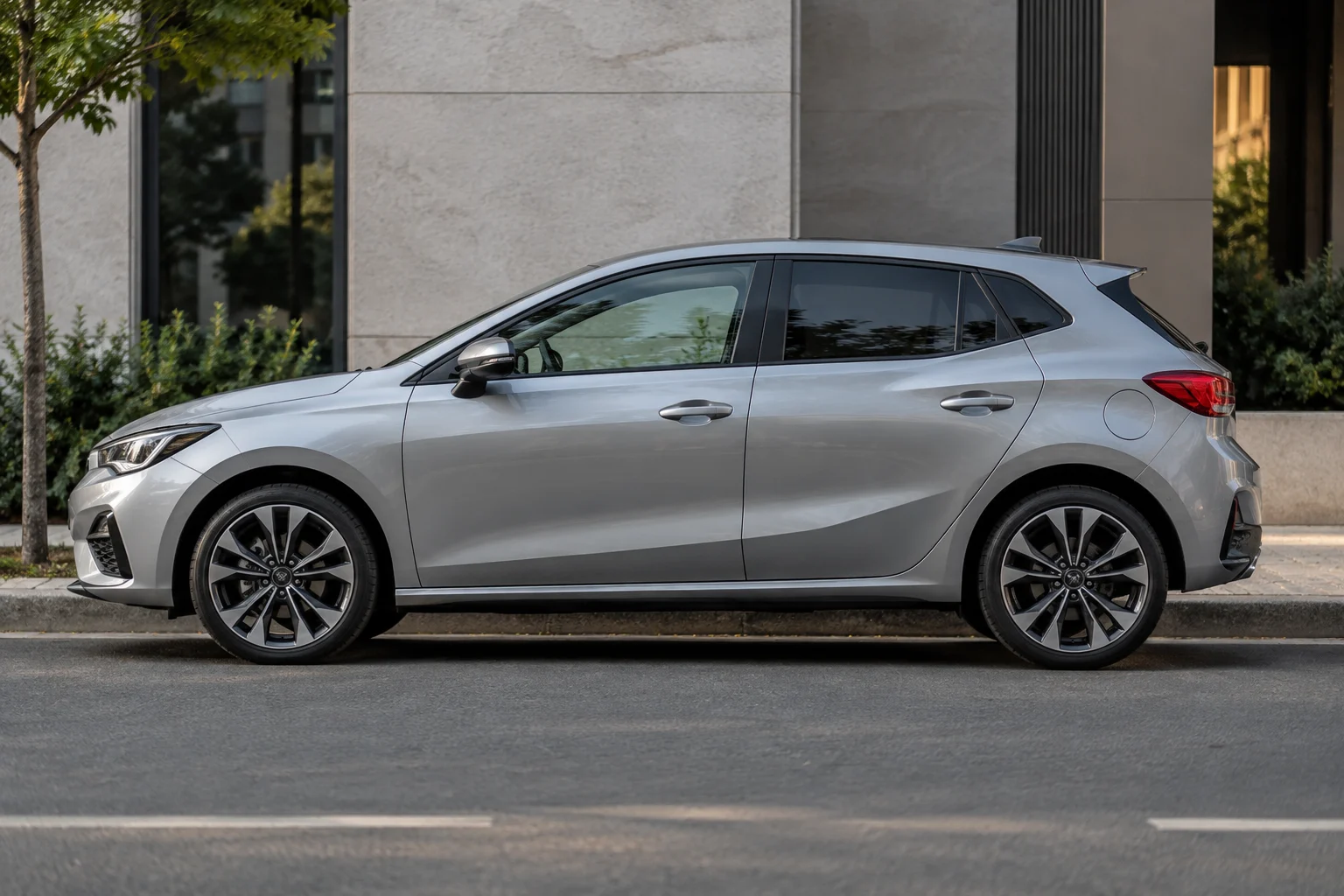
A compact car can be sufficient for a family if you verify the real rear-seat space, ISOFIX compatibility, and practical trunk capacity. The decision should be based on a test drive with regular passengers and actual luggage, not just published dimensions.
Define Real Needs Before Comparing Body Styles
The choice of body style should be based on the family's actual usage, not just aesthetic trends. A well-utilized compact car can meet the needs of families who do not transport large amounts of luggage, while other situations require more space. Before ruling out or prioritizing a vehicle type, it is fundamental to identify who travels regularly, how often, and what objects are loaded consistently.
Vehicle safety is the primary priority when choosing a family car, ahead of other features like space or design. However, safety is not just the car's structure, but also the ability to correctly install child restraint systems and ensure passenger comfort during daily trips.
Section references: Coches familiares de ocasión en 2026: qué buscar para acertar con espacio, seguridad y consumo ↗ · Cómo elegir un coche familiar según tus necesidades ↗
- Identify regular passengers and their approximate height.
- List frequent luggage: strollers, suitcases, sports equipment.
- Determine if trips are urban, weekend, or long-distance.
Rear Seats: Access, Space, and Comfort
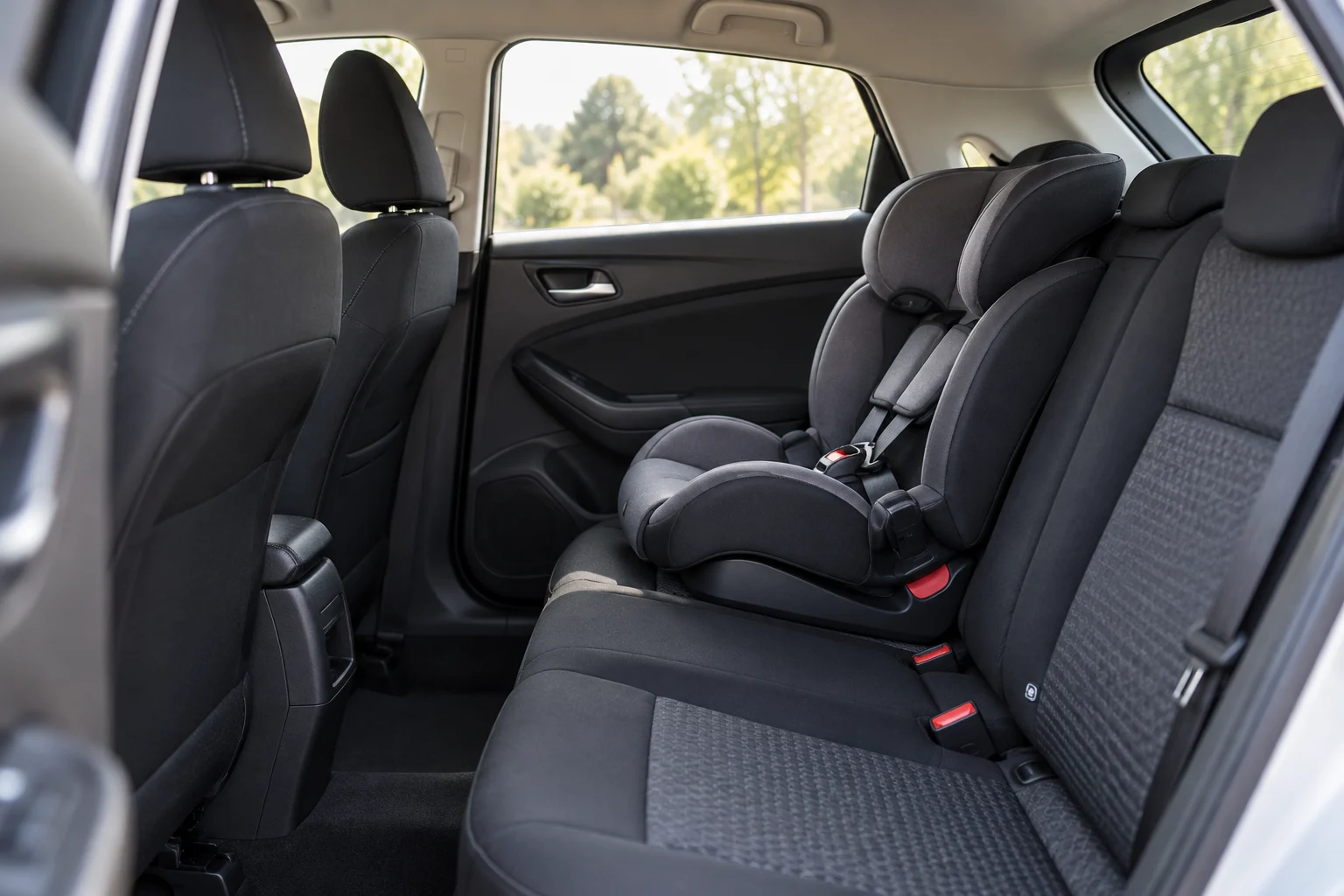
Not all compact cars offer the same rear-seat habitability. Passenger comfort, especially for children, is a key factor in the choice, beyond the general spaciousness of the cabin. It is important to distinguish between a spacious area and a seat that adapts to the occupants' physique, as a larger cabin does not necessarily guarantee a better posture or comfort.
When testing the vehicle, it is recommended to sit in all seats and verify ease of access. This is especially relevant if elderly people or small children who need help getting in and out are traveling. Seat position, legroom, and headroom are factors that vary between models and are only fully appreciated with regular passengers present.
Section references: Consejos para elegir un vehículo familiar ↗
- Check legroom with an average-height adult.
- Verify ease of entering and exiting the rear seats.
- Evaluate seat posture and backrest inclination.

Child Seats: Anchors and Compatibility
For families with small children, it is essential to check the presence and position of ISOFIX anchors and the available space to install rear-facing child seats in the rear seats. Not all cars have the necessary ISOFIX attachments to install safety seats, so this aspect must be verified in the specific unit being purchased.
In addition to the presence of anchors, it is important to evaluate the ease of fastening seatbelts when multiple restraint systems are installed, as well as checking that the chosen seat fits in the available space.
Section references: Coches familiares de ocasión en 2026: qué buscar para acertar con espacio, seguridad y consumo ↗ · Consejos para comprar coche familiar ↗
- Verify the location of ISOFIX anchors in the rear seats.
- Check space for installing the seat rear-facing.
- Evaluate ease of fastening seatbelts with the seat installed.
Family Trunk: Shape, Access, and Real Loading
Trunk capacity should be evaluated not only by the advertised liters, but also by the shape of the space, the height of the threshold, and the ease of loading objects like strollers or suitcases. A wide loading opening, a flat floor, and low height between the edge and the floor facilitate introducing bulky objects, which is crucial for daily family use.
If you already have a safety seat or a stroller, bring them along to the test. There is no better way to know if they fit in the trunk and how much free space remains when you introduce them. This practical verification provides more information than comparing only technical sheets, as the shape of the trunk can vary significantly between models in the same category.
Section references: Coches familiares de ocasión en 2026: qué buscar para acertar con espacio, seguridad y consumo ↗ · Consejos para comprar coche familiar ↗
- Measure the height of the loading threshold.
- Check the trunk shape with real objects.
- Evaluate free space after loading regular luggage.
Practical Test: Reproduce a Daily Routine
Before buying a family car, it is recommended to perform a practical test that includes sitting in all seats, checking ease of access, and verifying space with real luggage like strollers or chairs. This simulation allows detecting limitations that are not apparent in the technical sheet or the seller's description.
Bring the regular child seat and luggage to check how they are installed and how much space remains available in the cabin and trunk.
Section references: Coches familiares de ocasión en 2026: qué buscar para acertar con espacio, seguridad y consumo ↗
- Sit in all seats and check ease of access.
- Test the installation of the regular child seat.
- Load the trunk with regular luggage and check the remaining space.
When a Compact Is Enough and When to Look for More Space
A compact car can be sufficient for small families who do not transport large amounts of luggage and whose trips are mainly urban or short-distance. However, if the family grows, travels frequently long distances, or needs space for sports or work equipment, it may be necessary to consider a larger vehicle.
Signs that justify looking for more space include difficulty installing child seats, lack of space for regular luggage, or discomfort for rear passengers. In these cases, an SUV, a minivan, or a larger sedan may offer a better solution, provided that safety and comfort are verified in the same way.
Section references: Coches familiares de ocasión en 2026: qué buscar para acertar con espacio, seguridad y consumo ↗
- A compact is suitable for small families with little luggage.
- Look for more space if there is difficulty installing child seats or loading luggage.
- Consider a larger vehicle for long trips or large families.
Is an SUV better than a compact car for a family?
Not necessarily. A well-chosen compact car can be sufficient for small families with little luggage. The choice should be based on actual usage, safety, and comfort, not just the size of the vehicle.
What should I check in the rear seats of a compact car?
You must verify legroom, ease of access, and seat comfort. It is important to sit in the seats with regular passengers to evaluate posture and real space.
Do all cars have ISOFIX anchors?
No, not all cars have the necessary ISOFIX attachments to install child seats. Verify the presence and position of these anchors in the specific unit you are buying, and check that the chosen seat fits and that it is practical to fasten the seatbelts.
How do I know if the trunk is enough for my family?
The best way is to bring your regular luggage, such as strollers or suitcases, and check if it fits in the trunk and how much free space remains. The shape of the trunk and the height of the threshold are as important as the advertised liters.