NSU Wankel Spider: History, Technology, and Restoration Guide
Discover the history of the first production car with a rotary Wankel engine. We analyze the DKM 54 engine technology, common apex seal failures, and the real budget for restoring an NSU/Wankel Spider.
Key points
The NSU/Wankel Spider was the first production car with a rotary Wankel engine, introduced in 1963. This guide details its history, the DKM 54 engine technology, typical sealing issues, and restoration costs for the 2,375 surviving examples.
The first production car with a rotary engine
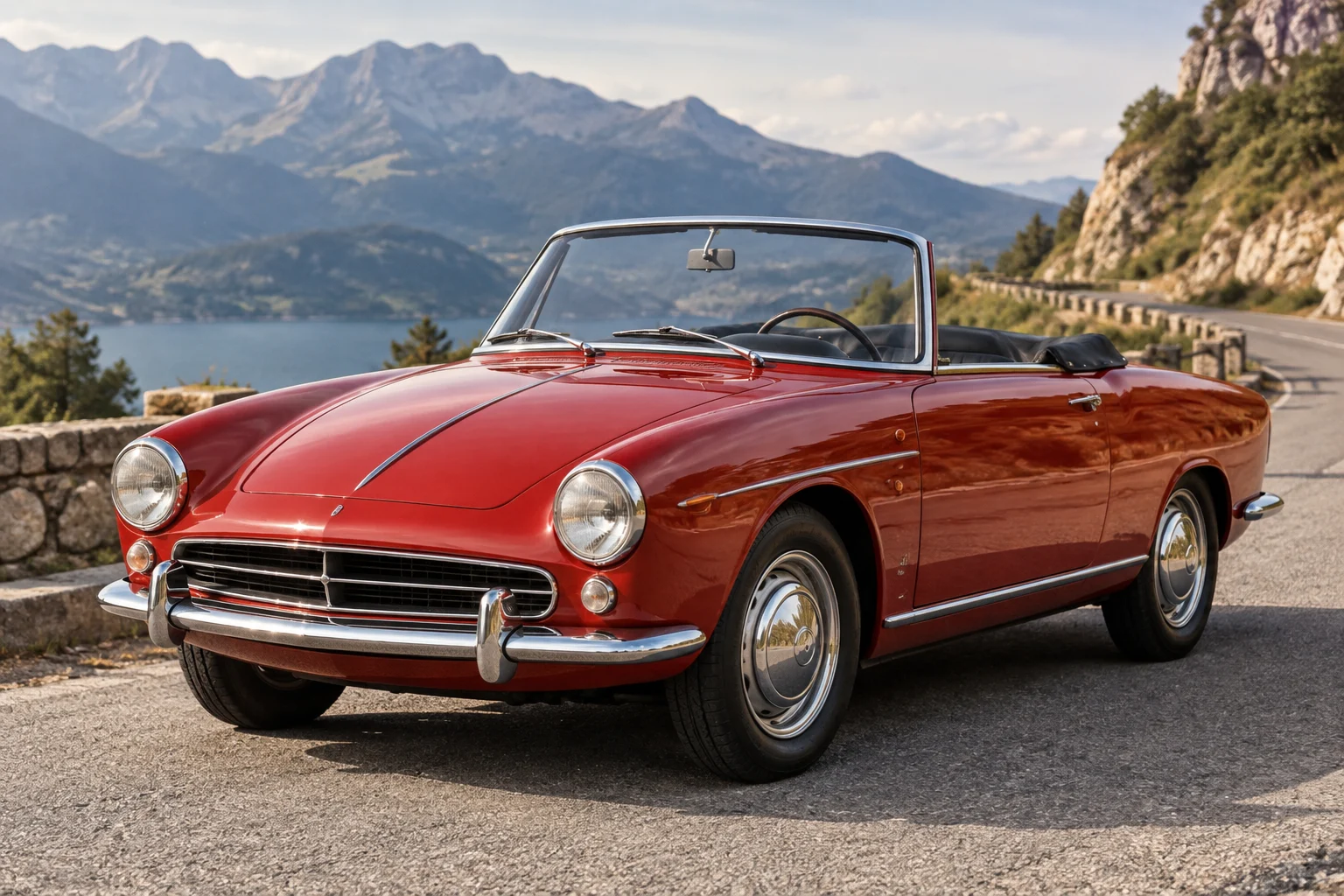
The NSU/Wankel Spider holds a unique place in automotive history as the first production vehicle to incorporate a single-rotor Wankel rotary engine. Presented as one of the stars of the 1963 Frankfurt IAA, this model marked the beginning of a new technological era for NSU and, subsequently, for Audi.
Total production of the Spider was limited to 2,375 units, built until July 1967. This scarcity, combined with its pioneering character, makes it a sought-after object for collectors and automotive engineering enthusiasts today.
Section references: Sporty, beautiful, and innovative: the NSU/Wankel Spider ↗
Design and development of the DKM 54 engine
The development of the rotary engine was a long and complex process. The first prototype, the DKM 54, developed by NSU and Felix Wankel, ran for the first time on a test bench on February 1, 1957. However, after only 15 hours of operation, the first sealing problems began to appear, a technical challenge that would define the evolution of this technology.
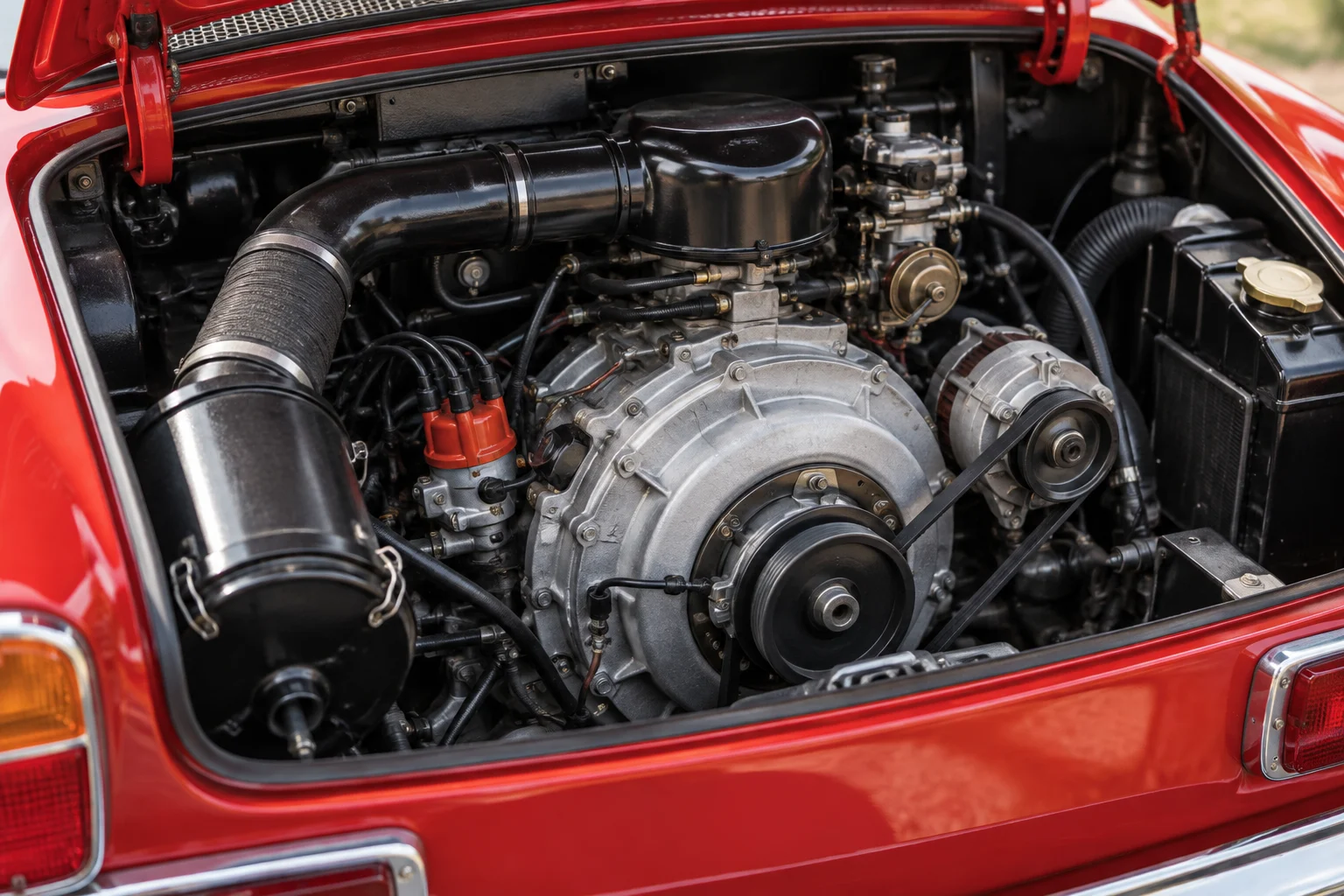
To overcome these difficulties, NSU switched to a concept in which the rotor rotated inside a fixed housing. This new design, known as the KKM 250 (Kreiskolbenmotor), started on the bench for the first time in early 1959. The final version installed in the Spider was notably compact and light: the complete engine, transmission, alternator, and starter motor weighed only 125 kg.
This lightness allowed the engine to be installed under the rear floor, which not only improved weight distribution but also left space for both front and rear trunks, a functional advantage uncommon in sports cars of the era.
Section references: Sporty, beautiful, and innovative: the NSU/Wankel Spider ↗
- First start of the DKM 54: February 1, 1957.
- Total weight of the powertrain: 125 kg.
- Total production: 2,375 units until July 1967.
Typical technical problems: apex seals
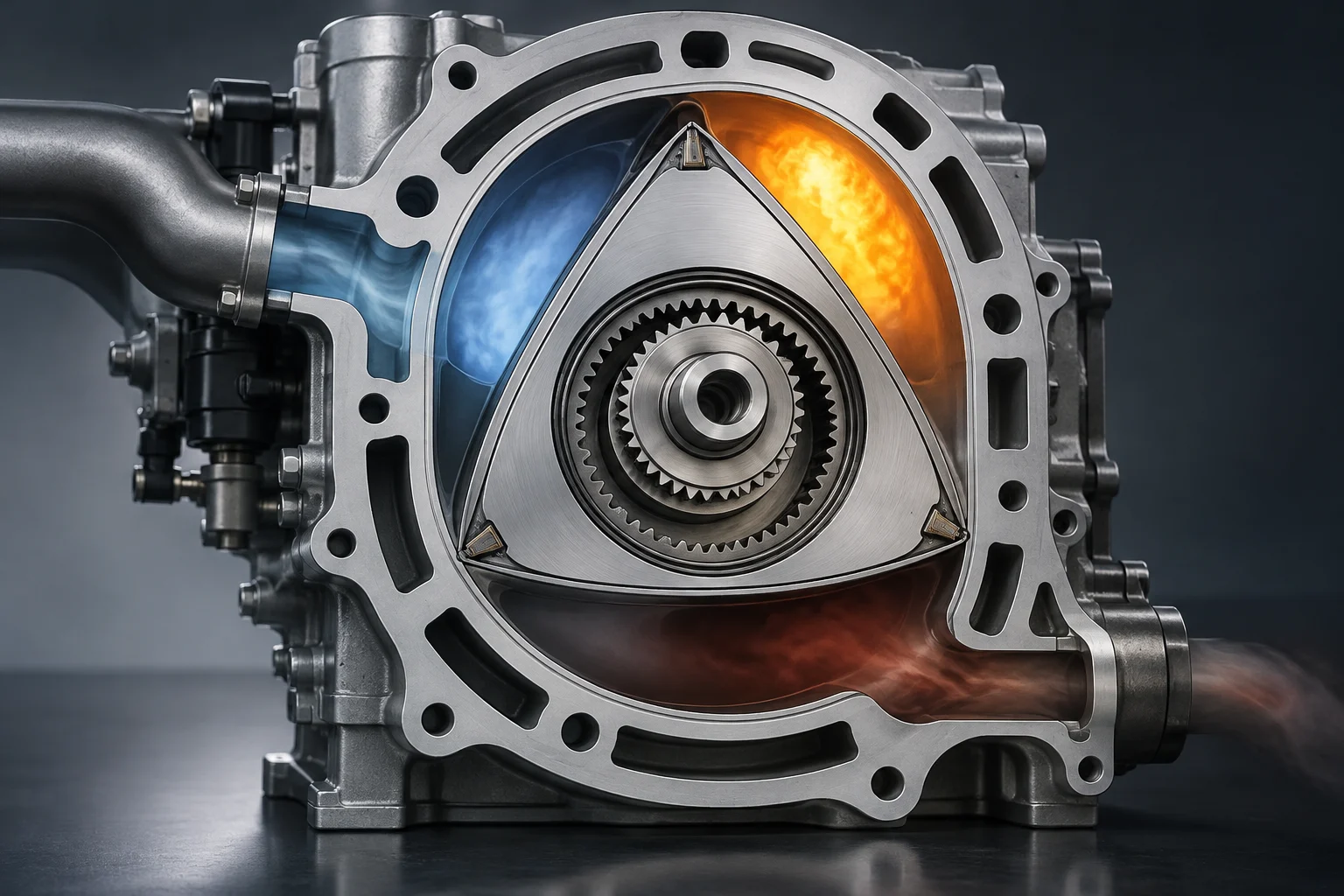
The main technical challenge of Wankel rotary engines lies in sealing the combustion chambers. Apex seals are critical components that separate the engine chambers. Their function is to maintain pressure in each phase of the combustion cycle.
According to technical studies, failure or wear of these seals causes leaks between the engine cavities. This results in significant power loss and can affect the overall reliability of the vehicle. In the context of a classic like the Spider, the condition of these seals is one of the most important factors when evaluating engine health.
For owners, this implies special attention to maintenance and periodic inspection of these components, as their replacement requires specific knowledge of rotary engine geometry.
Section references: Analysis of Apex Seal Friction Power Loss in Rotary Engines ↗
- Apex seals seal the combustion chambers.
- Wear causes leaks and power loss.
- Regular inspection is crucial for engine reliability.
Restoration: costs and considerations
Restoring an NSU Wankel Spider is an ambitious project that requires budget and patience. The NSU/Wankel-Spider Club Deutschland has published a guideline document estimating the cost of a complete restoration, without own work, at approximately 35,400 euros.
This budget includes essential items such as the body, engine, transmission, and paint. However, the club explicitly warns about the possibility of unforeseen events and variables that may arise during the process, which can raise the final cost.
For those considering buying an example, it is fundamental to review the maintenance history and the condition of critical components, especially the engine and body, to avoid financial surprises.
| Item | Detail |
|---|---|
| Total production | 2,375 units |
| Powertrain weight | 125 kg |
| Restoration budget | ~€35,400 |
| Body design | Giuseppe 'Nuccio' Bertone |
Section references: NSU/Wankel-Spider Club Deutschland e. V. – Restaurierungskosten-Dokument ↗
- Estimated budget for complete restoration: €35,400.
- Includes body, engine, transmission, and paint.
- It is recommended to budget for unforeseen events.
Sporting legacy and design
The NSU Wankel Spider was not only a technological milestone but also a successful competitor. The monocoque body, based on a design by Giuseppe «Nuccio» Bertone, gave it an elegant and aerodynamic aesthetic that has aged with great style.
In the sporting arena, the Spider demonstrated its potential. Siegfried Spiess was runner-up in the mountain championship in 1966 and absolute German mountain champion in 1967 and 1968 with a Wankel engine prepared by NSU. Additionally, Karl-Heinz Panowitz and Rainer Strunz achieved victory in the 1966 German GT Rally Championship with this model.
These successes consolidated the Spider's reputation as a versatile vehicle, capable of competing in different disciplines while serving as a platform to demonstrate the viability of the rotary engine under real conditions.
Section references: Sporty, beautiful, and innovative: the NSU/Wankel Spider ↗ · Sporterfolge ↗
- Body design by Giuseppe «Nuccio» Bertone.
- German mountain champion in 1967 and 1968.
- Victory in the German GT Rally Championship in 1966.
How many NSU Wankel Spiders were built?
Exactly 2,375 units were built until July 1967.
What is the main technical problem of the Wankel engine?
Wear of the apex seals, which can cause leaks between chambers and power loss.
How much does it cost to restore an NSU Wankel Spider?
The estimated budget for a complete restoration is approximately 35,400 euros, although unforeseen events may arise.
Who designed the Spider's body?
The monocoque body was based on a design by Giuseppe «Nuccio» Bertone.