Large Wheel vs. Small Wheel Scooters: What Changes in the City and What to Check
Discover the real differences between large and small wheel scooters. Analyze stability, storage space, and braking to choose the ideal model for your urban commutes.
Key points
The choice between large and small wheel scooters depends on road conditions and storage needs. Small wheels offer more under-seat space and agility, while large wheels improve stability and braking on rough asphalt.
Definition and Common Dimensions
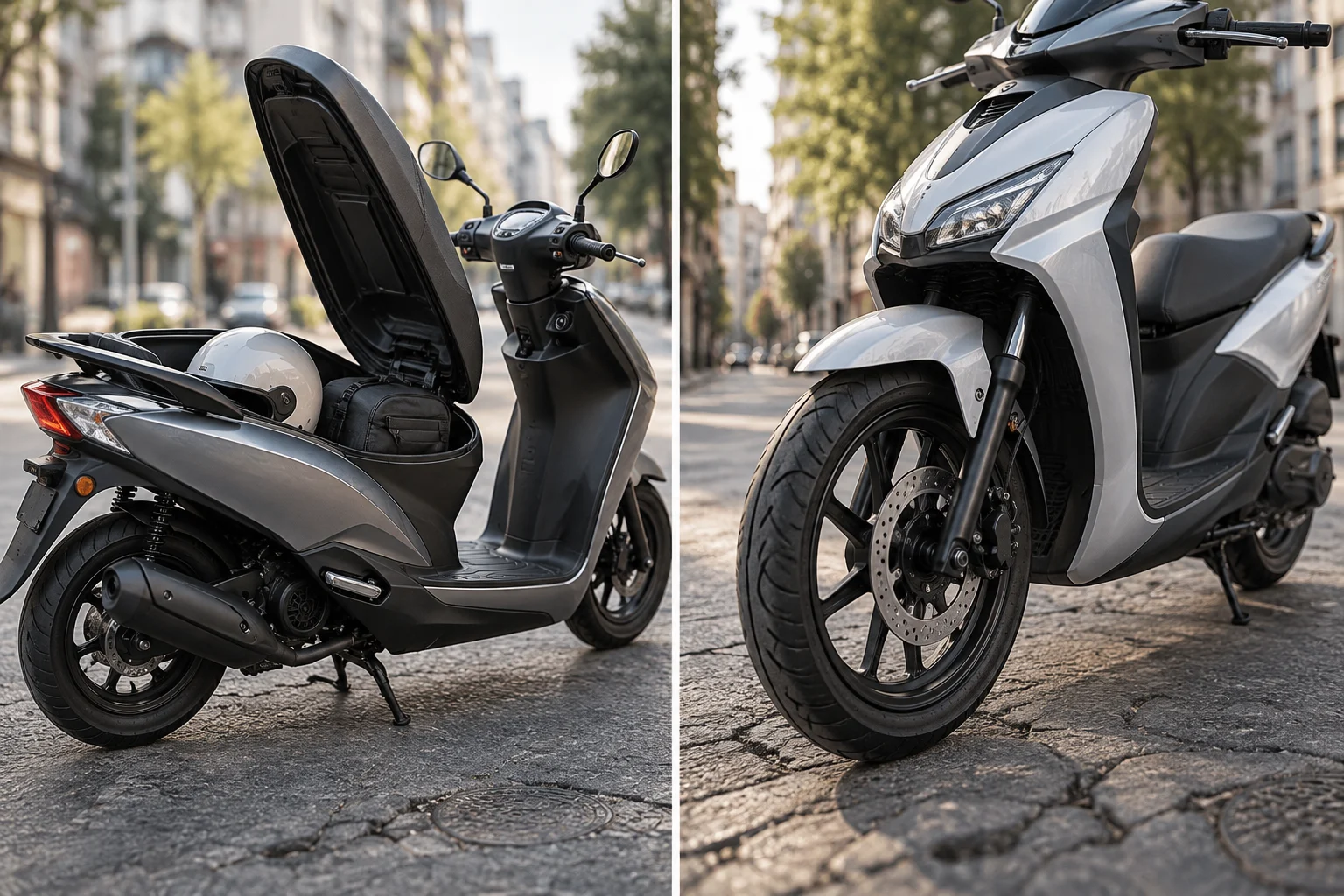
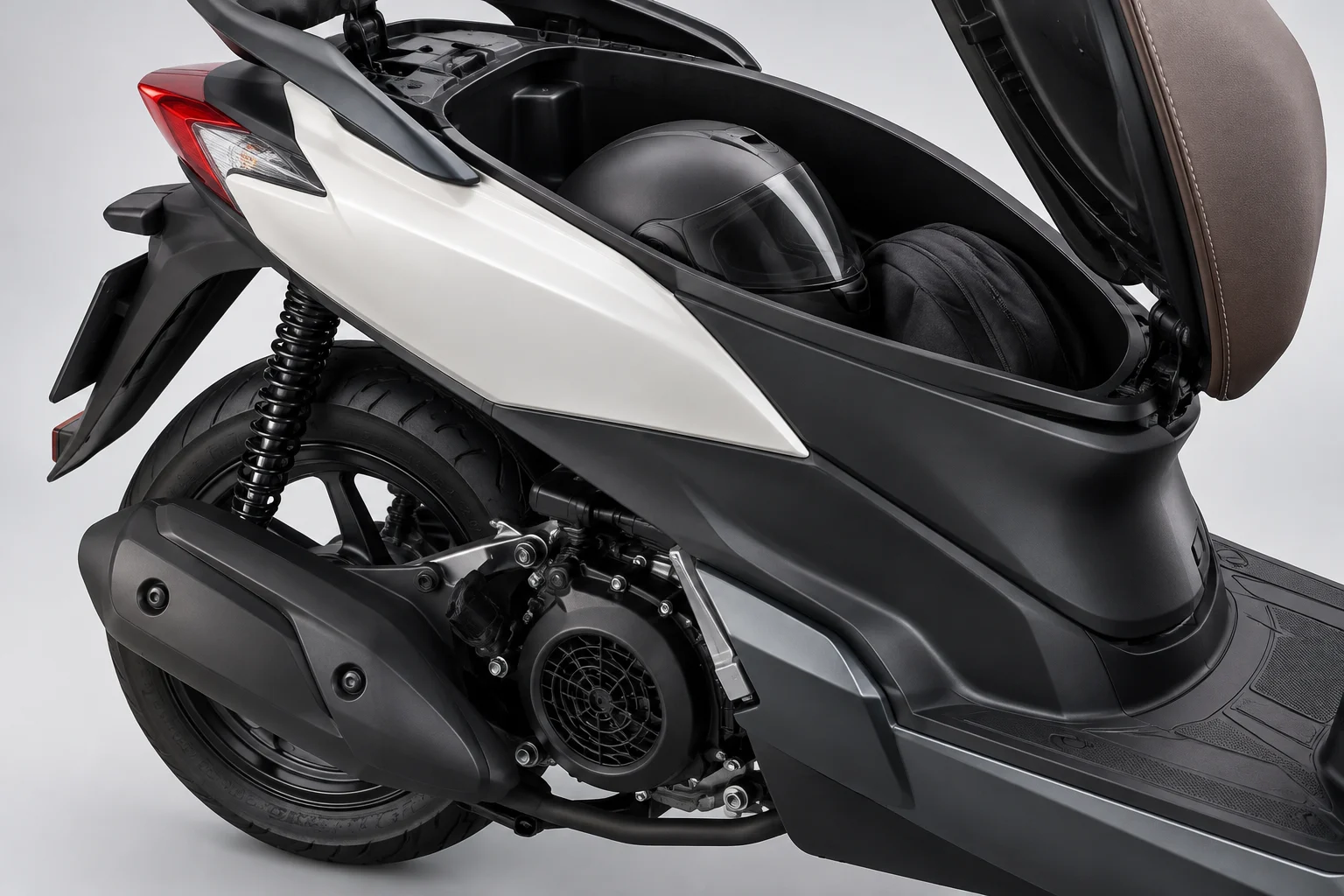
The main distinction between the two types of scooters lies in the rim diameter. Small-wheel models typically use rims between 10 and 14 inches, although some GT models can reach 15 inches on the front axle. This configuration allows the mechanics to be housed more compactly in the rear wheel area, freeing up space for a larger storage compartment under the seat.
In contrast, large-wheel scooters usually mount a 16-inch front rim, which in many cases is combined with a 14-inch rear rim. This geometry modifies the chassis design and component placement, prioritizing interaction with the asphalt over internal storage capacity.
Section references: Motofichas: Scooter de rueda alta o baja ↗ · AMV: Scooter de rueda alta o baja ↗
- Small wheel: 10 to 14-inch rims (up to 15" in some GT models).
- Large wheel: 16" front rim and 14" rear rim.
- Under-seat space is larger in small-wheel models.
Behavior on Potholes and Deteriorated Surfaces
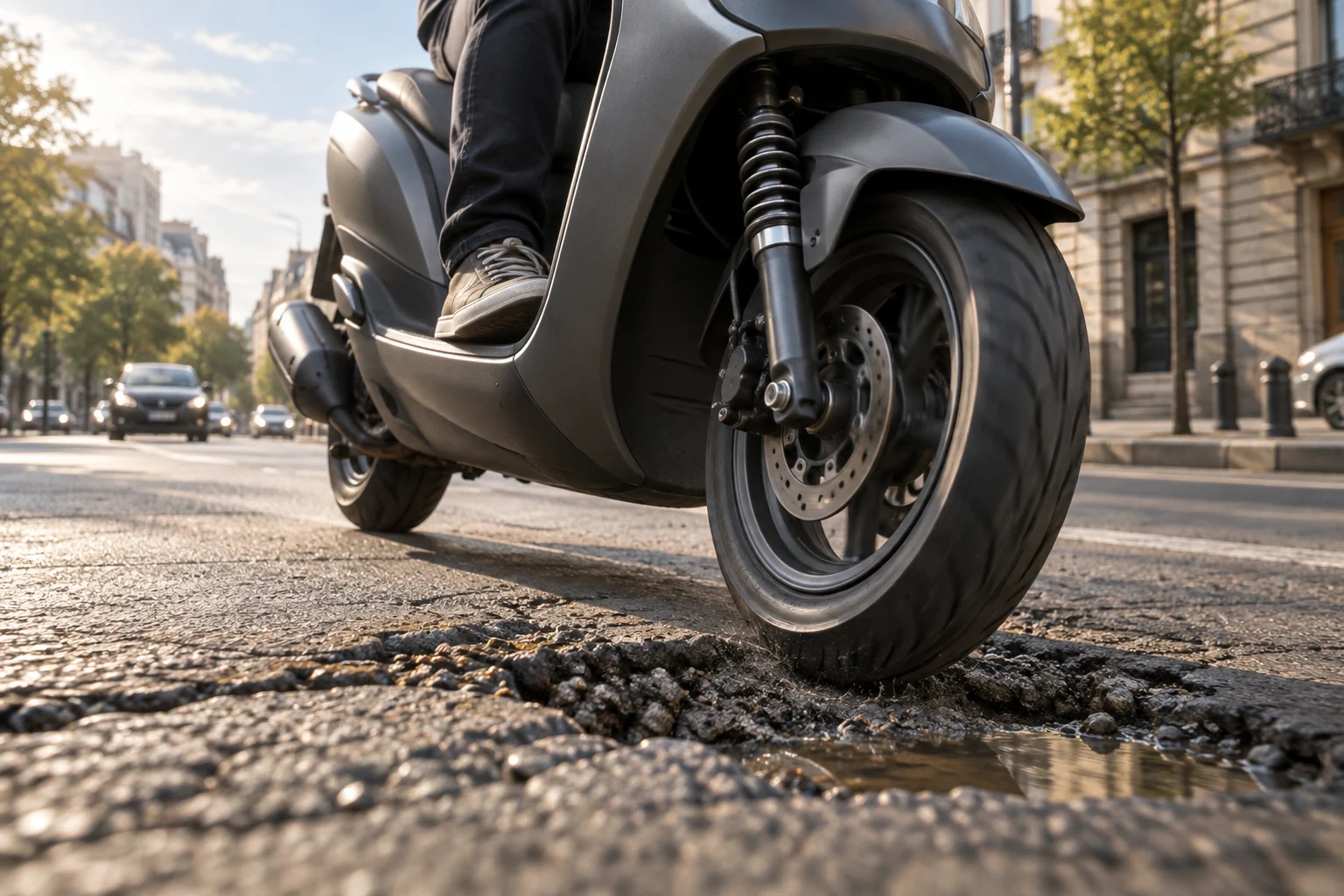
Wheel diameter directly influences how the scooter absorbs asphalt irregularities. A small-diameter wheel sinks deeper into a pothole than a larger-diameter one. This affects safety and comfort, as the impact transmitted to the chassis and the rider is stronger.
On streets with expansion joints or deteriorated pavement, large-wheel scooters usually offer a smoother response. The larger contact surface and rim geometry help to 'roll over' asphalt imperfections rather than impacting them head-on, reducing fatigue on long urban routes.
Section references: Motofichas: Scooter de rueda alta o baja ↗
- Small wheels suffer more from the impact of potholes and joints.
- Large wheels improve comfort on irregular asphalt.
- Safety is affected by the force of the impact on small wheels.
Maneuverability, Stability, and Braking
In dense urban traffic, small-wheel scooters stand out for their agility and low center of gravity. This facilitates low-speed maneuvers and parking in tight spaces. However, as speed increases, small-diameter wheels are more sensitive to steering oscillations, which can result in a feeling of instability.
Regarding braking, physics plays a crucial role. Small wheels have less contact surface with the asphalt, making them more prone to locking during braking. In contrast, the larger surface and inertia of large wheels make braking more linear and less prone to locking, offering greater confidence in emergency situations.
Section references: Motofichas: Scooter de rueda alta o baja ↗ · AMV: Scooter de rueda alta o baja ↗
- Small wheel: greater agility and low center of gravity.
- Large wheel: greater stability at speed and more linear braking.
- Small wheels are more prone to locking when braking.
Range and Load Capacity
The adoption of larger rims in large-wheel scooters forces the fuel tank to be designed more compactly. This capacity usually hovers around 7 liters, limiting the vehicle's total range compared to small-wheel models, which can accommodate larger tanks thanks to the space freed by the compact mechanics.
Additionally, under-seat storage space is significantly smaller in large-wheel scooters. If transporting luggage, such as a full-face helmet or shopping bags, is a daily priority, the volume available under the seat of a small-wheel scooter is usually the most practical option.
Section references: Motofichas: Scooter de rueda alta o baja ↗ · AMV: Scooter de rueda alta o baja ↗
- Large-wheel tank: usually around 7 liters.
- Lower range in large-wheel scooters.
- Less under-seat storage space in large-wheel models.
What to Check in the Technical Sheet
Wheel diameter is not the only factor that determines scooter behavior. For an informed decision, it is necessary to cross-reference technical sheet data with usage needs. Steering geometry, tire type, and suspension are variables that modify the riding feel regardless of rim size.
It is recommended to verify seat height, ground clearance, and the exact dimensions of the under-seat compartment. These data, along with tank capacity and suspension type, allow you to anticipate whether the model suits the rider's height and the amount of usual luggage.
| Characteristic | Small Wheel (10-14") | Large Wheel (16"/14") |
|---|---|---|
| Urban Agility | High | Medium |
| Under-seat Space | Spacious | Reduced |
| Comfort on Potholes | Lower | Higher |
| Braking | More prone to locking | More linear |
| Tank Capacity | Variable (larger) | Approx. 7 liters |
Section references: AMV: Scooter de rueda alta o baja ↗
- Check seat height and ground clearance.
- Verify the exact fuel tank capacity.
- Check the dimensions of the under-seat compartment.
Which scooter is better for dense traffic?
Small-wheel scooters are usually more agile and maneuverable in dense urban traffic thanks to their low center of gravity and compact size.
Are large wheels always more stable?
Generally, larger-diameter wheels offer greater stability at speed and improve comfort on irregular asphalt, but this also depends on the specific model's geometry and suspension.
How much storage space do I have in a large-wheel scooter?
Under-seat space is smaller in large-wheel scooters due to the larger rear rim. It is recommended to check the exact dimensions in the model's technical sheet.