How Luggage Affects Motorcycle Handling: A Practical Guide
Discover how the weight, volume, and position of your luggage influence your motorcycle's stability, braking, and steering. Practical tips for loading correctly and traveling safely.
Key points
Motorcycle luggage affects more than just weight; its volume, height, and position alter aerodynamics, center of gravity, and steering response. Placing cargo low, centered, and securely is essential for maintaining stability and safety on the road.
What changes when adding luggage: mass, distribution, and aerodynamics
When loading a motorcycle, the total weight increases, but the distribution of mass and air resistance also change. Additional weight modifies steering, braking, and the vehicle's overall stability. Poorly distributed cargo can make the bike feel heavier than it actually is, especially during slow maneuvers or hard braking.
Furthermore, bulky accessories create aerodynamic effects that can severely impact stability. The motorcycle may tend to lift up in headwinds or become unstable in crosswinds. Therefore, it is not enough for the cargo to be light; its shape and position are just as important.
Section references: Manual de servicio YBR125-Z (Yamaha Motor Argentina) ↗ · Cómo preparar tu moto para un viaje largo (Sharmax) ↗
- Extra weight affects steering, braking, and stability.
- The volume and height of the cargo influence aerodynamics.
- Crosswinds or headwinds can destabilize high or wide loads.
Why cargo height and position matter
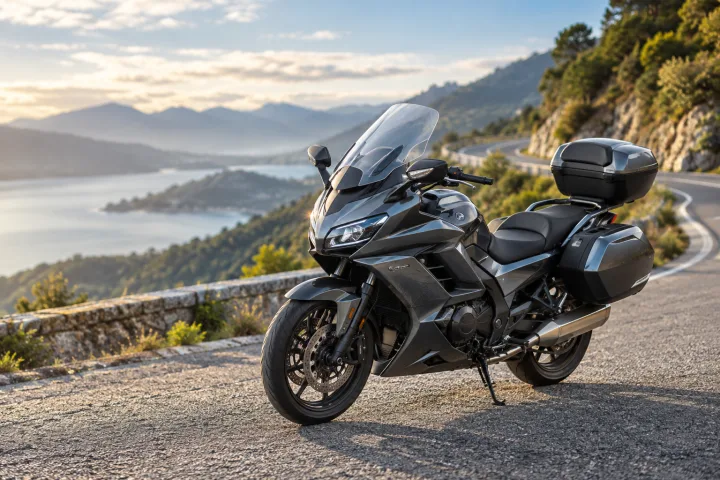
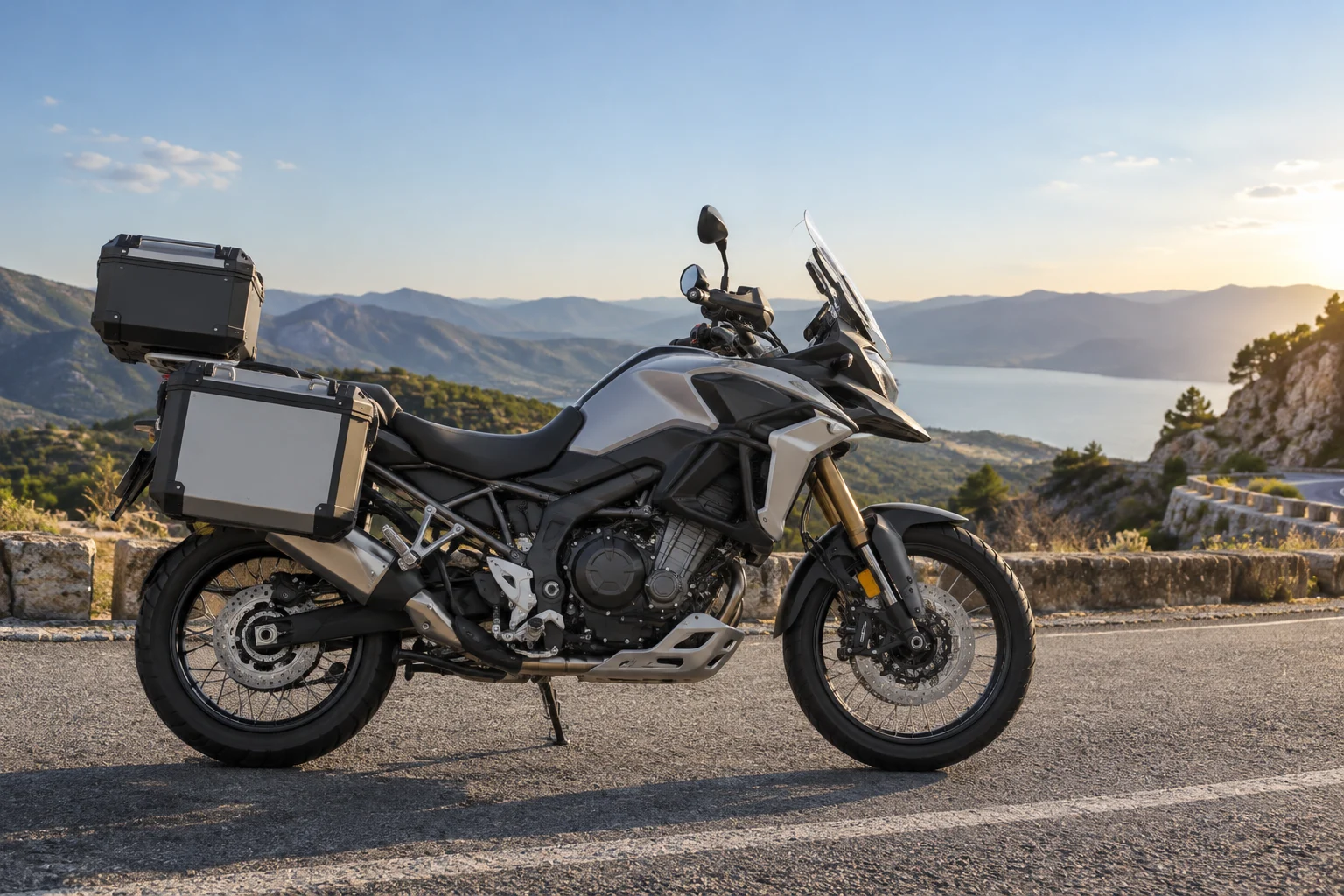
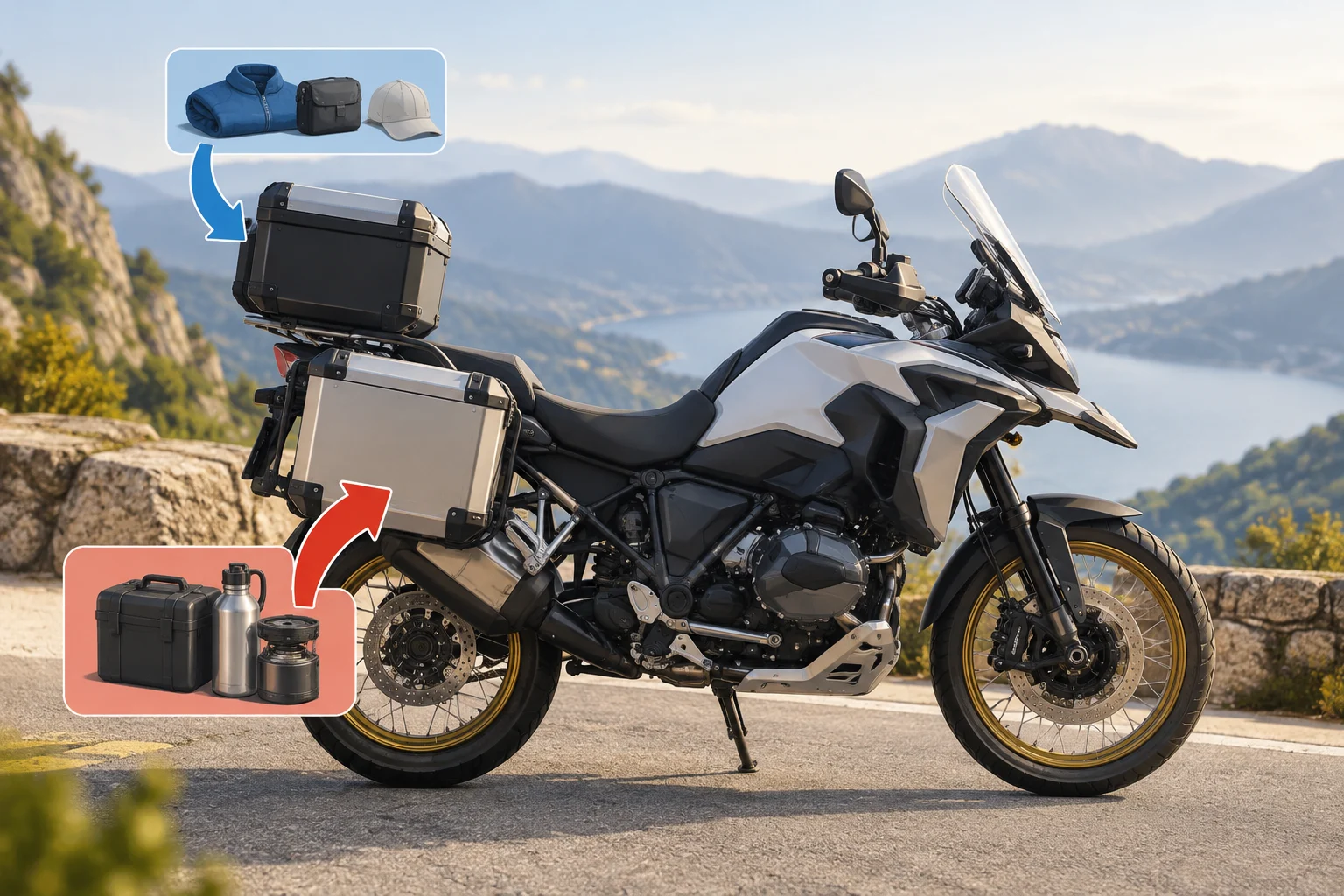
A high center of gravity reduces motorcycle stability and increases the risk of accidents. Therefore, the general rule is to place heavy luggage at the bottom and light items on top. The heaviest objects should go in the bottom of the side panniers and close to the motorcycle's center of gravity, while the top box is reserved for light clothing or low-volume items.
It is crucial not to attach large or heavy objects to the handlebars, front fork, or front fender. These points are sensitive to steering, and any additional mass there can create instability or reduce handlebar response, making the ride more unpredictable.
Section references: Manual de servicio YBR125-Z (Yamaha Motor Argentina) ↗ · Consejos para elegir la mejor moto para nuestras necesidades (AMV) ↗ · Así debes llevar tu equipaje en la moto (RACE) ↗
- Heavy cargo at the bottom, light cargo on top.
- Avoid weight on the handlebars, fork, or front fender.
- Keep the center of gravity as low and centered as possible.
Load limits and basic regulations
A motorcycle's load capacity is determined by the difference between its curb weight (unladen weight) and its GVWR (gross vehicle weight rating). This difference includes the weight of occupants and luggage. Exceeding this limit is not only illegal but also seriously compromises the safety and performance of the brakes and suspension.
Regarding dimensions, Spanish regulations establish that for vehicles less than one meter wide, the load cannot extend more than half a meter to each side of the longitudinal axis. It is prohibited for the load to protrude from the front, and it cannot extend more than 0.25 meters from the rear. Respecting these limits is mandatory for road use.
| Parameter | Maximum limit |
|---|---|
| Lateral overhang (per side) | 0.5 meters |
| Rear overhang | 0.25 meters |
| Front overhang | Prohibited |
Section references: Así debes llevar tu equipaje en la moto (RACE) ↗
- Maximum load = GVWR - Curb weight (includes occupants).
- Maximum lateral overhang: 0.5 m per side (if the bike is <1 m wide).
- Maximum rear overhang: 0.25 m.
- Prohibited to protrude from the front.
Checks before setting off
Before starting a trip with a fully loaded motorcycle, it is recommended to perform a test ride of 15 to 20 minutes in a safe area. During this test, you should check stability at low speeds, brake response, full handlebar turn, and suspension behavior. This will allow you to detect if the cargo is securely fastened and if the bike responds as expected.
Verify that all panniers and the top box are properly anchored and that there are no loose objects that could move during the ride. Poorly secured luggage can become a projectile or destabilize the motorcycle in case of sudden braking.
Section references: Cómo preparar tu moto para un viaje largo (Sharmax) ↗ · Colocar el equipaje en la moto: cómo sujetarlo correctamente para viajar seguro (Calimoto) ↗
- Perform a test ride with the loaded motorcycle.
- Check braking, steering, and suspension.
- Securely fasten all luggage.
Can I put a bag on the handlebars?
No. Large or heavy objects should not be attached to the handlebars, front fork, or front fender, as they can create instability or reduce steering response.
How much can luggage protrude from the rear?
For vehicles less than one meter wide, the load cannot protrude more than 0.25 meters from the rear. It is prohibited to protrude from the front.
How do I calculate the maximum load for my motorcycle?
The maximum load is the difference between the GVWR (gross vehicle weight rating) and the curb weight (unladen weight). This value includes the weight of occupants and luggage.