Accessible City Buses: Ramps and Wheelchair Space
A ramp is only one part of an accessible journey: its operation, the space available and the layout of the bus assigned to the service also matter.
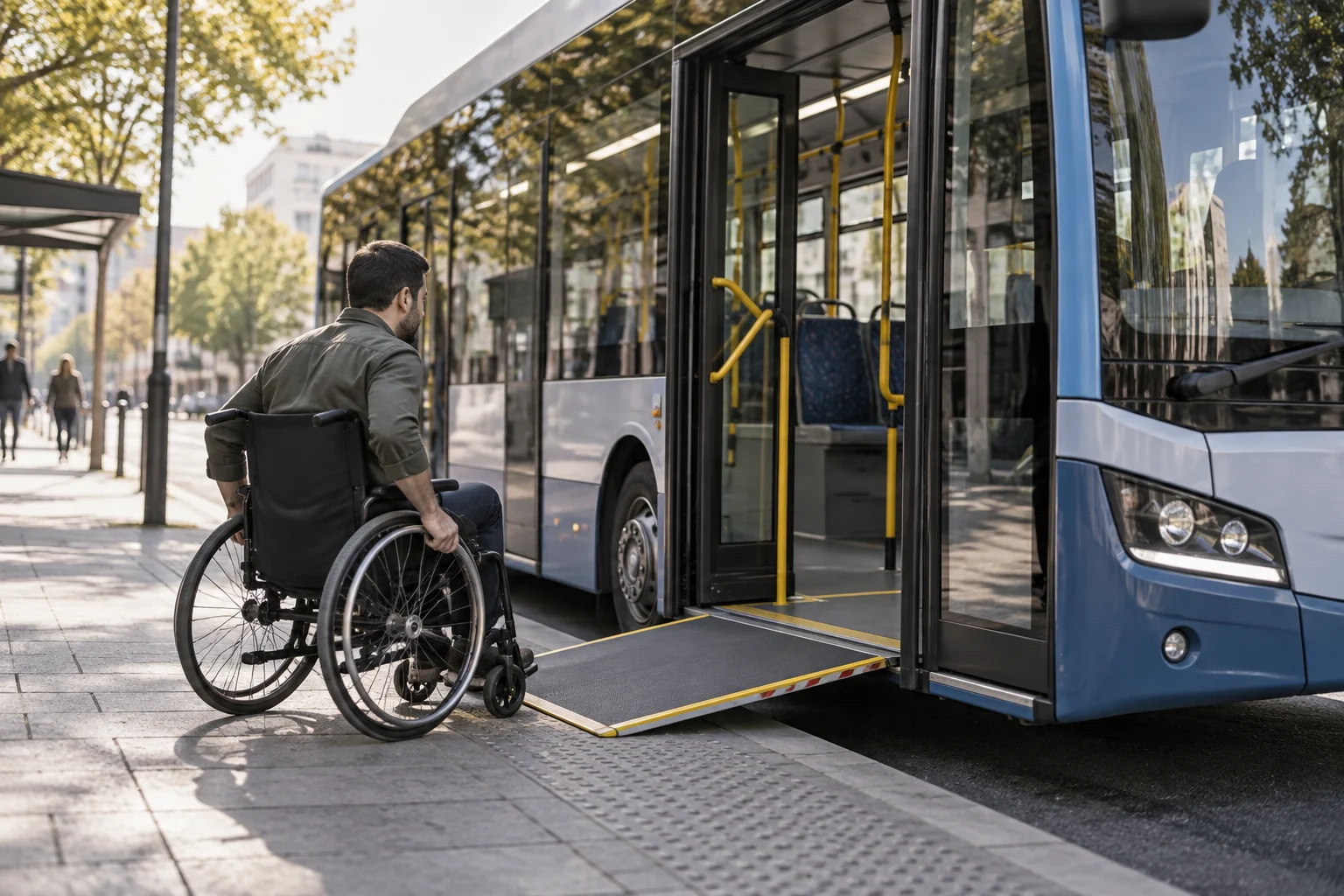
Key points
Accessibility information can vary by route and vehicle. Ask the operator whether the service you plan to use has a working ramp and what access conditions it offers; historical figures from Zaragoza do not describe current services or other cities.
The ramp must work and have room to deploy
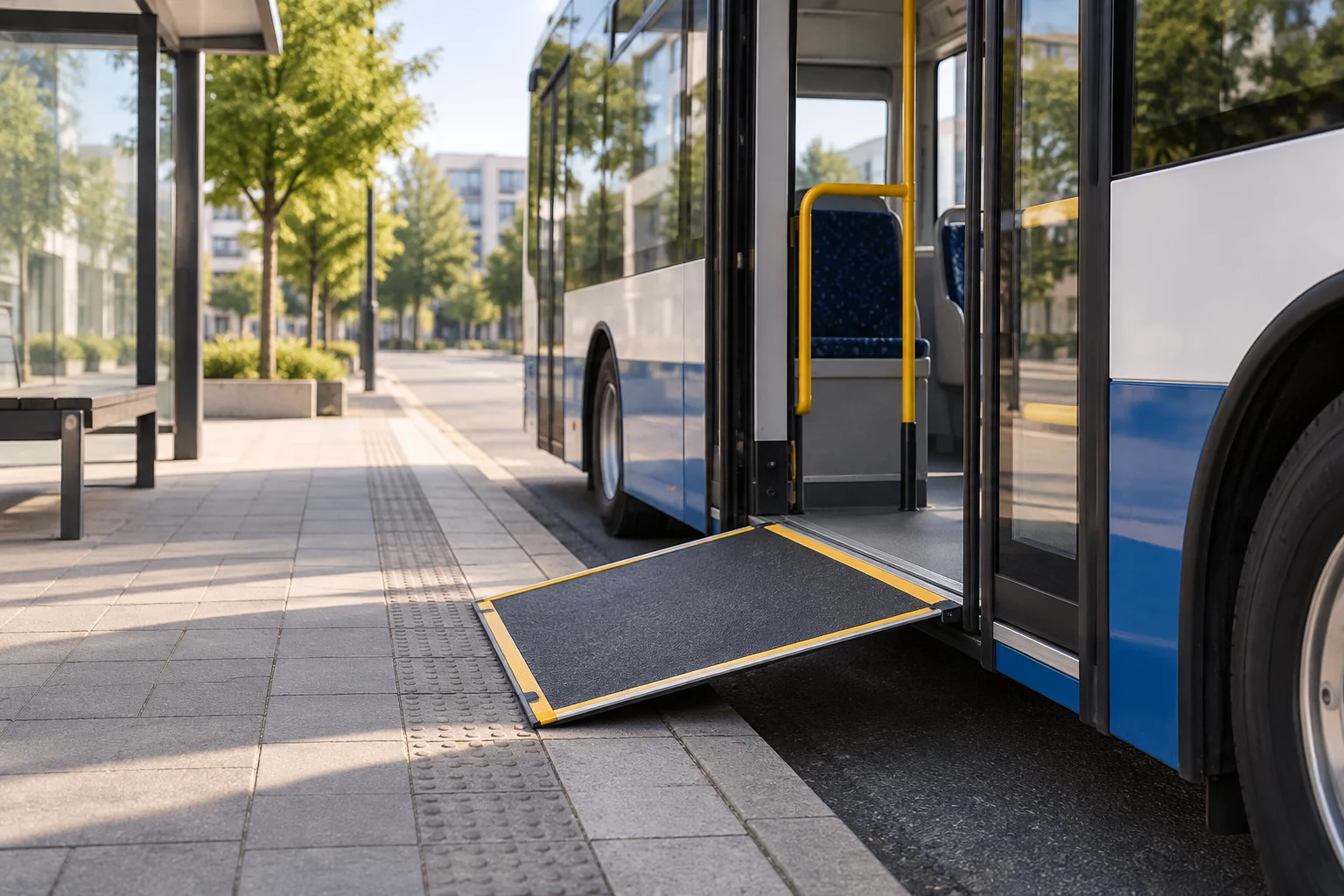
For a wheelchair user to board, it is not enough for a bus to have a ramp: the ramp must work, and there must be enough space beside the vehicle to deploy it. The height and conditions of the bus stop also affect access.
A local example illustrates why maintenance matters, but it should not be generalized across Spain: in July 2016, Zaragoza City Council reported inspections of the ramps on its buses. The share reported as working rose from 70.15% in March to 88.24% in June that year. These figures relate to that inspection campaign; they do not describe current conditions or those in other cities.
Section references: Los autobuses de Zaragoza contarán con 40 nuevas rampas para el acceso de personas en silla de ruedas ↗
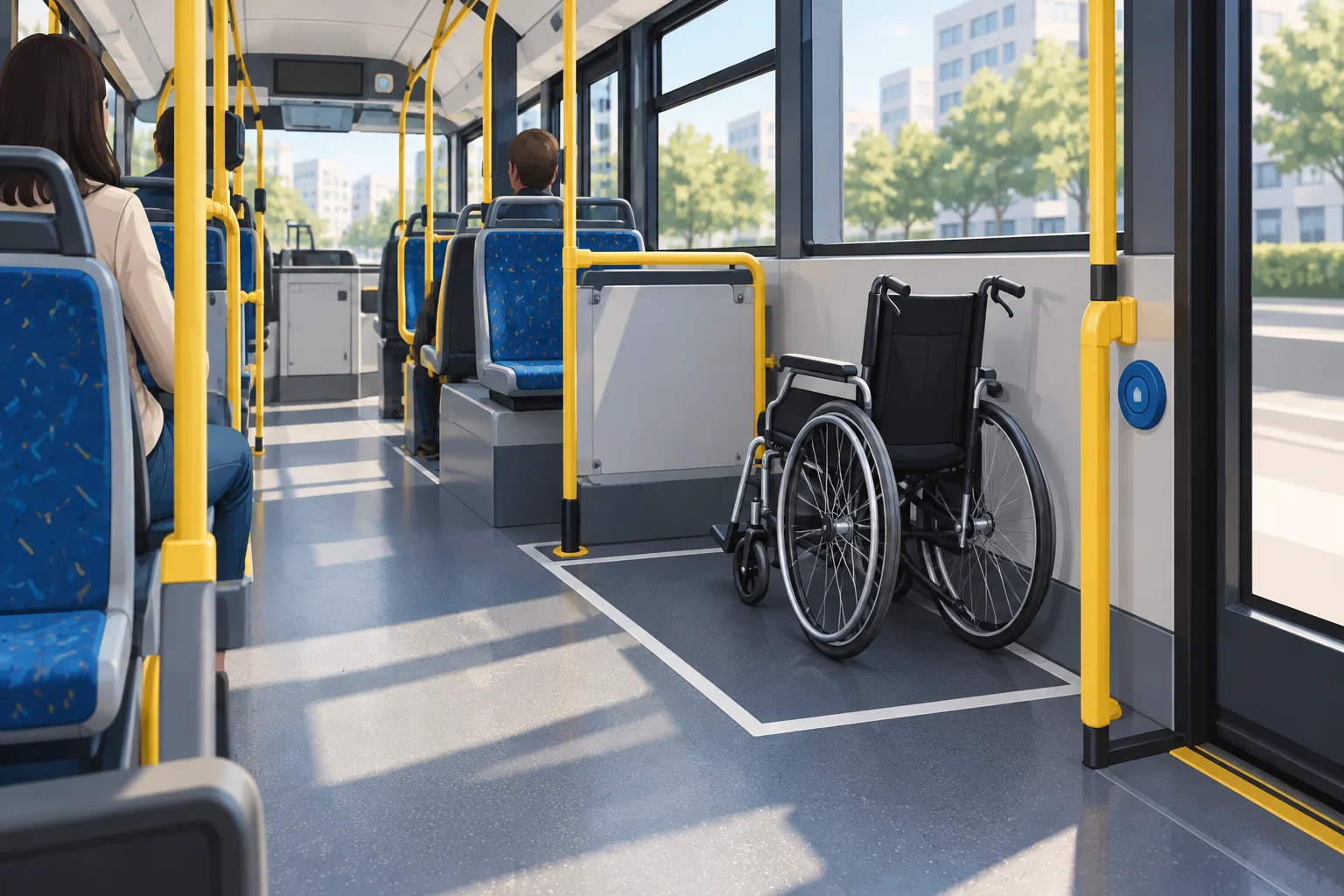
Ask about the space available on the bus
The space available for a wheelchair and the layout of the bus can vary between vehicles. Do not assume that all low-floor buses have the same interior configuration.
Before travelling, ask the operator about the features of the specific service, including the space available and any conditions of use. If the public information only says that the bus is accessible, ask what that means for your route: the label alone does not describe the layout or confirm that the ramp will be working at any given time.
- Check whether the route information specifies ramp access and space for a wheelchair.
- Ask the operator about conditions of use and alternatives if the assigned vehicle does not allow you to board.
Plan for differences between routes and vehicles
Check the operator’s website, app or customer service for your planned route and travel time. Look for specific information about ramp access and available space. If you need a particular feature, ask directly whether it is provided on the service you intend to use.
Official information can vary depending on the vehicle assigned and the service conditions. In 2016, Zaragoza City Council announced plans to install new ramps on buses registered before 2008 and to inspect existing ramps. This is a historical example from that city, not a description of its current fleet.
Section references: Los autobuses de Zaragoza contarán con 40 nuevas rampas para el acceso de personas en silla de ruedas ↗
- Confirm the route, direction of travel and, if possible, the planned departure time.
- Ask what to do if the ramp does not work or the space is unavailable; the operator can explain the current procedure and alternatives.
- If you cannot board, alert the service staff and ask for guidance on the next accessible option. Do not assume that every bus on the route has the same layout.
Scope of the information
The Zaragoza figures cited here are municipal figures from 2016. They are not a guarantee of current service conditions or information about other cities.
To find out what to expect on a particular journey, ask the operator about access and the space available on the bus planned for that service. The terms “low-floor bus” or “bus with a ramp” alone do not establish every detail of the journey.
Do all low-floor city buses have the same wheelchair space?
Do not assume they do. Layouts can vary between vehicles, so ask the operator about the specific route and service.
Does a route listed as having a ramp guarantee that I can board?
Not necessarily. The ramp must be working and conditions at the stop must allow it to be deployed. Ask the operator what to do if it is unavailable.
Do the figures published by Zaragoza describe the current situation?
No. The figures refer to a municipal inspection campaign in 2016 and do not describe the current fleet or buses in other cities.