How to Choose the Right Work Van Configuration
The advertised cargo volume alone does not show whether a van will work for everyday tasks. These checks help you compare usable space, doors, payload and the impact of modifications.
Key points
To choose a work van, start with your usual loads and measure the items and their route in and out. Compare door openings, usable space, accessibility and payload, then check these again against the equipment and documents for the specific vehicle.
Start with your work routine
The right configuration depends on what you carry most often, how you access the load, and where you park or unload. Before comparing versions, keep a representative week's record of what you carry, how much it weighs, how many people travel with you, and which occasional jobs might require more space. This helps you avoid choosing around an unusual task at the expense of everyday needs.
Also distinguish between bulky and heavy loads: volume describes the space they occupy, while payload is the weight the vehicle can carry within the limits of its specific configuration. A spacious cargo area does not guarantee enough capacity for heavy materials.
Section references: Cómo elegir furgoneta de renting para autónomos ↗

Measure your items and their loading route
Length and height labels help distinguish body styles, but they do not replace measurements for the specific vehicle on offer. Ask for the usable length, width between the wheel arches, interior height, and dimensions of the side and rear openings. Also check the loading floor height if you will load and unload goods frequently.
Measure your bulkiest item and check its entire route: it must fit through the door, be positioned for transport, secured and then removed. Comparing its volume alone with the advertised cubic capacity can be misleading if an opening or the shape of the cargo area prevents it from fitting.
Section references: Cómo elegir furgoneta de renting para autónomos ↗ · Furgoneta de ocasión para autónomos: cómo elegir ↗
- Record the length, width, height and weight of your largest or most awkward item.
- Check the width between the wheel arches and the dimensions of each door opening.
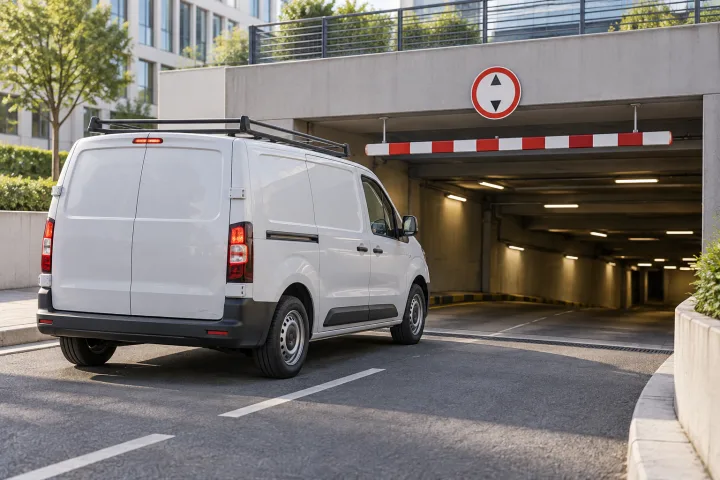
- If you use garages or other restricted-access areas, check the exterior height of the specific version against the available clearance.

Choose doors to suit deliveries and jobs
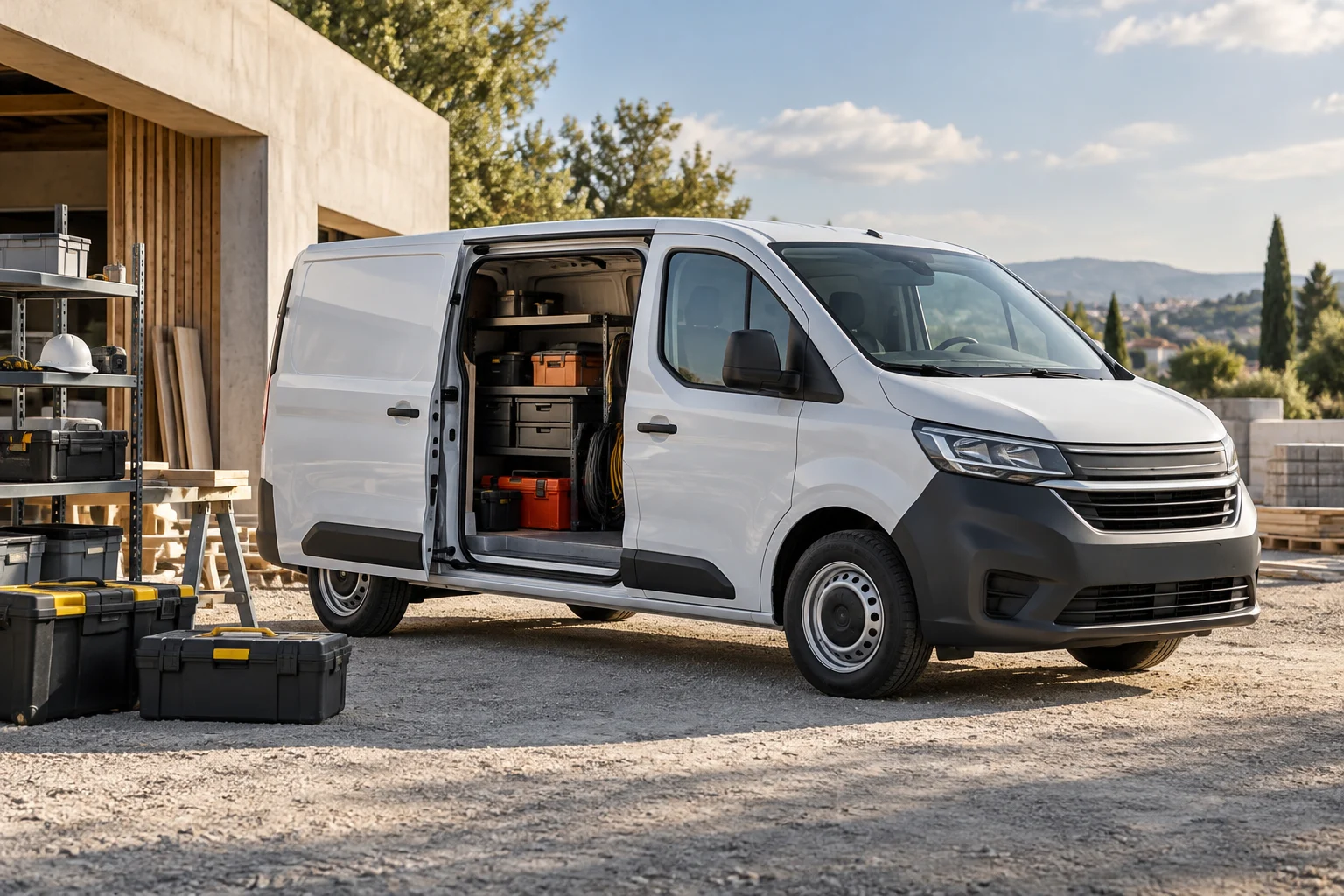
For urban deliveries, a side door can make it easier to reach parcels without always going around to the rear. If you handle tools or materials in different sizes, consider a second side door or rear doors that open wide. What works best depends on where you stop and how much room you have to open the doors and manoeuvre.
Do not just check whether a door is fitted: compare its opening with the loads you actually need to put inside, and consider which side gives you the most convenient access. For regular work, ease of loading and unloading may matter more than a difference in nominal volume.
Section references: Furgoneta de ocasión para autónomos: cómo elegir ↗
Bulkhead, anchor points and interior protection
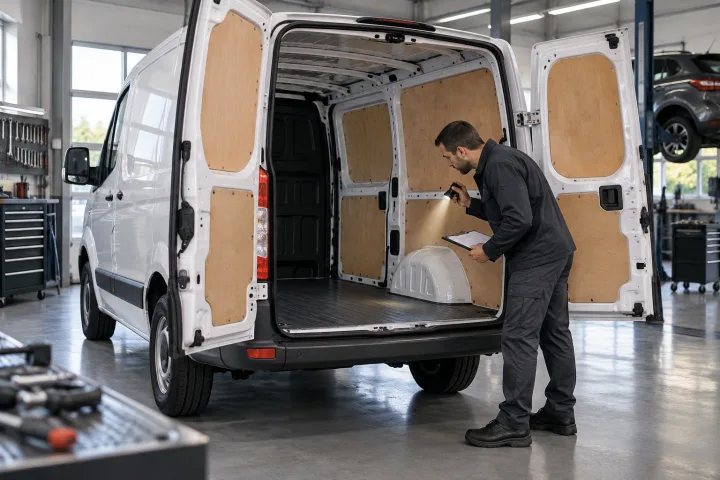
Anchor points and interior protection panels can be useful for tools and materials of different sizes. Consider them alongside your planned layout: shelving or drawers can keep loads organised, but they take up space and add weight. Check that the arrangement keeps the items you need during the day within reach and allows you to secure the load.
The exact features of the bulkhead, anchor points and equipment depend on the version and any modifications. Check the vehicle specification to confirm what is actually included rather than assuming that a model name or photograph represents that configuration.
Section references: Cómo elegir furgoneta de renting para autónomos ↗ · Furgoneta de ocasión para autónomos: cómo elegir ↗
Allow for the weight of modifications
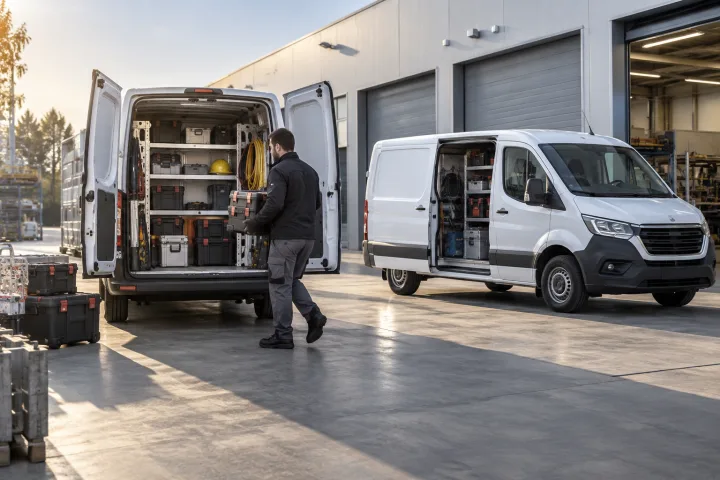
Shelving, drawers, insulation, refrigeration and other equipment must be included when calculating how much payload remains. If the van is offered with modifications already fitted, ask for information about that specific vehicle; do not rely solely on the capacity of an unequipped version.
If you plan to fit equipment after buying or leasing the van, request any necessary written authorisation and, where relevant, a quote for installation and removal. If the modification qualifies as a vehicle conversion, it must follow the applicable process. To find out what procedure applies to a specific modification, check the vehicle documents and consult the manufacturer or converter.
Section references: Cómo elegir furgoneta de renting para autónomos ↗ · Furgoneta de ocasión para autónomos: cómo elegir ↗
Checklist for comparing specific vans
Before deciding, gather the measurements of your usual loads and compare them with the specification for each vehicle, including any modifications. If a particular measurement or capacity is essential, ask for documentary confirmation for the vehicle on offer: model-range names alone do not guarantee that every version has the same dimensions or equipment.
Section references: Cómo elegir furgoneta de renting para autónomos ↗ · Furgoneta de ocasión para autónomos: cómo elegir ↗
- What do you usually carry, how much does it weigh, and how many people travel with you?
- What are the dimensions of the most awkward item? Can it pass through the doors and fit in the cargo area?
- Would side access, rear access or both suit the way you work and park?
- What are the usable length, width between wheel arches, interior height and loading height of the specific vehicle?
- What is the authorised payload for that configuration, and how much weight do the fitted items add?
- What do the bulkhead, anchor points and panels include? Are there modifications and related documents you need to check?
Is it enough for the van's cargo volume to exceed the volume of my load?
No. Check that the item can pass through the door, be positioned and secured, and then be unloaded. The advertised volume also does not, by itself, tell you how much weight the vehicle can carry.
Which measurements should I ask for when comparing vans?
At a minimum, ask for usable length, width between the wheel arches, interior height, and the dimensions of the side and rear door openings. Compare them with your loads and the specific vehicle.
Do shelves affect the available payload?
Yes. Their weight, along with that of drawers, insulation or refrigeration equipment, must be included when calculating the remaining payload. If the installation qualifies as a vehicle conversion, it must follow the applicable process.