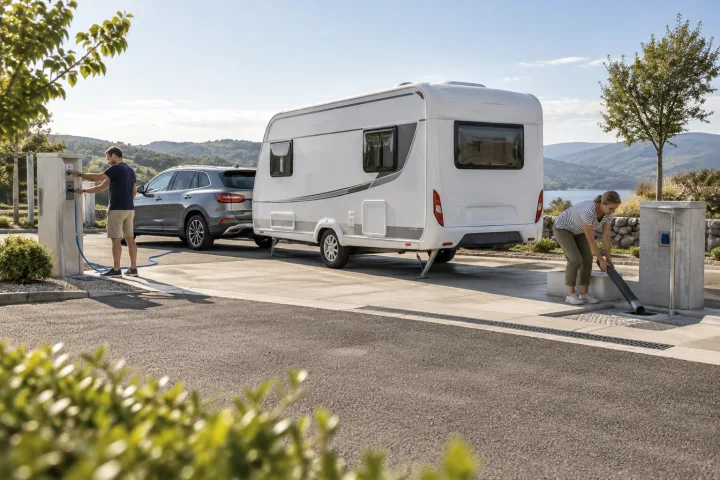
Caravan Gas: What to Check Before You Travel
Learn how to identify the components of a caravan gas system, carry out safe visual checks before setting off and understand Spain’s inspection requirements.
Key points
Before travelling, visually check that the gas cylinders are secured and that the hoses and regulator are in good external condition, without handling any connections. In Spain, fixed LPG installations in caravans and motorhomes require a periodic inspection every four years, separate from the vehicle inspection.
Main components of a caravan gas system
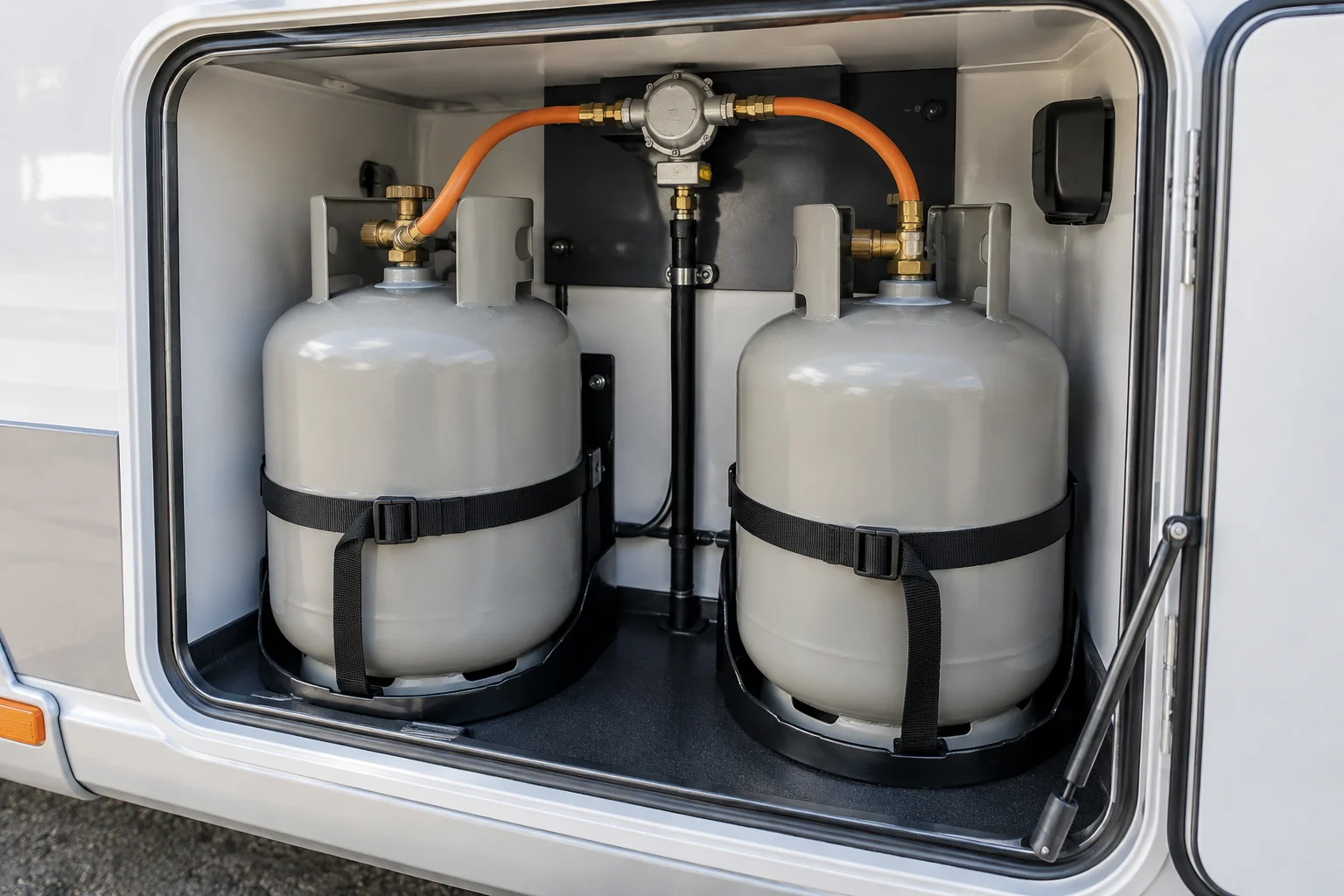
A caravan or motorhome gas system usually consists of LPG (liquefied petroleum gas) cylinders, a pressure regulator, flexible hoses connecting the gas supply to the appliances, and the appliances themselves, such as a cooker, water heater or heating system.
The periodic inspection described in ITC-ICG 10 applies to fixed domestic-use LPG installations and the appliances connected to them. Portable appliances with their own gas supply are outside the scope of this technical instruction.
Section references: Revisión de gas en autocaravanas y campers: obligatoria cada 4 años ↗
Visual checks before setting off
Before travelling, you can carry out a basic visual inspection without dismantling or handling any connections. Look for obvious signs of wear or damage that may need professional attention.
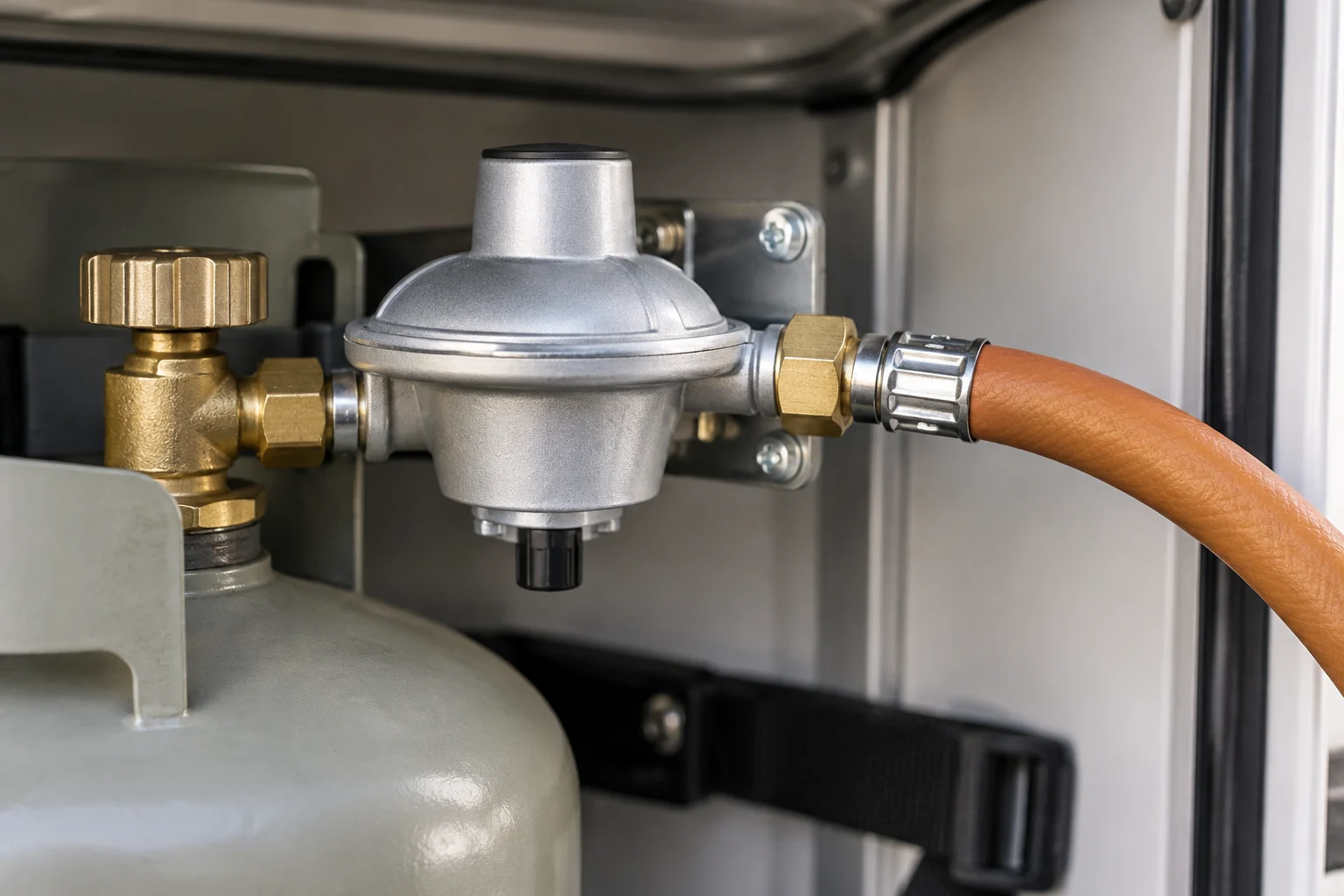
Check that the cylinders are secured in their holders and look for dents or corrosion. You can also check the date marked on the flexible hoses and inspect the regulator’s exterior. Do not handle the connections. If you find damage or suspect a leak, stop using the system and contact an authorised installer.
Section references: Qué revisar en tu autocaravana antes de un viaje largo ↗
- Check that the cylinders are securely fastened and in good external condition.
- Visually check the date marked on the flexible hoses.
- Inspect the pressure regulator visually.
- If you find damage or suspect a leak, stop using the system and contact an authorised installer.
Warning signs and when to stop using the system
If you smell gas inside the vehicle, turn off the cylinder and ventilate by opening doors and windows. Do not switch on lights or electrical devices, and avoid any naked flames. If the smell persists, do not use the vehicle until a professional has inspected the system.
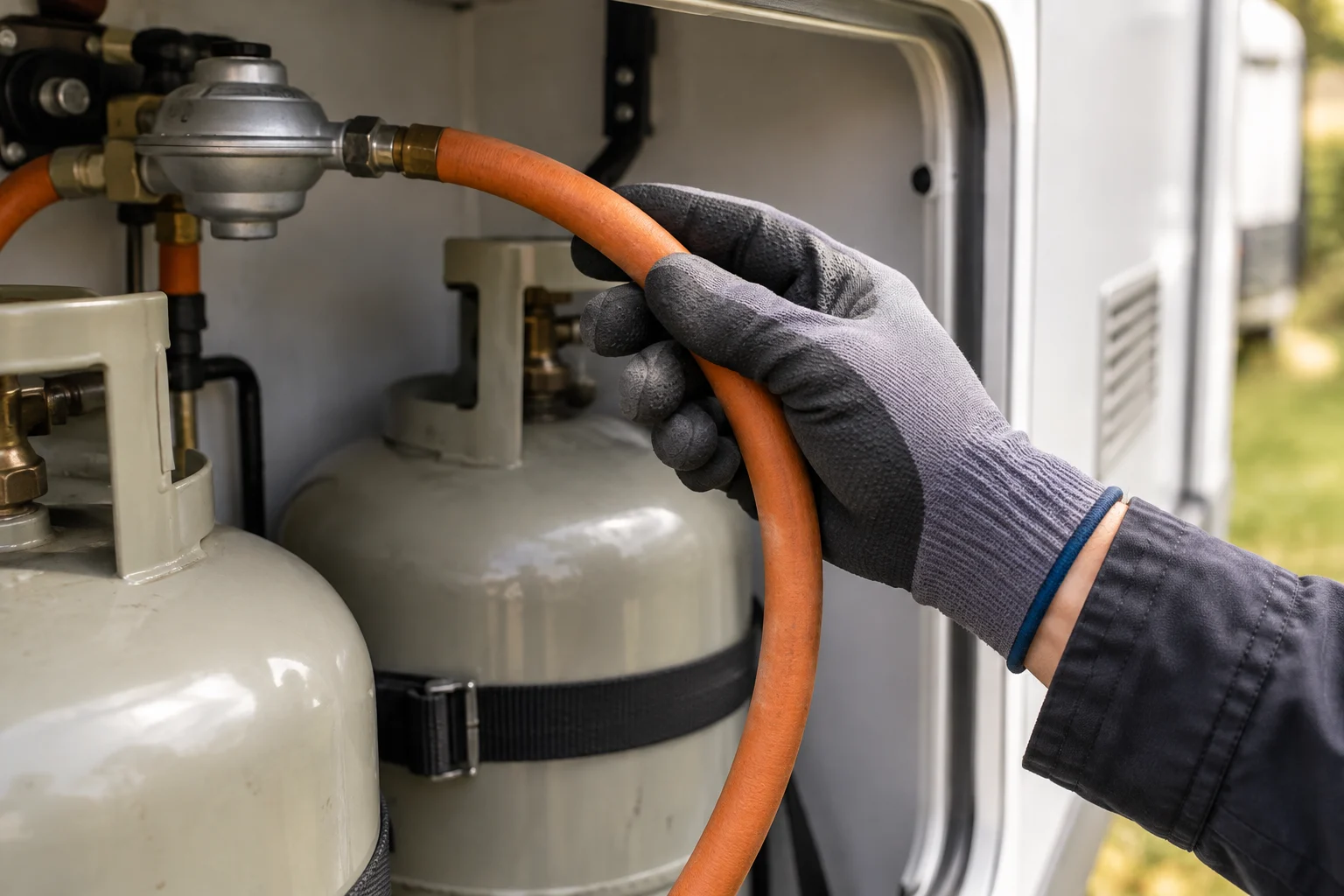
Other signs that mean you should stop using the system include visible leaks, cracked hoses or abnormal operation of gas appliances.
Section references: Problemas de gas en autocaravanas: consejos y soluciones prácticas ↗
- If you smell gas, turn off the cylinder and ventilate by opening doors and windows.
- Do not switch on lights or electrical devices, and avoid any naked flames.
- If the smell persists, do not use the vehicle until a professional has inspected the system.
Gas inspections in Spain
In Spain, ITC-ICG 10 requires fixed domestic-use LPG installations in caravans and motorhomes to be inspected every four years. The inspection covers the installation and connected appliances; portable appliances with their own gas supply are outside the scope of this technical instruction.
A gas inspection and the vehicle’s ITV roadworthiness inspection are separate checks. A professional gas inspection may include checking the circuit for leaks and examining the hoses, pigtails, connections and installed appliances.
Section references: Revisión de gas en autocaravanas y campers: obligatoria cada 4 años ↗ · Qué revisar en tu autocaravana antes de un viaje largo ↗
- Fixed LPG installations require a periodic inspection every four years.
- A gas inspection is separate from the vehicle’s ITV.
- A professional inspection may check for leaks and examine the hoses, pigtails, connections and installed appliances.
Pre-travel checklist
Use this short checklist before setting off. It does not replace a professional inspection, but it can help you spot obvious problems that could affect safety.
Section references: Qué revisar en tu autocaravana antes de un viaje largo ↗
- Make sure the gas inspection is up to date (every four years).
- Check that the cylinders are secured and in good external condition.
- Visually check the date marked on the flexible hoses.
- Visually inspect the regulator.
- If you find damage or suspect a leak, stop using the system and contact an authorised installer.
- Consult your caravan’s manual for the manufacturer’s specifications.
How often should my caravan’s gas system be inspected in Spain?
Under ITC-ICG 10, fixed domestic-use LPG installations in caravans and motorhomes require a periodic inspection every four years. Portable appliances with their own gas supply are outside the scope of this instruction.
Is a gas inspection the same as the ITV?
No. They are separate checks. Periodic inspections of LPG installations are governed by their own regulations and should not be confused with the vehicle’s ITV inspection.
What should I do if I smell gas in my caravan?
Turn off the cylinder and ventilate by opening doors and windows. Do not switch on lights or electrical devices, and avoid any naked flames. If the smell persists, do not use the vehicle until a professional has inspected the system.