Belgian Historic Vehicles: Clubs, Preservation, and Circulation Requirements
Discover how historic vehicle registration works in Belgium. Requirements for the 'O' plate, usage restrictions, tax benefits in Flanders, and preservation clubs like BEHVA or B.R.E.K.
Key points
In Belgium, a vehicle is classified as a historic 'oldtimer' if it is over 30 years old and registered with an 'O' plate. This guide covers the registration process, usage restrictions, tax benefits in Flanders, and key preservation clubs like BEHVA and B.R.E.K.
Definition and 'O' Plate Requirements
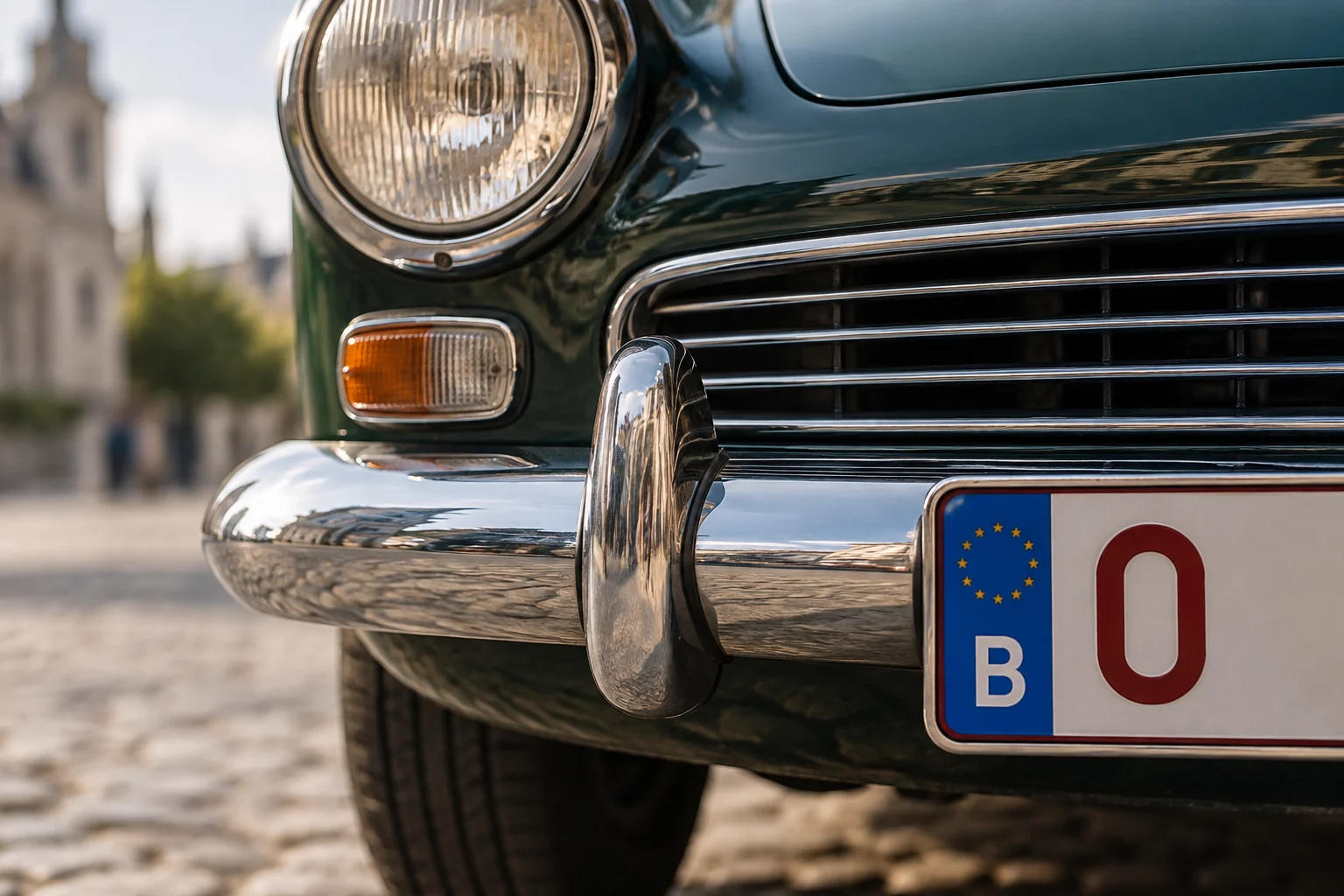
In Belgium, a vehicle is classified as an 'oldtimer' or historic vehicle if it meets two fundamental conditions: it must be more than 30 years old from its first use and it must be registered with a license plate starting with the letter 'O'. This distinction is crucial because it determines the legal, tax, and circulation regime of the vehicle.
To obtain this specific plate, the owner must submit the vehicle to a specialized technical inspection for historic vehicles. Unlike the standard technical inspection, this review evaluates the state of preservation and the authenticity of the vehicle, ensuring it remains faithful to its original or period configuration.
Section references: Een oldtimer inschrijven - 0 plaat ↗
- The vehicle must be more than 30 years old.
- It must have a license plate starting with the letter 'O'.
- A specific 'oldtimer' technical inspection is mandatory.
- Personalized plates do not count for this classification.
Usage Restrictions and Prohibitions
Obtaining the 'O' plate involves a series of strict restrictions on the use of the vehicle. The purpose of this category is preservation and recreational enjoyment, not daily or professional use.
It is expressly prohibited to use a vehicle with an 'O' plate for commercial, professional, or work purposes. This includes the paid transport of persons or goods, as well as use for home-to-work or home-to-school commutes. The vehicle must be considered a collection or leisure item, not a regular means of transport.
Section references: Een oldtimer inschrijven - 0 plaat ↗
- Commercial or professional use is prohibited.
- Paid transport is not allowed.
- It must not be used for home-to-work or home-to-school commutes.
- Use as a work tool or active agricultural machinery is prohibited.

Tax Benefits in Flanders
In the region of Flanders, historic vehicles over 30 years old currently enjoy a reduced rate on the vehicle tax (BIV) and other traffic taxes. This tax incentive aims to encourage the preservation of automotive heritage.
However, it is important to stay alert to legislative changes. A tax reform has been announced for January 1, 2027, which will more closely link the tax benefit to the possession of the 'O' plate and compliance with non-commercial usage conditions. Owners must verify the conditions in force at the time of their tax renewal.
Section references: Fiscaliteit in Vlaanderen ↗
- Reduced vehicle tax (BIV) rate in Flanders.
- Tax reform scheduled for 2027.
- The tax benefit will be more closely linked to the 'O' plate.
- Surveillance of non-commercial use will be reinforced.
Preservation Clubs and Associations
The historic vehicle community in Belgium is organized through associations and clubs that promote the preservation, protection, and promotion of these vehicles. The BEHVA (Belgian Historic Vehicle Association) is the recognized umbrella organization, founded on September 7, 1988.
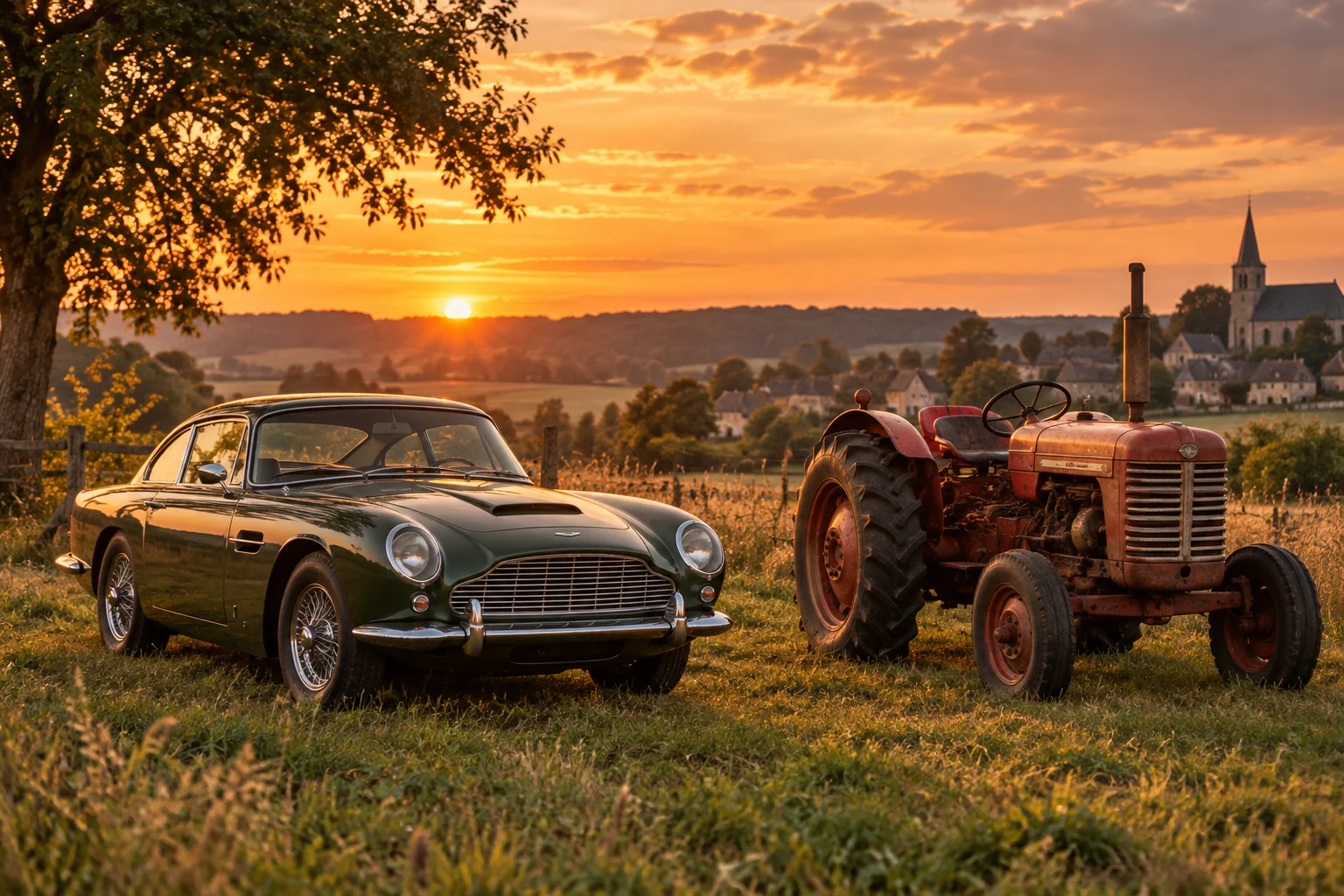
The BEHVA groups a wide variety of clubs, including brand-specific clubs, regional clubs, vintage motorcycle clubs, and military and agricultural vehicle clubs. For enthusiasts of tractors and stationary engines, clubs like B.R.E.K (Bewaarders Rollend Erfgoed Kempen) are important reference points for the preservation of this type of rolling heritage.
Section references: Historiek - BEHVA ↗ · Belgische oldtimerclubs ↗
- BEHVA: umbrella organization founded in 1988.
- Includes brand, regional, and motorcycle clubs.
- Covers military and agricultural vehicles.
- B.R.E.K: club specialized in tractors and stationary engines.
Can I use my car with an 'O' plate to go to work?
No. The use of vehicles with an 'O' plate for home-to-work or home-to-school commutes is expressly prohibited by Belgian regulations.
What happens if my car is 30 years old but does not have an 'O' plate?
If it does not have the 'O' plate, it is considered a standard vehicle for tax and circulation purposes, losing the specific tax benefits for historic vehicles in Flanders.
Where can I find information about vintage tractor clubs?
You can consult the list of clubs on the BEHVA website or look for specific clubs like B.R.E.K, which specializes in the preservation of tractors and stationary engines in the Kempen region.