Kubvan and VW Typ 181 Conversions: History and Restoration Guide
Discover what Kubvans are, how they differ from the original Typ 181, and the technical aspects you must verify before buying or restoring a classic Volkswagen from this family.
Key points
Kubvans are unofficial conversions of classic Volkswagen vehicles, primarily based on the Kübelwagen or Typ 181 mechanics. This article explains their origin, the differences from factory models, and the technical keys to identify and restore these vehicles safely.
What are Kubvans and how do they differ from the Typ 181?
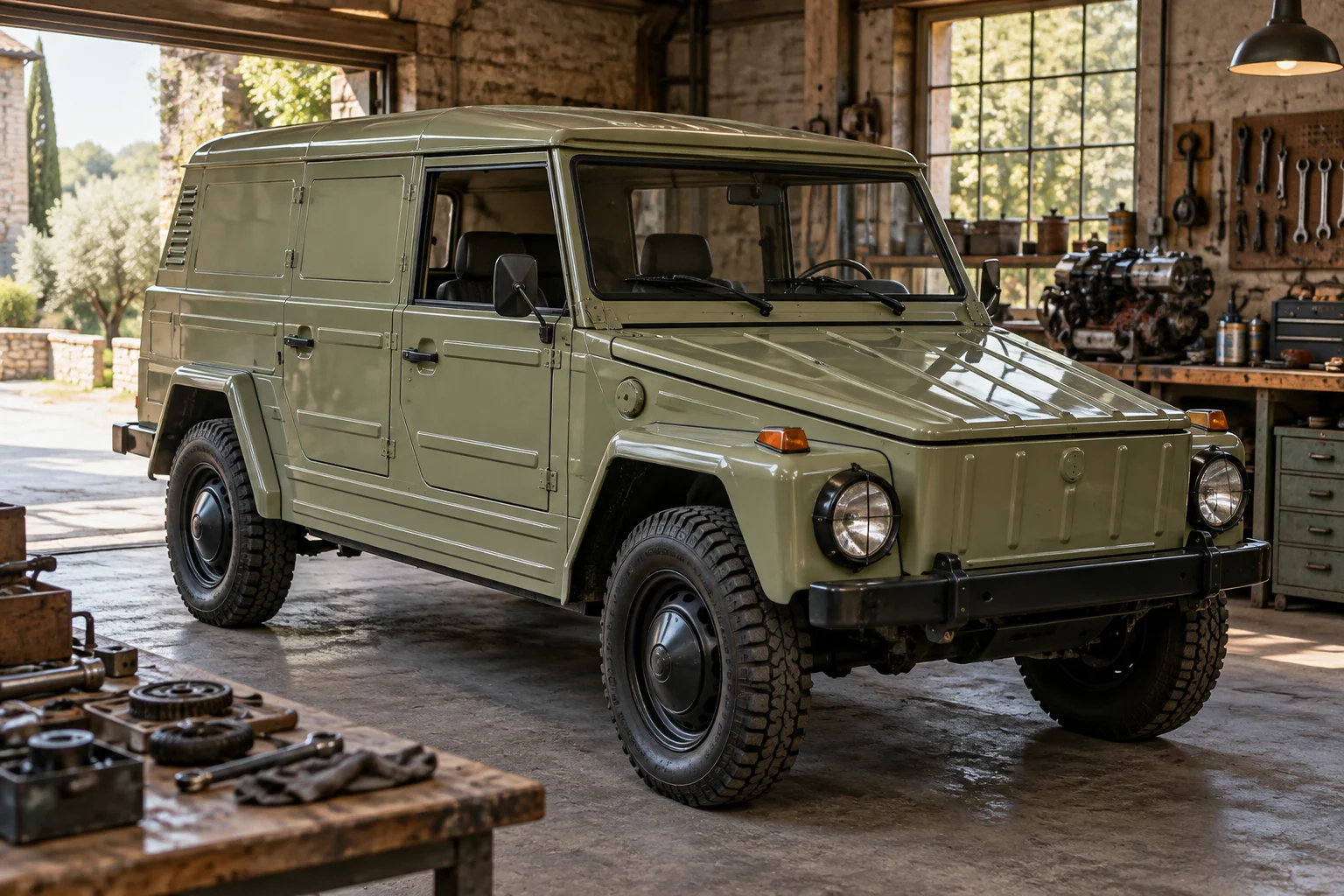
The term “Kubvan” is colloquially used to designate unofficial conversions of classic Volkswagen vehicles, generally based on the Kübelwagen or Typ 181 platform. Unlike the Typ 181, which was a mass-production model developed by Volkswagen for military and civilian use between 1969 and 1980, Kubvans are later modifications carried out by independent workshops or owners.
The Typ 181, also known as the “Courier,” was designed to replace the DKW Munga in the German armed forces. It was not a mandatory all-wheel-drive vehicle, but a utility vehicle with improved off-road capabilities through portal axles and robust components. In contrast, Kubvans usually incorporate van bodies or adapted cargo boxes on this mechanical base, without the factory homologation that characterizes the original model.
Section references: Type 181 “Courier” (1969–1980) ↗
- The Typ 181 is an official Volkswagen model with documented production.
- Kubvans are aftermarket conversions without factory certification.
- The base mechanics usually come from the Kübelwagen or the Typ 181.
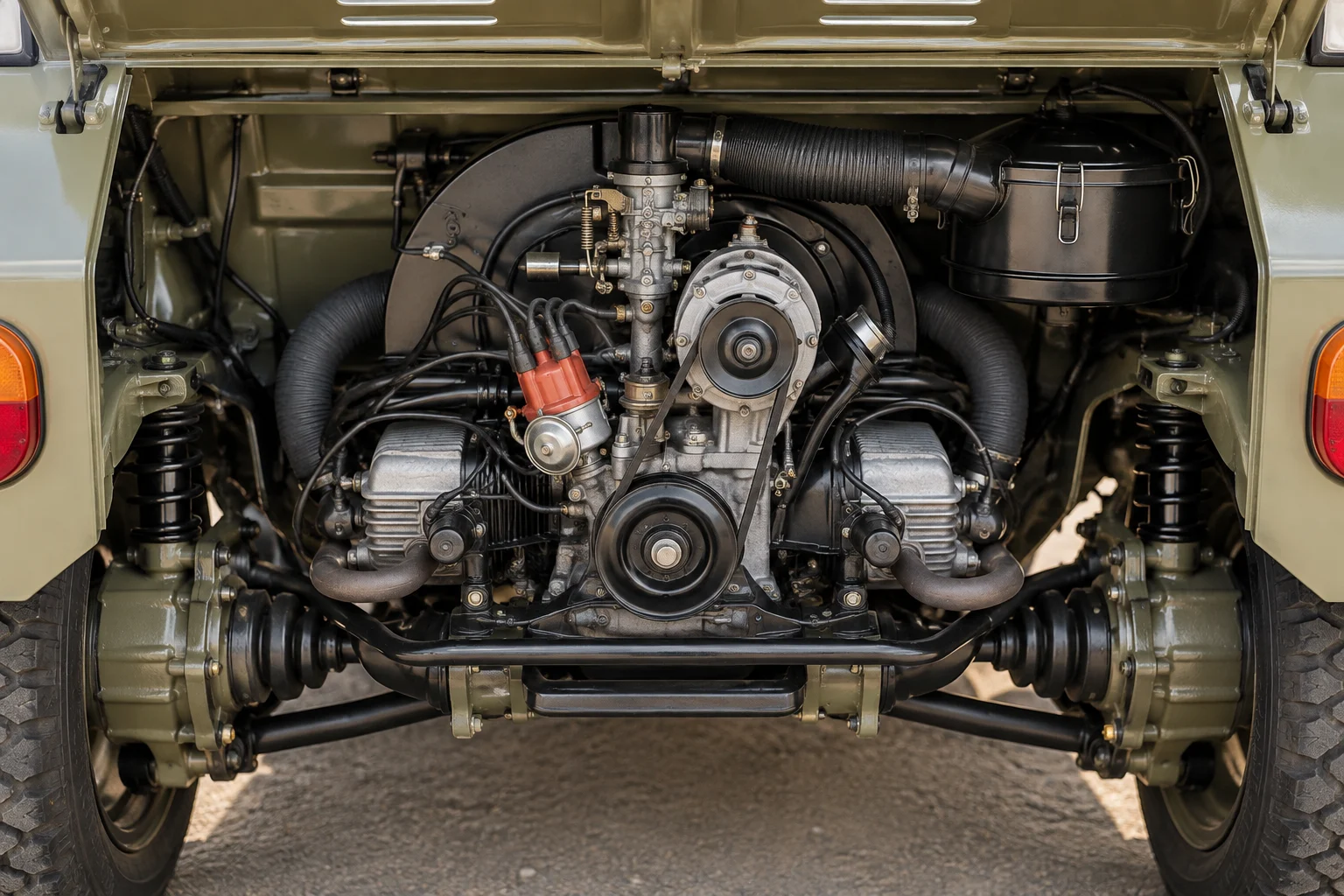
History and technical evolution of the Typ 181
Volkswagen developed the Typ 181 in the late 1960s to meet the needs of the German armed forces. The vehicle was not a completely new design, but an adaptation of existing platforms: the base came from the Karmann Ghia Typ 14, while the transmission and rear axle were taken from the Transporter T1. This combination allowed offering a robust and easy-to-maintain vehicle.
In 1970, the 1.5-liter engine was replaced by the 1.6-liter block from the Beetle 1302, maintaining power at 44 hp. In 1973, a significant change was introduced in the rear suspension, replacing the portal axle with a semi-trailing arm axle, which increased power to 48 hp without changing the displacement. Total production reached 140,768 units, ending in Germany in 1978 and in Mexico in 1980.
| Period | Engine | Power | Rear Suspension |
|---|---|---|---|
| 1969-1970 | 1.5 L boxer | 44 hp | Portal axle |
| 1970-1973 | 1.6 L boxer (Beetle 1302) | 44 hp | Portal axle |
| 1973-1980 | 1.6 L boxer (Beetle 1302) | 48 hp | Semi-trailing arms |
Section references: Type 181 “Courier” (1969–1980) ↗
- Total production: 140,768 units between 1969 and 1980.
- Engine: 1.5 L and later 1.6 L gasoline boxer.
- Rear suspension: portal axle (1969-1973) and semi-trailing arms (1973-1980).
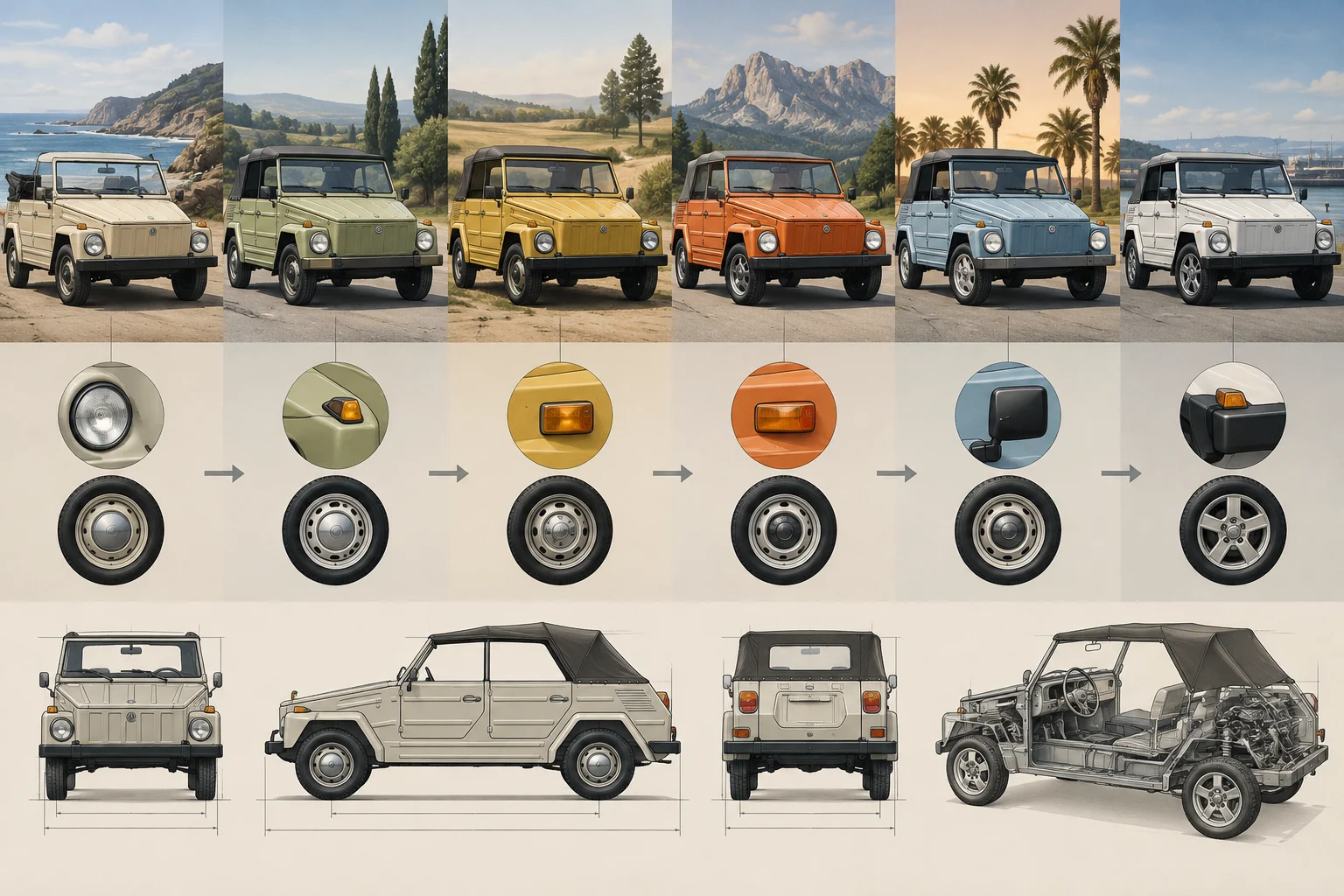
Keys to identify and restore a Kubvan
When buying or restoring a Kubvan, it is fundamental to distinguish between original factory components and later modifications. Verify the vehicle's chassis plate to confirm whether it is an original Typ 181 or a modified base. Vehicles with unofficial conversions may have homologation and safety issues, especially in the braking systems and body structure.
Inspect the condition of the portal axle or rear suspension, as these are critical wear points. Ensure that the drum brakes are in good condition and that the steering system is compatible with the current configuration of the vehicle. If the body has been modified, verify structural integrity and the absence of corrosion at the anchoring points.
Section references: Type 181 “Courier” (1969–1980) ↗ · VW M181 – Danish Army Vehicles Homepage ↗
- Verify the chassis plate and documentation to confirm provenance.
- Inspect the portal axle or rear suspension for wear and corrosion.
- Check the structural integrity of the modified body.
- Ensure that the brakes and steering are functional and safe.
Is it legal to drive a Kubvan in Spain?
Legality depends on the vehicle's homologation. Unofficial conversions may require a special technical inspection and compliance with current safety and emissions regulations. Consult with a specialized workshop and the local traffic authority before driving.
What is the difference between a Kübelwagen and a Typ 181?
The Kübelwagen is a World War II military vehicle, while the Typ 181 is a later model (1969-1980) developed for military and civilian use. Both share a philosophy of robustness, but the Typ 181 incorporates more modern components and documented mass production.
Where can I find parts for a Kubvan?
Parts are usually compatible with those of the original Typ 181 or the Beetle from the same era. Look in classic Volkswagen clubs, specialized workshops, and second-hand markets. Always verify the compatibility of parts with the specific configuration of your vehicle.