Three or five doors: what can be compared and verified
Available evidence does not allow recommending a body style or establishing general differences. Follow these steps to compare two cars with verifiable data and identify what remains pending.
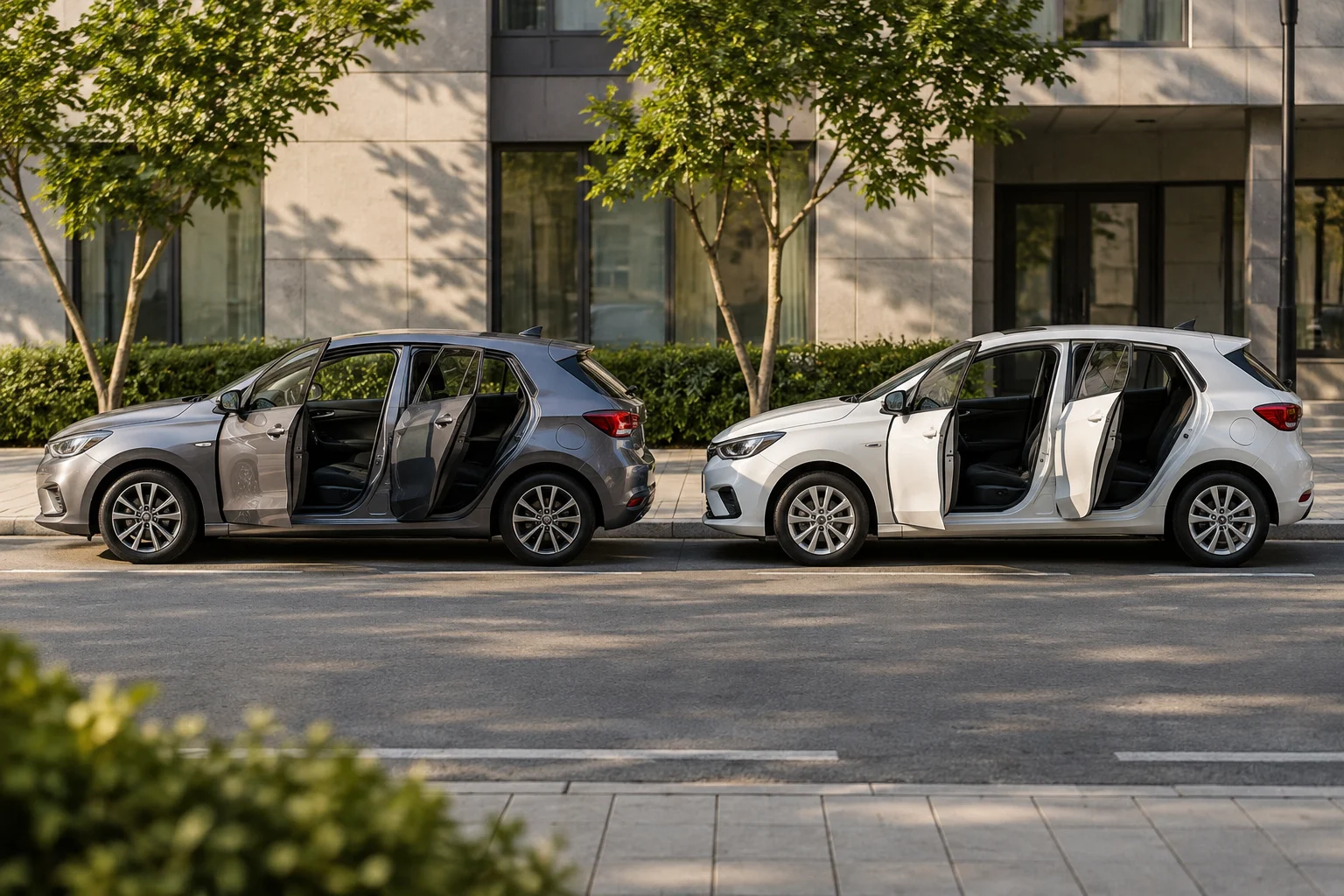
Key points
Available evidence does not allow establishing a universal rule for counting doors or general differences between body styles. To compare two specific cars, identify the model, year, and version, and verify each manufacturer's definitions; leave pending any data that is not equivalent.
What documentation to consult to compare versions
The available evidence for this guide does not allow establishing a universal rule on how doors are counted or concluding general differences in access, interior space, cargo capacity, or rigidity between specific versions. Therefore, the label 'three doors' or 'five doors' alone is not enough to determine what changes in two specific cars.
Check how each manufacturer names and configures each version in its technical sheet, catalog, or official page; compare a technical data point only if it appears with the same definition and units. For configurations or usage conditions, consult the corresponding user manual.
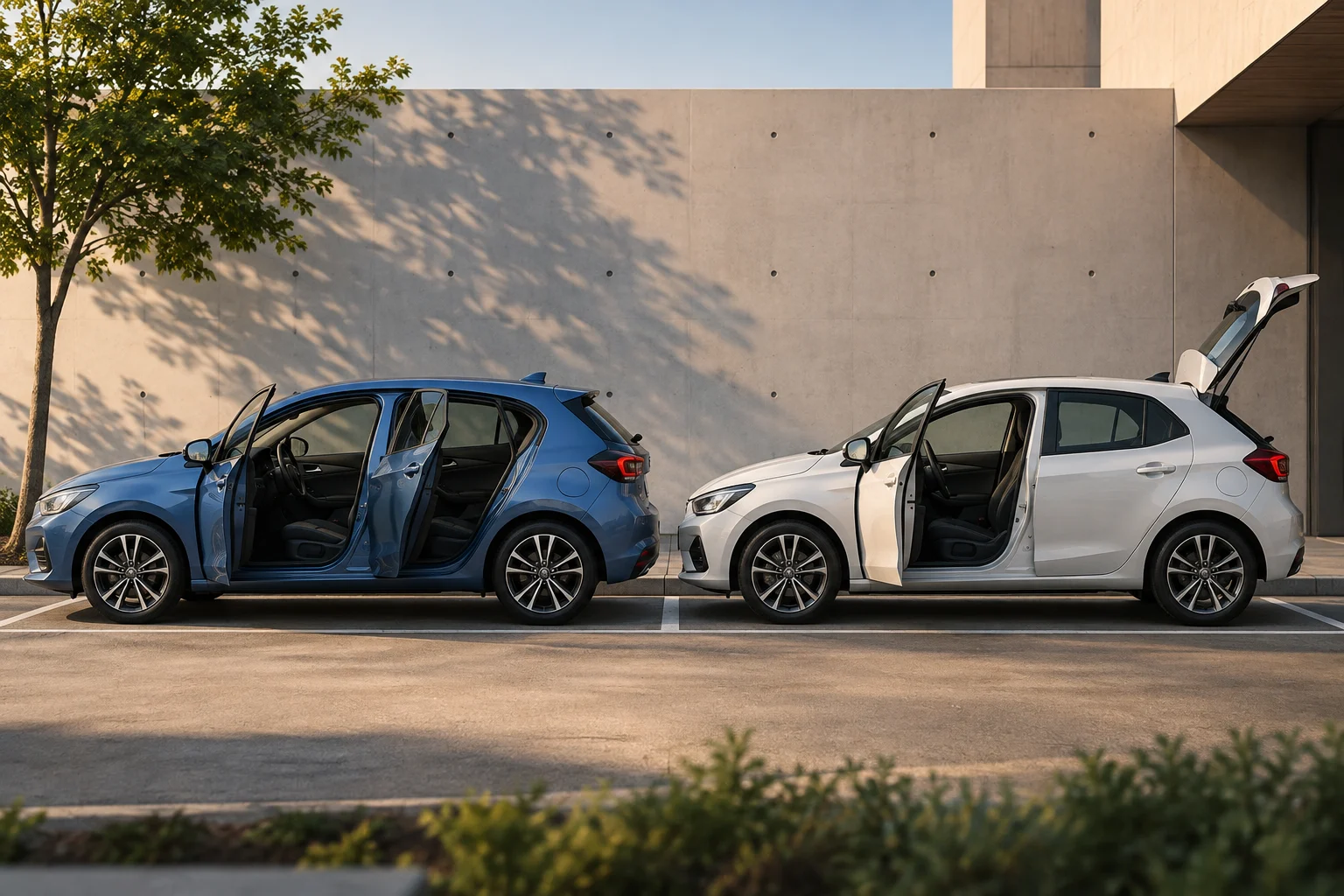
A practical method to compare two specific cars
Note what decision you need to make and what your essential requirements are. Identify each car in Brands, models and versions and ensure the documentation corresponds to the variant you are comparing.
Record what each source claims and which version it corresponds to. If you value access or a specific task, check both units under the same conditions and describe the test performed, without generalizing it to other versions. Use the table as a verification sheet; if information is missing or definitions do not match, leave the question pending.
| Verification result | Valid conclusion | Next step |
|---|---|---|
| Official documentation identifies the configuration of each version. | You can describe how each manufacturer names and configures those specific cars. | Keep the source and version identification. |
| Published data use the same definition and units. | You can compare those data points for the identified versions. | Note the sources, units, and any indicated conditions. |
| The difference depends on access or a specific task. | The observation only describes the units and conditions checked. | Record what was tested and avoid generalizing the result. |
| Information is missing or definitions do not match. | The comparison does not allow resolving that question. | Leave it pending until equivalent data is available. |
- Open a record for each question and note next to each data point the model, year, version, and source that supports it.
- Separate questions you can resolve with documentation from those that require directly checking the units; do not present a single observation as a general characteristic of the body style.
- Before closing the comparison, review which data have the same definition and units, which results come from direct verification, and which issues remain pending.

How to interpret the result without generalizing
Limit the conclusion to the cars and criteria examined. Separate what is supported by relevant and equivalent data, what was checked directly, and what remains pending.
Return to your initial requirements and explain which car meets them according to the evidence gathered. If no difference is supported, specify what information is missing to resolve the comparison.