How to Protect Campervan and Motorhome Water Systems from Frost
Cold weather can affect tanks, pipes and connections, especially those exposed beneath the vehicle. Find out what to check in your vehicle documentation and how to plan water use in winter.
Key points
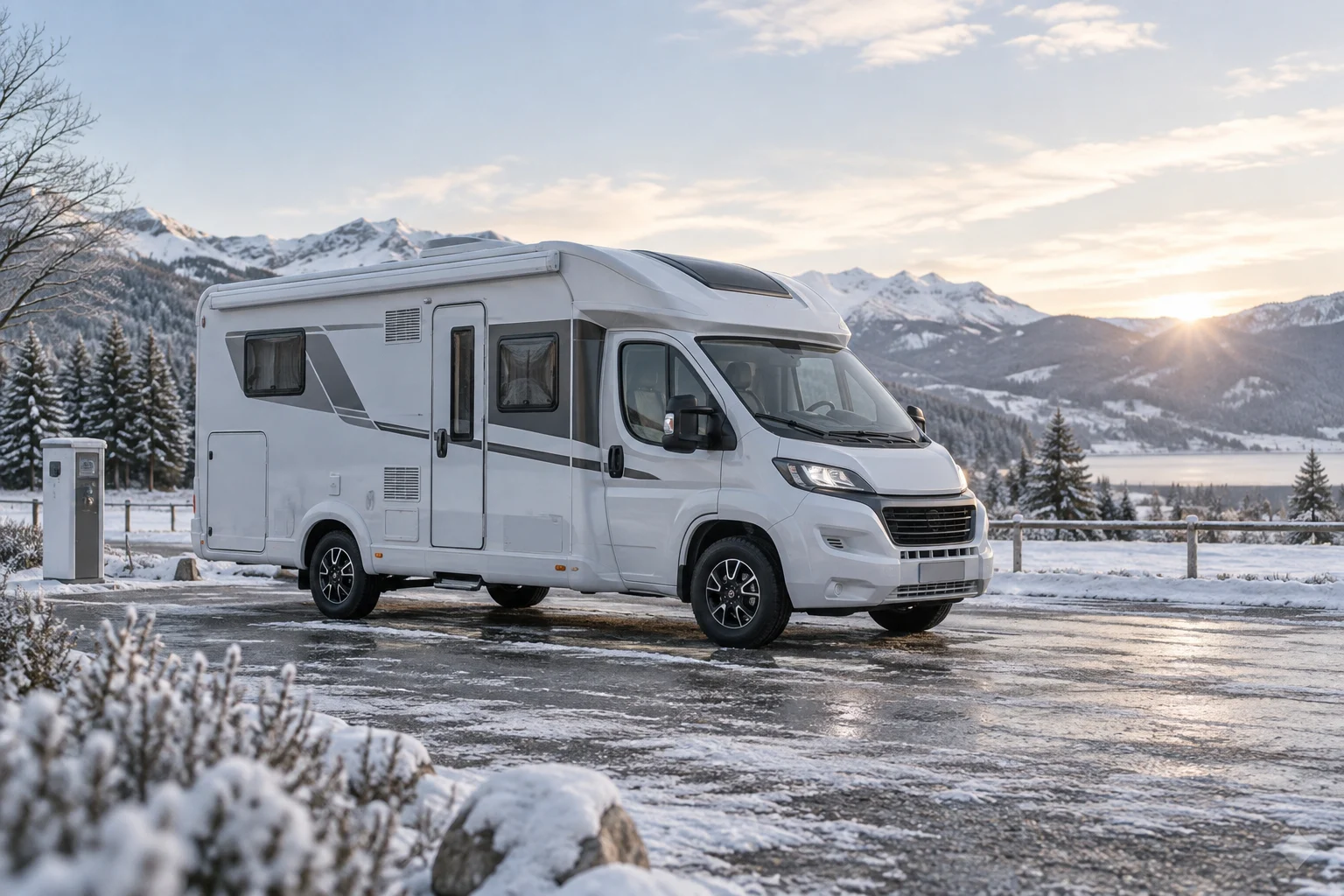
To protect a campervan or motorhome’s tanks and water lines from frost, consider where they are installed and what protection the manufacturer specifies. Check the manual, pay particular attention to components beneath the vehicle, and plan where to fill and drain water along your route.
Which parts of the water system are vulnerable to cold?
Frost can affect water left in tanks, pipes, seals and connections. As water freezes, it expands and can damage these components. So it is important to look beyond the tank itself: the route taken by the pipes and whether any sections are exposed outdoors also matter.
Grey-water tanks mounted beneath the vehicle are particularly vulnerable, especially overnight. The location of each component and the protection built into that vehicle’s design determine which precautions make sense for your campervan or motorhome.
Section references: Depósitos de agua en camper: cómo proteger el sistema con la llegada del frío ↗ · El frío puede congelar las tuberías de mi furgoneta camper ↗

Tank location affects exposure
A water tank installed inside the living area is generally more sheltered than one beneath the vehicle. External tanks and pipes routed through exposed areas, by contrast, are more directly affected by cold air. That does not mean every indoor tank is immune to frost: the route of the water circuit and the conditions of use matter too.
Before travelling, use the vehicle documentation to locate the fresh-water tank, grey-water tank, pipes and drain points. If it is unclear which parts are protected, ask the manufacturer or a specialist familiar with that installation.
Section references: Depósitos de agua en camper: cómo proteger el sistema con la llegada del frío ↗

What to check about insulation and heating
Check the vehicle manual to find out what protection the water system has and what operating limits the manufacturer specifies. Some general advice suggests insulating external pipes with thermal sleeves and keeping the living area between 10 and 12°C while inside the vehicle. Do not assume these measures protect tanks or pipes outside the heated space equally well: confirm which components they cover in your model.
Do not apply materials or products to the water circuit without confirming they are compatible with the installation. In particular, do not use automotive antifreeze in a campervan or motorhome water system; the available guidance distinguishes it from antifreeze specifically made for caravans. For any treatment, follow the vehicle and product manufacturers’ instructions.
Section references: El frío puede congelar las tuberías de mi furgoneta camper ↗ · Autocaravana en Invierno: Cómo viajar y protegerla del frío ↗
Plan water use and service stops
When travelling in sub-zero temperatures, plan where you can fill up with fresh water and empty grey water. Before relying on a service point, check that it is expected to be open. Adjust the amount of water you carry and use to the stops available, so your trip does not depend on a facility you may not be able to use in cold weather.
Also check whether the manual describes drain taps or other specific points in the circuit. Their location and operation vary by vehicle, so do not improvise a draining or winterisation procedure based on instructions for another model. If the vehicle will be left unused in freezing conditions, follow the manufacturer’s specific instructions for its tanks and water circuits.
Section references: El frío puede congelar las tuberías de mi furgoneta camper ↗ · Preparar una autocaravana o camper para el invierno ↗
- Before setting off, locate filling and draining points and check whether they are expected to be available.
- Check the manual to see which parts of the system are exposed and what measures the manufacturer recommends.
- If you are unsure how to protect a particular part of the circuit, ask a service professional before handling it.
When to stop using the system and seek help
If part of the system appears to be frozen, do not force taps, connections or valves. Ice can damage water-system components, so stop using the system and consult the manual or a specialist before trying to restart it. If you notice a leak or abnormal operation, arrange an inspection rather than attempting an improvised repair.
Tank and pipe locations, insulation and equipment vary between vehicles. There is no single temperature or measure that guarantees protection for every design; use the documentation for your campervan or motorhome as your guide.
Section references: El frío puede congelar las tuberías de mi furgoneta camper ↗
Which tank is most vulnerable to frost?
External tanks, particularly grey-water tanks mounted beneath the vehicle, are more exposed than tanks inside the living area. External pipes and connections also need consideration.
Will heating the living area protect the whole system?
Not necessarily. Heating can help keep the interior warm, but it does not guarantee protection for tanks or pipes outside the heated space. Check the manual to see which components it protects in your vehicle.
Can I use car antifreeze in my motorhome’s water system?
No. Do not use automotive antifreeze in the water circuit. Check the manual and use only products the manufacturer says are compatible with the installation.