Motorcycle for daily commuting: what to check on comfort, parking, and load
A practical guide to choosing a motorcycle or scooter for daily use. Learn how to evaluate posture, load space, and maneuverability with your real luggage to make an informed decision.
Key points
To choose a motorcycle or scooter for daily use, prioritize ergonomics with your usual footwear, ease of parking, and actual space for your luggage. Verify accessory compatibility and load limits in the manufacturer's documentation before deciding.
Define the route and parking conditions
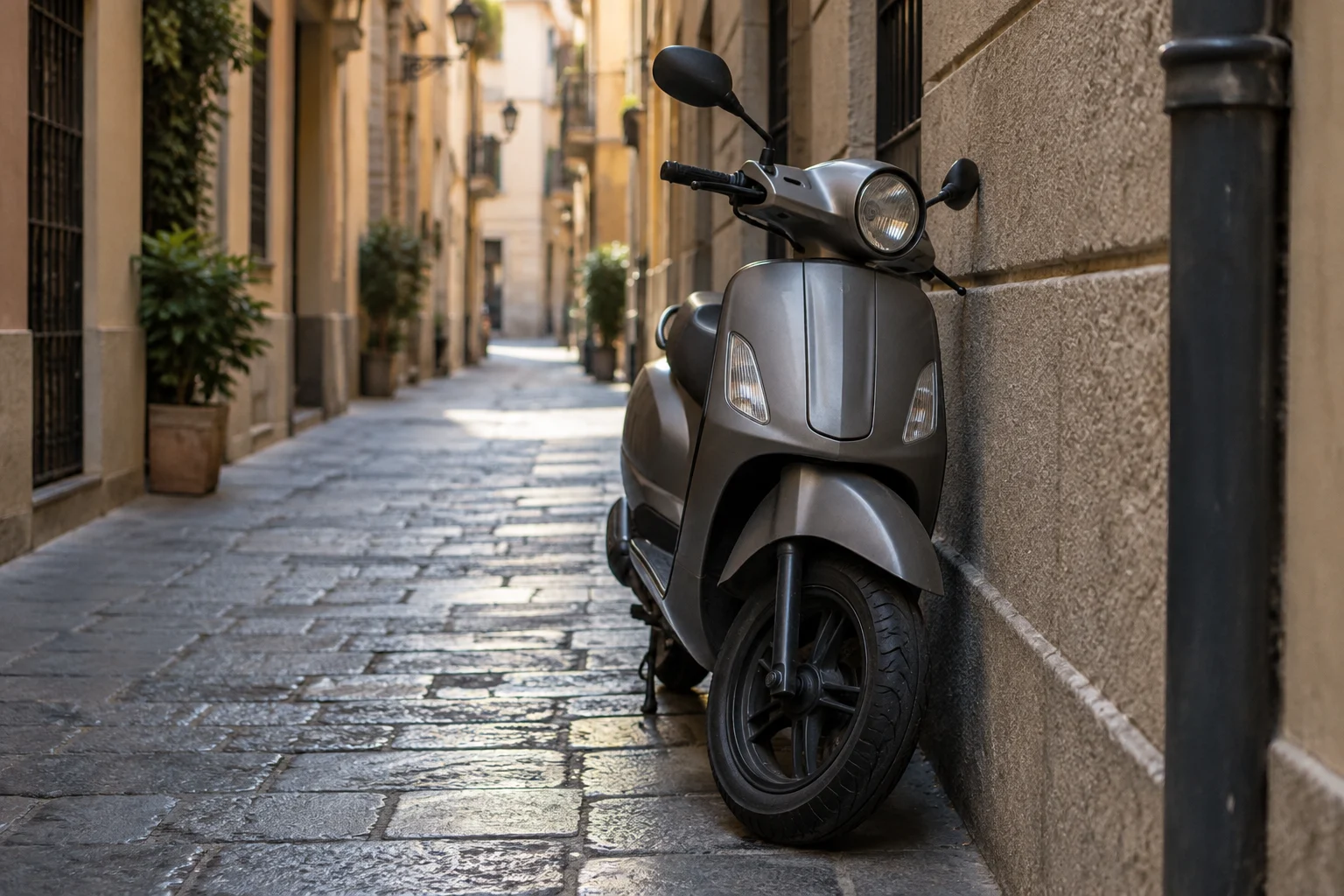
Before comparing models, it is fundamental to analyze the reality of your commutes. A 5 km route through narrow streets is not the same as a 20 km route that includes avenues and roundabouts. The frequency of use and parking conditions (garage, street, loading and unloading zone) determine which features are prioritized.
If you park in reduced spaces or garages with low height, the weight and width of the vehicle are critical. Moving the vehicle without starting it during the test allows you to evaluate whether the center of gravity and stability facilitate or hinder habitual parking. A lighter model is usually more maneuverable at traffic lights and narrow streets, reducing fatigue in the daily routine.
Section references: Scooter o moto para ciudad: cómo decidir ↗
- Calculate the average distance and type of road (urban, mixed, highway).
- Identify where you park: garage, street, workplace.
- Evaluate the frequency of maneuvers in reduced spaces.
Comfort and ergonomics with usual equipment
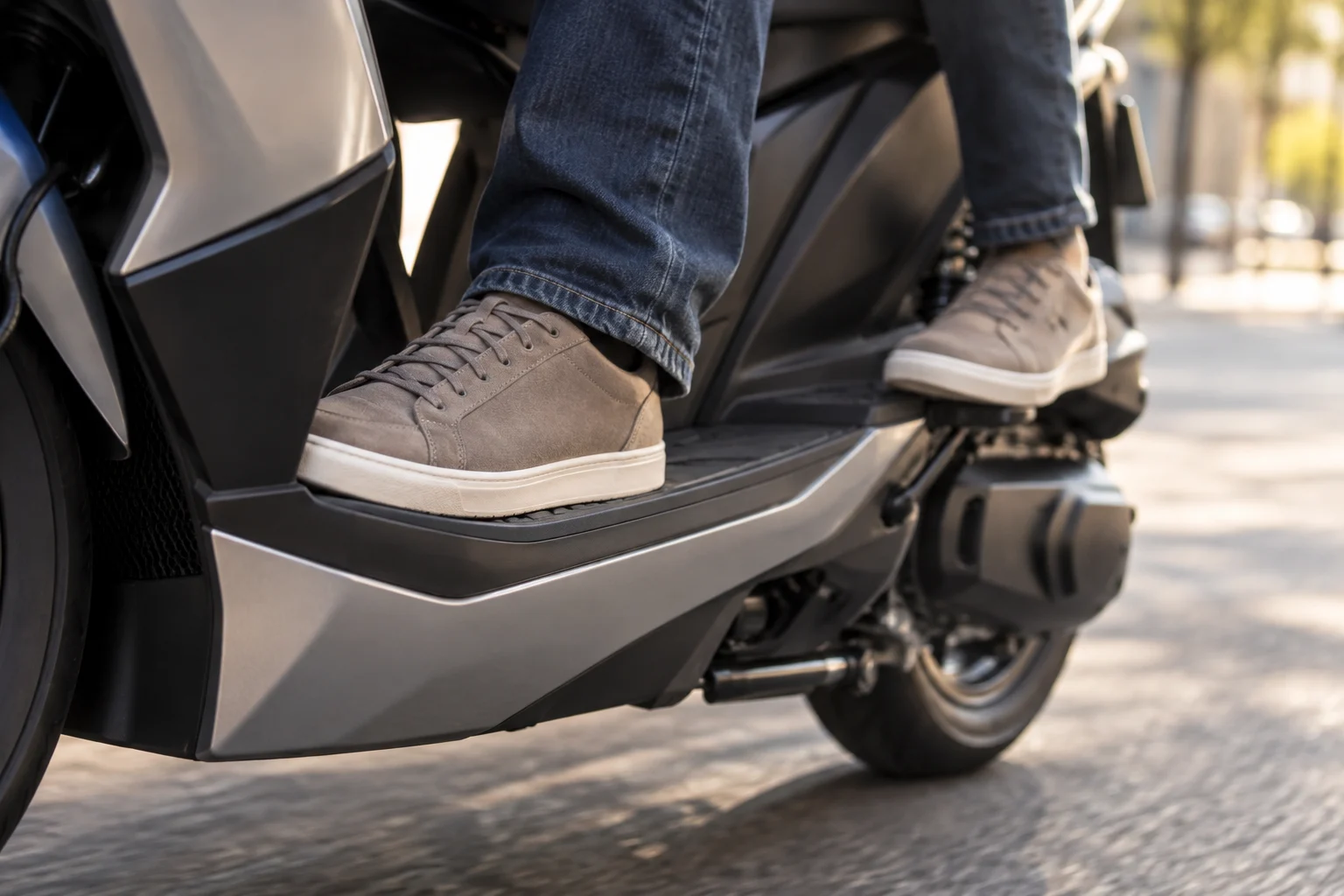
Ergonomics are not evaluated with sportswear, but with the footwear and clothing you will use daily. Sit on the vehicle with your usual footwear and check the distance to the handlebar, the angle of the knees, and the freedom to turn your head. These factors determine the accumulated fatigue after hours of driving.
Seat height is a key factor for safety. Being able to place your feet well when stopped gives confidence, especially if it is your first motorcycle or if you drive in dense traffic. A seat that is too high can compromise stability when stopped, while one that is too low can force the leg posture. Real comfort is verified when stopped and in slow motion, not just at high speed.
Section references: Scooter o moto para ciudad: cómo decidir ↗ · Mejores motos para uso diario y cómo elegir ↗
- Test the seat with your usual footwear and work or daily clothing.
- Check the distance to the handlebar and the angle of the knees.
- Verify the ease of placing your feet when stopped.
- Evaluate the freedom of movement to turn your head.
Load space and luggage solutions
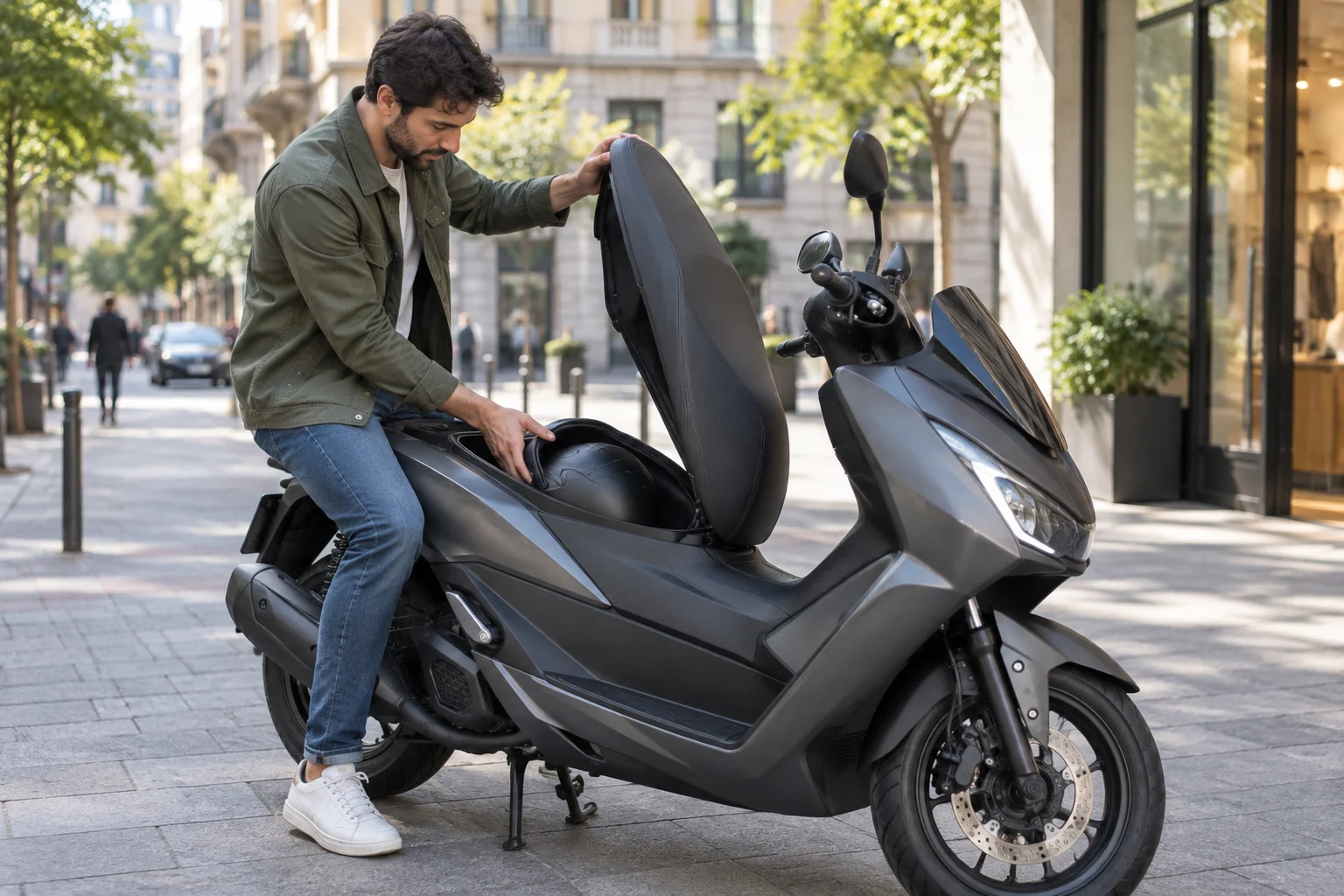
The load capacity under the seat varies significantly between models. An urban scooter with space for a full-face helmet is not the same as a naked motorcycle with limited space. Bring a real reference of what you will transport to the test: helmet, gloves, anti-theft device, or a small bag. Verify if these objects fit and if the closure works without forcing.
Distinguish between integrated space (under the seat, glove box) and added solutions (top boxes, panniers). Integrated space is safer and more practical for small objects, while external accessories require compatibility verification. A poorly installed top box can modify the vehicle's balance or interfere with the driver's protection.
Section references: Scooter o moto para ciudad: cómo decidir ↗
- Bring your real luggage to the test ride.
- Verify if the full-face helmet and usual objects fit.
- Check the operation of the load space closure.
- Distinguish between integrated space and external accessories.
Accessory compatibility and load limits
Before installing top boxes, supports, or crash bars, it is essential to confirm their compatibility with the specific model. An accessory can modify the balance, available space, or protection, so it is not advisable to incorporate it without confirming its installation and maintenance conditions.
Verify the allowable load limits in the manufacturer's documentation. Exceeding these limits can compromise stability and safety. If the accessory is removable, check that you can move and store it comfortably following the manufacturer's instructions. Compatibility is not just aesthetic; it is a factor of safety and legality.
Section references: Scooter o moto para ciudad: cómo decidir ↗
- Confirm the accessory's compatibility with your model.
- Verify the load limits in the manufacturer's manual.
- Evaluate the accessory's impact on balance and maneuvering.
- Check the installation and maintenance instructions.
Protection, visibility, and urban use
On urban routes, protection against the weather and visibility are factors of comfort and safety. If you drive in winter or in areas with frequent rain, consider the height of the handlebar and the front protection. Visibility in dense traffic depends on the driver's position and the vehicle's design.
For pure urban use, 125-300 cc scooters and light naked motorcycles are common options, prioritizing the space under the seat and maneuverability. If you opt for an electric motorcycle, analyze the range considering the driver's weight, the type of road, and weather conditions, not just the announced figure. Verify the battery compatibility and warranty conditions before purchase.
Section references: Mejores motos para uso diario y cómo elegir ↗ · Qué moto comprar según el uso: ciudad, escapadas y ruta ↗ · Las motos más prácticas para moverse por ciudad ↗
- Evaluate protection against wind and rain.
- Consider visibility in urban traffic.
- If electric, analyze the real range with your weight and road type.
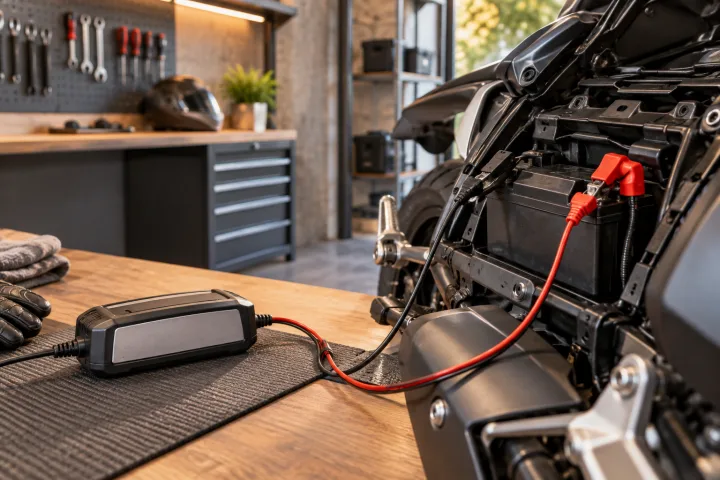
- Verify the battery warranty and charging conditions.
Checklist for comparing two motorcycles
When comparing two models, use an objective checklist to avoid biases. This list helps you prioritize the factors that really matter for your daily routine, instead of being led by aesthetics or power.
| Criterion | What to verify | Importance |
|---|---|---|
| Ergonomics | Posture with usual footwear, knee angle | High |
| Parking | Weight, width, ease of maneuvering | High |
| Load | Space under seat, top box compatibility | Medium-High |
| Protection | Windscreen, handlebar height | Medium |
| Range | Real range with weight and road type (electric) | High (if electric) |
Section references: Scooter o moto para ciudad: cómo decidir ↗ · Mejores motos para uso diario y cómo elegir ↗
- Ergonomics with usual footwear and clothing.
- Ease of parking and maneuvering in reduced spaces.
- Real load space for your luggage.
- Accessory compatibility and load limits.
- Protection against weather and visibility.
- Real range (if electric) and warranty conditions.
What is more important: power or ergonomics for daily use?
For daily use, ergonomics and ease of parking are usually more important than power. The accumulated fatigue from a bad posture is a greater factor of safety and comfort than acceleration in urban routes.
How do I verify if a top box is compatible with my motorcycle?
Consult the manufacturer's documentation and the accessory manual. Verify the anchoring points, load limits, and the impact on balance. Do not install accessories without confirming their specific compatibility with your model.
Is a scooter or a motorcycle better for the city?
It depends on your needs. Scooters usually offer more integrated load space and are lighter, which facilitates parking. Motorcycles can offer better stability on mixed routes. Evaluate your routine and luggage to decide.
What should I check if I choose an electric motorcycle?
Analyze the real range considering your weight, the type of road, and weather conditions. Verify the battery compatibility, warranty conditions, and where you will charge the vehicle.