How to Organize Motorcycle Luggage for Daily Use and Trips
Decide what to carry under the seat, in a backpack, or in removable luggage, and how to protect and secure it based on your motorcycle and route.
Key points
For daily use, utilize the space under the seat for essentials and keep documents accessible; for trips, add compatible bags or cases, distribute weight evenly, and verify your motorcycle's load limits.
Start with what you need to carry
For daily use, reserve the space under the seat for small items you habitually transport and avoid loading accessories you do not need on every trip. It is advisable to keep documentation in an accessible place—for example, a tank bag or a backpack—so you do not have to dismantle the luggage if it is requested.
For a one-day outing, 5 to 15 liters are usually sufficient, while for a one-week route, the general reference is 35 to 60 liters in total. These are general volumes: adjust what you carry to your needs and to the specific capacity and limits of the motorcycle.
Section references: Cómo hacer una maleta para viajar en moto ↗ · Lista de equipaje para rutas en moto ↗
- Daily: prioritize essentials and easy-to-store items.
- On a trip: add capacity only when needed and ensure bags are removable.
- Before leaving, separate what you will use during the trip from what can remain stored.
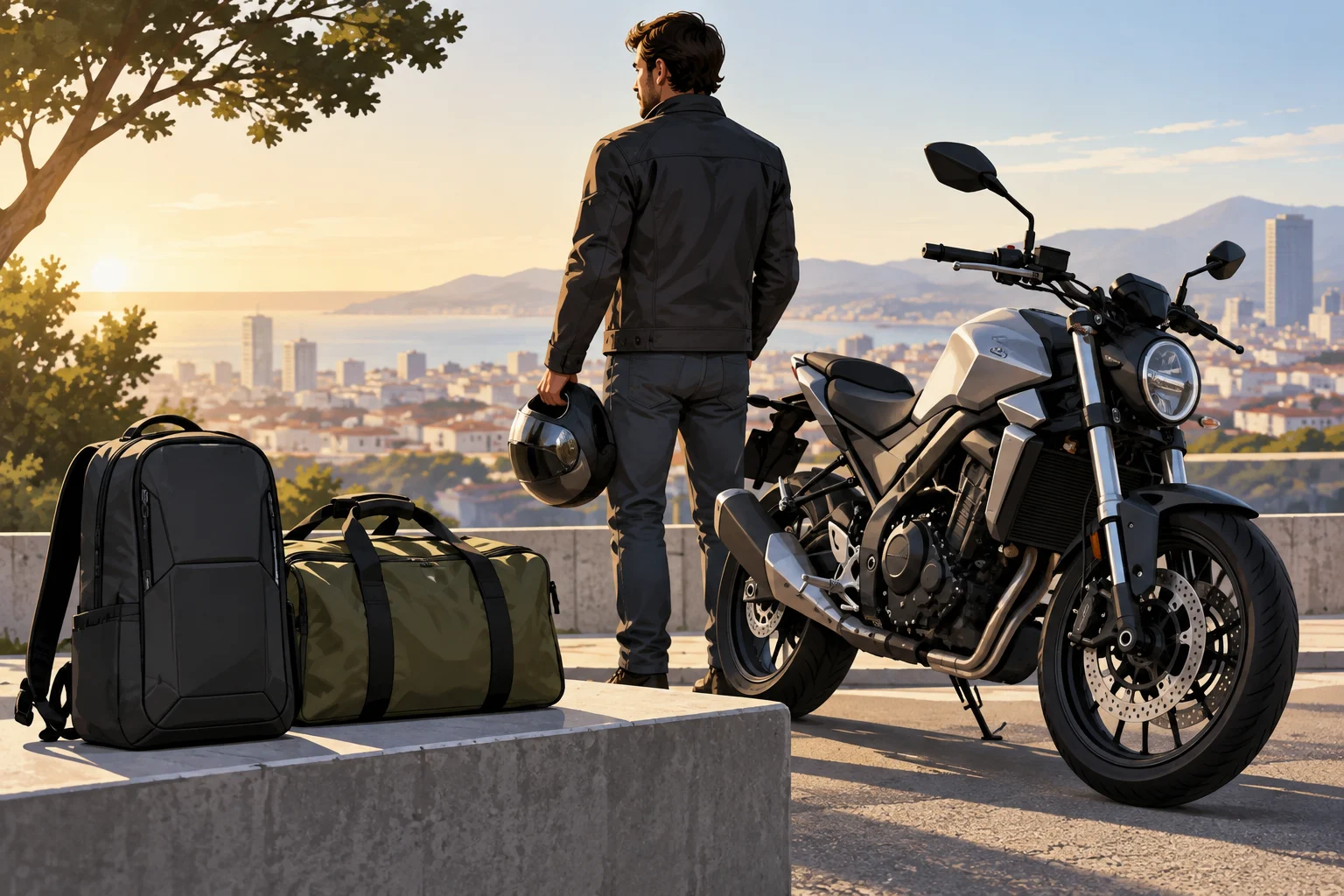
Under the seat, backpack, or removable bag
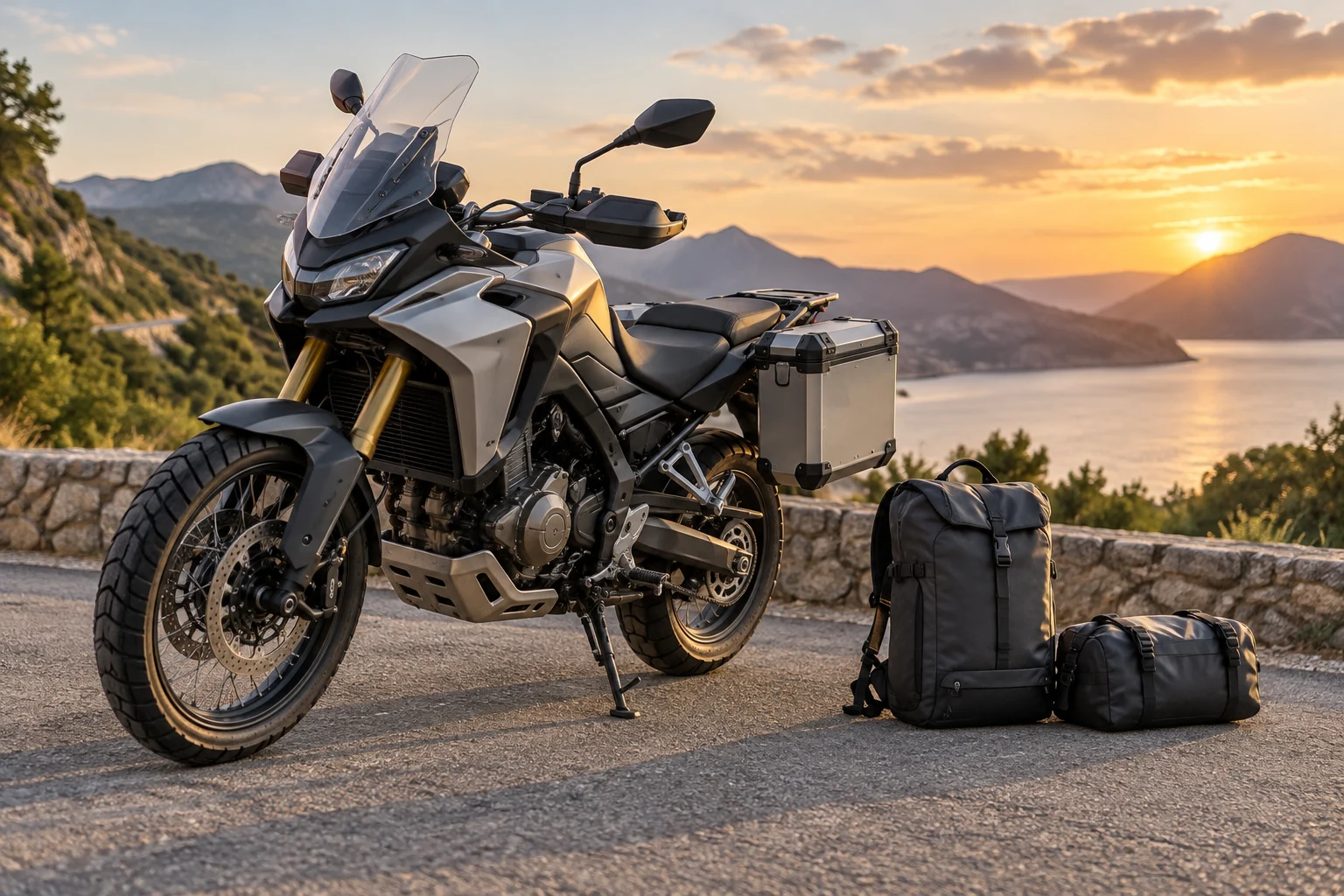
The space under the seat can serve for small equipment you want to keep stored, but its capacity depends on each motorcycle. A backpack allows you to carry your belongings when parking and can facilitate access to documentation; in exchange, you will have to carry it during the trip. A tank bag or a small rear bag can provide volume for an outing, provided it is compatible and well secured.
Rigid cases offer fixed space and are waterproof according to the consulted guide, but they occupy the volume they have even if you are loaded with little. Fabric panniers adapt better to the content, although they may let water in during heavy rain. In both cases, inner bags help organize the content and protect it from water, even inside rigid cases.
| Option | Practical advantage | Aspect to consider |
|---|---|---|
| Under-seat space | Allows storing small objects on the motorcycle itself. | Capacity depends on the model and may be limited. |
| Backpack | You can take your belongings with you when parking. | You carry it on your back during the trip and it is advisable to keep documentation accessible. |
| Rigid case | Fixed space and protection against rain according to the consulted source. | Does not adapt to the volume of the content; verify compatibility and mounting. |
| Fabric pannier | Adjusts to the luggage you transport. | May get wet in heavy rain and requires checking its placement on the motorcycle. |
Section references: Cómo hacer una maleta para viajar en moto ↗
- Under-seat space: useful for small objects you do not need to remove continuously.
- Backpack: practical if you want to take your luggage with you when getting off the motorcycle.
- Rigid case: fixed size space; check the mounting system and compatibility.
- Fabric pannier: flexible, but protect its content with inner bags against rain.
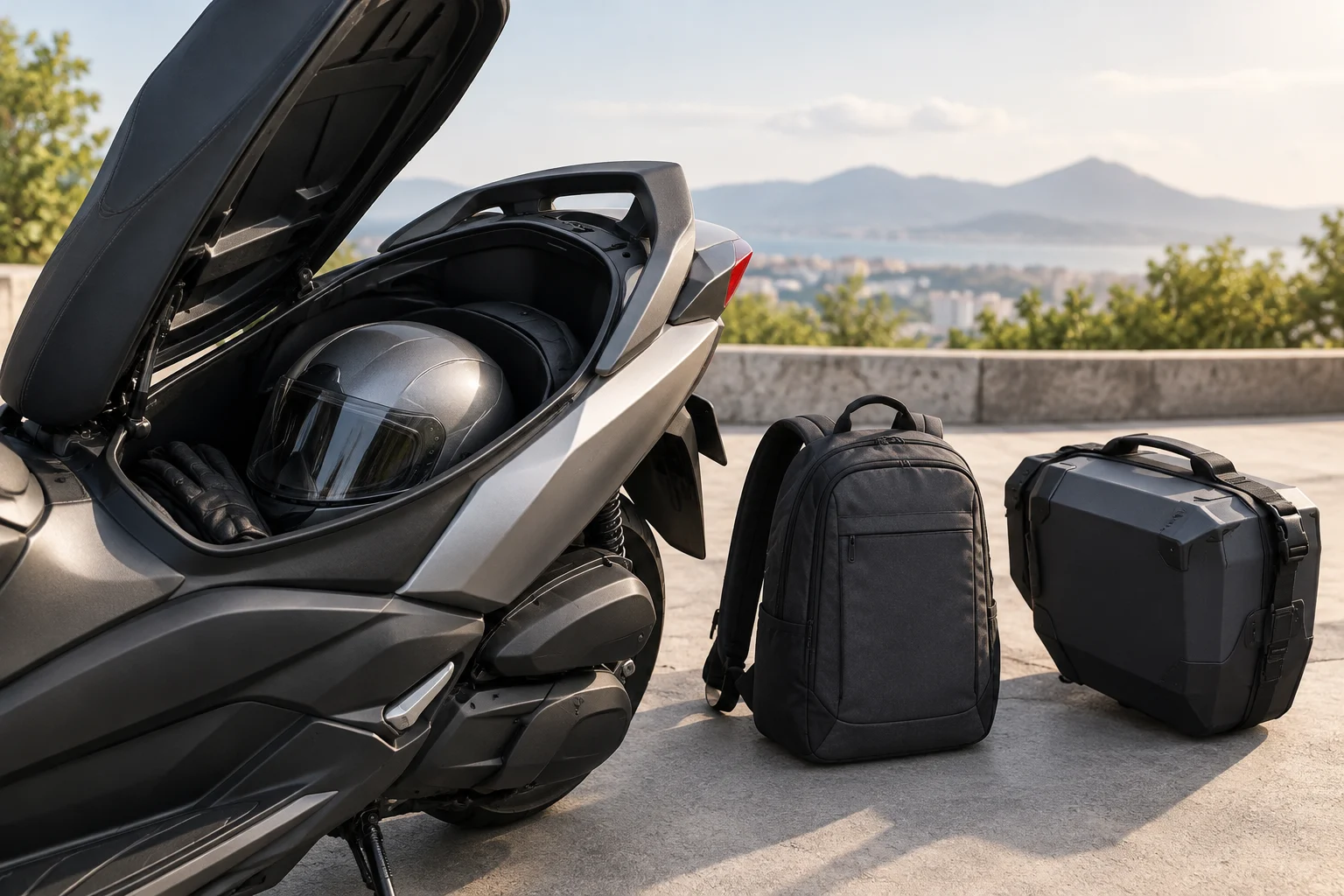
Check compatibility, fixation, and load
Do not assume that an accessory fits any motorcycle. Before buying or installing it, consult the motorcycle manufacturer's documentation and the product data: fixation system, compatibility with the model, and load limits. If the documentation does not clarify an important issue, consult the manufacturer or seller before using it.
To distribute the luggage, the Wunderlich guide recommends placing heavy objects low and close to the center of gravity, and balancing the weight on both sides. Another source advises not to exceed 20% of the motorcycle's weight and proposes a specific distribution between side cases and bags; these figures are general orientations from that source, not a universal limit for all motorcycles. The reference that should prevail is the one indicated for your vehicle and its accessories.
Avoid concentrating too much weight in a rear case: the consulted source warns that it can produce a lever effect and vibrations. Also check that the panniers are kept away from the exhaust; proximity can damage them due to heat, depending on the exhaust position and motorcycle configuration.
Section references: Lista de equipaje para rutas en moto ↗ · Equipamiento para Viajes Largos en Moto ↗ · Siete trucos para montar el equipaje en la moto en los viajes ↗
- Verify the accessory's compatibility with the specific motorcycle.
- Respect the load limits indicated by the manufacturer.
- Place heavy objects low, centered, and distributed evenly.
- Check that the luggage is not near the exhaust or interferes with the motorcycle.
Access to essentials and content protection
Keep documentation and objects you may need during the trip in an accessible compartment, not at the bottom of a loaded case. To organize the rest, inner bags allow separating clothes and objects; they also help protect them from water. Do not assume the entire set is waterproof just because the outer case is rigid: the consulted source recommends bagging the content even in that case.
Section references: Cómo hacer una maleta para viajar en moto ↗
- Keep documentation at hand.
- Group the content in inner bags to locate and protect it better.
- If you use fabric panniers, consider that heavy rain may wet what they store.
Quick checklist before leaving
Adapt the luggage to the route and do a loaded test before a long trip. Motorpasión Moto recommends practicing on a short nearby outing to check the mounting and organization when it is still easy to correct them.
Section references: Siete trucos para montar el equipaje en la moto en los viajes ↗
- Decide which objects you need daily and which only for the trip.
- Check compatibility, mounting instructions, and load limits of the motorcycle and accessory.
- Distribute weight low and balanced; avoid overloading the rear.
- Ensure access to documentation and protect the content with inner bags.
- Review the distance of the panniers to the exhaust and test the mounting on a short route.
How much luggage do I need for a one-day trip?
As a guide, 5 to 15 liters are usually sufficient for a one-day outing. Adjust the volume to what you really need and to the capacity and load limits of your motorcycle.
Is a rigid case or a fabric pannier better?
The rigid case offers fixed space and, according to the consulted source, is waterproof; the fabric pannier adapts better to the content, but may get wet in heavy rain. In both cases, inner bags help organize and protect the transported items.
Where is it advisable to place heavy objects?
The general recommendation is to place them low and close to the center of gravity, with the weight distributed evenly. Always confirm the limits applicable to your motorcycle and luggage system.