Can You Ride an Electric Scooter in a Cycle Lane?
Whether an electric scooter can use a cycle lane depends on local rules and the signs along the route. Find out what to check and what the DGT says about general limits.
Key points
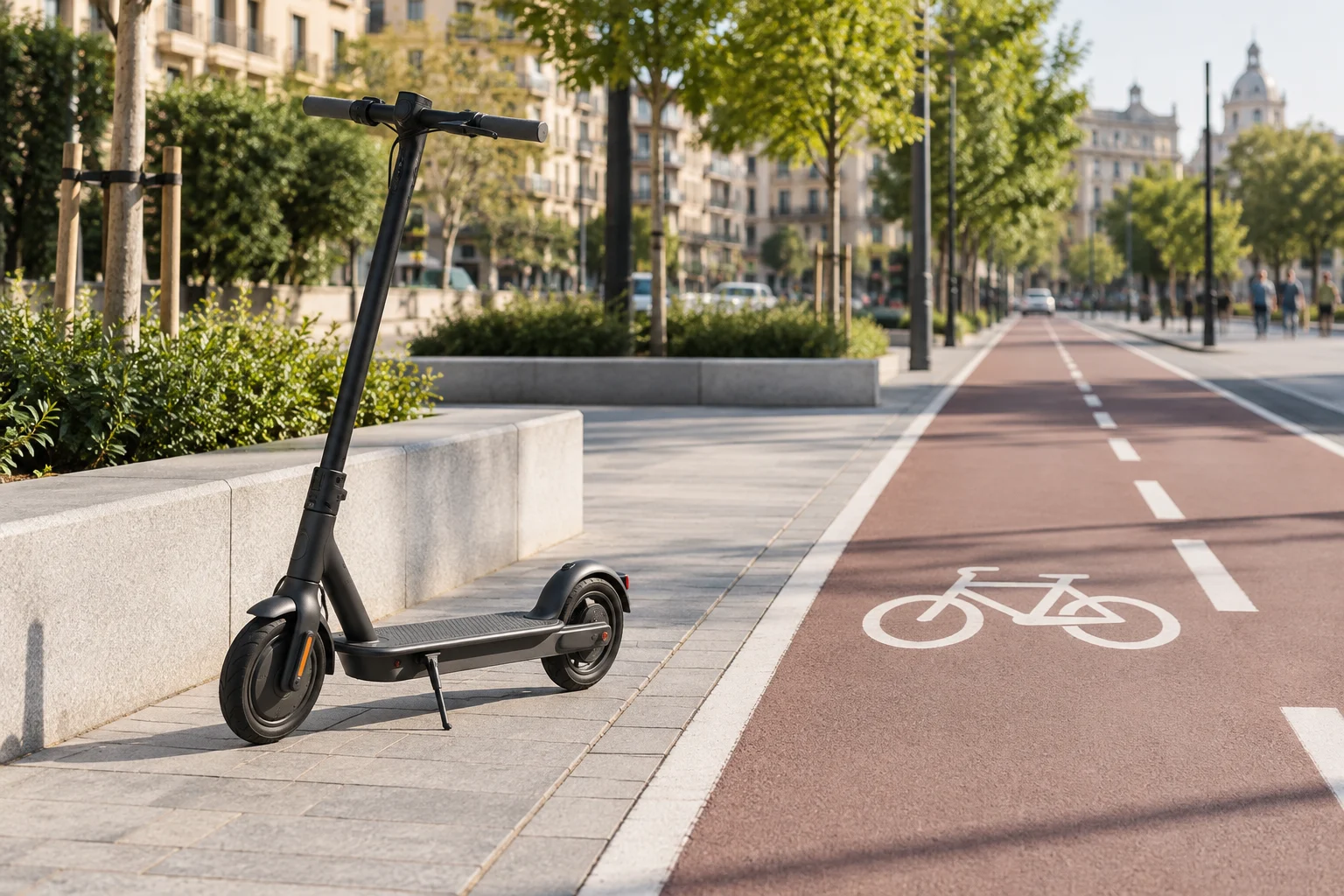
There is no single rule for every cycle lane in Spain: electric scooter access depends on local regulations and the signs along the route. The DGT prohibits riding on pavements and sets a maximum speed of 25 km/h.
The answer depends on the municipality and route
It cannot be assumed that every electric scooter may use every cycle lane in Spain. The DGT guidance cited here says scooters must not be ridden on pavements and sets a maximum permitted speed of 25 km/h, but it does not by itself determine access to each cycle lane. Check your municipality’s rules and the signs on the specific stretch before using it.
Local rules may distinguish between different types of cycle route. For example, Madrid City Council allows personal mobility vehicles (PMVs) to use cycle lanes and limits them to 10 km/h on the cycle track reserved on pavements. This rule applies to Madrid and should not be applied to other places.
Section references: En patinete ↗ · Patinetes eléctricos y otros vehículos de movilidad personal ↗
- Check the rules in the municipality where the cycle lane is located.
- Look at the signs along the route, not just general information about the city.
- Do not confuse a cycle lane with a pavement cycle track: Madrid sets different conditions for each.
What to check on the council’s official website
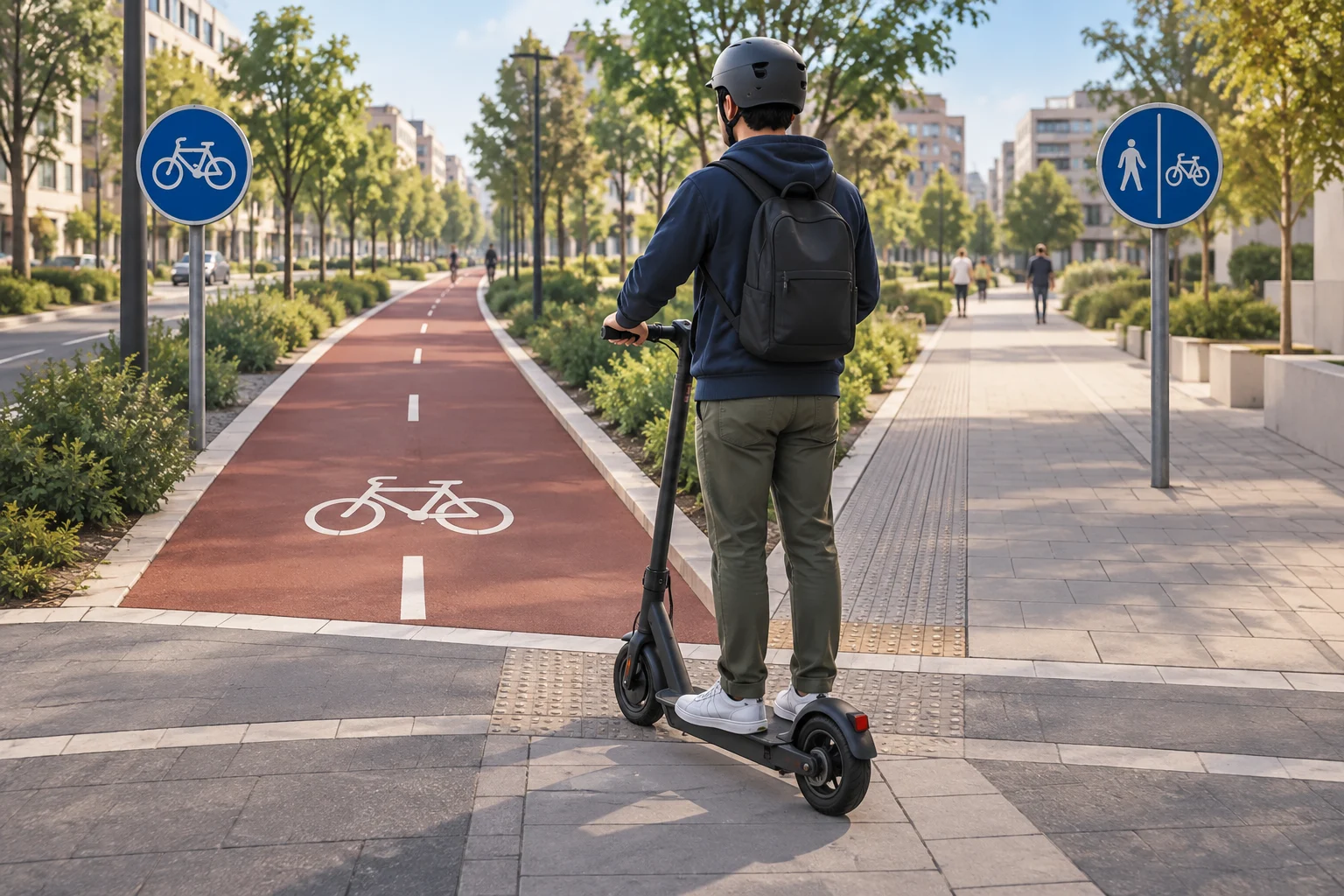
Look for the mobility, traffic or personal mobility vehicle section on the municipality’s official website. Check the current bylaw or municipal guidance, including which routes are authorised, how each type of lane is defined and whether it sets specific riding conditions. Official FAQs can help, but check the applicable rule if they describe routes only in general terms.
Then check the signs along the stretch you plan to ride. If the municipal information and signs do not confirm that your scooter may use the route, do not assume that it is allowed. Contact the municipality’s mobility or traffic service for clarification.
Section references: Vehículos de movilidad personal, preguntas frecuentes ↗ · Patinetes eléctricos y otros vehículos de movilidad personal ↗
- Search for terms such as “PMV”, “personal mobility vehicle”, “electric scooter” and “cycle lane”.
- Make sure the information applies to your municipality and is current.
- Check the signs and conditions on the specific stretch.
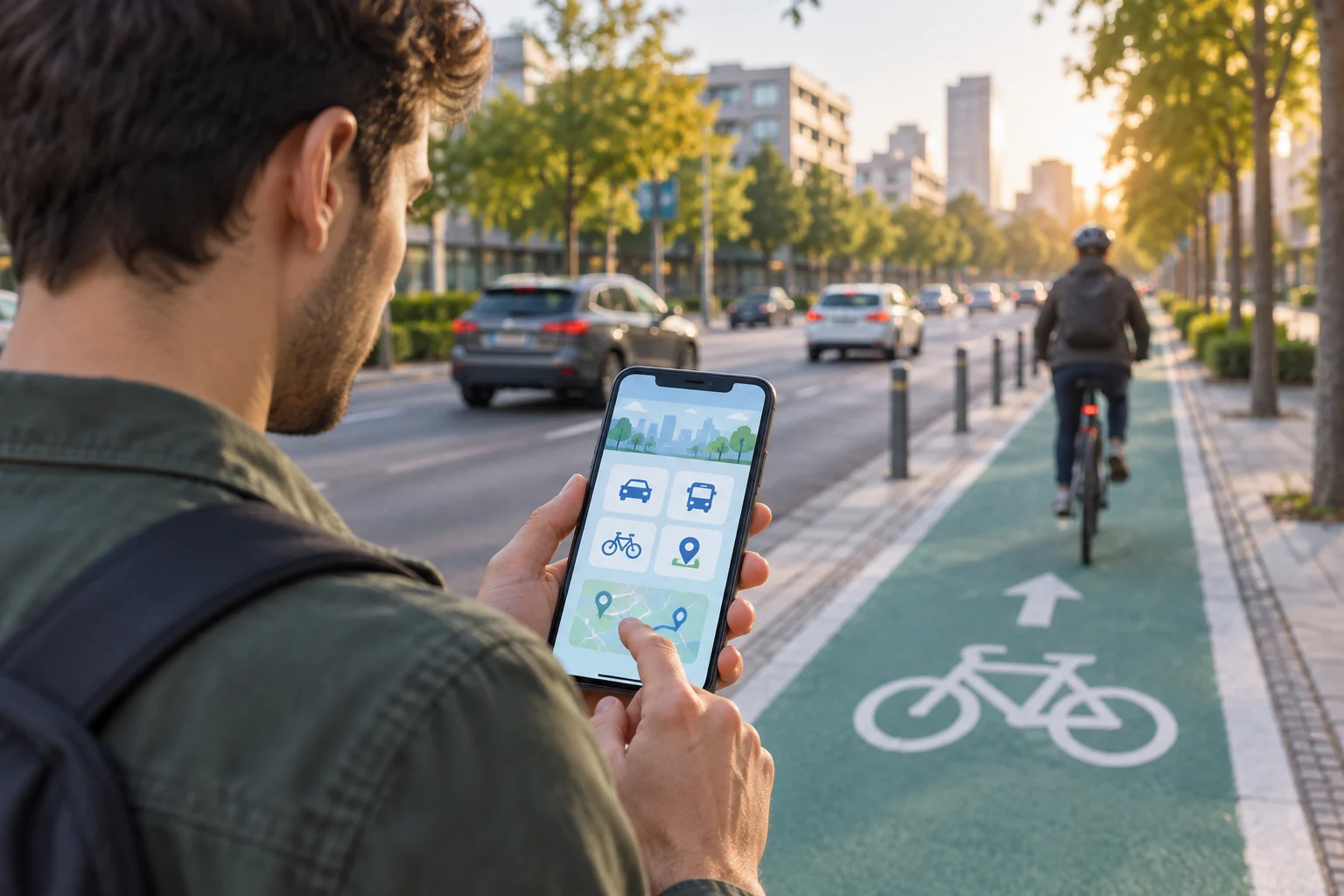
Pavements, cycle lanes and roads are different
The DGT says electric scooters may not be ridden on pavements. That prohibition does not automatically answer whether they may use cycle lanes: these are different spaces, and access to cycle lanes must be checked against local rules. Do not infer the rule in one municipality from the rule in another.
The official pages consulted illustrate this variation. Madrid expressly allows PMVs on cycle lanes and sets a specific condition for pavement cycle tracks. Alicante City Council’s information says scooters should travel in the centre of the road; the cited extract does not say whether they may use cycle lanes. Check the full rule that applies to your route.
| Location | Official information consulted | What it means for riders |
|---|---|---|
| Madrid | Allows PMVs on cycle lanes and limits speed to 10 km/h on cycle tracks reserved on pavements. | Applies in Madrid and distinguishes between these types of route. |
| Alicante | Municipal guidance says scooters should travel in the centre of the road; the cited extract does not confirm access to cycle lanes. | This does not mean Madrid’s rule applies in Alicante. |
Section references: En patinete ↗ · Vehículos de movilidad personal, preguntas frecuentes ↗ · Patinetes eléctricos y otros vehículos de movilidad personal ↗
- Pavement: the DGT prohibits riding an electric scooter on it.
- Cycle lane: check local permission and conditions.
- Road: check which roads and conditions local rules specify for PMVs.
The scooter’s classification also matters
The DGT’s guidance for electric scooters appears in its information on PMVs. If you are unsure how your vehicle is classified, check its documents and specifications alongside the municipal rules. Do not assume that rules for PMVs apply to every similar-looking electric vehicle.
As general guidance for electric scooters, the DGT says they must not be ridden on pavements and sets a maximum speed of 25 km/h. You still need to check local rules and route signs to find out whether you may use a cycle lane.
Section references: En patinete ↗
Can I ride my electric scooter in any cycle lane in Spain?
Do not assume that you can. Access depends on local regulations and the signs along the route; check both before riding.
What does the DGT say about electric scooters?
The DGT says electric scooters may not be ridden on pavements and sets a maximum permitted speed of 25 km/h.
Does Madrid’s rule also apply in Alicante?
No. Madrid allows PMVs on cycle lanes and sets a 10 km/h limit on cycle tracks reserved on pavements. The cited Alicante municipal guidance says scooters should travel in the centre of the road. Check the current rules in the municipality where you plan to ride.