Electric Locomotive Evolution: Motors and Control
From third-rail power to electronic systems, explore the milestones that transformed electric traction and why its development depends as much on railway infrastructure as on the locomotive itself.
Key points
Electric locomotives draw power from external infrastructure rather than an onboard prime mover. From Siemens’s 1879 demonstration to electronic control, their evolution involved new motors and control systems as well as the electrification of railway lines.
What distinguishes electric traction
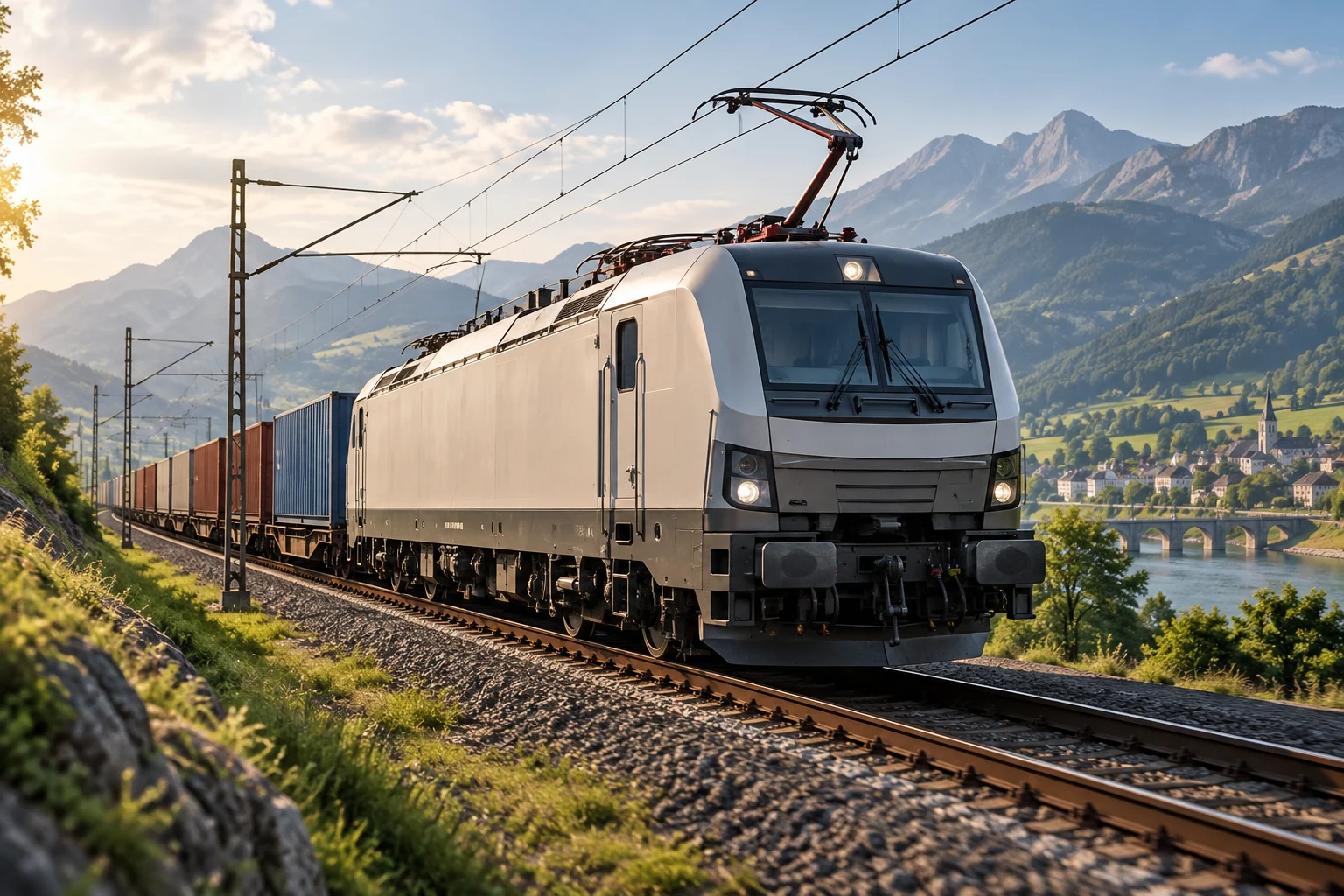
An electric locomotive receives power from an external source, usually through overhead wires or a third rail. A diesel-electric locomotive also uses electric transmission, but an onboard prime mover generates the electricity that powers it; it therefore does not need an electrified line to obtain power.
The distinction matters beyond vehicle design: an electric locomotive depends on infrastructure that supplies power compatible with the line. Electric traction is therefore not just an onboard technology.
Section references: Locomotora eléctrica ↗
From the 1879 demonstration to underground railways
Werner von Siemens presented an electric train in Berlin in 1879. It received electricity from an insulated third rail placed between the running rails—an early example of how power supply could be separated from the vehicle and provided by infrastructure.
Electric traction found a practical application on underground lines, where steam smoke was a problem. The City and South London Railway opened in 1890 with electric locomotives; the conditions under which the line was built prohibited the use of steam power. The example shows how adoption also depended on the environment in which trains operated.
Section references: Locomotora eléctrica ↗
Motors and control systems
Rail networks did not follow a single technical solution. Among the documented developments was the use of converters to transform single-phase current into three-phase alternating current inside the locomotive. This allowed power conversion to take place onboard to supply the motors.
Later, electronic control systems made it possible to use increasingly smaller and more powerful electric motors. The change involved more than replacing a component: electronic traction control expanded the ways motor operation could be managed. The specific solutions vary by locomotive design and railway system.
Section references: Locomotora eléctrica ↗
Electrification extends to the railway line
For an electric locomotive to operate, the line needs fixed power-supply and operating equipment. This can include overhead wires or a third rail, substations and control systems. The choice and arrangement of these elements determine compatibility between the train and the infrastructure.
This helps explain why there is no single timeline for all of Europe or for every railway network: electrification means developing railway installations, not simply acquiring new locomotives. It also highlights a practical difference from steam or diesel traction: electric traction requires the power-supply infrastructure to be available along the route.
Section references: Locomotora eléctrica ↗
- When comparing two railway systems, distinguish the characteristics of the vehicle from those of the network that supplies it.
- Overhead wires or a third rail alone do not describe the entire installation; substations and control systems also matter.
An evolution of both vehicle and infrastructure
The documented milestones show change on two fronts: first, different ways of delivering electricity to trains; then, advances in conversion and control that enabled smaller, more powerful motors. At the same time, the growth of electric traction depended on fixed installations and the conditions of each railway line.
The evolution of electric locomotives is therefore not a universal sequence of models. Siemens’s 1879 demonstration, the City and South London Railway’s use of electric locomotives from 1890, and later developments in conversion and control illustrate distinct stages, but each network followed its own path.
Section references: Locomotora eléctrica ↗
How does an electric locomotive differ from a diesel-electric locomotive?
An electric locomotive draws power from an external source, such as overhead wires or a third rail. A diesel-electric locomotive carries an onboard prime mover that generates power for its electric transmission.
When did Siemens present the first electric train?
Werner von Siemens presented an electric train in Berlin in 1879. It received electricity through an insulated third rail placed between the running rails.
Why does an electric locomotive need more than the vehicle itself?
It depends on the line’s power supply. Electrification requires infrastructure such as overhead wires or a third rail, substations and control systems.