How to Prepare and Maintain a Boat in Storage
A clear plan helps avoid surprises at the boatyard: compare storage options and quotes, record the boat’s condition and arrange inspections during its stay.
Key points
To prepare a boat for storage, first decide whether it should remain afloat or be stored ashore, then confirm what the yard includes and which work it permits. Document the boat’s condition, agree on inspections and follow the manuals for each system.
Choose the storage option and scope before booking
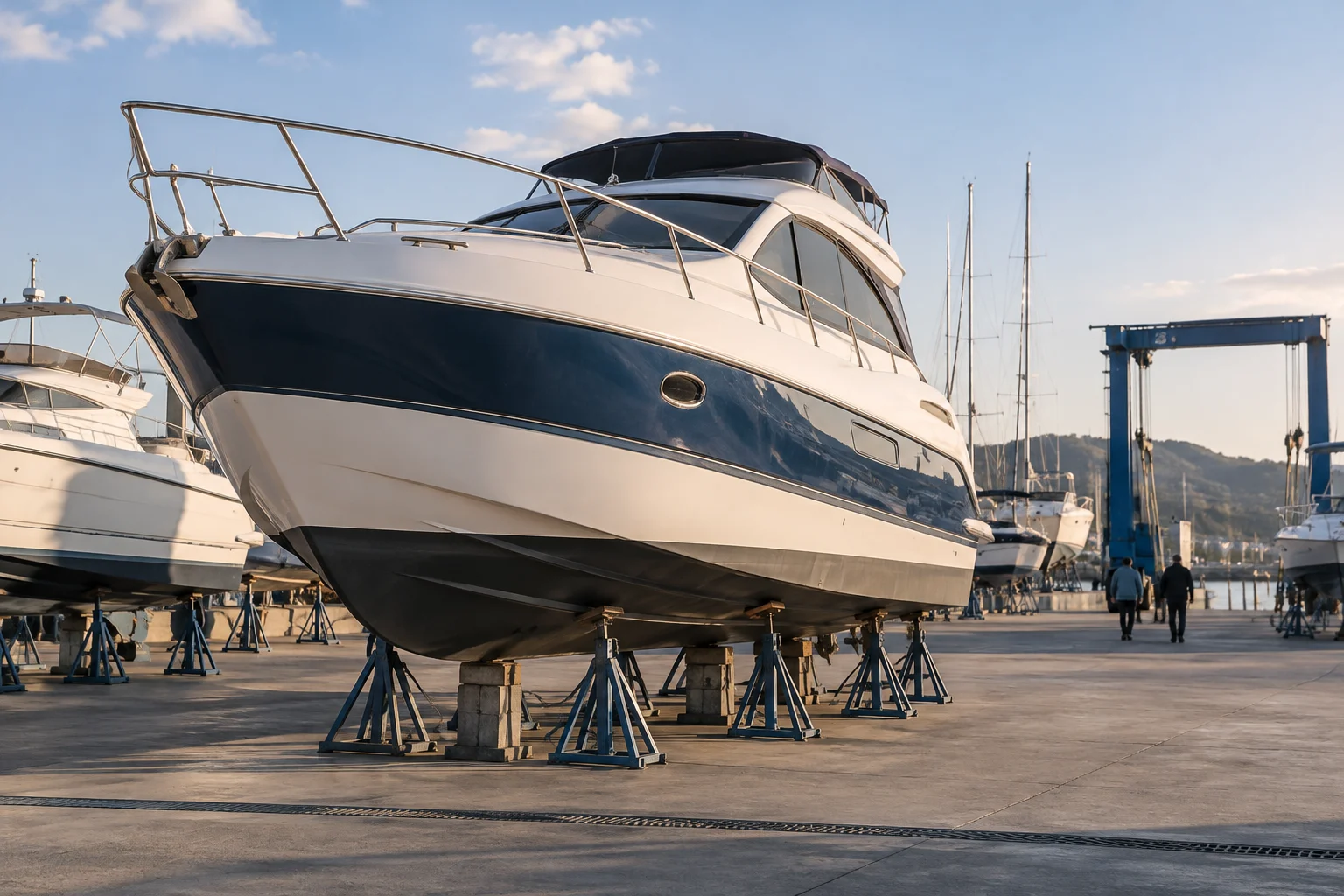
Start by deciding whether the boat will remain afloat or be stored ashore. The right choice depends on the boat’s condition, how long it will be laid up and how easily you need to access it for inspections. If work is pending, ask the yard specifically which option it offers: winter storage may have different terms and may not allow work during the stay.
Before requesting a quote, gather four details: the boat’s dimensions, the planned storage period, outstanding work and how often you will need access. Compare the total cost, not just the storage rate: lifting, launching, utilities and additional work may be charged separately.
Section references: Invernaje de barcos: opciones y preparación ↗ · Reparación de barcos Barcelona: planificar varada ↗
- Confirm which services each quote includes and which are charged separately.
- Ask about access rules and the services available for inspections or work.
- Separate essential work to be completed before relaunch from tasks that can wait, and agree on what is authorized.

Record the boat’s condition before leaving it
A simple record helps distinguish pre-existing damage from issues found during storage and makes it easier to explain the work you are requesting. Take overall photos and close-ups of visible marks or damage. Note any leaks, noises, vibrations, steering problems or electronic faults you observed during use, without trying to diagnose their cause.
Keep any available service and repair history as well. If there are symptoms or a fault, describe them clearly and share the details with the technicians so they can assess the scope before starting work.
Section references: Invernaje de barcos: opciones y preparación ↗ · Reparación de barcos Barcelona: planificar varada ↗
- Photograph the hull and any visible parts you want to document.
- Note damage, leaks, loose items and symptoms you have observed.
- Gather relevant maintenance records and previous repair history.

Arrange care during storage
Before storage, inspect surfaces, damage, possible leaks and loose items so you can record their condition. It is also worth visually checking ropes, fenders, closures and drains. Agree on who will check the boat during its stay and how often; if it is stored ashore, first confirm the site’s access rules.
Do not assume that a particular cover, ventilation setup or location is suitable for every boat. Ask the yard about the conditions it provides and check the manufacturer’s recommendations for your boat and its equipment. If an inspection reveals a fault, record what you observed and request a technical assessment before authorizing work.
Section references: Invernaje de barcos: opciones y preparación ↗
- Agree on who will carry out inspections and how they will report any issues.
- Confirm access rules before planning visits or work.
- Record any problems found and request an assessment before work begins.
Tailor maintenance to the engine and equipment
There is no single maintenance checklist for every boat: tasks depend on the engine, installed equipment and length of the lay-up. Use the relevant manuals to identify the instructions for each item, and consult a workshop when a task calls for it. Do not commission generic work without confirming that it applies to your setup.
Before returning the boat to the water, review the storage record and confirm which agreed tasks have been completed and which remain outstanding. If there is a fault, uncertainty about the boat’s condition or a task beyond your expertise, arrange a professional inspection before using it.
Section references: Invernaje de barcos: opciones y preparación ↗
- Check each task against the manuals for the engine and installed equipment.
- Ask the yard to clarify what has been done and what remains outstanding.
- Do not rely on a generic winter-storage checklist in place of a technical assessment.
Is it better to store a boat ashore or leave it afloat?
It depends on the boat’s condition, the length of the lay-up and the access needed for inspections. Compare the terms and services for each option with the marina or boatyard.
What should I ask before booking ashore storage?
Confirm whether the service is winter storage or another arrangement, what work is permitted, how you can access the boat and which costs the quote includes, such as lifting, launching, utilities or additional work.
What maintenance does my boat need while in storage?
Tasks depend on the engine, installed equipment and length of the lay-up. Consult the relevant manuals and use a workshop when a task requires technical assessment or work.