Motorcycle Aerodynamic Protection: What to Check Before Long Trips
Discover how the windscreen, fairing, and your posture influence comfort on the road. A practical guide to evaluating wind protection and avoiding fatigue on long journeys.
Key points
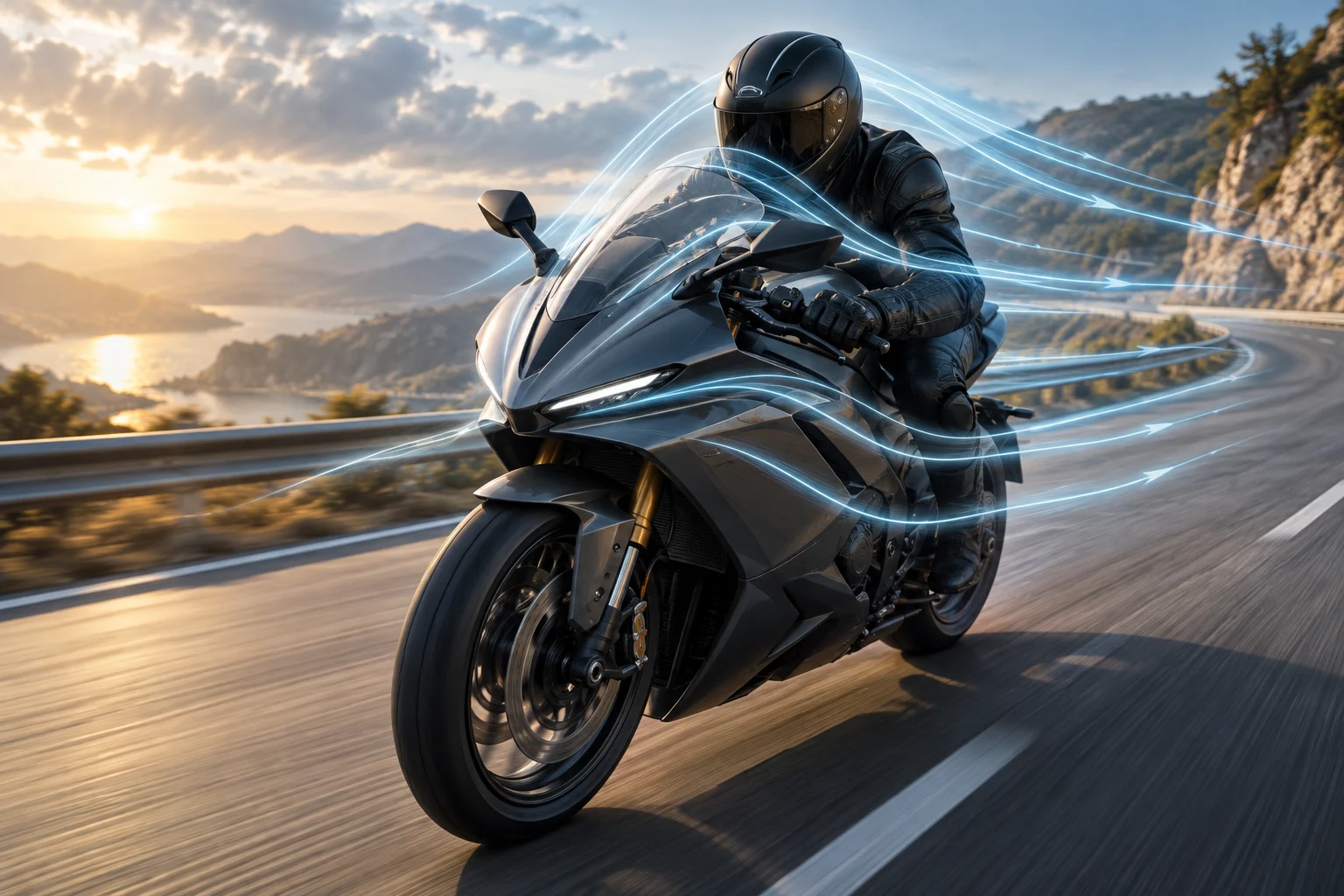
Motorcycle aerodynamic protection depends on the interaction between the fairing, windscreen, and rider posture. Before traveling, verify accessory compatibility with your model and adjust the configuration according to your height to optimize comfort without compromising safety.
What aerodynamic protection means on a motorcycle
Aerodynamic protection is not a single feature, but the result of how air flows around the motorcycle and the rider. On long trips, the main objective is to reduce turbulence and wind pressure on the torso and legs, factors that directly contribute to muscle fatigue and loss of concentration.
Unlike a car, the rider is exposed to the airflow. The effectiveness of the protection depends on three main elements: the geometry of the fairing, the height and angle of the windscreen, and the driver's posture. There is no universal configuration; what works for a 1.80 m rider may be insufficient or excessive for another who is 1.65 m tall.
Section references: BMW Motos Foro: Protección aerodinámica ↗
- The side fairing deflects air away from the arms and legs.
- The front windscreen channels the flow over the helmet.
- The rider's posture modifies the wind impact point.
Windscreen, fairing, and deflectors: differences and compromises
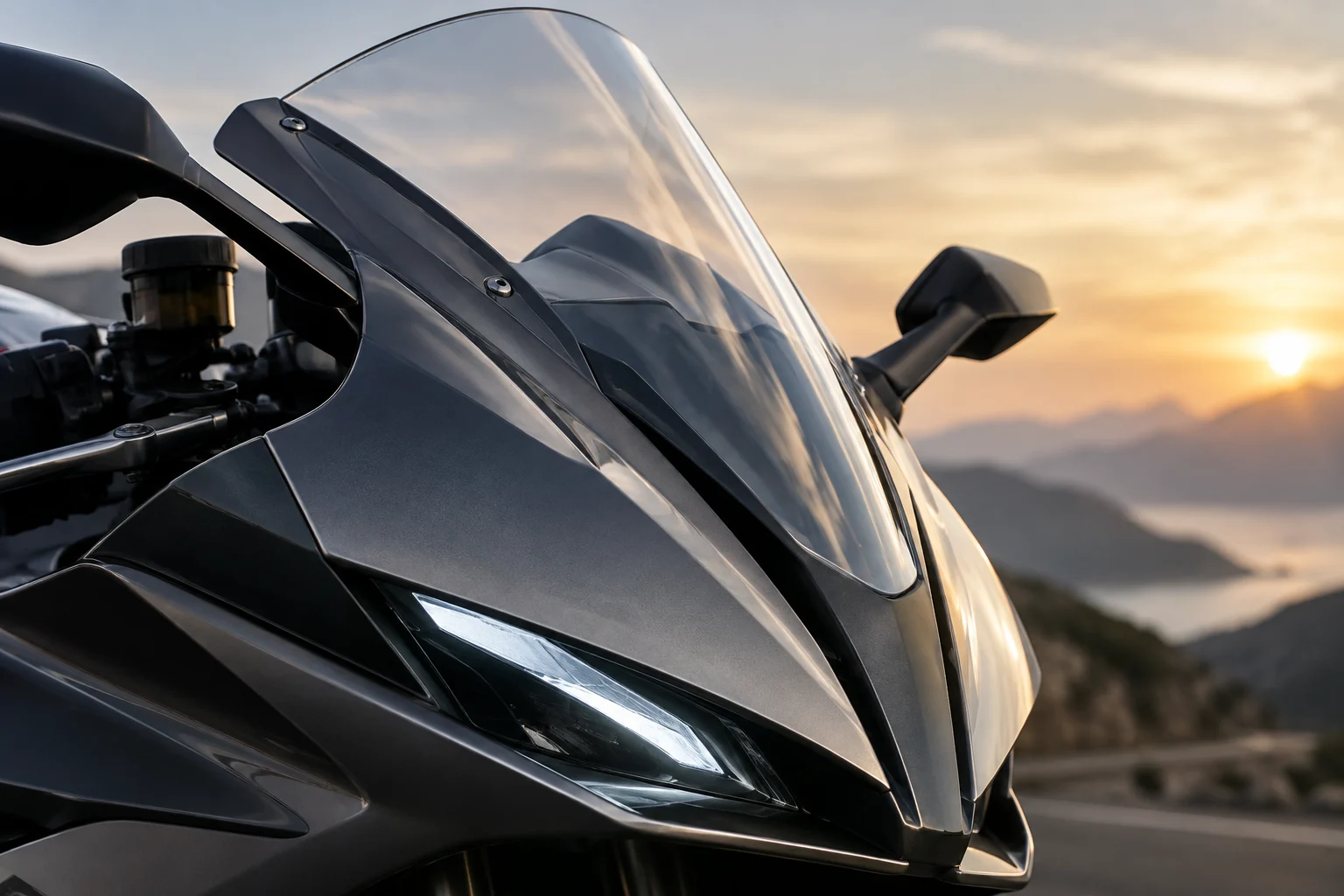
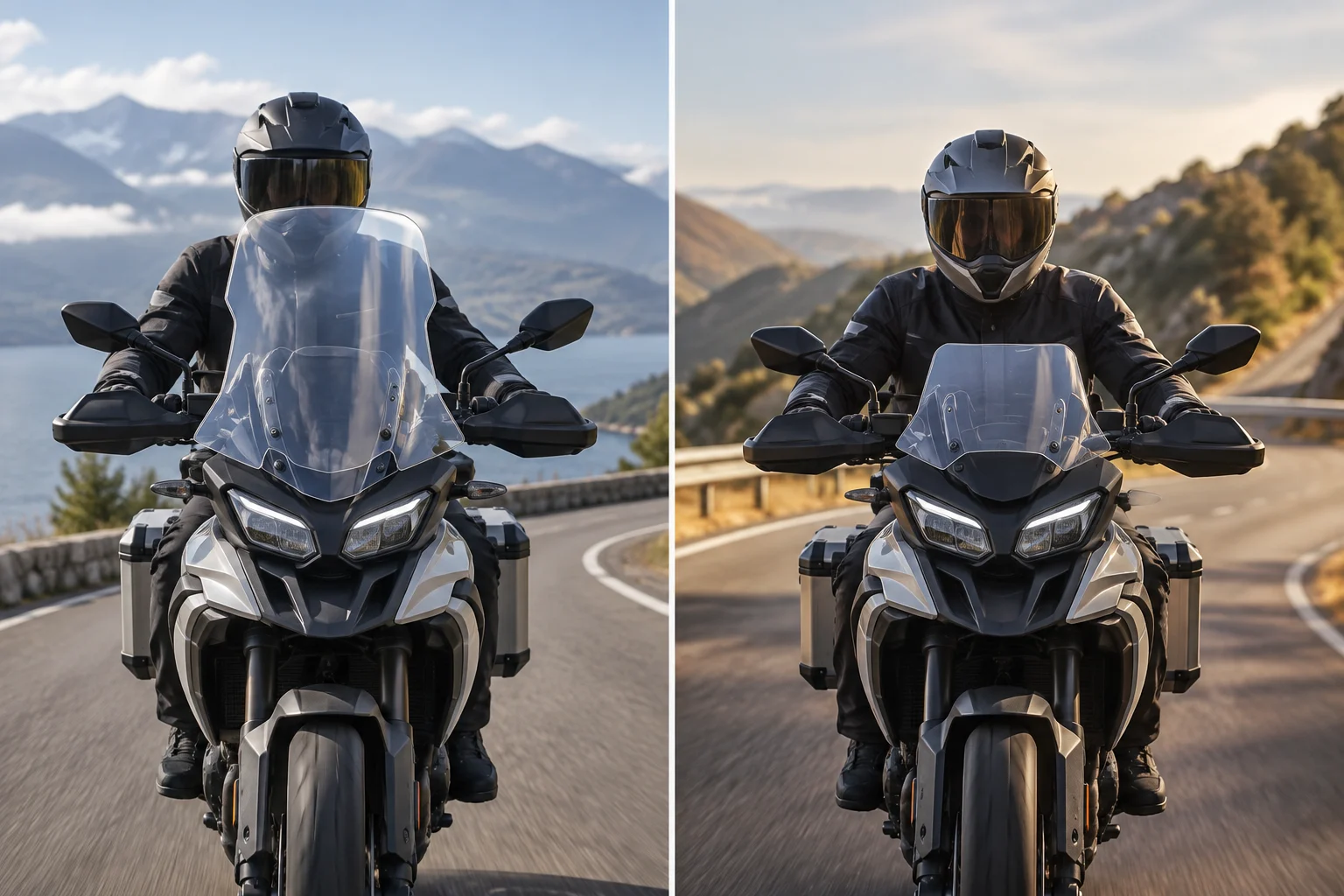
The windscreen is the most adjustable element. A taller windscreen offers greater protection for the chest, but it can generate turbulence in the helmet if the rider is short or if the bike is loaded. Conversely, a lower windscreen reduces drag but exposes the torso more.
Side fairings are fixed on most standard motorcycles and determine the base protection. Wind deflectors or 'bars' are accessories that can be installed on the handlebar or fairing to deflect lateral flow. Their effectiveness depends on compatibility with the specific model and the usual cruising speed.
| Element | Main function | Key considerations |
|---|---|---|
| Windscreen | Deflect air over the helmet | Height adjustable according to height and load |
| Side fairing | Protect arms and legs | Fixed on most standard models |
| Deflectors | Reduce lateral turbulence | Verify compatibility with the model |
Section references: BMW Motos Foro: Protección aerodinámica ↗
- Tall windscreen: better chest protection, risk of helmet turbulence.
- Low windscreen: less drag, more exposure to frontal wind.
- Deflectors: improve lateral protection, require compatibility verification.
Influence of height, posture, and helmet
The rider's height is the most determining factor for windscreen configuration. A taller rider can use a lower windscreen without losing protection, while a shorter rider usually needs a taller windscreen or a more pronounced angle to prevent air from impacting the chest directly.
Posture also modifies the flow. A more upright position increases the exposed frontal surface, while a more hunched position reduces drag but can increase pressure on the knees. The helmet, for its part, must be well-fitted and have a visor that complements the windscreen to prevent air currents on the face.
Section references: Cyclone Motor Madrid: Prueba de moto en verano ↗
- Adjust the windscreen height according to your height and luggage load.
- Evaluate the riding posture: upright vs. hunched.
- Verify that the helmet and visor work in conjunction with the windscreen.
What to check in the spec sheet and approved options
Before buying aerodynamic accessories, consult your motorcycle's technical sheet and the options approved by the manufacturer. Not all third-party deflectors or windscreens are compatible with all models, and an incorrect installation can compromise stability or visibility.
Verify that the accessories comply with safety regulations and do not obstruct the rider's vision or interfere with the operation of the controls. If the manufacturer offers specific windscreen or fairing options for your model, they are usually the safest and most optimized choice.
Section references: Dainese: Lo que hay que comprobar antes de emprender un viaje en moto ↗
- Check the accessory's compatibility with your model and year.
- Verify that they do not obstruct vision or interfere with controls.
- Prioritize manufacturer-approved options when available.
How to assess comfort during a safe test ride
The best way to evaluate aerodynamic protection is during a test ride in real conditions. If the route allows, analyze stability, engine response, and wind protection. Pay attention to fatigue in the arms and torso after 30-45 minutes of riding at cruising speed.
Do not generalize the results of a short test. Road comfort depends on speed, load, and weather conditions. If possible, perform the test with the luggage you plan to carry on the trip to simulate real conditions.
Section references: Cyclone Motor Madrid: Prueba de moto en verano ↗
- Evaluate muscle fatigue after 30-45 minutes of riding.
- Perform the test with the luggage planned for the trip.
- Consider weather conditions and cruising speed.
When to consult a professional for compatibility and installation
If you plan to install deflectors, non-original windscreens, or modify the fairing, consult the manufacturer or a qualified professional. An incorrect installation can affect the motorcycle's stability, visibility, or the durability of the components.
In addition to aerodynamics, remember that before a long trip you must check the overall condition of the motorcycle: tire pressure and wear (tread not less than 1.6 mm), chain slack, brake pad condition (replace if less than 4 mm), and brake fluid level and quality. Aerodynamics is part of comfort, but mechanical safety is the foundation of any trip.
Section references: Dainese: Lo que hay que comprobar antes de emprender un viaje en moto ↗ · Hit Air: Preparar tu moto para un viaje largo ↗ · IMTBIKE: Mantenimiento básico de tu moto antes de un viaje largo ↗
- Consult a professional for the installation of non-original accessories.
- Verify tire pressure and wear before traveling.
- Check the condition of the chain, brakes, and brake fluid.
What is the ideal windscreen height for a long trip?
There is no universal height. It depends on your height, riding posture, and luggage load. A taller rider can use a lower windscreen, while a shorter rider usually needs a taller one to avoid wind impact on the chest.
Are wind deflectors mandatory for traveling?
They are not mandatory, but they can improve comfort on long trips by reducing lateral turbulence. Their installation must be verified for compatibility with the model and safety.
How does luggage load affect aerodynamics?
Luggage alters the airflow and center of gravity. A poorly distributed load can increase drag and fatigue. Place heavier objects low and centered to maintain stability.
Should I change the windscreen if my motorcycle is standard?
Only if the standard protection is not sufficient for your height or riding style. Verify the compatibility of any third-party windscreen with your model before buying it.