Medications and Driving: Which Drugs Affect Your Safety Behind the Wheel
Discover how common medications like antihistamines, anxiolytics, and opioids can affect your driving ability and how to interpret leaflet warnings to maintain safety.

Key points
Antihistamines, anxiolytics, opioids, and sleep aids can impair driving by causing drowsiness or slowed reflexes. Always check the medication leaflet for specific warnings and consult a healthcare professional before driving.
Drugs That Can Affect Driving
Several groups of common medications can compromise safety behind the wheel by altering attention, reflexes, or alertness. The Spanish Agency for Medicines and Medical Devices (AEMPS) and the U.S. Food and Drug Administration (FDA) specifically identify antihistamines, anxiolytics (such as benzodiazepines), opioid analgesics, and sleep aids as drugs that can reduce driving ability.
These effects are not always obvious to the driver. The FDA notes that antihistamines, for example, can slow reaction time and make it difficult to concentrate or think clearly, even if drowsiness is not perceived. Similarly, some sleep aids can leave residual effects that impact the ability to perform daily activities, including driving, the following morning.
Section references: Medicamentos y conducción ↗ · Avoid driving impaired with these tips from FDA ↗
- Antihistamines: may cause slowed reflexes and difficulty concentrating.
- Anxiolytics (benzodiazepines): may cause drowsiness and lack of coordination.
- Opioid analgesics: risk of extreme drowsiness and respiratory difficulty.
- Sleep aids: effects may last until the next day.

How to Read Leaflet Warnings
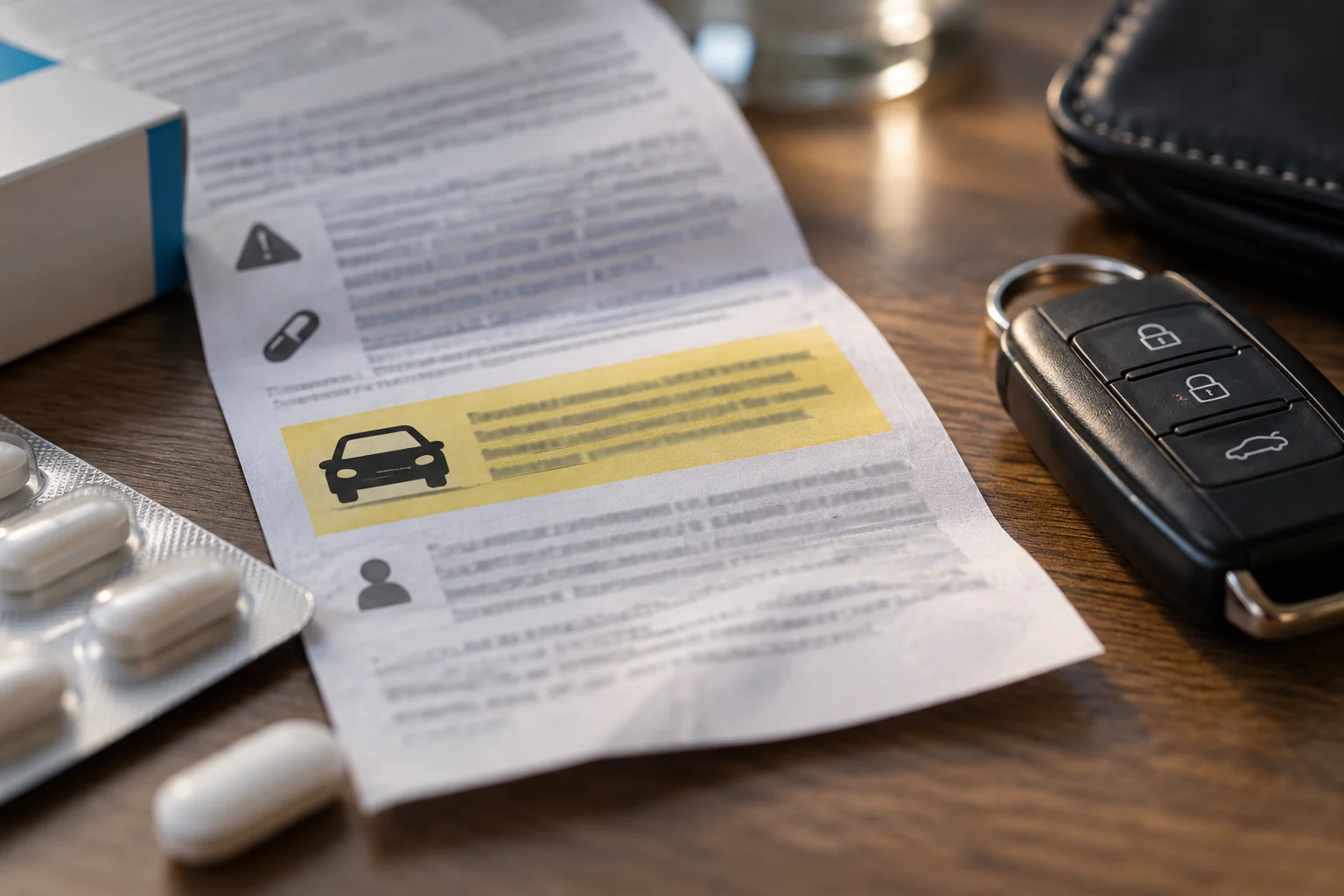
In Spain, all authorized leaflets include a fixed section on warnings for driving or operating dangerous machinery. If a medication can reduce driving ability, the outer packaging must include a specific warning pictogram. This symbol is a quick visual signal to identify the risk before taking the medication.
It is essential to read the 'Warnings and precautions' section of the leaflet. This details side effects related to driving, such as dizziness, drowsiness, or blurred vision. The AEMPS indicates that these effects are evaluated and reported in the leaflet when appropriate. Knowing the drug name is not enough; the dose and interaction with other medications also influence the risk.
Section references: Medicamentos y conducción ↗
- Look for the warning pictogram on the outer packaging.
- Read the warnings section of the leaflet before taking the medication.
- Pay attention to side effects like dizziness or drowsiness.
- Consider the dose and combination with other drugs.
Combination Risks and Residual Effects
Combining certain medications can significantly increase the risk. The FDA warns that mixing opioids with benzodiazepines can cause extreme drowsiness, slow or difficult breathing, coma, and even death. This interaction is particularly dangerous for driving, as it can cause a sudden loss of consciousness or control of the vehicle.
Additionally, the effects of some medications can last for several hours or even until the next day. This means that taking a sleep aid at night does not guarantee that it is safe to drive in the morning. The FDA recommends consulting a healthcare professional to determine when it is safe to resume driving after taking a medication that affects alertness.
Section references: Avoid driving impaired with these tips from FDA ↗ · New Safety Measures Announced for Opioid Analgesics, Prescription Opioid Cough Products, and Benzodiazepines ↗
- Avoid combining opioids with benzodiazepines without medical supervision.
- Residual effects can last up to 24 hours.
- Consult your doctor about the safe time before driving.
- Inform your healthcare professional of all medications and supplements you take.
Practical Recommendations Before Driving
To minimize risks, the FDA and AEMPS recommend following clear guidelines. First, always follow usage instructions and understand label warnings. If it is the first time you are taking a medication, do so at a time when you do not need to drive, to learn how it affects you.
It is crucial to inform your doctor or pharmacist of all medications, vitamins, and supplements you are taking, as well as any side effects you experience. This allows for the evaluation of interactions and dose adjustment if necessary. If you feel dizzy, drowsy, or have difficulty concentrating after taking a medication, do not drive until the symptoms disappear completely.
Section references: Avoid driving impaired with these tips from FDA ↗
- Try the medication for the first time when you are not going to drive.
- Inform your doctor of all drugs and supplements you take.
- Do not drive if you feel dizzy, drowsy, or confused.
- Consult a healthcare professional if you have doubts about safety.
Do all medications have warnings about driving?
In Spain, all leaflets include a fixed section on driving warnings. However, only medications that can reduce driving ability carry the warning pictogram on the outer packaging.
Can I drive if I take an antihistamine and do not feel drowsy?
Not necessarily. The FDA indicates that antihistamines can slow reaction time and make it difficult to concentrate even without causing perceptible drowsiness. It is best to avoid driving until you know how the medication affects you.
How long should I wait after taking a sleep aid before driving?
The effects of some sleep aids can last until the next day. The FDA recommends consulting a healthcare professional to determine when it is safe to resume driving after taking this type of medication.
What happens if I combine an opioid with an anxiolytic?
The combination of opioids and benzodiazepines can cause extreme drowsiness, slow breathing, coma, and death. This is a dangerous interaction that must be strictly supervised by a doctor.