History of the VW Type 147 'Fridolin': The German Post Van
Discover the origins of the VW Type 147 'Fridolin', its production by Westfalia for the German Federal Post and Swiss Post, and its rare survival as a collector's classic.
Key points
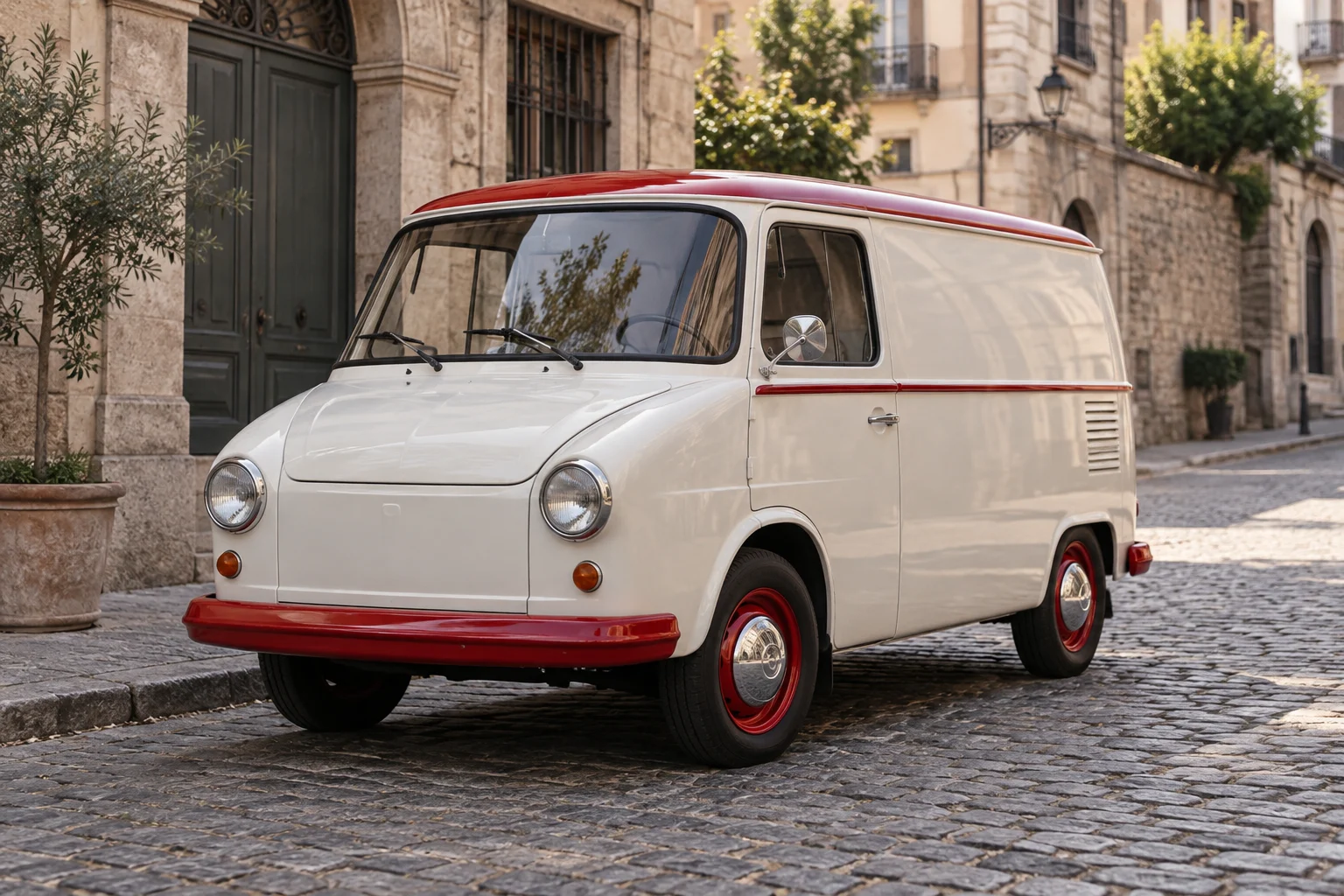
The VW Type 147 'Fridolin' was a delivery van developed for the German Federal Post and Swiss Post between 1964 and 1974. Its construction combined components from the Beetle, Karmann Ghia, and Transporter, and it is now a rare classic due to corrosion.
Origins and Postal Commission
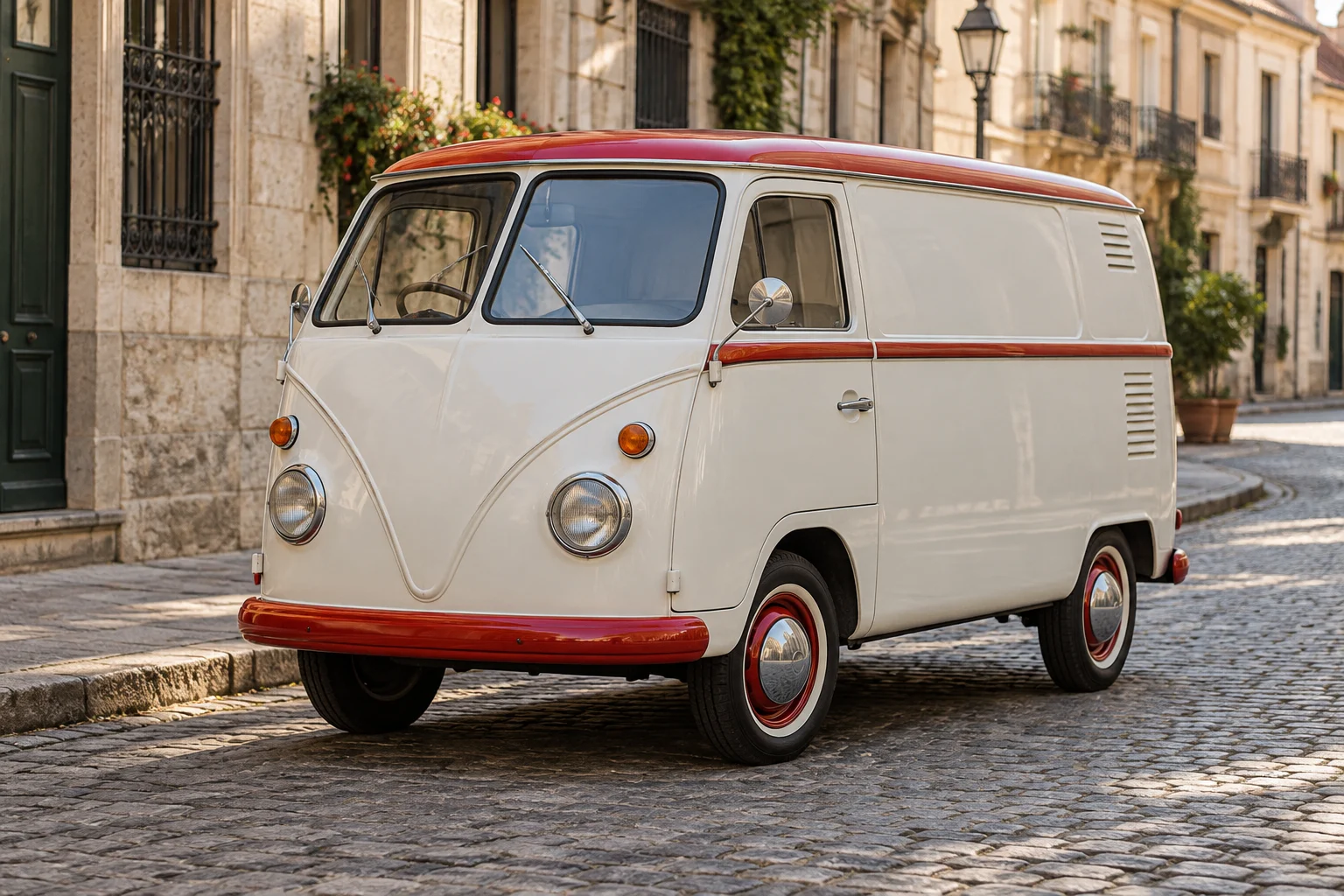
The Volkswagen Type 147, popularly known as the 'Fridolin', was developed primarily for the Deutsche Bundespost (German Federal Post) to facilitate mail delivery and mailbox emptying. The initial commission specified a vehicle with a 2 m³ storage compartment and a payload between 350 and 400 kg, requirements that defined the configuration of this delivery van.
Mass production began in 1964 at the Westfalia plants in Rheda-Wiedenbrück, and the vehicle was officially presented on March 9, 1965. Its official name was Volkswagen Type 147 Kleinlieferwagen, although the unofficial nickname 'Fridolin' quickly became established among users and collectors.
Section references: VW Fridolin-IG: The history of the VW Fridolin/VW Type 147 ↗ · Volkswagen Newsroom: Type 147 "Fridolin" (1964–1974) ↗
Technology Derived from the Beetle
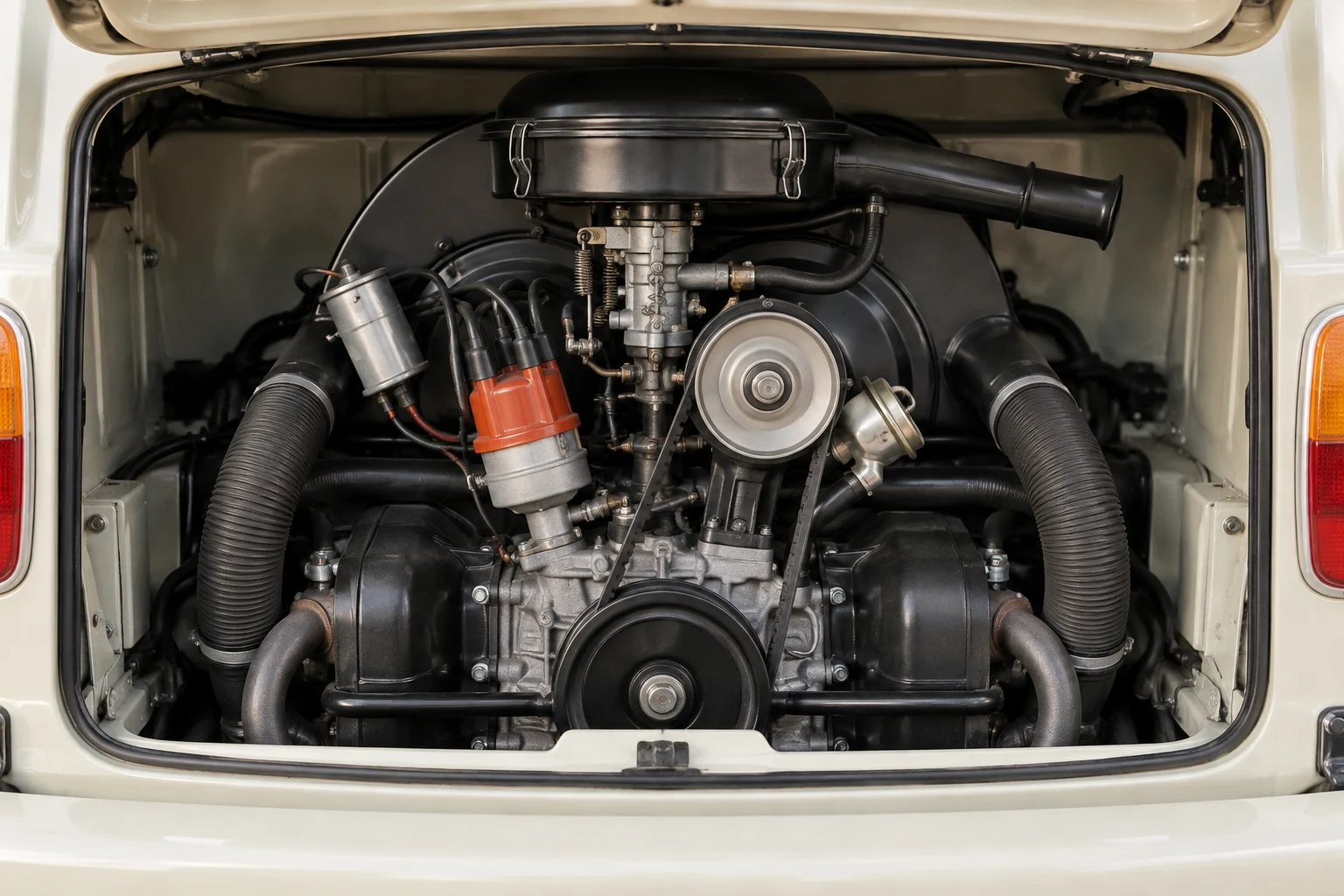
The Type 147 is an example of mixed construction using components from various Volkswagen models. The engine, axles, and transmission come directly from the Volkswagen Type 1 (Beetle), ensuring proven and easy-to-maintain mechanics for postal service.
The floor assembly (chassis) is based on the Volkswagen Karmann Ghia Type 14, while the front lights come from the Volkswagen Type 3 (VW 1500). The rear panels were supplied by the Transporter plant in Hannover, using components from the Volkswagen Type 2. This combination of parts from different models allowed Westfalia to assemble a vehicle specific for delivery without developing a completely new platform.
Section references: Volkswagen Newsroom: Type 147 "Fridolin" (1964–1974) ↗
- Engine, axles, and transmission: derived from the VW Type 1 (Beetle).
- Floor assembly (chassis): based on the VW Karmann Ghia Type 14.
- Front lights: from the VW Type 3 (VW 1500).
- Rear panels: supplied by the Transporter plant (VW Type 2).
Production and Versions
Between 1964 and 1974, a total of 7,340 units of the Volkswagen Type 147 were produced. Production ended in 1974, leaving a total of 6,139 units built for the German market until 1972. 85% of these German units were destined for Bundespost use, confirming its character as a fleet vehicle.
In addition to the German market, the Schweizer Bundespost PTT (Swiss Post) ordered 1,201 units. The Swiss version was distinguished by being equipped with a 1.3-liter engine of 44 PS and front disc brakes, improvements that were not present in the standard German version, which featured a 1,192 cc engine and 34 HP at 3,600 rpm.
| Feature | German Version (Bundespost) | Swiss Version (PTT) |
|---|---|---|
| Engine | 1,192 cc, 34 HP at 3,600 rpm | 1,300 cc, 44 PS |
| Front Brakes | Drum (standard for the era) | Disc |
| Units Produced | 6,139 (until 1972) | 1,201 |
| Curb Weight | 935 kg | Not specified in sources |
Section references: VW Fridolin-IG: The history of the VW Fridolin/VW Type 147 ↗
Current Status as a Classic
Due to the lack of corrosion protection in its original manufacturing, only a small number of Volkswagen Type 147s have survived to the present day. This scarcity, combined with its specific history as a postal delivery vehicle, has turned the 'Fridolin' into a highly sought-after collector's classic among enthusiasts of historic Volkswagen vehicles.
For collectors, the authenticity of the version (German or Swiss) and the condition of the components derived from the Beetle and Transporter are key factors. Original documentation, especially if the vehicle was part of the Bundespost or Swiss PTT fleet, adds historical and authenticity value to the example.
Section references: VW Fridolin-IG: The history of the VW Fridolin/VW Type 147 ↗
- Limited survival due to corrosion.
- High collector value due to scarcity and postal origin.
- Importance of original fleet documentation.
- Technical differences between German and Swiss versions.
How many VW Type 147 'Fridolin' units were produced?
Between 1964 and 1974, a total of 7,340 units were produced. Of these, 6,139 were for the German market (until 1972) and 1,201 for the Swiss post.
Which Beetle components does the Type 147 use?
The engine, axles, and transmission of the Type 147 come directly from the Volkswagen Type 1 (Beetle).
Why are there few 'Fridolin' units preserved?
The main reason is the lack of corrosion protection in its original manufacturing, which has caused only a small number of units to survive to the present day.
What is the main difference between the German and Swiss versions?
The Swiss version was equipped with a 1.3-liter engine of 44 PS and front disc brakes, while the German version featured a 1,192 cc engine of 34 HP and drum brakes.