FIVA Guide: How to Certify and Maintain Your Historic Vehicle
Discover what the FIVA is, how the Identity Card works, and what the Turin Charter establishes for the conservation of classic cars.

Key points
The FIVA is a global non-governmental organization dedicated to the preservation, protection, and promotion of historic vehicles. This guide explains the 30-year age requirement, the physical inspection process for the FIVA Identity Card, and the Turin Charter principles for maintaining classic cars.
What is the FIVA and its role in preservation
The Fédération Internationale des Véhicules Anciens (FIVA) defines itself in its 2025 Technical Code as a global non-governmental organization dedicated to the preservation, protection, and promotion of historic vehicles and related culture.
For the FIVA, a historic vehicle must meet three fundamental conditions: it must be at least 30 years old, be kept and maintained in a historically correct state, and not be used as a daily means of transport.
Section references: Código Técnico FIVA 2025 ↗
- Global non-governmental organization.
- Focus on the preservation and promotion of motor culture.
- Standardized international criteria.

The FIVA Card: identity and certification
The FIVA Identity Card is a standardized international document that summarizes the identity, technical specifications, and history of a specific vehicle at the time of its issuance. This document certifies the vehicle's registration with the FIVA.
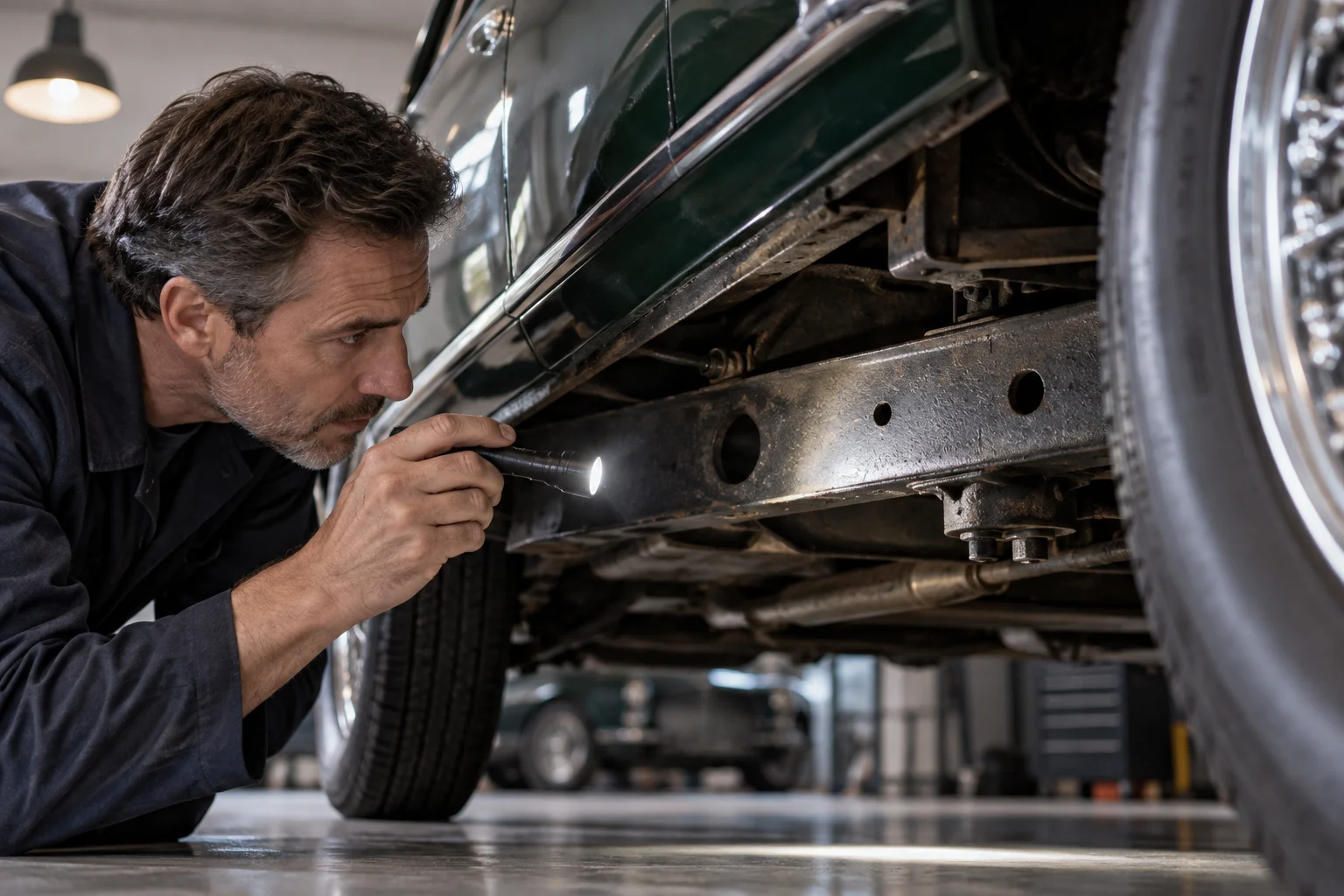
The certification process requires a physical inspection of the vehicle, except in exceptional cases where a virtual inspection is allowed subject to approval by the FIVA Technical Commission. It is the owner's responsibility to provide all demonstrable evidence and information about the vehicle. The FIVA identifies the chassis or monocoque as the primary carrier of the vehicle's identity and history, so the integrity of this element is crucial for validation.
| Aspect | Detail |
|---|---|
| Validity | Maximum 10 years |
| Inspection | Physical (or virtual in exceptional cases) |
| Responsibility | The owner provides the evidence |
| Key element | Chassis or monocoque |
Section references: Código Técnico FIVA 2025 ↗
- Maximum validity of 10 years.
- Loses validity if the owner changes or the vehicle is modified.
- Requires physical inspection (or virtual in exceptional cases).
- The chassis or monocoque is the primary identifying element.
The Turin Charter: conservation principles
The Turin Charter brings together the guiding principles regarding the use, maintenance, conservation, restoration, and repair of historic vehicles. This document, translated and disseminated by the Jorge Jove Foundation, establishes that constant and sustainable maintenance is essential for the survival of these vehicles.
One of the most notable points is that the use of the vehicle, even on public roads, is important for its preservation. The Charter recommends systematically documenting the work carried out and keeping that documentation with the vehicle. It also distinguishes between restoration (replacing missing parts to recover a previous appearance) and repair (restoring functionality without necessarily considering historical authenticity). Subsequent modifications must be discreet, respect the original structure, and be reversible.
Section references: Carta de Turín: Manual ↗
- Use on public roads helps preservation.
- Document all work carried out.
- Modifications must be reversible.
- Clear distinction between restoration and repair.
International events and categories
The FIVA events page lists categories for historic vehicle events, including regularity, touring, concours, and static show.
These events are also classified by their scope: national, international, and FIVA World Event.
Section references: FIVA Events ↗
- Categories: Regularity, Touring, Concours, Static Show.
- Scope: National, International, FIVA World Event.
How old must a car be to be considered historic by the FIVA?
It must be at least 30 years old, be in a historically correct state, and not be used as daily transport.
How long is the FIVA Card valid?
It has a maximum validity of 10 years and loses its validity if the owner changes or the vehicle is modified.
Is it mandatory for the car to be on public roads to preserve it?
It is not mandatory, but the Turin Charter notes that its use, even on public roads, is important for its preservation.